Executive Overview
The technological landscape shifted decisively last week as Amazon Web Services (AWS) hosted its flagship AWS Summit New York City 2026. Drawing thousands of enterprise customers, software developers, cloud architects, and industry partners to the heart of Manhattan, the high-energy, single-day conference served as the definitive showcase for the next generation of cloud computing, infrastructure optimization, and artificial intelligence.
At the core of the event was a powerful central thesis delivered by Dr. Swami Sivasubramanian, Vice President of Agentic AI at AWS: the future of enterprise software is not merely about static automation or conversational chatbots, but about intelligent agents that compound in value over time.
Against a backdrop of surging enterprise demand for autonomous workflows, AWS utilized the New York summit to unveil a sweeping portfolio of AI innovations, developer tools, and infrastructure enhancements designed to fundamentally alter how businesses operate. From advanced agentic orchestration architectures to targeted price reductions and performance enhancements, the conference underscored AWS’s aggressive strategy to maintain its leadership in the cloud-native artificial intelligence era.
This comprehensive report provides a deep dive into the major announcements, strategic shifts, cost-optimization initiatives, and future outlooks emerging from the 2026 AWS Summit in New York City.
Detailed Chronology of the Keynote and Major Announcements
The energy at the Javits Center was palpable as attendees packed the main auditorium for the opening keynote address. Dr. Sivasubramanian took the stage to chart the evolution of artificial intelligence in the enterprise, mapping the journey from early machine learning models to generative text interfaces, and finally arriving at the current paradigm: Agentic AI.
The Shift Toward Agentic AI Systems
For the past few years, generative AI has primarily functioned as an assistant—answering prompts, summarizing text, and writing discrete blocks of code under the direct supervision of a human user. However, Dr. Sivasubramanian argued that the next technological horizon belongs to autonomous agents capable of reasoning, planning, executing multi-step workflows, interacting with enterprise APIs, and learning from feedback loops to compound their utility over time.
"We are moving past the era of isolated prompts," Dr. Sivasubramanian told the packed auditorium. "Organizations are no longer looking for tools that simply generate content on demand. They require autonomous, highly secure agents that can take complex, ambiguous business objectives, break them down into actionable execution plans, coordinate across disparate data silos, and continuously optimize their performance without constant human hand-holding."
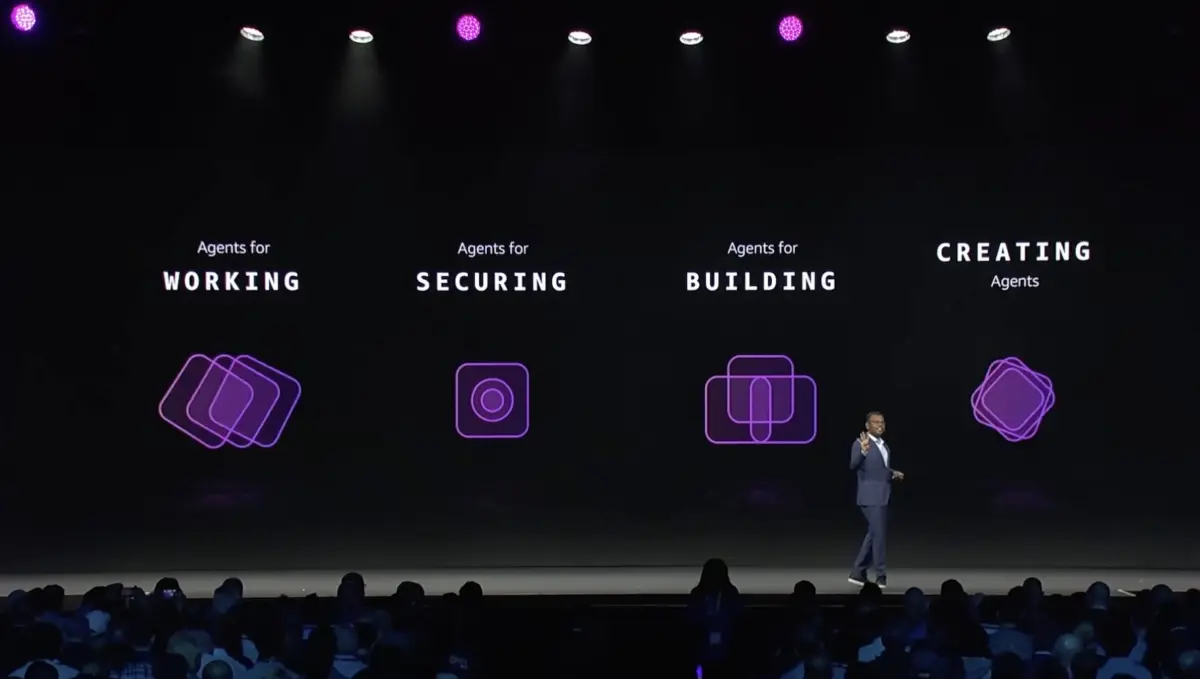
To back this vision, AWS introduced a robust stack of platform capabilities designed to simplify the deployment, governance, and scaling of multi-agent architectures within secure cloud environments.
Key Technical Launches Unveiled at the Summit
While the full spectrum of AWS updates spans dozens of minor and major service releases tracked continuously on the What’s New with AWS portal, the New York Summit highlighted several critical breakthrough innovations:
- Advanced Agent Orchestration Frameworks: AWS unveiled native enhancements to its managed AI orchestration services, enabling developers to stitch together specialized autonomous agents. These agents can dynamically delegate tasks—such as automated data cleansing, security vulnerability patching, and customer support escalation—while maintaining an immutable audit trail.
- Enhanced Retrieval-Augmented Generation (RAG) at Scale: Recognizing that enterprise agents are only as good as the data they access, AWS rolled out high-throughput vector database integrations and optimized embedding pipelines. These updates dramatically reduce latency when agents query petabyte-scale data lakes stored in Amazon Simple Storage Service (Amazon S3).
- Streamlined Developer Tooling: The integration of advanced generative coding assistants within the AWS Builder Center ecosystem was a major talking point. Developers now have access to context-aware debugging utilities that natively understand multi-tier cloud architectures, significantly accelerating the time-to-market for modern serverless applications.
Supporting Context & Metrics: The Economics of Cloud and AI
Beyond the headline-grabbing AI breakthroughs, the 2026 AWS Summit underscored the company’s continuous commitment to balancing cutting-edge innovation with aggressive cost-efficiency for its global customer base. In an economic climate where CIOs and CFOs demand strict return on investment (ROI) for every cloud dollar spent, AWS highlighted vital infrastructure optimizations and price-performance milestones.
Driving Down the Cost of High-Performance Compute
A recurring theme throughout the developer and architectural sessions was the relentless drive to lower operational expenditures. AWS announced a series of strategic price reductions and performance enhancements designed to pass operational efficiencies directly onto customers.
- Optimized Silicon Efficiency: The wider adoption of AWS-designed custom silicon—specifically AWS Graviton processors for general-purpose workloads and AWS Trainium and Inferentia chips for machine learning training and inference—has yielded massive structural savings. By bypassing traditional third-party hardware bottlenecks, AWS continues to slash the unit economics of running deep learning models.
- Storage and Data Transfer Reductions: Reflecting feedback from data-heavy enterprise clients operating massive analytics pipelines, AWS introduced tiered pricing adjustments for cross-region data replication and long-term archival storage classes. These adjustments directly target the friction points of multi-region disaster recovery and compliance data retention.
The Macroeconomic Impact of Agentic Automation
Industry analysts attending the New York Summit noted that the convergence of falling hardware costs and rising agentic productivity creates a powerful deflationary force for software development and IT operations. According to preliminary case studies shared by early enterprise adopters during the event:
- Reduction in Routine Toil: Organizations leveraging autonomous AWS-backed agents reported up to a 40% reduction in time spent on routine incident triage and manual log analysis.
- Accelerated Feature Delivery: Development teams utilizing integrated AI coding assistants and agentic deployment pipelines documented a noticeable compression in software release cycles, moving from bi-weekly deployments to continuous, automated multi-stage rollouts.
Official Statements and Industry Perspectives
The announcements made at AWS Summit NYC 2026 reverberated across the global cloud computing community, eliciting strong reactions from industry analysts, partner executives, and AWS leadership alike.
Perspectives from AWS Leadership
In his keynote address, Dr. Sivasubramanian emphasized that the democratization of AI infrastructure remains the primary mission for Amazon Web Services.

"Technology only matters when it is put into the hands of builders who can turn imagination into reality," Dr. Swami Sivasubramanian, VP of Agentic AI at AWS, stated during his keynote. "Our goal with the launches unveiled here in New York is to remove the undifferentiated heavy lifting of managing complex AI pipelines. By empowering agents to compound value over time, we are giving enterprises a force multiplier that grows smarter, more efficient, and more aligned with business goals every single day."
Partner and Developer Ecosystem Reactions
The summit floor buzzed with validation from major enterprise partners who have spent the past several months testing early builds of the newly announced agentic frameworks.
- System Integrators: Leading global consultancies noted that enterprise clients are shifting their budgets away from experimental AI proofs-of-concept (PoCs) toward production-grade, secure agentic deployments. The new orchestration tools introduced by AWS provide the exact governance, logging, and security guardrails required by regulated industries such as finance, healthcare, and public sector defense.
- Startup Founders: Independent software vendors (ISVs) participating in the startup-focused tracks praised the low barrier to entry provided by managed AI services, noting that small engineering teams can now punch well above their weight class by deploying autonomous agents to handle customer success, backend scaling, and automated testing.
Future Outlook: What Lies Ahead for AWS Builders
As the dust settles on the Javits Center floor and thousands of attendees return to their respective engineering hubs, the 2026 AWS Summit leaves a clear roadmap for the remainder of the year and beyond.
The Road to AWS re:Invent 2026
The announcements made in New York serve as a vital mid-year waypoint. Historically, AWS uses its regional spring and summer summits to test new architectural concepts, gather real-time feedback from the developer community, and lay the groundwork for the massive enterprise service launches traditionally reserved for AWS re:Invent later in the year.
Key areas to watch over the next six months include:
- Deeper Autonomous Integration: Expect further convergence between operational analytics (such as Amazon Redshift and Amazon OpenSearch) and generative AI agents, moving toward self-tuning databases that proactively optimize query execution without human intervention.
- Regulatory Compliance and Enterprise Governance: As autonomous agents gain broader write-access to enterprise infrastructure, AWS will undoubtedly expand its security tooling (such as AWS IAM and AWS CloudTrail extensions) to provide granular, policy-based guardrails ensuring that agentic workflows remain strictly compliant with global regulatory frameworks like GDPR, HIPAA, and the EU AI Act.
- Expanding Community and Educational Initiatives: AWS continues to pour resources into the AWS Builder Center, developer community days, and specialized startup bootcamps. Ensuring that the global workforce possesses the skills required to design, audit, and maintain agentic AI systems will remain a top priority for the cloud giant.
Conclusion
The AWS Summit New York City 2026 will be remembered as the moment agentic AI officially graduated from experimental computer science theory into mainstream enterprise reality. By combining scalable, purpose-built infrastructure, aggressive price-performance optimization, and visionary orchestration tools, AWS has firmly established the scaffolding upon which the next generation of intelligent enterprise applications will be built.
As Channy noted in the weekly roundup, builders across the globe should keep a close eye on the What’s New with AWS page as these preview features roll into general availability. The future of cloud computing is autonomous, compounding, and happening now.