Executive Overview
In the fast-paced world of mobile technology, few accessories are as universally relied upon—and yet as quietly scrutinized—as the portable power bank. As smartphones grow increasingly power-hungry, driven by complex computational photography, high-refresh-rate displays, and power-intensive artificial intelligence processing, keeping a reliable energy source within arm’s reach has transformed from a convenience into an absolute necessity.
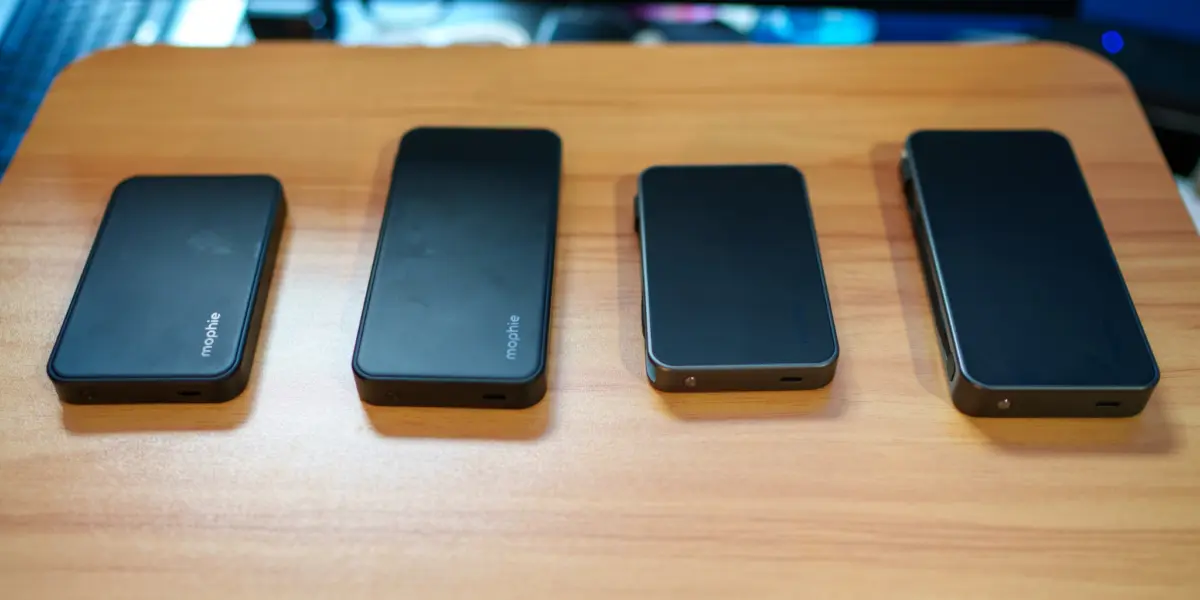
Into this demanding landscape steps Mophie, a legacy titan in the mobile accessories space, with the launch of its newest generation of portable charging solutions: the expanded PowerStation Plus lineup. Comprising four distinct power banks tailored specifically to the modern smartphone user—namely the iPhone ecosystem—this new family of chargers attempts to strike a delicate balance between everyday pocketability, robust power capacity, and user-friendly features like integrated cabling.
Retailing at competitive price points ranging from $29.95 to $59.95, these new power banks arrive at a critical inflection point for the consumer electronics industry. Following a string of high-profile safety scares, recalls, and heightened regulatory scrutiny regarding lithium-ion battery safety in commercial air travel, consumers are looking for more than just raw milliamp-hours (mAh). They are demanding safety compliance, structural integrity, and thoughtful design that avoids the unsightly clutter of loose charging wires.
This comprehensive report examines the structural anatomy, feature sets, safety engineering, and market positioning of Mophie’s latest PowerStation Plus offerings. Through a meticulous breakdown of their capacities, finishes, charging speeds, and safety certifications, we explore whether these new devices successfully navigate the treacherous waters between ultra-portability and heavy-duty utility.
Detailed Chronology: The Evolution of Portable Power and Mophie’s Latest Launch
To understand the significance of the new PowerStation Plus release, it is necessary to contextualize how portable charging has evolved over the past decade.
From Brick Batteries to Pocket Companions
In the early days of external smartphone batteries, users were forced to carry cumbersome, heavy "bricks" that weighed down backpacks and required carrying separate, easily tangled cables. These units often lacked intelligent power management, frequently resulting in overheating or degraded device battery health over time.

As engineering techniques improved, manufacturers began integrating cables directly into the chassis of the power bank. However, these early attempts often suffered from fragile hinges, proprietary connector lock-in, or bulky overall footprints that defeated the purpose of "pocket-friendly" design.
The 2026 Mophie Rollout
Mophie’s recent strategic deployment of four distinct PowerStation Plus variants represents a refined evolution of this concept. Rather than offering a one-size-fits-all solution, the brand has segmented its latest release into two distinct tiers—Standard and Signature—with each tier branching into 5,000mAh (5K) and 10,000mAh (10K) capacities.
- Phase One: Conceptualization and Design Optimization. Mophie engineers focused heavily on the physical dimensions of the chassis. Recognizing that users dislike carrying separate accessories, the team integrated non-retractable, side-mounted USB-C cables directly into the casing.
- Phase Two: Tier Differentiation. To cater to different consumer budgets and aesthetic preferences, the company split the lineup. The Standard versions offer reliable, utilitarian performance with durable plastics, while the Signature versions elevate the tactile experience with premium finishes and braided cabling.
- Phase Three: Safety Overhaul and Compliance Engineering. In direct response to recent industry-wide recalls and safety incidents involving low-cost lithium-ion power banks ordered through online marketplaces, Mophie heavily emphasized structural testing, thermal management, and strict adherence to airline carry-on regulations.
- Phase Four: Global Retail Debut. The full quartet of power banks officially launched on major retail channels, spearheaded by Amazon, establishing a pricing bracket from $29.95 for the entry-level configurations up to $59.95 for the high-end Signature 10K model.
Supporting Context & Metrics: Anatomy of the New PowerStation Plus Lineup
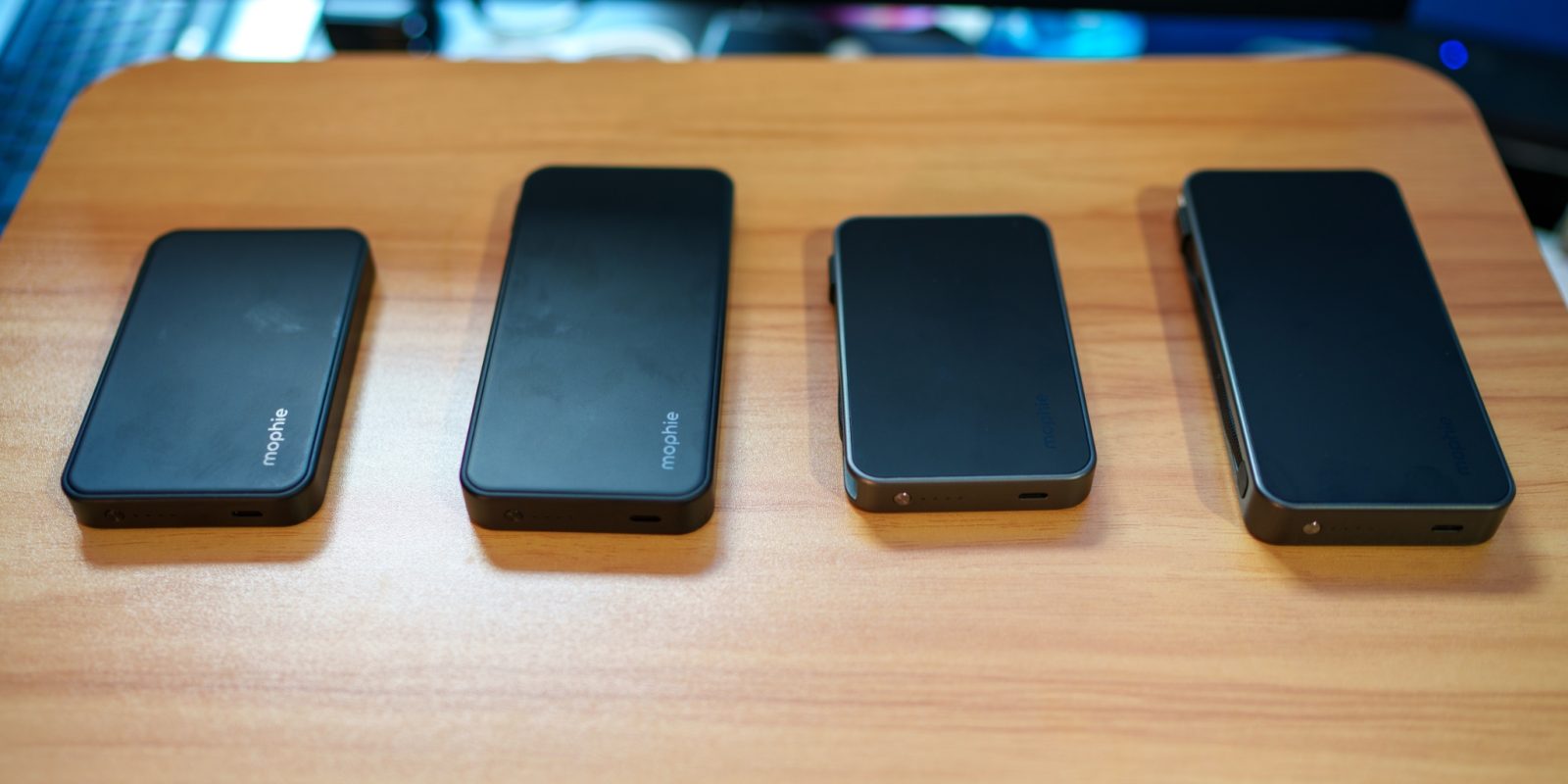
A closer examination of the hardware reveals how Mophie has structured its four new offerings to meet specific use cases. While all four variants share a foundational commitment to modern USB-C standards, their internal specifications and external finishes create distinct user experiences.
The Four Variants at a Glance
| Model Name | Capacity | Finish Type | Integrated Cables | Max Simultaneous Devices | Price Point |
|---|---|---|---|---|---|
| PowerStation Plus Standard (5K) | 5,000mAh | Standard Matte | 1 (Side-Mounted USB-C) | 2 (1 Built-in + 1 Port) | ~$29.95 |
| PowerStation Plus Standard (10K) | 10,000mAh | Standard Matte | 1 (Side-Mounted USB-C) | 2 (1 Built-in + 1 Port) | ~$39.95 – $44.95 |
| PowerStation Plus Signature (5K) | 5,000mAh | Premium Finish | 1 (Braided USB-C) | 2 (1 Built-in + 1 Port) | ~$44.95 – $49.95 |
| PowerStation Plus Signature (10K) | 10,000mAh | Premium Finish | 2 (Braided USB-C) | 3 (2 Built-in + 1 Port) | ~$59.95 |
Capacity and Real-World Performance Metrics
Capacity metrics on paper often fail to translate accurately to real-world usage due to power conversion losses during energy transfer. Mophie’s engineering specifications provide a clearer picture of what users can expect when pairing these power banks with modern hardware, such as the iPhone 17 Pro:
- The 5,000mAh Models (5K): Engineered for the minimalist traveler, the 5K variants deliver roughly one full recharge for an iPhone 17 Pro. Their physical footprint is remarkably slim, sliding easily into front jeans pockets or small jacket pockets without creating an awkward bulge or excessive weight.
- The 10,000mAh Models (10K): Designed for heavier users, frequent flyers, or day-long excursions away from wall outlets, the 10K variants provide approximately two full recharges for an iPhone 17 Pro. Despite doubling the energy storage capacity, Mophie has managed to keep the physical thickness remarkably restrained, avoiding the "brick-like" bulk that plagues competing high-capacity models.
Power Delivery and Multi-Device Charging Architecture
All four variants support a consistent 20W power output via their primary USB-C ports. While 20W may not match the absolute ceiling of ultra-fast desktop charging bricks, it hits the optimal sweet spot for mobile devices, enabling fast-charging protocols for iPhones without inducing excessive thermal stress on the phone’s internal battery cells.
Crucially, the USB-C port is bidirectional—it serves both as the power output channel to charge your devices and as the input port used to recharge the power bank itself.
The physical cable integration is another masterclass in practical engineering:
- The lower three variants feature a single integrated USB-C cable embedded snugly into the side of the housing. When not in use, the cable slips flush into a dedicated groove, eliminating dangling wires. Users can simply slide the cable out of its channel when a quick charge is required.
- The top-tier Signature 10K model takes versatility a step further by incorporating two braided cables alongside an additional open USB-C port. This configuration allows enterprising users to charge up to three devices simultaneously, making it an ideal companion for individuals carrying an iPhone, wireless earbuds, and a secondary gadget like an iPad mini or a work phone.
Visual Indicators and Aesthetics
To keep users informed of remaining energy reserves, each power bank features a discreet, intuitive LED charge status indicator system. A quick press of the side button illuminates a series of clean lights, offering an immediate read on battery percentage without requiring complex digital displays that drain parasitic power.
The aesthetic distinction between the Standard and Signature lines lies in the surface treatment and cable durability. While the Standard versions utilize a clean, utilitarian matte finish, the Signature variants boast a more tactile, premium exterior coating paired with heavy-duty braided cables designed to resist fraying and wear over years of being tossed into bags and pockets.
Official Statements and Industry Safety Landscape
The launch of Mophie’s new lineup does not occur in a vacuum. The portable battery accessory market has faced intense public scrutiny and regulatory anxiety following a series of alarming safety incidents.
The Shadow of Recent Recalls and Fires
In late 2025, the consumer tech world was rocked by a series of high-profile safety warnings and voluntary recalls. Several popular, budget-focused Amazon-exclusive power banks were pulled from shelves and flagged by safety regulators after multiple reports of spontaneous thermal runaway incidents, resulting in property damage and minor fires. These incidents exposed a dark side of the accessories market: white-label manufacturers cutting corners on internal circuit protection, subpar lithium-ion cell sourcing, and inadequate thermal throttling mechanisms.
In the wake of these events, consumer trust plummeted regarding generic or ultra-cheap power banks. Brand reputation became paramount.

Mophie’s Safety Engineering Response
Addressing these industry-wide anxieties head-on, Mophie highlighted the rigorous safety architecture built into the PowerStation Plus series during its launch rollout. Company representatives emphasized that safety was a core pillar of the product’s development cycle, particularly regarding air travel compliance.
- Airline Carry-On Compliance: Commercial aviation authorities strictly regulate lithium-ion batteries. Batteries exceeding certain watt-hour thresholds are outright banned from checked luggage, and even carry-on allowances are heavily monitored. Mophie engineered the entire PowerStation Plus family to fall safely within standard international airline carry-on regulations, ensuring travelers can pass through TSA and international security checkpoints without hindrance.
- Advanced Circuit Protection: Unlike unvetted budget alternatives, Mophie’s internal management systems feature multi-layered protections against over-current, over-voltage, short-circuiting, and extreme temperature fluctuations. If the power bank detects abnormal thermal output during high-draw charging sessions, it automatically throttles output or shuts down entirely to prevent catastrophic failure.
Future Outlook: The Trajectory of Portable Power and Accessory Design
As we look toward the remainder of the decade, the launch of the Mophie PowerStation Plus series signals several broader trends shaping the mobile accessory industry.
1. The Death of the Loose Cable?
For years, the standard portable charging experience involved carrying a power bank, a separate charging brick, and a tangled mess of cables. The market is clearly shifting toward all-in-one, integrated solutions. By embedding sturdy, flush-fitting cables directly into the chassis of the power bank—without adding unreasonable bulk—Mophie has set a new benchmark for user convenience. We can expect competing manufacturers to rapidly adopt and refine similar integrated cable designs in future product generations.
2. The Premiumization of Essentials
Consumers are increasingly willing to pay a modest premium for peace of mind. The bifurcation of Mophie’s lineup into Standard ($29.95) and Signature ($59.95) tiers illustrates a mature market strategy: cater to the budget-conscious consumer while offering an upscale, durable alternative for power users who demand premium finishes (like braided cabling) and multi-device charging capabilities. Moving forward, brand trust and safety certifications will continue to command higher margins in the accessory sector.
3. Energy Density Breakthroughs on the Horizon
While 5,000mAh and 10,000mAh capacities remain the gold standard for pocket-sized power banks, ongoing advancements in silicon-anode battery chemistry and solid-state research promise even higher energy densities in the coming years. Future iterations of devices like the PowerStation Plus will likely shrink physical dimensions even further while pushing capacity ceilings higher, eventually making the compromise between pocketability and high capacity entirely obsolete.
Conclusion
Mophie’s latest PowerStation Plus release is more than a routine hardware refresh; it is a calculated response to the modern consumer’s demand for safety, convenience, and reliability. By addressing the pain points of loose cables, pocket bulk, and post-recall safety anxieties, Mophie has delivered a versatile quartet of power banks that solidify its standing as a premier brand in the mobile accessory ecosystem. Whether opting for the streamlined Standard 5K or the feature-rich Signature 10K, users now have access to dependable, airline-friendly power that seamlessly integrates into the rhythm of daily life.