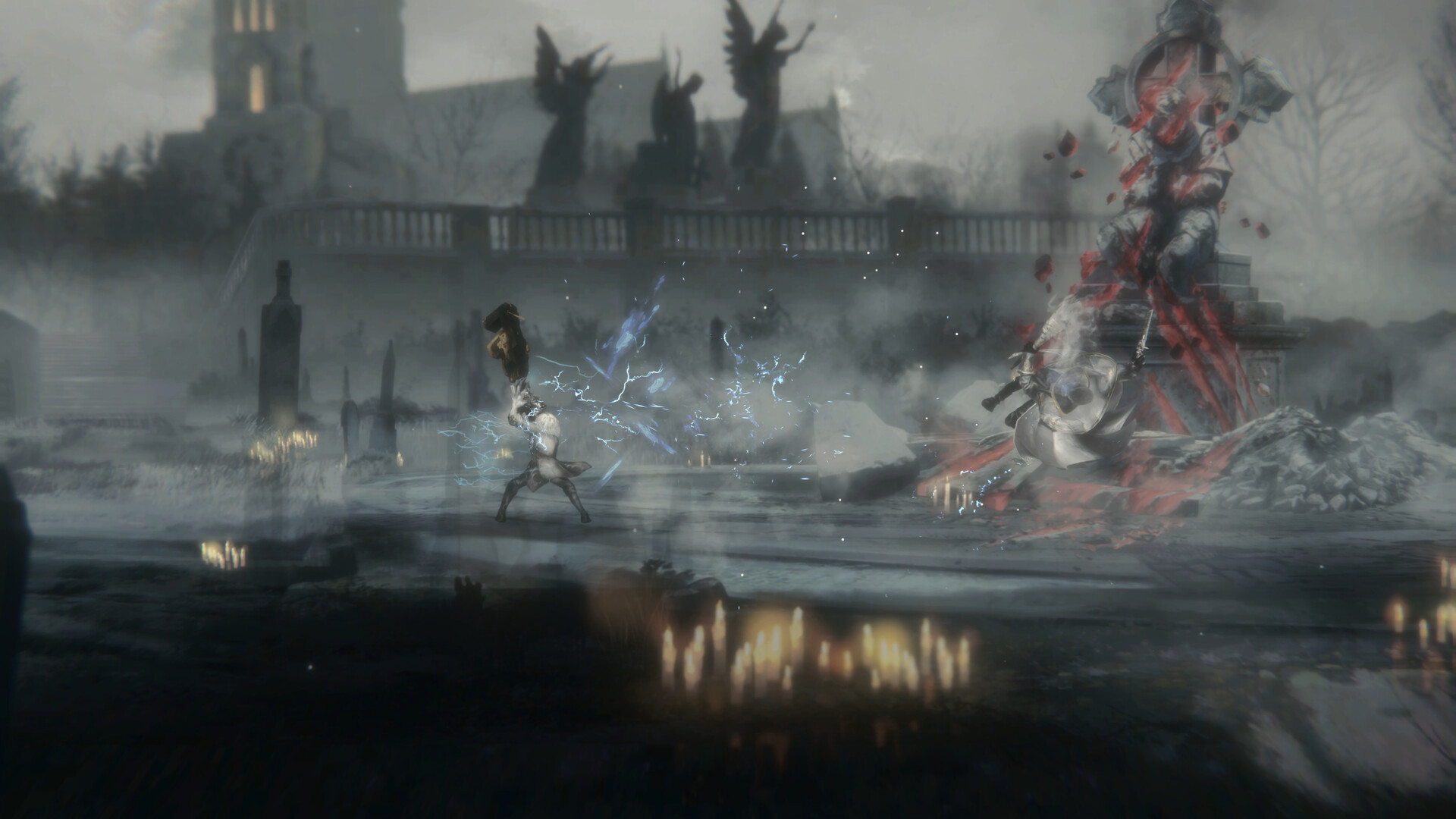
The intersection of indie game development, player expectations, and emerging technologies has produced another cautionary tale. Vapor World: Over The Mind, an ambitious Soulslike Metroidvania developed by the five-person South Korean studio Alive Inc, entered Early Access on Steam on August 19 with substantial momentum. Backed by an evocative, painterly art style reminiscent of Lies of P and the narrative-driven platformers of Playdead, the game had amassed 100,000 wishlists largely on the strength of a well-received playable demo that had been available since January 2025.
However, what should have been a triumphant release quickly turned into a public relations crisis. Instead of engaging with the game’s distinctive worldbuilding or its challenging, parry-heavy combat mechanics, players focused entirely on an element absent from the demo: conspicuous, low-quality generative AI assets.
The inclusion of inconsistent AI-generated cutscenes triggered an immediate and severe backlash, pushing the game’s Steam review score down to "mostly negative" within days. The incident underscores a deepening industry divide: while developers increasingly eye generative AI as a viable tool to bridge resource gaps, players remain deeply intolerant of its use as a creative shortcut.
Detailed Chronology: From Wishlist Triumph to Launch Backlash
The trajectory of Vapor World: Over The Mind highlights the fragile nature of community goodwill in modern PC gaming.
January 2025: Alive Inc releases a playable demo for Vapor World. The response is overwhelmingly positive. Players praise its dark atmosphere, fluid movement, and atmospheric combat, pushing the game’s wishlist count toward a respectable 100,000 milestone ahead of its summer release. Crucially, the demo contains no generative AI assets, establishing a baseline of quality and human craftsmanship that players expect to see in the final product.
August 19, 2025:Vapor World: Over The Mind launches into Steam Early Access. Upon booting up the game, players are immediately greeted by a cinematic intro cutscene. Rather than setting the dark, cohesive tone established by the demo, the opening sequence prominently features hallmarks of early-generation AI video tools: flickering character models, morphing architecture, and glaring inconsistencies in the protagonist’s facial features and clothing from frame to frame.
August 19–20, 2025: Social media platforms and Steam community hubs light up with criticism. Players who supported the game based on its demo feel deceived. The top-rated review on Steam articulates the community’s frustration, pointing out that the generative AI could not even maintain basic character model consistency across the very first cutscene. Within 48 hours, the game accumulates 64 reviews, dragging its rating down to "mostly negative."
August 22, 2025: Facing mounting pressure and plummeting user scores, studio director Young Kim issues a public statement acknowledging the backlash and announcing that the AI-generated cutscenes will be replaced by the end of the weekend—a swift pivot that Alive Inc executes rapidly.
Supporting Context & Metrics: Cultural Divides and Studio Realities
The rapid fallout raises questions about how a micro-studio misjudged the global appetite for AI content so severely. Part of the answer may lie in regional attitudes toward technology.
According to a Pew Research Center global survey covering 25 countries, South Korea stands out as the least AI-skeptical nation surveyed, easily outpacing the United States, the United Kingdom, Australia, and India. While approximately half of respondents in Western markets like the US, Italy, Australia, and Brazil report being "more concerned than excited" about AI in daily life, only 16 percent of South Korean respondents share that apprehension. This cultural optimism is mirrored at the institutional level; the South Korean government has aggressively championed AI integration across various sectors, even attempting (though ultimately failing) to introduce AI-powered school textbooks nationwide.
For a tiny team like Alive Inc—consisting of roughly five developers—the temptation to leverage generative tools to match the cinematic scope of larger studios is understandable. Yet, this regional optimism clashed violently with the global PC gaming demographic on Steam, which has consistently drawn a hard line against uncurated or poorly implemented generative AI tools in commercial releases.
Official Statements and Industry Precedents
In his statement addressing the controversy, studio director Young Kim offered a candid, if belated, perspective on the studio’s decision-making process:
"If someone asked me what I think about using AI, the honest answer is that I would have to think about it for a long time. The reason I chose AI was that I believed it could reach a level of expression our existing resources could not, and that it would let us focus more on the game itself, outside of story and cinematics."
Kim admitted that the choice was hasty and rooted in an ideal rather than reality: "I expected some of you would be disappointed by our use of AI. I did not expect it to become this big."
The director explained that the team had spent a long time attempting to build the game’s complex narrative cutscenes by hand, but the results fell short of their internal standards. Turning to generative AI was viewed as a pragmatic solution to a resource bottleneck, but the execution backfired.
"The truth is, we spent a long time trying to tell this game’s story with cutscenes made entirely by our own hands. The results were devastating every time… But if that choice hurt your experience, the fault is not in the tool. It is in our own shortcomings."
Alive Inc now joins a growing roster of development teams—including Larian Studios and Sandfall Interactive—that have faced severe public backlash over AI integration and subsequently walked back their implementation. While Vapor World features genuine craftsmanship in its core gameplay loops and combat design, the controversy proves that audiences currently view generative AI cutscenes as an unacceptable shortcut rather than a valid artistic medium.
Future Outlook: The Road Ahead for Vapor World
Despite the rocky launch, Alive Inc’s rapid removal of the AI-generated cutscenes demonstrates a willingness to listen to its core audience. However, rebuilding consumer trust following a "mostly negative" review bombing campaign is notoriously difficult in the crowded Steam ecosystem.
For the wider gaming industry, Vapor World: Over The Mind serves as a stark reminder that technical shortcuts carry severe reputational costs. As generative AI tools become more accessible to small independent teams, studios must weigh the short-term savings in time and labor against the long-term risk of alienating their players. For now, the message from the PC gaming community remains unequivocal: human-crafted artistry, even with flaws, will always be preferred over synthetic polish.