Executive Overview
In the modern landscape of cinematic marketing, high-concept blockbusters and historical dramas alike are subjected to rigorous, hyper-calculated promotional rollouts. Every trailer, poster, and social media post is scrutinized by focus groups, PR executives, and studio heads to ensure an immaculate, unified message is delivered to the public.
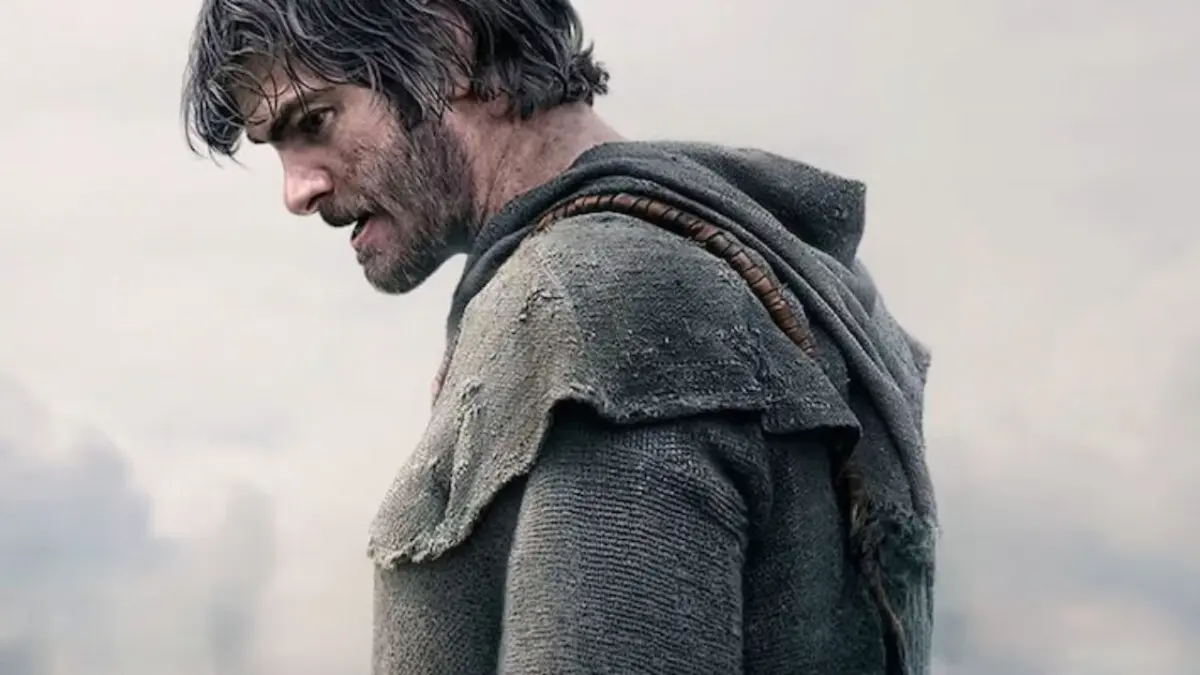
Yet, on August 20, 2026, the film industry witnessed an astonishing lapse in synchronized messaging that quickly spiraled into a full-blown PR puzzle. Focus Features’ upcoming historical drama The Uprising, starring Academy Award nominee Andrew Garfield and directed by renowned filmmaker Paul Greengrass, seemingly underwent a spontaneous metamorphosis online. For months, the film had been painstakingly positioned as a gritty, ground-level historical epic chronicling the 1381 Peasants’ Revolt—a pivotal, bloody chapter in medieval English history.
However, a sudden wave of promotional material posted to the film’s official X (formerly Twitter) account abruptly reframed the project. The marketing pivot introduced a subtitle—The Uprising: The Rise of Robin Hood—and explicitly marketed Garfield’s character not as a generic peasant, but as the cinematic genesis of Britain’s most legendary outlaw.
What followed was a dizzying 48 hours of rapid-fire title reversals, frantic social media scrubbing, conflicting statements from international distributors, and stealth updates to press kits. As moviegoers and industry analysts alike try to decipher whether The Uprising is a hard-hitting historical accounting of Wat Tyler’s rebellion or a stealth origin story for Sherwood Forest’s most famous archer, the confusion threatens to muddy the waters ahead of the film’s September 11 theatrical release.
This comprehensive investigation explores the anatomy of the The Uprising marketing fiasco, the historical and literary tightrope walk attempted by the filmmakers, and the broader commercial implications for a cinematic landscape still nursing the wounds of recent box office failures within the Robin Hood IP ecosystem.
Detailed Chronology: A Week of Promotional Whiplash
To truly understand the depth of the marketing confusion surrounding The Uprising, one must trace the timeline of events that transformed a standard prestige historical rollout into a digital guessing game.
Phase 1: The Historical Epic Status Quo
For the better part of its pre-release campaign, The Uprising was understood by trade publications, film journalists, and general audiences to be a straight-faced historical drama. Headlined by Andrew Garfield, the film boasted an impressive ensemble cast featuring Shōgun breakout Cosmo Jarvis as historical rebel leader Wat Tyler and Jamie Bell as radical cleric John Ball.
Initial stateside production notes, distributed to domestic press corps ahead of junket interviews, rooted the film firmly in the soil of 14th-century feudal England. Garfield’s protagonist was simply referred to in script summaries and cast lists as "Ploughman"—a symbolic Everyman figure pushed to the absolute brink by the oppressive taxation and draconian rule of King Richard II.
The original plot synopsis distributed to the American press read:
"Andrew Garfield stars as the legendary leader of a ferocious rebellion against the tyranny of King Richard II. As war burns across England, he forms an army of the people to face the King’s might in a fight for justice and survival."
At no point in these early promotional cycles, teaser trailers, or casting announcements was the name "Robin Hood" invoked. The tone was explicitly aligned with Paul Greengrass’s signature documentary-realism style—visceral, grounded, and intensely political.
Phase 2: The Robin Hood Bomb Drops
The status quo shattered abruptly on Wednesday, August 20, 2026. The official X account for the movie (@theuprisingmov) published a high-octane promotional video accompanied by text that shocked followers:
"To the rich, he was an outlaw. To the people, he was a hero. Witness the rise of Robin Hood in THE UPRISING, only in theaters September 11."
The accompanying advertisement revealed a heavily modified title card reading The Uprising: The Rise of Robin Hood. The footage showed Garfield—attired in a distinct green hooded cloak—stepping out from a dense forest canopy to ambush the King’s royal guards. Flanked by highwaymen wielding traditional English longbows, Garfield’s character delivers a chilling ultimatum at swordpoint: "There will be no peace until we are free. Time to pay."
For a brief window, internet film fandom went into overdrive. Speculation ran rampant: Was Focus Features executing a massive, secretive marketing bait-and-switch? Had they managed to keep a major studio IP pivot under wraps for years, only to reveal it weeks before the premiere?
Phase 3: The Rapid Retreat and Damage Control
The answer, it turned out, was far messier than a clever marketing stunt. Within 24 hours of the initial post going live, the digital footprint of the "Robin Hood" rebrand began to dissolve.
The newly minted subtitle was quietly stripped from social media headers and promotional banners, reverting the film’s title back to its original, minimalist moniker: The Uprising.
The international ramifications were swift and severe. Recognizing the dissonance the US-facing ad had caused abroad, the film’s official UK distributor issued a forceful, clarifying statement to the press, attempting to distance themselves entirely from the Robin Hood angle:
"Marketing materials posted by other countries that may appear in the UK online and on social media referencing Robin Hood are not issued or approved by us."
The statement laid bare an apparent internal disconnect between domestic US marketing teams and international publishing arms—an uncoordinated rollout that left global audiences questioning who was actually driving the promotional vehicle.
Supporting Context & Metrics: Literary Roots and Studio Shifts
While the marketing departments scrambled to clean up the mess, industry observers turned their attention to the updated press materials trickling out of Focus Features. Late last week, a revised set of production notes was quietly pushed to the studio’s press portal, offering a window into the artistic philosophy guiding Paul Greengrass’s vision.
The Piers Plowman Connection
The updated US production notes shed light on the creative alchemy that likely inspired the marketing department’s sudden pivot, while simultaneously explaining the film’s deep-seated historical inspirations.
According to the revised studio documentation, the creative team drew heavily from the 14th-century Middle English allegorical poem Piers Plowman, written by William Langland. The poem serves as a vast, visionary dream-narrative exploring social corruption, Christian salvation, and the struggles of the honest laborer.
The production notes elaborate on this literary foundation:
"The 14th century English poem ‘Piers Plowman’ — a simple farmer’s dream about his hopes and fears — was the inspiration for the character of the Ploughman and helped the filmmaker [Paul Greengrass] settle on his approach. (Notably, the same poem gave birth to the legend of ‘Robin Hoode,’ the ultimate British outlaw myth about a common man attempting to right great injustice and coming under threat from the authorities for his actions to serve the citizenry.)"
This revelation bridges the gap between the historical Peasants’ Revolt and the folkloric myth of Sherwood Forest. Historically, the archetype of Robin Hood did not emerge fully formed from a vacuum; rather, it crystallized from centuries of oral traditions, political balladry, and peasant unrest in medieval England—with the turbulence of the late 14th century serving as fertile ground for the outlaw archetype.
The Revised Synopsis
Reflecting this literary and thematic justification, the updated official plot synopsis provided to the US press subtly tweaked its phrasing to acknowledge the shadow of the legend:
"Andrew Garfield stars as the leader of a ferocious rebellion against the tyranny of King Richard II. Set against the true events of the Uprising that helped inspire the legend of Robin Hood, he forms an army of the people to face the King’s might in a fight for justice."
Noticeably, the direct claim that Garfield is playing "Robin Hood" has been walked back even within the written text, replaced by the more nuanced framing that the events of the uprising helped inspire the legend. Yet, the damage—or alternatively, the intrigue—was already baked into the campaign.
Official Statements and Industry Disarray
The chaotic rollout of The Uprising highlights a recurring vulnerability in contemporary Hollywood distribution: the siloed nature of global marketing strategies.
When major motion pictures are co-marketed across multiple territories, divergent promotional angles can often cause cross-contamination on borderless platforms like X, TikTok, and Instagram. A campaign designed to test high-concept IP synergy in the North American market can instantly bleed into the UK and Europe, where audiences expect strict historical adherence, particularly when revered local talents like Paul Greengrass, Cosmo Jarvis, and Jamie Bell are attached.
The UK distributor’s blunt disavowal of the US-approved marketing assets is a rare public crack in the studio veneer. It points to a lack of consensus within Focus Features and its parent entities regarding how to sell a multi-million-dollar historical drama to an increasingly fragmented theatrical audience. Is it safer to market a grim, realistic medieval rebellion led by historical figures, or does the modern box office demand the immediate, brand-name recognition of a pre-sold pop-culture icon like Robin Hood?
By attempting to straddle both worlds—naming the film The Uprising while simultaneously leaning into the "Rise of Robin Hood" narrative in select digital spaces—the studio managed to alienate purists who wanted a straight historical account, while confusing casual moviegoers who wondered if the film was yet another iteration of the classic Sherwood Forest tale.
Future Outlook: Navigating a Crowded and Skeptical Marketplace
With its September 11 theatrical release date looming just weeks away, The Uprising faces an uphill battle to realign audience expectations and clear up the lingering fog of its promotional misadventure.
The Ghost of The Death of Robin Hood
Compounding the sensitivity of the Robin Hood connection is the recent performance of competing intellectual property within the marketplace. The Uprising arrives hot on the heels of The Death of Robin Hood, a darker, revisionist take starring Hugh Jackman. Unfortunately for that production, it proved to be a notable box office bomb, grossing less than $7 million worldwide against a reported production budget of $20 million.
The failure of The Death of Robin Hood demonstrates a broader audience fatigue surrounding traditional iterations of the green-tighted hero. For decades, Hollywood has repeatedly returned to the well of Sherwood Forest—from Kevin Costner’s 1991 swashbuckler to Ridley Scott’s 2010 historical epic and Taron Egerton’s slick 2018 action reboot—with diminishing commercial returns.
If The Uprising is perceived primarily as "yet another Robin Hood movie," it risks inheriting the box office apathies that plagued Jackman’s project. Conversely, if marketed strictly as a sweeping, high-stakes historical drama about the 1381 Peasants’ Revolt—anchored by the heavyweight dramatic talents of Andrew Garfield and the gritty action direction of Paul Greengrass—it stands a far better chance of carving out a distinct identity in the fall prestige window.
Final Verdict on the Campaign
As opening day approaches, the marketing team at Focus Features will need to exercise absolute message discipline. The fleeting experiment with The Uprising: The Rise of Robin Hood serves as a cautionary tale of how social media agility, when unmoored from a unified global strategy, can quickly curdle into confusion.
Whether Garfield’s "Ploughman" is ultimately remembered as a historical freedom fighter or a stealth incarnation of England’s favorite outlaw will soon be decided by audiences in the dark of the theater. Until then, The Uprising remains one of the most uniquely confusing promotional rollouts of the cinematic year—proving that even in the 14th century, controlling the narrative is half the battle.