Executive Overview
In the contemporary social media landscape, the phenomenon of the "accidental viral moment"—frequently colloquially termed becoming the "main character of the day"—has transformed from a rare stroke of digital luck into an occupational hazard. Users across platforms regularly find their casual musings, ill-conceived jokes, or out-of-context remarks thrust onto the screens of millions, inviting intense scrutiny, harassment, and profound psychological distress.
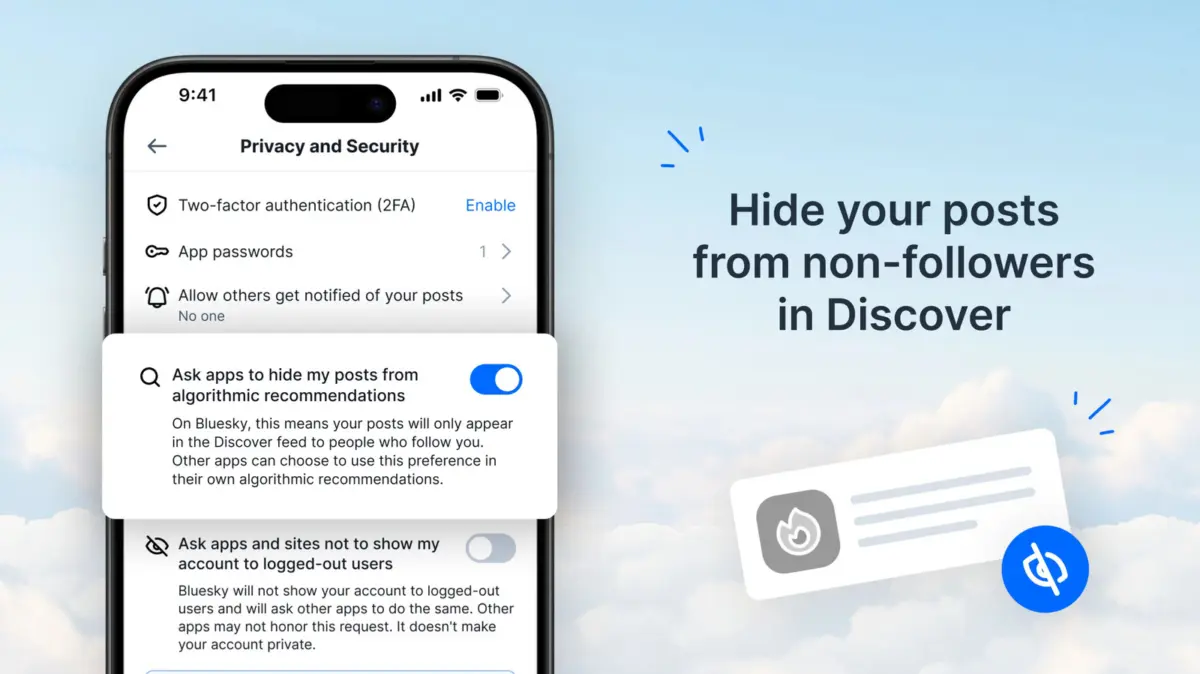
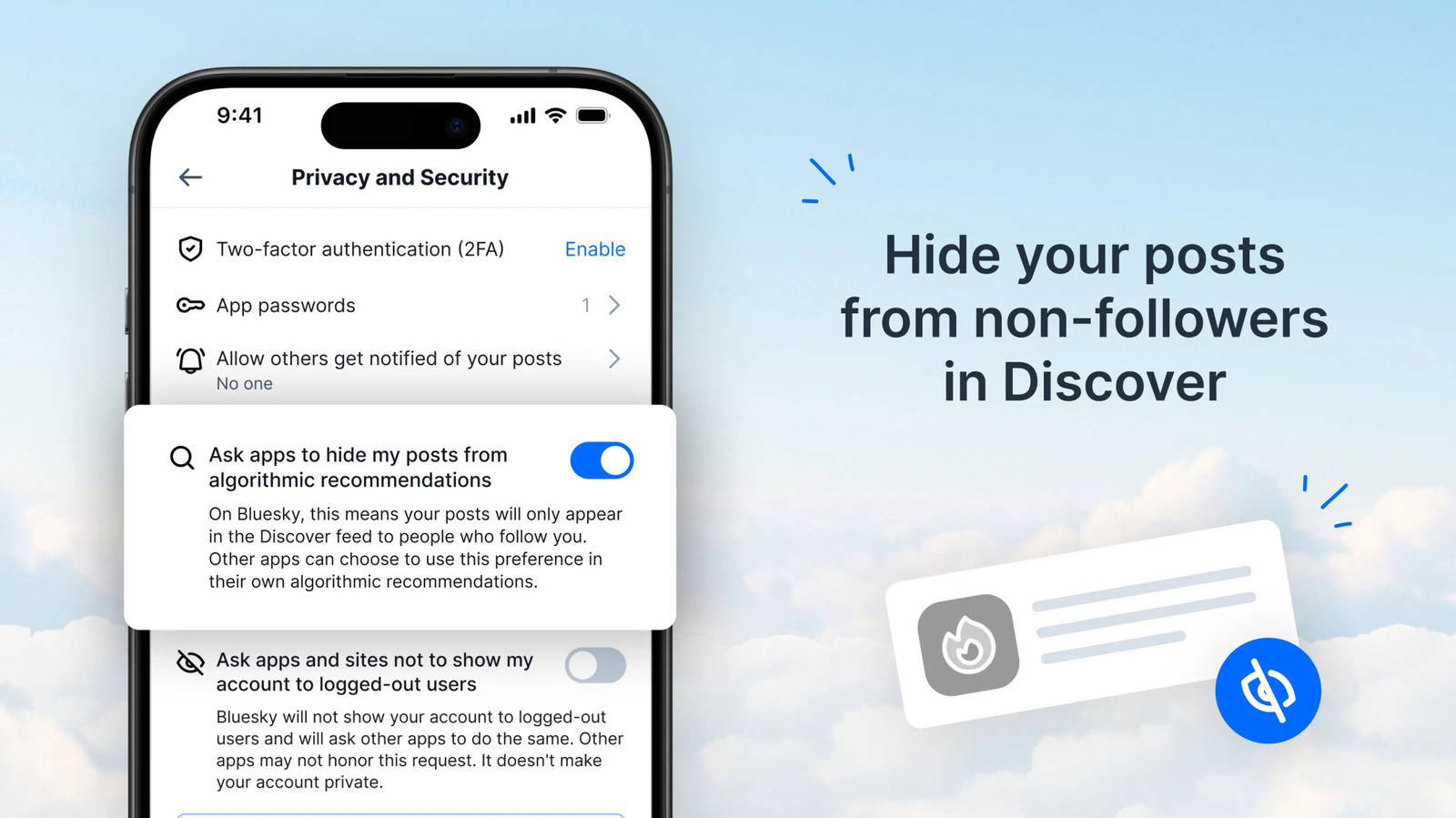
Recognizing these mounting anxieties, decentralized social media platform Bluesky has officially rolled out a pivotal account-level privacy control designed to mitigate this exact digital vulnerability. The new feature allows users to fundamentally opt out of the platform’s algorithmic "Discover" feed for anyone who does not already follow them.
While not a silver bullet for total digital anonymity—especially given Bluesky’s architectural commitment to a public-first, decentralized protocol—this new setting represents a significant philosophical shift in how social media platforms approach algorithmic amplification. Rather than defaulting to a growth-at-all-costs model that pushes every piece of content into the global slipstream, Bluesky is actively ceding a degree of control back to the user. This move underscores a broader industry maturation, wherein platforms must balance the dopamine hits of mass reach against the very real human costs of unwanted exposure.
Detailed Chronology of the Feature Rollout
The genesis of Bluesky’s new anti-virality setting did not happen in a vacuum; it is the direct result of rapid platform growth, shifting user demographics, and a fundamental architectural philosophy that prioritizes user agency through decentralization.
The Post-X Exodus and Scaling Pains
Following significant structural and policy changes at legacy platforms like X (formerly Twitter), Bluesky experienced successive waves of user migrations. As the platform transitioned from an exclusive, invite-only beta for tech enthusiasts and journalists into a mainstream public square boasting millions of active accounts, its network dynamics fundamentally changed.
In a smaller, tightly knit community, cultural norms are largely shared, and context is easily preserved. However, as the user base diversified, the friction between micro-community inside jokes and macro-algorithmic distribution became glaringly apparent. Early adopters began voicing concerns that the algorithmic Discover feed—powered by Bluesky’s innovative customizable feed architecture—was dragging niche conversations into hostile, uninitiated public view.
Development and Deployment
Behind the scenes, Bluesky’s engineering and product teams began evaluating how to balance the discovery engine necessary for a healthy network with the emotional safety of its populace. Unlike traditional platforms that treat algorithmic recommendation as a non-negotiable core service, Bluesky’s underlying open standard, the AT Protocol, was explicitly designed to decouple content storage from content recommendation.
In a quiet update deployed through the app’s privacy and security menu, the company introduced an explicit toggle: an account-level setting allowing users to request that apps hide their posts from algorithmic recommendations for non-followers. The rollout was announced via Bluesky’s official communication channels, immediately drawing praise from privacy advocates, vulnerable communities, and everyday users exhausted by the pressures of performative, hyper-visible online discourse.
Supporting Context & Metrics: The Mechanics of Modern Virality
To fully appreciate the significance of Bluesky’s intervention, one must examine the mechanics of algorithmic amplification and the unique architectural constraints of the AT Protocol.
The Psychology and Perils of the "Main Character"
In digital sociology, the "main character" phenomenon occurs when a single user’s post is algorithmically amplified to a massive, hostile, or uncomprehending audience. Devoid of the original author’s intent, tone, or community context, the post becomes a Rorschach test for internet outrage.
The consequences of accidental virality are rarely benign. Studies in digital wellbeing consistently demonstrate that sudden, unwanted mass exposure correlates with spikes in anxiety, reputational damage, and severe targeted harassment. For marginalized groups, activists, and private citizens navigating a public space, the omnipresence of algorithmic curation acts as a persistent surveillance threat. By removing oneself from the Discover feed for non-followers, users can engage in conversations with the comfort that their net is cast locally, rather than globally.
Understanding Bluesky’s AT Protocol Architecture
It is vital to analyze the precise boundaries of Bluesky’s new feature to manage user expectations realistically. Bluesky operates differently from closed platforms like Facebook or Instagram:
- No Fully Private Accounts: Unlike X, which allows users to lock their accounts entirely, Bluesky’s foundational architecture is built on public data transparency. Because data on the AT Protocol is federated and publicly accessible via personal data servers (PDS), accounts cannot be made entirely "private" in the traditional sense. Anyone with a web browser can theoretically look up a user’s public feed if they have their handle.
- Account-Level vs. Post-Level Control: The new setting is a global switch. Toggling it on applies the restriction across all future posts on the account, preventing the platform’s primary Discover feed from surfacing your content to strangers.
- The Custom Feed Ecosystem: Bluesky’s standout feature is its decentralized marketplace of custom feeds. While the official Discover feed will honor the new privacy setting, the open nature of the AT Protocol means third-party developers build independent feeds and algorithms. While Bluesky’s primary setting asks compliant apps to respect user intent, the decentralized wild-west of the protocol means absolute guarantees are technologically impossible across every conceivable third-party client.
Official Statements and Industry Implications
The introduction of the anti-virality toggle has sparked widespread discussion across the tech and media sectors regarding the ethical responsibilities of social networks.
What Bluesky is Saying
In communications accompanying the feature release, Bluesky representatives framed the update as part of a continuous iterative process to return control to the individual. The company explicitly acknowledged that mass distribution is not always desirable, noting that the update is:
"One of a few updates we’re working on to give you more control over your experience and help you find your people."
By acknowledging that users may wish to cultivate intimate digital spaces rather than chase global metrics, Bluesky is actively subverting the engagement-maximizing ethos that has defined social media business models for the past two decades.
Industry Reactions and Competitive Landscapes
Competitors are watching closely. Legacy platforms have long tied their monetization and ad-revenue models directly to raw engagement metrics, maximizing screen time by feeding users polarizing, highly viral content regardless of the author’s wishes.
By offering an explicit escape hatch from the attention economy, Bluesky is positioning itself as a user-first alternative. Analysts suggest this move could attract creators, journalists, and everyday users who are burnt out by the algorithmic anxiety of platforms like X, Meta’s Threads, or TikTok. However, it remains to be seen whether mainstream platforms will adopt similar opt-outs, as their foundational reliance on ad impressions makes reducing systemic virality a counter-cultural business strategy.
Future Outlook: Where Do We Go From Here?
As digital spaces continue to evolve under the pressures of artificial intelligence, automated scraping, and shifting cultural norms, the definition of privacy online is undergoing a profound transformation.
The Horizon of Platform Privacy Controls
Bluesky’s recent update is unlikely to be the final word on user safety. Industry observers anticipate several key developments in the near future:
- Granular Per-Post Controls: While the current feature is an all-or-nothing account toggle, future iterations may allow users to designate specific posts as "low-amplification" or restrict visibility on a case-by-case basis.
- Enhanced Third-Party Protocol Compliance: As the AT Protocol matures, developers are likely to build standardized metadata flags that allow custom feed creators to automatically respect user-level anti-virality preferences, bridging the gap between decentralization and personal safety.
- AI and Scraping Mitigations: With the explosion of generative AI models scraping public social data for training sets without consent, privacy controls that limit algorithmic discoverability may serve a dual purpose—shielding users from both human mobs and automated data harvesters.
Conclusion
Bluesky’s new privacy setting represents a mature, empathetic acknowledgment of the psychological tolls exacted by modern social media architecture. By empowering users to step out of the algorithmic spotlight, the platform is carving out a necessary sanctuary within the hyper-connected web.
While architectural limitations mean true digital obscurity remains difficult to achieve on a public protocol, this feature is a critical step forward. It signals to the tech industry that user welfare, peace of mind, and intentional community-building can—and should—take precedence over the relentless, anxiety-inducing pursuit of viral fame.