Executive Overview
When a psychological thriller boasts a pedigree featuring bestselling source material, a stellar cast including Adam Scott, Robert De Niro, and Michelle Monaghan, and the atmospheric direction of James Ashcroft, expectations inevitably soar. Premiering globally on Netflix, The Whisper Man arrives with the heavy burden of cinematic promise. Adapted from Alex North’s acclaimed novel of the same name, the film explores terrifying themes of paternal failure, childhood trauma, and a sleepy community haunted by an infamous nursery rhyme and a string of chilling murders.
Yet, despite its palpable atmospheric dread and a genuinely committed ensemble, the film ultimately trips over its own narrative feet. Earning a middling 6/10 (“Okay”) in its critical reception, The Whisper Man serves up a potent cocktail of horror tropes—borrowing heavily from everything from The Silence of the Lambs to The Black Phone—only to leave its most promising ingredients half-baked. While director James Ashcroft delivers moments of genuine unease and the veteran cast members deliver scene-chewing interactions, the script suffers from sluggish plotting, overly telegraphed twists, and illogical character turns that prevent the project from ever finding its true voice.
This comprehensive review explores the narrative architecture of Netflix’s latest dark offering, analyzing its performances, its reliance on worn-out genre tropes, and why its high-profile creative team couldn’t quite salvage a script weighed down by narrative contrivances.
Detailed Chronology and Plot Mechanics
The haunting fabric of The Whisper Man is woven from decades of generational trauma, beginning long before the opening credits roll. The narrative kicks into high gear following a sudden family tragedy that forces newly widowed crime novelist Tom Kennedy (Adam Scott) to pack up his life and move with his young son, Jake (Acston Luca Porto), to a secluded home carrying its own dark history.
Tom’s desperate bid to rebuild his relationship with his son—and find a quiet sanctuary to write—is upended when Jake goes missing. The kidnapping bears the exact, unmistakable signature of a child abduction and murder spree that terrorized the region years prior. That original case was solved by Pete Willis (Robert De Niro), a retired detective whose intense, psychologically scarring involvement with the perpetrator and the investigation permanently broke him, forcing him to abandon his own family—including a young Tom.
With Jake’s life hanging in the balance, Tom is forced into an uneasy reconciliation with his estranged, aging father. Meanwhile, Detective Amanda Beck (Michelle Monaghan), assigned to the active case, realizes she needs all the historical insight she can get. She forms an uneasy alliance with Willis, hoping the disgraced former detective can help them track down the copycat—or worse, determine if the original butcher of innocents known as "The Whisper Man" is pulling strings from behind bars.
As the search intensifies, the plot relies heavily on a series of aggressive conveniences. The home that Tom rents is so chock-full of wild coincidences and glaring narrative contrivances that the suspension of disbelief is frequently tested. The narrative marches forward at a brisk, undeniably engaging pace, but the structural mechanics driving the characters from one set-piece to the next often feel engineered rather than earned. The mystery unravels not through clever investigative breakthroughs, but through convenient encounters and red herrings that fail to obscure the ultimate truth of the central mystery.
Supporting Context, Influences, and Genre Tropes
To understand why The Whisper Man feels simultaneously familiar and hollow, one must look at the extensive cinematic and literary lineage it draws upon. Director James Ashcroft, whose previous feature Coming Home in the Dark proved his ability to wring relentless tension out of dark premises, treats the material with an undeniable visual eye. The film is peppered with unsettling images, eerie sound design, and atmospheric motifs that successfully chill the blood during its early acts.
However, the film’s biggest hurdle is its derivative nature. The Whisper Man functions as a hodgepodge of influences, tropes, and plotlines from past horror and thriller classics. Viewers will easily spot DNA from:

- James Patterson’s serial killer novels: Procedural elements focusing on historical profiles and institutional decay.
- The Silence of the Lambs & Slender Man: The unsettling dynamic of consulting a rotting, incarcerated monster to catch a new threat in the wild.
- The Sixth Sense & The Black Phone: The supernatural-adjacent dread of a child hearing whispers from the walls and dealing with isolation.
- A Nightmare on Elm Street: The integration of nursery rhymes and dream-like auditory motifs that haunt waking hours.
- The Pied Piper: Themes of children being lured away from the safety of their homes by melodic, sinister calls.
While this is a potentially potent mix of psychological horror elements, the execution falters. Most glaringly, the film’s major twist and largest reveal are telegraphed far too early in the runtime. Instead of keeping audiences guessing, the narrative leaves viewers sitting idly by, waiting for the characters and the script to finally catch up to what was obvious reels ago.
Furthermore, the film’s attempts at subversion result in curveballs that simply do not land. Illogical character choices, obvious red herrings, and a wildly disturbing villain motivation that lacks proper thematic groundwork leave the audience befuddled rather than terrified.
Character Dynamics and Acting Performances
The saving grace of The Whisper Man—and the primary reason it avoids total collapse—is its remarkably stacked cast. The actors elevate material that often threatens to slip into B-movie predictability.
Adam Scott trades his comedic chops for a grounded, anxious portrayal of grief and paternal inadequacy. As Tom Kennedy, Scott captures the frantic desperation of a father who realizes he is failing to truly connect with his son. The emotional core of the film hinges on Tom’s fear of repeating the generational trauma inflicted upon him by his own father.
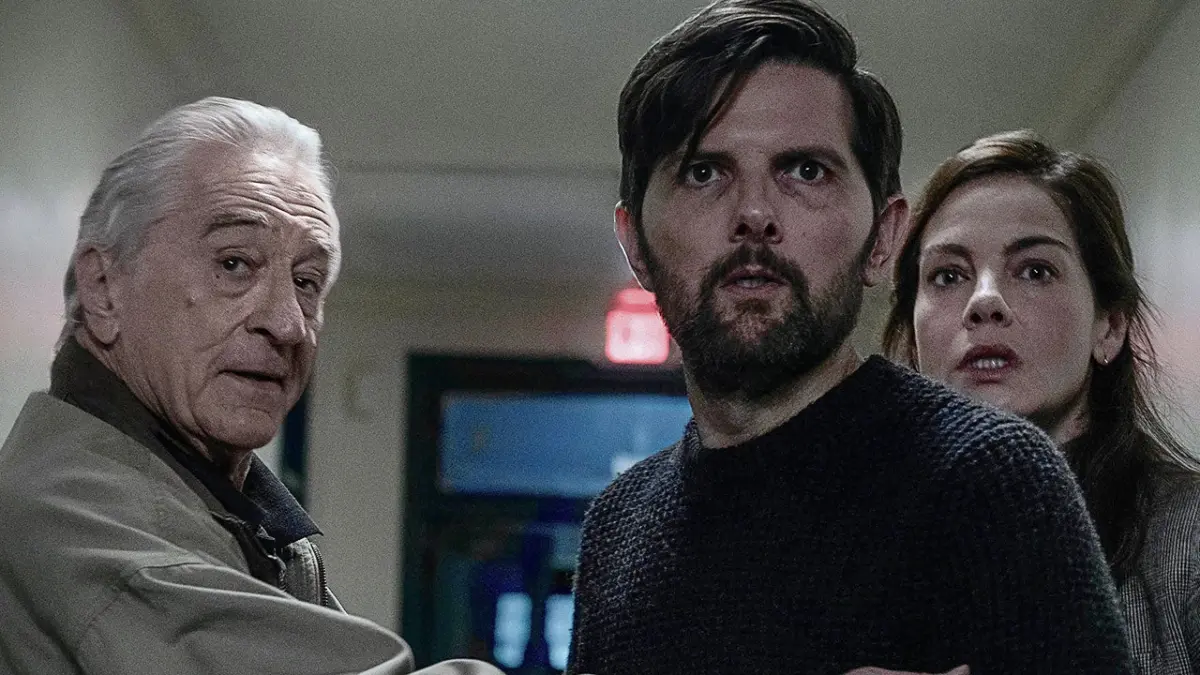
That father figure is brought to life by Robert De Niro, who brings his trademark gravitas to the role of Pete Willis. De Niro portrays Willis as a hollowed-out shell of a man, haunted by the ghosts of his past investigations. The scenes shared between Scott and De Niro crackle with authentic tension, exploring the heavy cost of obsession and emotional neglect. However, because the script chooses to spend valuable screen time on sprawling side stories and extraneous supporting characters, these central relationships—Tom and Pete, Jake and Tom, and Willis and his jailed nemesis—are ultimately short-changed. They never quite receive the deep narrative real estate required to leave a lasting emotional imprint.
Michelle Monaghan rounds out the primary trio as Detective Amanda Beck. Monaghan plays the role with gritty determination, acting as the stabilizing bridge between the fractured Kennedy men and the institutional pressures of the active police investigation. While her character partnership with Willis relies on well-worn cinematic contrivances, Monaghan commands the screen during her procedural sequences, injecting much-needed momentum into the investigation scenes.
Future Outlook and Final Verdict
The Whisper Man arrives on Netflix at a time when audiences have grown accustomed to elevated horror and psychological thrillers that continuously reinvent the genre—from the subversive storytelling of Ari Aster to the grounded, gritty prestige dramas populating streaming platforms. In that landscape, The Whisper Man often feels like it was unearthed directly from a 1990s thriller time capsule.
Retro aesthetics and fast pacing can carry a project far, but they cannot entirely mask a shaky foundation. The film serves up service-level direction, entertaining moments of high tension, and a handful of memorable, scene-chewing interactions between Hollywood heavyweights. Yet, it ultimately buckles under the weight of its unexplored narrative threads, illogical twists, and a script that struggles to balance its high-concept terror with grounded emotional stakes.
Final Verdict: 6/10 ("Okay")
Though it features strong actors and capable direction, The Whisper Man delivers little mystery or terror. The core ideas are enough to unsettle the mind, but the script and execution feel like echoes of another era. Multiple plot conveniences and detours get in the way of deep connection with the central characters, and its most disturbing moments ultimately border on incoherence. It is a passable watch for thriller completionists, but it leaves its greatest potential frustratingly unfulfilled.