The cutting-edge boundaries of real-time computer graphics have always been defined by a constant tug-of-war between raw performance and artistic fidelity. For years, Nvidia’s Deep Learning Super Sampling (DLSS) technology has stood at the vanguard of this struggle, using machine learning to intelligently upscale lower-resolution renders, thereby boosting frame rates without drastically compromising visual integrity. However, the graphics hardware landscape was recently thrown into a state of both fascination and alarm when an unreleased, highly experimental iteration—colloquially and unofficially referred to in developer circles as DLSS 5—escaped containment ahead of any formal corporate announcement.
Discovered within newly leaked dynamic-link libraries (DLLs), this early build didn’t take long to find its way into the hands of intrepid modders and hardware enthusiasts. Eager to push boundaries, these early adopters immediately began injecting the experimental framework into a wide array of existing PC titles. The resulting visual phenomena have ranged from the delightfully absurd to the genuinely disconcerting.
Unlike traditional upscaling models designed to preserve an artist’s original pixel intent, DLSS 5 leans heavily into generative AI image synthesis. The technology attempts to actively "improve" and detail the artwork it touches in real time, leveraging models that echo the aesthetic of typing "photorealism" into a generative text-to-image prompt.
As screenshots and video comparisons flood community hubs like Reddit, ResetEra, and dedicated Discord servers, the gaming community finds itself deeply polarized. While some players celebrate the newfound skin textures and simulated depth added to otherwise flat character models, others recoil at what they perceive as an invasive layer of synthetic "AI slop" stripping away authentic artistic direction. This comprehensive report examines the timeline of the leak, the starkly mixed community reception, the technical mechanics driving the controversy, and what this unexpected preview means for the future of interactive entertainment.
Detailed Chronology: From DLL Discovery to Wild Community Experimentation
The saga of the DLSS 5 leak unfolded with rapid, almost cinematic pacing, highlighting just how quickly the modern PC modding community can mobilize around raw software code.
Phase 1: The Discovery
The entire phenomenon began quietly when eagle-eyed data miners and modders discovered experimental DLL files referencing an unannounced version of Nvidia’s software package. While Nvidia had not yet communicated any roadmap regarding a fifth-generation architecture—let alone one featuring heavy generative integration—the mere presence of the files was enough to spark curiosity. Within hours of the initial file discovery, tech-savvy enthusiasts realized the binaries could be manually forced into existing directories of games supporting earlier DLSS iterations.
Phase 2: Wild-West Experimentation
Free from constraints, guardrails, or official documentation, users began testing the experimental DLLs across a sprawling catalogue of blockbuster PC titles. Because the software was never meant to be deployed publicly in its current state, it lacked proper optimization profiles for the vast majority of engines it encountered.
Modders tossed the technology into everything from stylized Japanese role-playing games to expansive Western open-world epics. The immediate visual feedback loop on platforms like the RenoDX Discord server and various gaming forums turned into an instantaneous content firehose. Users shared side-by-side comparisons showcasing wildly divergent outcomes—some praising the sudden injection of fine micro-details, others laughing at characters mutated by bizarre algorithmic interpretations.
Phase 3: The Memeification of "Claude Strife"
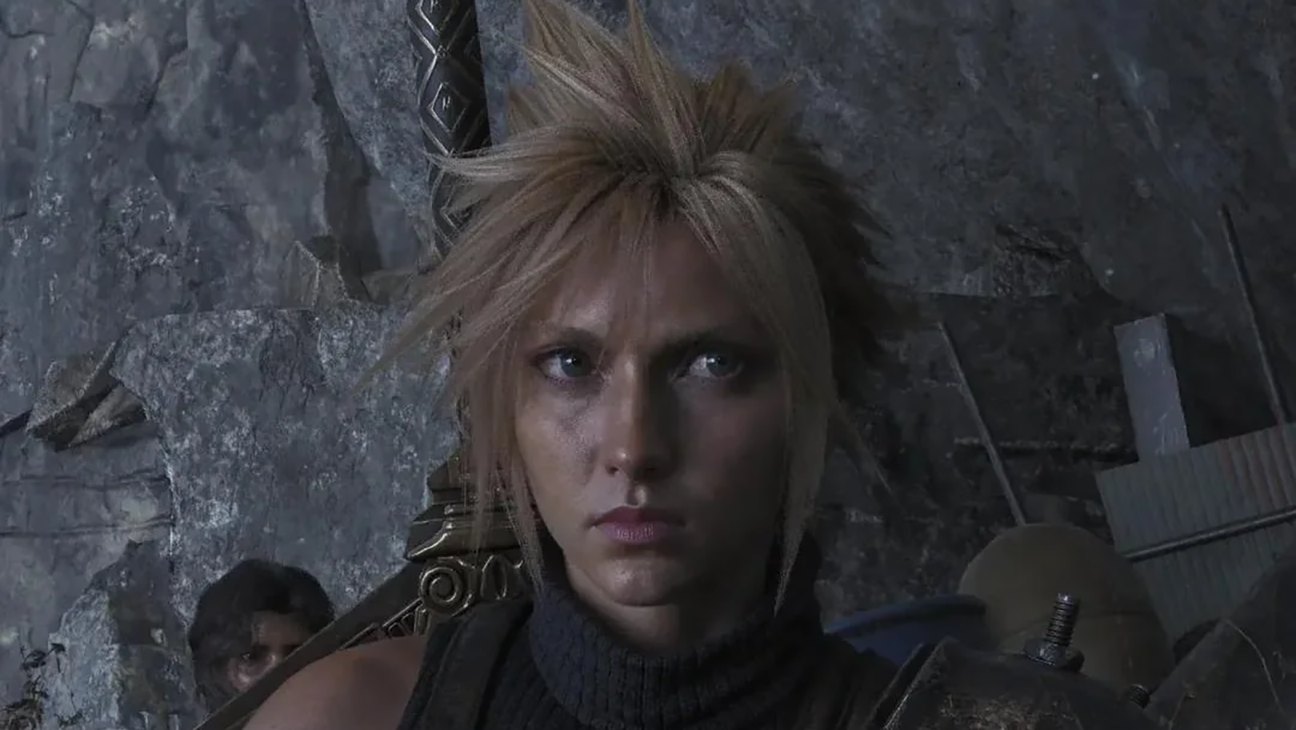
Chief among the early viral artifacts was a heavily modified screenshot of Square Enix’s Final Fantasy 7 Rebirth, featuring the game’s iconic protagonist, Cloud Strife. Processed through extreme settings of the experimental DLSS 5 build, the character’s traditionally stylized, anime-adjacent features were warped by generative algorithms into an hyper-realistic, slightly uncanny valley countenance.
Dubbed "Claude Strife"—with community credit widely attributed to user Brian Bucklew—the image quickly became the poster child for the leak. It underscored the fundamental mismatch between deep learning generative models trained on real-world photography and the deliberate, highly stylized artistic intent of Japanese role-playing character design.
Technical Mechanics: How DLSS 5 Diverges From Its Predecessors
To understand why the gaming community is reacting so strongly to these leaked experiments, one must examine the fundamental architectural shift between traditional DLSS and the generative approach exhibited in these leaked files.
Traditional DLSS (spanning iterations 1 through 3.5, and frame generation variants) fundamentally operates as an advanced reconstruction engine. It takes temporal data, motion vectors, and lower-resolution input buffers, using tensor cores to reconstruct a crisp, high-resolution image that remains deeply faithful to the developer’s original art direction. The goal has always been clarity and performance without altering the core aesthetic.
In stark contrast, the experimental tech found in the leaked DLSS 5 files behaves less like a reconstructive lens and more like an active, real-time image generator. When applied to game assets, the model attempts to "fill in the blanks" using broad generative training data. Instead of deducing where a pixel should go based on neighboring frames, it introduces brand-new pixel data designed to look "more realistic" by human photographic standards.
The Unintended Aging and Texturing Effects
As modders applied the code to various titles, several distinct behavioral quirks of the experimental software became apparent:
The Forced Photorealism Filter: The algorithm relentlessly applies skin pores, subsurface scattering approximations, and studio-lighting highlights to surfaces that were intentionally designed to look smooth, painterly, or stylized.
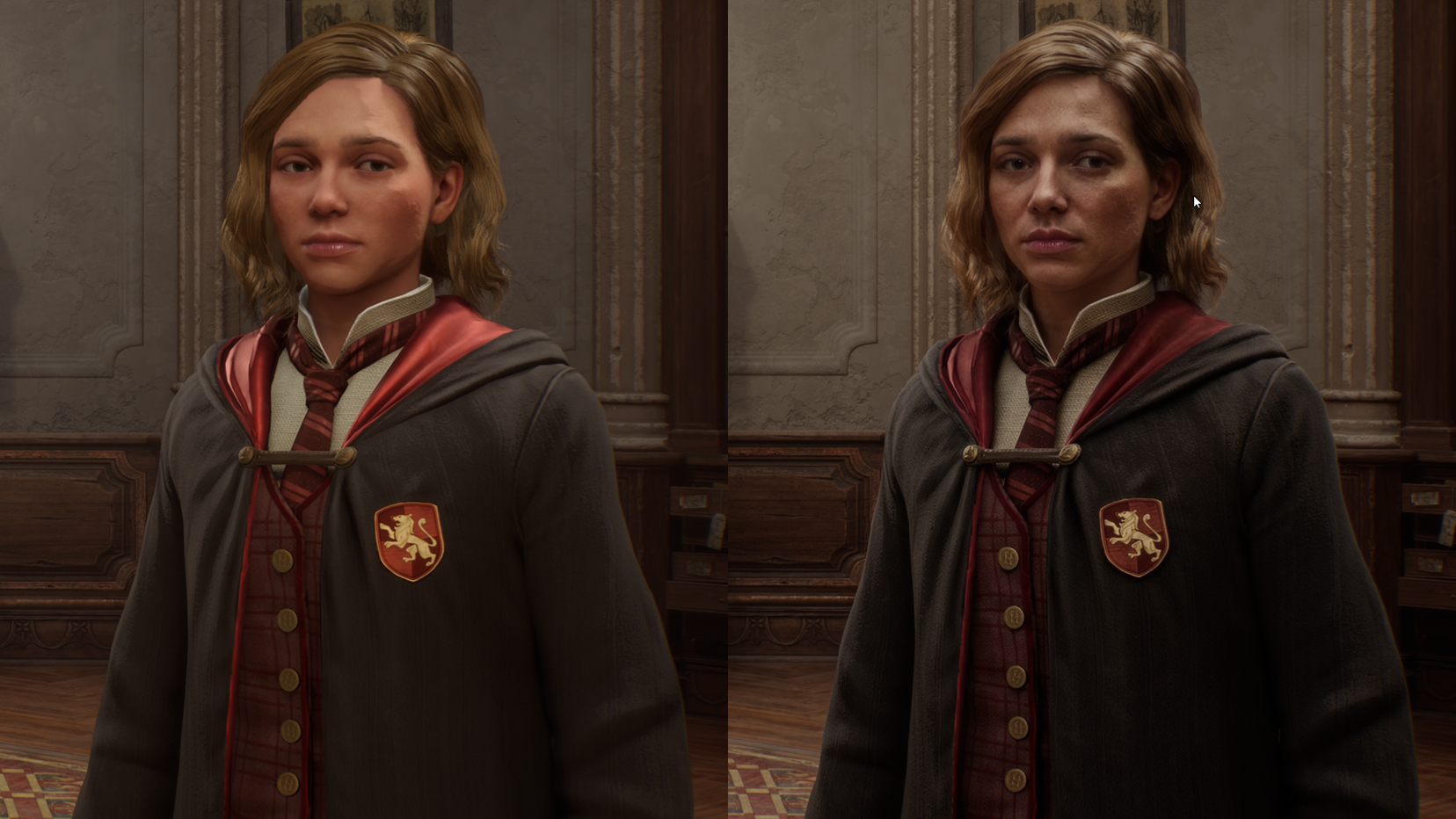
Involuntary Aging: Characters in games like Hogwarts Legacy and various sci-fi titles frequently emerged looking like weathered adults. As one user aptly joked in a RenoDX Discord exchange, a standard student character suddenly resembled a "35-year-old divorce attorney" due to the aggressive rendering of jawlines, cheek separations, and tired eye textures.
Dour Emotional Shifts: Neutral facial expressions rendered through the generative lens frequently took on an unnaturally dour, exhausted, or grim appearance, as the AI mistook subtle facial geometry for deep wrinkles and stress lines.
Supporting Context & Metrics: Where It Works vs. Where It Fails
While stylized titles like Final Fantasy 7 Rebirth yielded comedic or unsettling body horror results, the community quickly discovered that the technology’s success rate heavily depends on the source material’s native art style.
The Sci-Fi Redemption Arc: Starfield
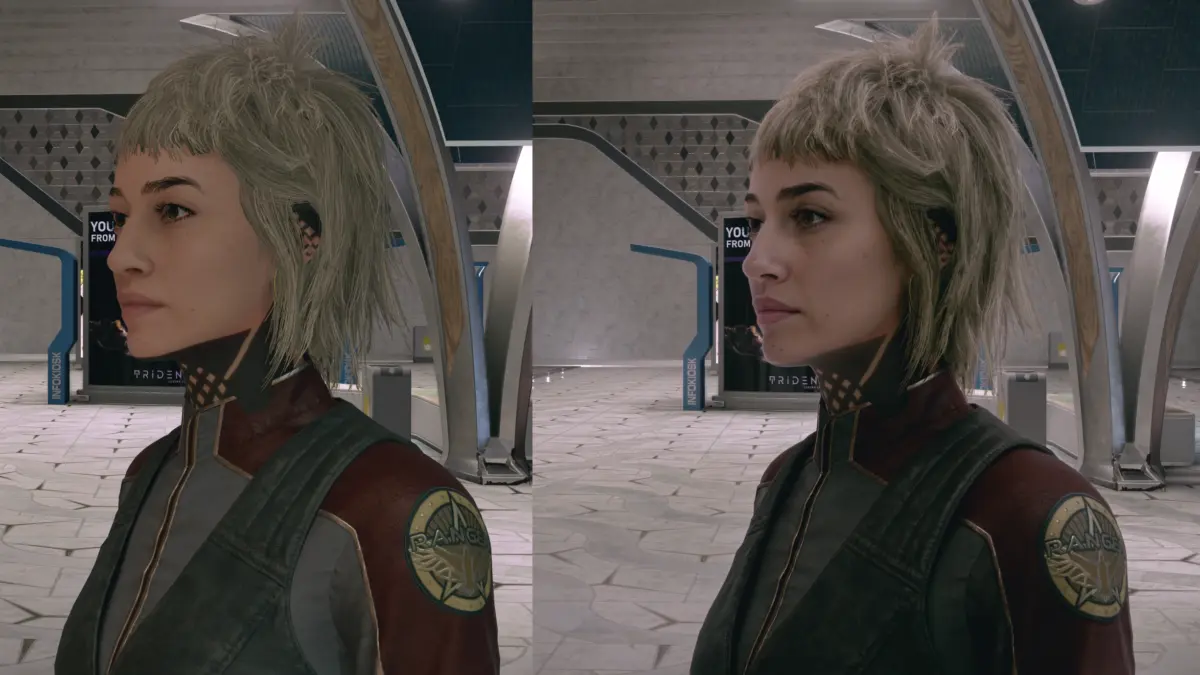
Paradoxically, not all early tests were total disasters. In titles featuring vast, open-world sci-fi aesthetics with historically flat or wax-like character shading—such as Bethesda’s Starfield—properly tweaked settings produced surprisingly compelling outcomes.
When applied to character models that traditionally suffered from untextured skin or poor lighting response, the experimental DLSS 5 model occasionally managed to inject genuine volume, depth, and tactile realism. Side-by-side comparisons shared by community members showed faces gaining organic warmth and definition that standard engine renderers struggled to achieve without heavy manual modding.
Community Breakdown Metrics (Based on Forum and Discord Sentiments)
Game Category / Art Style
Primary Community Reaction
Visual Outcome
Stylized / Anime (e.g., FF7 Rebirth)
Outrage, Humor, Disbelief
Uncanny valley mutations, "Claude Strife" effect, loss of original artistic identity.
Characters aged up drastically, unintended harsh facial contours.
Official Statements and Industry Silence
As of this writing, Nvidia has maintained an official silence regarding the leak. Representatives for the company have declined to comment on the origin of the DLL files, the specific capabilities of what users are calling "DLSS 5," or whether the code represents an internal research branch, a discarded prototype, or an early foundation for future hardware generations.
This corporate radio silence has only served to amplify speculation. Industry analysts note that major hardware manufacturers frequently test aggressive generative pipelines behind closed doors to evaluate their performance impact on upcoming GPU architectures (such as rumored post-RTX 50-series hardware). However, releasing or leaking such tech prematurely exposes a company to severe PR friction, particularly given the current cultural sensitivity surrounding generative AI in creative industries.
Independent game developers and digital artists have been less reticent. Across social media platforms like Bluesky and X (formerly Twitter), several developers voiced deep concern over technologies that override developer-authored textures and shaders in real-time.
"When you spend years crafting a specific visual language, color palette, and character design philosophy, seeing a black-box algorithm smear generic studio-lighting textures over your work isn’t impressive—it’s insulting," noted one veteran technical artist working in AAA development, who requested anonymity.
Future Outlook: A Blessing or a Curse for Interactive Entertainment?
The unauthorized emergence of experimental DLSS 5 serves as a fascinating and chaotic window into the near future of PC gaming graphics. It forces both developers and consumers to confront an uncomfortable philosophical question: At what point does technological enhancement cross the line into artistic vandalism?
For purists, the technology represents the ultimate slippery slope—a future where human artistry is merely a low-resolution prompt fed into a machine learning black box that spits out a homogenized, hyper-realistic, yet utterly soulless coat of paint. To these critics, the uncanny valley results seen in Final Fantasy 7 and Hogwarts Legacy are warning signs of an industry abandoning unique aesthetic expression in pursuit of a dull, uniform standard of "realism."
Conversely, technological optimists view these growing pains as an inevitable part of the R&D cycle. Just as early implementations of ray tracing caused massive performance drops and quirky artifacts, and early upscaling introduced shimmering and ghosting, bleeding-edge tech is messy during its infancy. If fine-tuned, give-and-take generative tools could theoretically empower developers to achieve unprecedented levels of visual fidelity without requiring thousands of hours of manual texture work.
Ultimately, the leaked DLSS 5 files have pulled back the curtain on a technological direction that Nvidia was likely hoping to introduce on its own terms. Whether this generative approach becomes the gold standard of future graphics pipelines or remains a cautionary tale of AI overreach will depend entirely on how hardware manufacturers balance technological capability with artistic preservation in the years to come.