Executive Overview
Few titles in the history of interactive entertainment have redefined spatial freedom and player agency quite like Nintendo’s 2017 masterpiece, The Legend of Zelda: Breath of the Wild. Upon its launch alongside the Nintendo Switch, the game shattered conventional open-world paradigms. Rather than steering the player down a tightly scripted corridor of objectives, it dropped Link onto the Great Plateau and whispered a singular, revolutionary prompt: Go anywhere, do anything, solve any problem however you see fit.
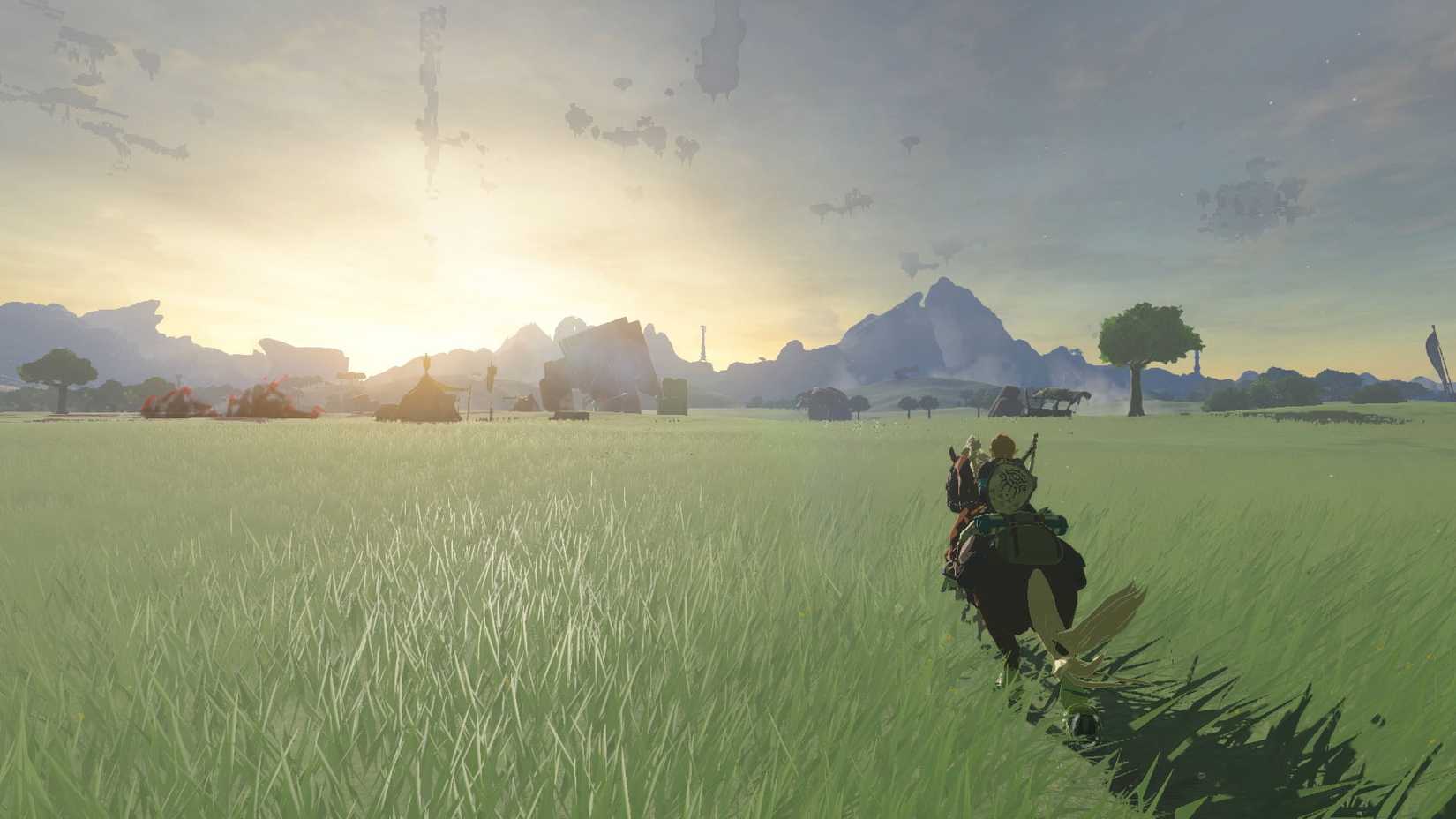
Years after its initial release—and even following the monumental success of its sequel, Tears of the Kingdom—millions of players continue to chase the elusive dragon of that first playthrough. The cognitive dissonance of stepping out of the Shrine of Resurrection, gazing across the sprawling, untamed expanse of Hyrule, and realizing that every distant mountain peak, ruin, and horizon is entirely traversable is a sensation uniquely difficult to replicate. Once a player masters the game’s mechanics, internalizes the locations of Korok seeds, and optimizes weapon durability management, the pristine wilderness of Hyrule can occasionally begin to feel predictable.
Yet, the community has refused to let the game languish in familiarity. Through self-imposed rulesets, experimental roleplay, and strict behavioral constraints, veteran players are engineering entirely new paradigms of gameplay. This investigative feature explores the most compelling replay strategies devised by the community—transforming Hyrule from a conquered playground back into a perilous, mysterious frontier.
Detailed Chronology: The Evolution of Breath of the Wild Replay Culture
To understand why players are inventing radical new ways to play Breath of the Wild, one must examine how the game’s cultural footprint has evolved since March 2017.
Phase 1: The Honeymoon Period (2017–2018)
In the immediate aftermath of launch, the gaming public was consumed by raw discovery. Players shared clips of ingenious physics-engine exploits, bizarre magnesis puzzles, and terrifying encounters with Lynels. The primary objective was mere survival and exploration. Guides focused on finding all 120 shrines, upgrading armor sets to their maximum tiers, and unlocking the Master Sword.
Phase 2: Speedrunning and Optimization (2018–2020)
As the dust settled, the speedrunning community dissected the game down to its code. Categories like "Any%" evolved from hours-long endeavors into blistering sprints lasting less than thirty minutes, heavily reliant on menu-overloading, wind-bombs, and precise physics manipulation. Simultaneously, hardcore players began developing baseline "challenge runs," such as three-heart runs or pacifist playthroughs, seeking friction in a world where Link had arguably become too powerful.
Phase 3: The Roleplay and Immersive Era (2020–Present)
As anticipation peaked and subsequently faded for Tears of the Kingdom, the community pivoted toward holistic, experiential challenges. Rather than simply rushing to the end credits as fast as possible or exploiting glitches, players began treating Hyrule as a living, breathing ecosystem that required localized rulesets. This era birthed the nuanced, region-locked, and dietary-restricted playthroughs that define modern Breath of the Wild longevity.
Supporting Context & Metrics: Deconstructing the Challenge Meta
Why do these self-imposed rules work so effectively from a psychological and game-design perspective? Breath of the Wild was architected as a systemic sandbox. When players strip away core systemic pillars—such as fast travel, currency, or healing items—they force the game’s underlying systems to interact in ways the developers anticipated theoretically, but rarely expected players to rely upon exclusively.
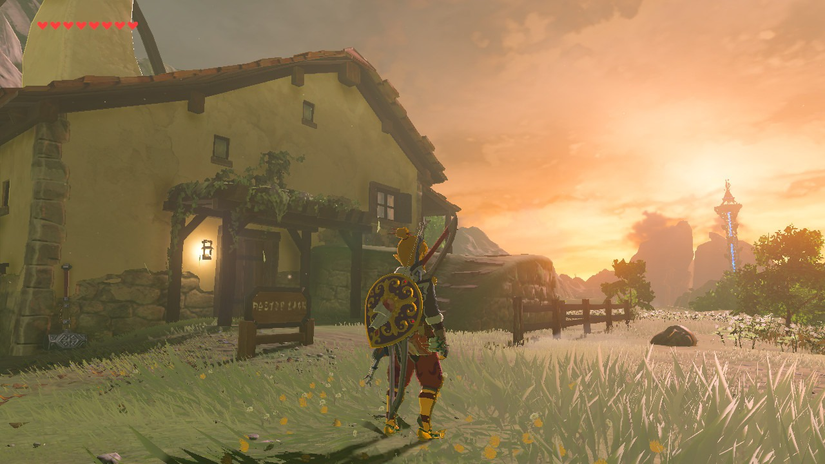
Below is an analysis of the premier replay strategies currently dominating the community meta, classified by their core mechanic disruption:
1. Cap Your Hearts and Stamina
- The Rule: Refuse to spend a single Spirit Orb on heart containers or stamina upgrades for the duration of the campaign.
- Mechanical Impact: This functions as the game’s missing manual difficulty slider. By keeping Link at tutorial-level vitality, standard encounters with low-tier enemies (such as Blue Bokoblins or Keese swarms) retain their lethality.
- Playstyle Shift: Players must heavily integrate stealth tactics, master precise dodging and parrying, and prepare elaborate, high-buff banquets to survive boss encounters. When combined with Master Mode, this strategy turns Breath of the Wild into a brutal survival horror game.
2. Commit to Permadeath for Horses and Canine Companions
- The Rule: Keep a designated horse and/or Wolf Link (unlocked via amiibo) active at all times. If either companion perishes, the player must immediately reload their last save file.
- Mechanical Impact: Re-evaluates the utility of equine travel. Once players acquire the paraglider and fast-travel networks, horses are frequently abandoned.
- Playstyle Shift: Introducing mortal companions forces high-stakes tactical planning. Attempting to cross treacherous terrain—such as scaling a snowy cliff face on horseback—becomes a genuine risk management exercise, altering navigation routes entirely.
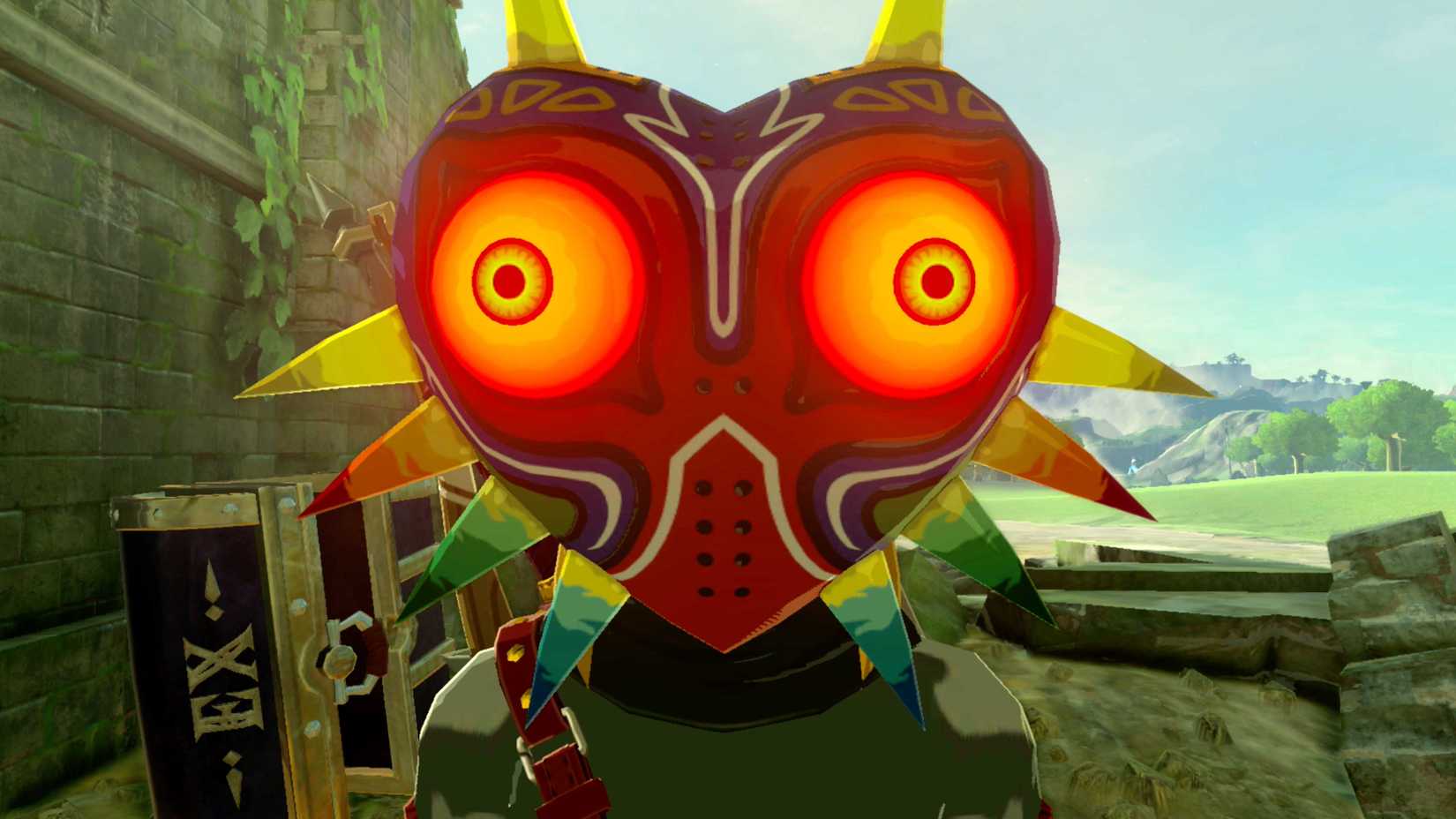
3. Live by Majora’s Mask Rules
- The Rule: Every three in-game days, the player must strip away all gear (retaining only arrows and base armor), warp back to the Great Plateau, and restart their territorial expansion.
- Mechanical Impact: Imposes an artificial temporal constraint on an otherwise timeless sandbox, mimicking the clockwork anxiety of Termina.
- Playstyle Shift: Expeditions must be meticulously planned. Players must weigh the risk of pushing deep into enemy territory against the looming deadline of losing their accrued inventory and positioning.
4. Cut Off Every Merchant in Hyrule
- The Rule: Zero interaction with NPCs for buying, selling, or trading. Survival is strictly confined to scavenging, hunting, and gathering.
- Mechanical Impact: Renders Rupees entirely obsolete, forcing absolute reliance on the game’s survival crafting systems.
- Playstyle Shift: Veteran players who typically ignore foraging must master the wilderness. Certain high-tier armor sets and weapon upgrades become permanently locked off, radically altering combat efficiency.
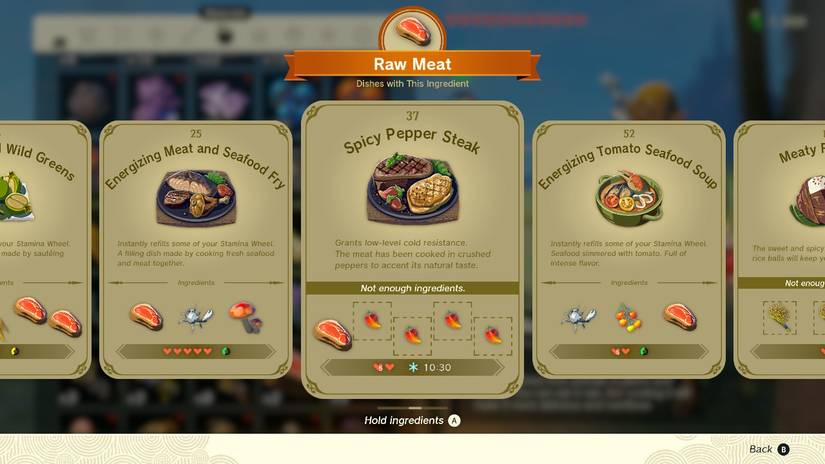
5. Eat Like a Carnivore
- The Rule: Strict dietary restriction permitting only meat, fish, eggs, and derived recipes. No fruits, vegetables, or grains.
- Mechanical Impact: Eliminates access to many of the game’s most potent plant-based stat-buffing and healing foods.
- Playstyle Shift: Shifts the logistical burden toward dangerous hunting expeditions and high-risk fauna harvesting during major engagements.
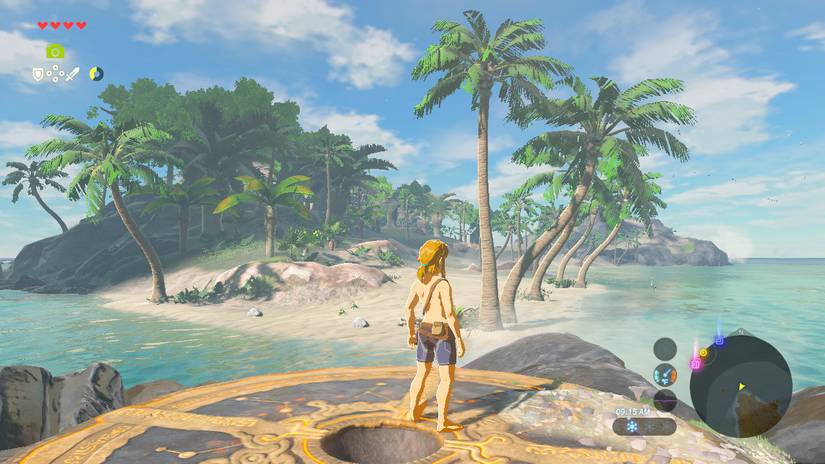
6. Turn All of Hyrule into Eventide Island
- The Rule: Every time Link crosses a regional border into a new tower’s domain, he must strip down to his undergarments and empty his inventory entirely.
- Mechanical Impact: Recreates the beloved, tension-filled design philosophy of Eventide Island across the entire map.
- Playstyle Shift: Prevents players from coasting on overpowered gear acquired hours prior. Every region demands localized mastery, forcing engagement with whatever flora, fauna, and crude weapons are immediately at hand.
7. Skip the Divine Beasts
- The Rule: Depart the Great Plateau and immediately make a direct bee-line for Hyrule Castle to face Ganon.
- Mechanical Impact: Bypasses all four regional champion quests and dungeon bosses.
- Playstyle Shift: A high-speed, high-difficulty speedrunning-inspired path that subverts narrative expectations, resulting in surreal contextual dialogue and immense bragging rights.
8. Write Your Own Linear Story
- The Rule: Disregard pre-existing meta-knowledge of the main questline. Treat the very first NPC comment, quest trigger, or landmark encountered as an absolute, binding priority.
- Mechanical Impact: Breaks open the psychological conditioning of traditional open-world checklists.
- Playstyle Shift: Players frequently find themselves completely absorbed in localized village politics and side content for dozens of hours, entirely ignoring the apocalyptic threat looming over Hyrule Castle.
9. Cosplay as Your Favorite Champion
- The Rule: Select a specific Champion (Urbosa, Daruk, Mipha, or Revali) and strictly mimic their combat philosophy and regional territory for as long as possible.
- Mechanical Impact: Imposes rigid stylistic limitations (e.g., Revali disciples using exclusively bows; Daruk followers restricted to heavy two-handed weapons).
- Playstyle Shift: Forces mastery over neglected weapon classes and elemental affinities, upending standard combat loops.
10. Cook Your Way Across the Map
- The Rule: Before departing any distinct region, the player must craft a signature culinary dish utilizing only ingredients native to that specific zone.
- Mechanical Impact: Transforms a utilitarian survival mechanic into a culinary travelogue.
- Playstyle Shift: Eliminates reliance on generalized, overpowered meta-recipes, forcing experimentation with localized flora and fauna under campfire conditions.
Official Statements and Design Philosophy
While Nintendo’s EPD development team crafted Breath of the Wild to accommodate infinite playstyles, producers like Eiji Aonuma have frequently expressed astonishment at how deeply players immerse themselves in the sandbox. In past retrospective interviews discussing the transition from linear Zelda design to open-air freedom, Aonuma noted that the primary goal was to allow players to "write their own story" within the geography of Hyrule.
Game Director Hidemaro Fujibayashi has similarly emphasized that the emergent gameplay loops—where chemistry engines and physics overlap to create unexpected outcomes—were intentionally designed without a single "correct" path. The fact that fans must invent increasingly harsh restrictions (such as permadeath or carnivore diets) speaks not to a flaw in the game’s original balancing, but rather to the staggering durability of its underlying systemic architecture.
Future Outlook
As the industry looks toward future hardware iterations and subsequent entries in the Legend of Zelda franchise, the cultural legacy of Breath of the Wild remains firmly anchored in its revolutionary approach to player freedom.
For veterans yearning to recapture the electric uncertainty of their initial journey across Hyrule, vanilla playthroughs may no longer suffice. By embracing these rigorous, imaginative replay strategies, players are not merely revisiting a classic game—they are actively re-engineering it. Whether you choose to limit your vitality to three hearts, strip yourself bare at every regional border, or commit to a strict culinary tour of the wilderness, Hyrule stands ready to be conquered anew. Choose your ruleset wisely, and prepare to be humbled by the wild once more.