
Executive Overview
YouTube has firmly planted its flag in the world’s living rooms, shifting its strategic center of gravity from mobile screens to the 65-inch television. For content creators, brands, and digital marketers, this is not merely a change in consumer behavior; it is a fundamental restructuring of the digital video landscape.
As living room viewing dominates, audience expectations, technical requirements, and content consumption patterns are undergoing a massive evolution. In a comprehensive discussion co-created by digital expert Liron Segev alongside Michael Stelzner and Jerry Potter, industry leaders laid out the seismic shifts happening on the platform. From navigating the psychological shift of the couch audience to leveraging AI-powered search tools like "Ask YouTube" and implementing two-click e-commerce, marketers must adapt their strategies to thrive in the era of Connected TV (CTV).
This comprehensive report breaks down the core pillars of YouTube’s living room revolution, offering an investigative look at what marketers must change today to capture tomorrow’s audiences.
The Paradigm Shift: Why YouTube on TV Changes Marketing Forever
YouTube’s leadership has made its long-term vision unambiguous: connected televisions are the ultimate destination. For a growing number of digital channels, the TV screen has already surpassed mobile and desktop to become the primary traffic source. This transition forces marketers to reckon with a psychological phenomenon that fundamentally alters viewer engagement.
The Mobile Mindset vs. the Couch Psychology
When a consumer watches a video on a smartphone during a crowded train commute, their tolerance for friction is high and expectations for production quality are low. They are distracted, standing or sitting in a transit car, and interacting with a tiny screen.
Conversely, a viewer lounging on a couch after finishing a prestige streaming-service documentary enters a completely different cognitive state. When they flip over to YouTube, their brain unconsciously applies the high production standards of traditional studio media to individual creators, even though they consciously know they are watching a digital marketer or independent channel.

According to Liron Segev, however, adapting to the TV screen does not require chasing Hollywood-level sterile perfection. Daily vloggers and independent creators have spent years training audiences to value authenticity, shaky camera work, and raw humanity over over-produced gloss. As artificial intelligence makes polished visuals ubiquitous, human authenticity will likely become an even more valuable currency. The real key to success is situational awareness: understanding where your audience is physically sitting and meeting those contextual expectations.
The Great Perspective Check
The single biggest strategic error Segev observes among marketers is a failure to audit their own content from a TV viewing distance. Most creators and brands review their videos exclusively on desktop monitors or mobile devices prior to publishing.
Few ever sit back on a living room couch, distanced from a 65-inch screen, to experience their content the way an actual TV viewer does. Conducting this free perspective check instantly reveals framing flaws, text readability issues, and audio imbalances that simply vanish on smaller displays.
Low-Hanging Fruit: Banners, Thumbnails, and First Impressions
Optimizing for the living room begins with three immediate adjustments:
- The Channel Banner as Real Estate: Most marketers treat channel art as an afterthought. On TV screens, however, banners display expanded negative space at the top and bottom that remains cropped out on mobile and desktop views. YouTube provides specific dimension guidelines during the upload process; smart marketers use these outer regions for complementary branding and secondary messaging visible exclusively on CTV displays.
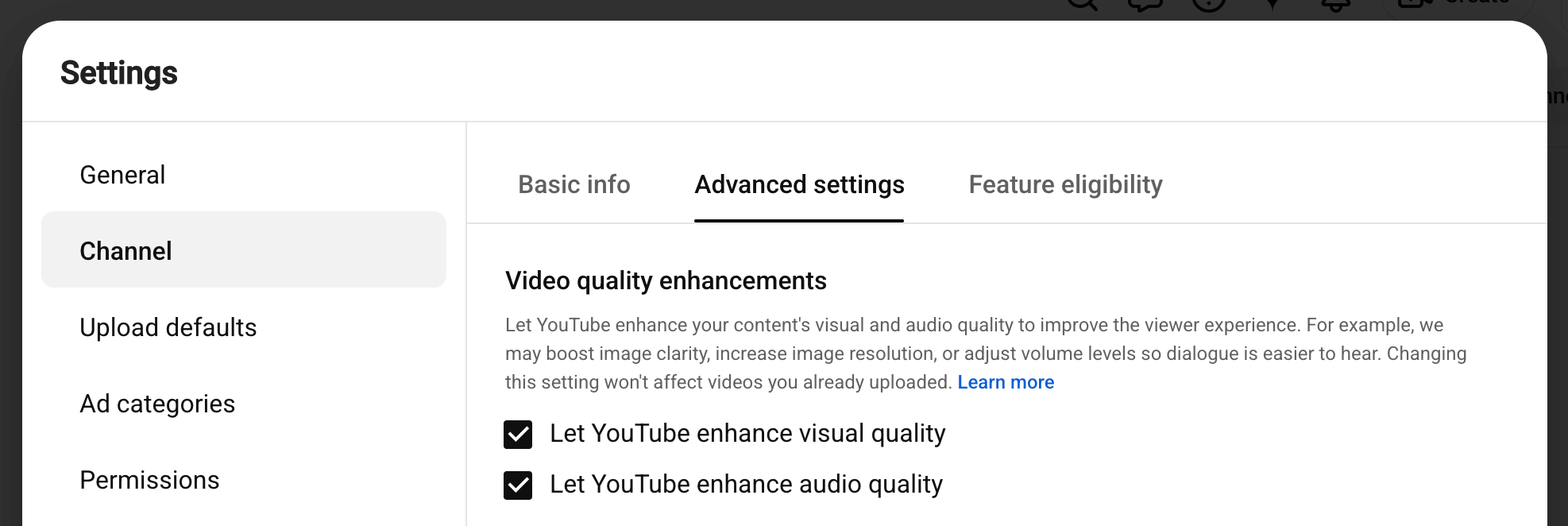
- Thumbnails in 4K Resolution: YouTube expanded its thumbnail file size limit from 2 megabytes to 50 megabytes, accommodating high-resolution 4K uploads. Yet, Segev warns that a high-resolution version of a cluttered, confusing thumbnail remains a bad thumbnail. The foundational rule persists: a thumbnail’s singular duty is to halt the scroll. Clean layouts, bold color palettes, and minimal text are essential across every screen format. Additionally, YouTube has introduced automated AI upscaling for videos uploaded below 1080p, though brands retain the right to disable this feature to maintain strict quality control.
- Immediate Delivery on Title and Thumbnail Promises: Whatever hook a title and thumbnail establish, the video must deliver upon it immediately. Front-loading the core value proposition satisfies the impatient couch viewer and aligns with AI discovery algorithms, which weigh the first 100 words of a transcript heavily.
Content Evolution: Crafting Longer, Episodic Experiences for the Living Room
The days of frantic, hyper-edited 3-minute clips reigning supreme across all formats are evolving. TV viewers naturally gravitate toward longer-form, immersive media. Ten-minute runtimes—once viewed as a high-water mark or stretch goal for digital marketers—are now merely the starting baseline for TV-optimized content.
The Rise of "Infotainment" and Relaxed pacing
The data validates this shift, matching the relaxed posture of the couch consumer—often lounging with a beverage in one hand and a smartphone in the other, searching for a deep narrative to settle into. Segev advocates for an "infotainment" approach. While the content must remain deeply informative, it requires a more relaxed pacing that encourages viewers to feel as though they are hanging out with the creator rather than sitting through a rigid lecture.
This environment welcomes humanizing moments that old-school YouTube editors would routinely slash on the cutting room floor: minor mistakes, genuine bloopers, or unscripted asides. Traditional broadcast media, such as large-scale talent competitions, have similarly pivoted toward showing behind-the-scenes realities rather than heavily scripted skits, reflecting the broader cultural shift toward raw authenticity.
View the financial scope of this opportunity: brands routinely invest millions of dollars into 30-second broadcast commercials to capture brief attention, whereas a well-optimized YouTube channel can place a brand in front of a global audience every single day, with content remaining discoverable in perpetuity.
Thinking Episodic, Not One-Off
Content strategies must pivot away from isolated, transactional "how-to" clips toward sweeping, episodic formats. Subscribers tune in because they want to follow a narrative arc, not simply because they needed a rapid, three-step fix for an isolated technical glitch.
Furthermore, because living room viewers are frequently multitasking with secondary devices, creators must weave natural re-hooks—brief, periodic narrative recaps—into longer videos to pull wandering attention spans back to the screen. Phrasing these transitions naturally (e.g., "We’ve just covered part A; let’s dive into part B now") keeps the audience engaged without sounding condescending.
Analytics and Audience Measurement: Decoding YouTube’s Unique Reach Metric
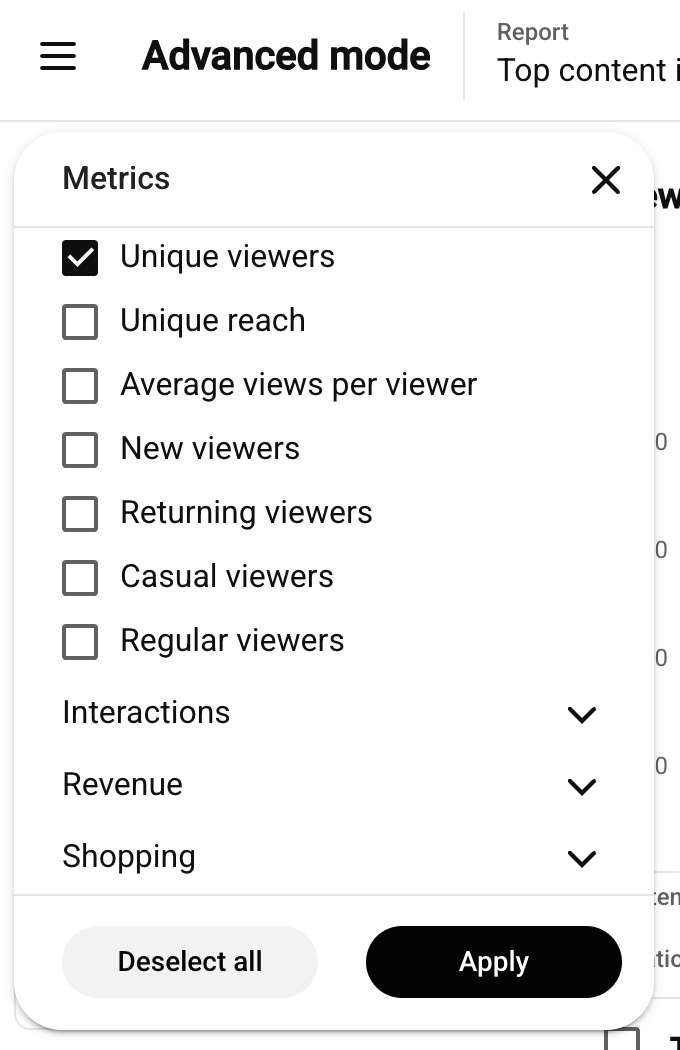
Evaluating performance solely through traditional view counts is no longer sufficient in a multi-viewer household. To bridge this data gap, YouTube has rolled out a powerful new analytics metric: Unique Reach.
Understanding Unique Reach
Unique Reach estimates the aggregate number of human beings watching a video, explicitly factoring in co-viewers sharing a single TV screen who are not logged into separate individual accounts. While standard unique viewer metrics only tally distinct logged-in profiles, Unique Reach models how many actual bodies are sitting in front of the display at any given moment.
Drawing on contextual signals—such as the time of day (evening hours imply higher household density), device architecture, viewer demographics, and video genre—the metric borrows heavily from the probabilistic modeling long used in traditional broadcast television via Nielsen ratings.
Implications for Marketers and Sponsors
For creators managing brand sponsorships and integrated ad placements, Unique Reach provides a much stronger value proposition during negotiations. A higher reach figure accurately reflects the true multi-viewer household impact of a CTV placement.

However, Segev issues a pragmatic warning for brands evaluating third-party sponsorships: if a video records 5,000 baseline views but boasts 15,000 in Unique Reach, marketers should request both datasets and anchor their valuation primarily to the traditional view count. While Unique Reach is a positive indicator of broad household appeal, it does not mathematically justify tripling a sponsorship financial commitment. Context remains king; family-oriented channels naturally yield high co-viewership ratios, while niche B2B or solo-viewing channels may not.
Cultivating the Communal Experience
Savvy creators are leaning directly into this group-viewing dynamic by scripting dialogue that invites communal participation. Cooking shows, for instance, naturally excel at this by instructing viewers to "get the kids involved" or "gather the team around."
This shifts the traditional one-to-one digital address into an inclusive group experience tailored for the living room. Similarly, live-streaming and live-shopping formats—such as prolonged card-opening broadcasts that run for hours—thrive precisely because viewers remain parked for the collective community experience.
The AI Revolution on CTV: Preparing for "Ask YouTube" and Voice Discovery
Artificial intelligence is rapidly reshaping how users navigate television screens. YouTube is actively expanding Ask YouTube—its Gemini-powered conversational chatbot—across smart TVs, gaming consoles, and dedicated streaming devices.
The Mechanics of Ask YouTube
Ask YouTube allows viewers to leverage their remote control’s microphone button to ask complex questions, retrieve AI-generated answers, and search deep inside video files without ever exiting the YouTube app or reaching for a smartphone.
This evolution draws immediate comparisons to the impact AI Overviews have had on traditional search engine optimization and blog traffic. If a viewer can extract a direct answer from an AI summary, raw view counts for standard tutorials could face downward pressure. Yet, Segev and fellow experts argue that marketers must look past raw vanity metrics. The ultimate objective is not merely accumulating views; it is driving business results. If a brand establishes itself as the trusted authority that AI systems cite as a primary source, leading directly to inbound phone calls and closed customers, that outcome eclipses unmonetized raw traffic.
Multimodal Optimization and Verbal URLs
Because Gemini is a multimodal vision model capable of processing both audio transcripts and on-screen visual data, marketers must adapt their content architecture:
- The First 100 Words: Directly answer core queries within the opening moments of the video transcript to satisfy AI retrieval systems.
- Verbalizing Call-to-Actions: Traditional instructions to check "the link in the description" fail completely on connected TVs where accessing description boxes requires cumbersome navigation. Creators must verbally articulate website URLs and social media handles directly within the audio track so that when Ask YouTube processes a query regarding resources, it can surface the spoken URL immediately.
- Visual On-Screen Data: Lower thirds, graphical text overlays, and visual callouts provide additional signals for Gemini’s vision models to ingest and cite.
Natural-Language Search and FAQ Playlists
Modern AI comprehends contextual intent far beyond rigid keyword matching. Creators should weave natural-language conversational queries directly into their scripts. Rather than stating, "Here are five recommended products," a creator should phrase it as, "My viewer asked me: what are the absolute best five products for this project?"
Furthermore, establishing dedicated Shorts FAQ playlists creates an optimized library of short-form answers. Search-driven discovery provides these bite-sized clips with a powerful long-tail lifespan that far outlasts standard initial algorithmic pushes.
Monetization and the Future: Frictionless E-Commerce in the Living Room
The final frontier of YouTube’s living room push is transactional commerce. With the integration of Buy with Google Pay functionality on connected TVs, YouTube is empowering viewers to purchase featured products and tagged items in just two clicks using their television remote.
Frictionless Checkout for CTV
This capability mirrors the frictionless checkout models popularized by social commerce platforms and streaming ecosystems. For brands selling low-ticket impulse items, branded merchandise, or affiliate-driven products, this represents a seamless new sales funnel.
For high-ticket offerings—such as executive consulting packages or high-end masterminds—a two-click remote checkout is inadequate; those conversions still demand dedicated landing pages, trust-building sequences, and direct sales conversations.
Looking ahead, natural-language voice commerce will soon allow viewers to issue direct voice commands such as "add this item to my shopping list" or "send this link to my phone" while consuming content. With platform data confirming that users consume billions of hours of shopping-related content—a massive share of which occurs squarely in the living room—YouTube is transforming the television screen from a passive viewing portal into an active commercial marketplace.
Future Outlook
The migration of YouTube to the living room is a watershed moment for the digital marketing industry. Brands and creators who cling to legacy mobile-first tactics risk marginalization as audiences settle comfortably onto their couches with larger screens, higher expectations, and AI-driven navigation tools at their fingertips.

To secure long-term market dominance, marketers must execute a comprehensive operational pivot:
- Audit Production Quality: Balance authentic, human storytelling with the polished visual standards expected in a living room environment.
- Embrace Long-Form Episodic Content: Transition from quick, transactional fixes to immersive narratives that capture distracted, multitasking couch viewers.
- Master AI and Voice Discovery: Structure transcripts, visual overlays, and verbal callouts so that multimodal AI engines like Gemini easily index, understand, and cite your brand.
- Capitalize on CTV Commerce: Integrate frictionless purchasing pathways and leverage accurate co-viewership metrics like Unique Reach to optimize sponsorship valuations.
The living room screen belongs to those who adapt. By aligning content strategies with the realities of Connected TV, forward-thinking marketers can turn YouTube’s aggressive platform evolution into their most powerful engine for growth.