By: Entertainment Desk / Investigative Television Reporting
Published: August 31, 2026
Executive Overview
When HBO’s ambitious, high-budget comic book adaptation series Lanterns premiered, it immediately signaled to audiences and long-time DC Comics purists that it would be charting its own distinct path away from traditional source material. However, no creative choice has shocked, fascinated, and polarized fans quite like the narrative curveball thrown in Episode 3, titled "OutKast."
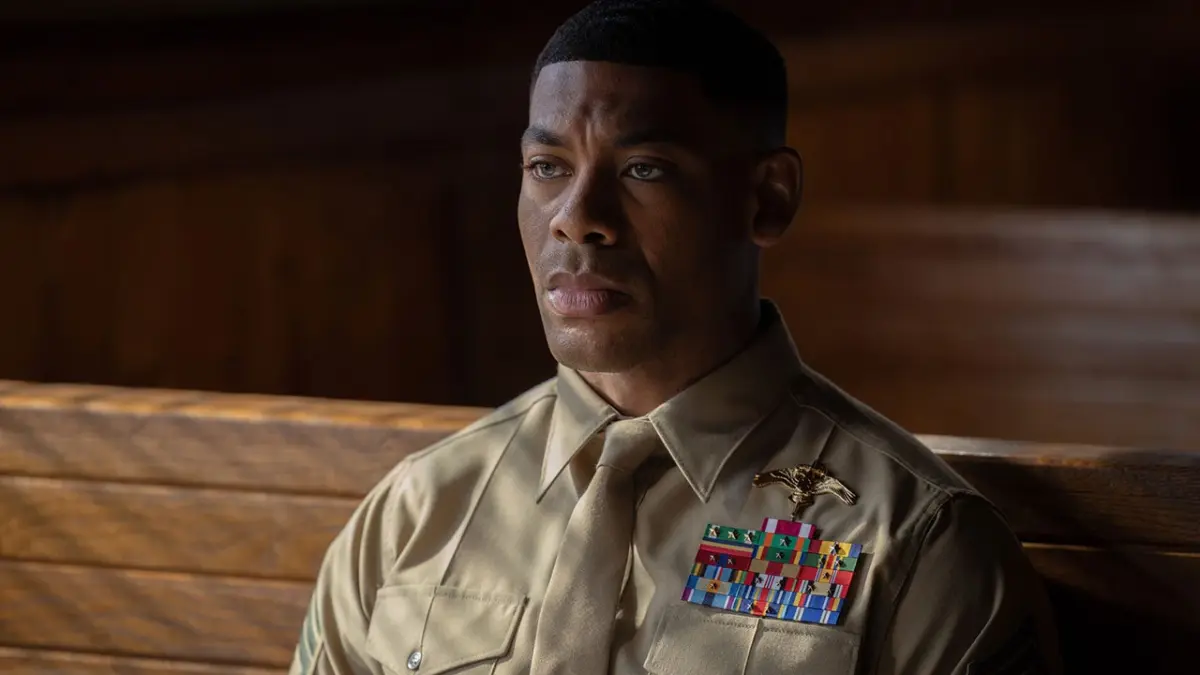
The episode dives headfirst into the haunting, psychologically warped origin story of John Stewart—portrayed in the series by Aaron Pierre. In classic DC continuity, Stewart’s path to becoming a Green Lantern was forged through his background as a U.S. Marine sniper, an architect, and a man of uncompromising moral fortitude who earned his ring through sheer willpower.
HBO’s Lanterns completely upends this framework. In this gritty television universe, the road to becoming a wielder of the universe’s most powerful weapon is paved with extreme psychological conditioning, generational trauma, and a deeply unsettling childhood marked by physical endurance trials, including his parents forcing him to shoot apples off human targets—culminating in a harrowing exercise involving his own mother.
To understand the mechanics behind this massive creative pivot, we examine the production choices, discuss the philosophical underpinnings of the adaptation with showrunner Chris Mundy, and explore how this shocking revision fits into the broader thematic tapestry of the DC Universe’s newest prestige television venture.
Detailed Chronology: Unpacking the Genesis of "OutKast"
To comprehend the narrative gravity of Lanterns Episode 3, one must look closely at the cascading butterfly effect established in the show’s premiere. In the series continuity, John Stewart’s father, John Sr. (played by J. Alphonse Nicholson), was originally offered a Green Lantern ring. However, gripped by overwhelming fear and the crushing weight of the unknown, he passed up the opportunity, clearing the way for Hal Jordan (Kyle Chandler) to claim the ring instead.
This single moment of hesitation alters the trajectory of the Stewart family forever. Consumed by what-ifs and a bitter sense of inadequacy, John Sr. and Bernadette (Nicole Ari Parker) resolve to ensure their son never succumbs to the paralyzing weakness that haunted the patriarch. Rather than fostering a normal childhood, they subject young John Jr. to an unsparing, merciless regimen designed to systematically strip every ounce of fear from his psyche.
This extreme form of parental pressure transforms into the William Tell-esque apple-shooting sequences that shock viewers in the early episodes. By Episode 3, the training has escalated from inanimate objects to high-stakes psychological warfare, forcing a young John to aim a weapon directly at his mother’s head.
According to the creative team behind the series, this radical shift wasn’t a last-minute addition to shock audiences; it was conceptualized in the earliest days of the writers’ room. Showrunner Chris Mundy notes that the core concept of John Sr. being "bubbled"—a term the crew used to describe a person paralyzed by missed potential and the burden of cosmic responsibilities—was locked in early.
The convergence of this domestic obsession with fear and the introduction of the infamous DC lore entities, the Manhunters, allowed the writers to weave a seamless narrative parallel. In the show’s mythology, the Manhunters are ancient, emotionless entities programmed to endlessly solve moral thought experiments, such as the classic "trolley problem." When their absolute adherence to logic and utilitarian calculus proved too frightening even for the Guardians of the Universe, the Manhunters were terminated.
The writers posed a provocative thematic question: What is the actual difference between being mechanically programmed by an artificial intelligence and being relentlessly, ruthlessly parented by humans trying to manufacture a cosmic hero? The answer to that question birthed the terrifyingly disciplined, emotionally scarred John Stewart seen on screen today.
Supporting Context & Metrics: Deconstructing the "Trolley Problem" and Generational Trauma
To fully appreciate the narrative architecture of Lanterns Episode 3, it is vital to analyze the intellectual frameworks driving the writers’ room. The integration of the ethical "trolley problem"—a staple of moral philosophy made famous by thinkers like Philippa Foot—serves as the thematic heartbeat of John Jr.’s upbringing.
In philosophical terms, a trolley problem forces an observer to weigh the value of individual human life against collective survival. It asks whether it is morally justifiable to actively sacrifice one person to save many. For John Sr. and Bernadette, their son’s entire life became a living trolley problem. They were willing to sacrifice his childhood, his psychological well-being, and his sense of safety to forge an instrument capable of protecting the cosmos.
This domestic dynamic reframes the classic "American Dream" through a deeply distorted, dystopian lens. Instead of working hard to achieve financial stability or personal fulfillment, the Stewart household operates like a military black site where emotional vulnerability is treated as a fatal operational defect.
Industry analysts tracking audience reception note that while Lanterns has drawn comparisons to prestige HBO crime dramas like True Detective, its dive into cosmic superhero lore via intimate domestic trauma has sparked intense online discourse. Engagement metrics across major fan forums and review aggregators indicate that Episode 3 produced one of the highest spikes in social media conversation for a DC streaming property since the launch of the shared universe initiative.

Furthermore, the series utilizes these high-concept character beats to quietly explore broader sociopolitical motifs, including systemic legacy, the psychological toll of generational expectations, and the weight placed on marginalized individuals to be inherently bulletproof.
Official Statements: Behind the Scenes with Showrunner Chris Mundy
In an exclusive discussion regarding the evolution of John Stewart’s modern origin story, showrunner Chris Mundy shed light on the collaborative, iterative process that brought the controversial narrative arc to life on screen.
Reflecting on the integration of the Manhunters and the psychological conditioning of young John, Mundy emphasized that the parallel between artificial programming and intense parenting felt organic to the writers early on:
"We hit on that pretty early," Mundy explained. "We didn’t hit on the entire framework of the storytelling in Episode 3 right away, but we did on the thing that John’s dad could have been Hal, and how many others there were. We would always just refer to it as he was bubbled—that John Sr. was bubbled. And then when the Manhunters came into the story, we talked a lot about how they were these entities that just solved trolley problems all the time, so they were programmed to be a certain way."
Mundy highlighted the thematic leap that tied the cosmic lore directly into the family dynamic:
"[The Manhunters] were so good at it that it was too scary to the Guardians, and they were terminated. And then we were like, ‘Well, what’s the difference between being programmed and being parented so hard?’ And the conversations just started converging and it felt really natural."
Addressing the shocking visual motif of the apple-shooting trials—specifically the moment John Jr. must fire a weapon while aiming at his mother’s head—Mundy credited the writers’ room synergy, noting that the idea was championed from day one by writer Vanessa Baden Kelly:
"Obviously shooting the apple off his head was in the pilot," Mundy said. "The very first day in the writer’s room, Vanessa, who ended up writing Episode 3, John’s origin episode, is like, ‘Well, I’d like to see a scene where he shoots it off his mom’s head.’ And we’re like, ‘Oh, that’s great. We don’t know how it fits.’ But it was literally day one. So we were always kind of chasing it."
When asked about the underlying commentary on ambition and parental pressure, Mundy stressed the importance of organic storytelling over heavy-handed messaging:
"The things I like best are talking about a lot of that kind of stuff without being pedantic or without preaching about any of it. [Those ideas are] putting people in situations and they’re talking about some things, but they’re not preaching. And hopefully we weren’t preaching, but all that stuff is in the mix of what we were putting out there."
Future Outlook: What This Means for the Rest of Lanterns Season 1
The radical reinvention of John Stewart’s origin story in Episode 3 fundamentally alters what viewers can expect from the remainder of Lanterns Season 1. By establishing that John’s formidable willpower is not merely an innate personality trait, but rather the product of systematic, psychologically abusive parental molding, the series has injected a deep layer of tragic complexity into Aaron Pierre’s performance.
As the narrative progresses, the lingering tension between John Jr. and his parents—alongside his uneasy dynamic with veteran Green Lantern Hal Jordan—will undoubtedly serve as the emotional pressure cooker for the show’s overarching mystery. If John’s entire existence has been engineered to eliminate fear, the dramatic climax of the season will likely test whether a person built on artificial resilience can withstand the genuine, unscripted horrors of the universe.
For HBO and the broader DC Universe franchise, taking such a massive creative gamble on a beloved legacy character demonstrates a willingness to prioritize character-driven prestige drama over strict comic book fidelity. Whether this bold departure pays off in the long run will depend on how the series resolves John’s internal trauma—and whether audiences embrace this darker, more psychological take on the Emerald Knights.
What are your thoughts on HBO’s dramatic reimagining of John Stewart’s origin story? Share your perspective in the comments below, and stay tuned for our weekly episodic breakdowns as Lanterns continues its gripping first season.