Executive Overview
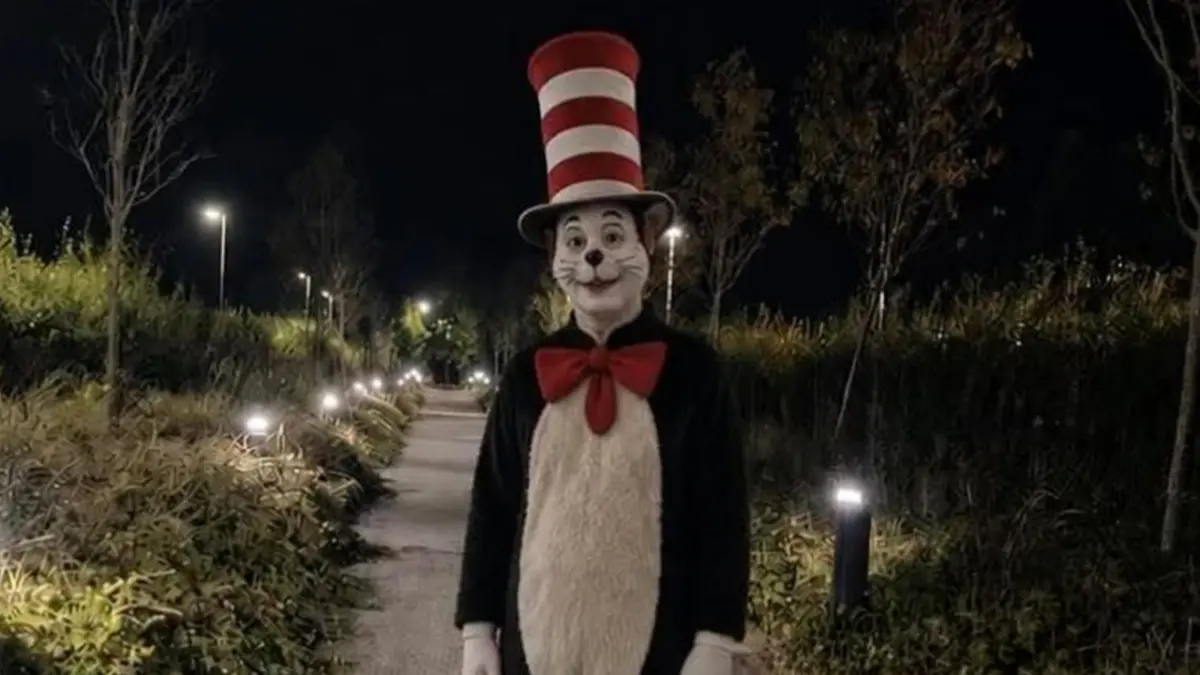
In late August 2026, social media feeds across Ireland, the United Kingdom, and the United States were gripped by a uniquely absurd and unnerving panic. Millions of users on TikTok, Instagram, and X (formerly Twitter) shared viral videos and images purporting to show a knife-wielding, nocturnal serial killer stalking suburban neighborhoods. The catch? The phantom menace was dressed precisely as Mike Myers’ grotesque, live-action interpretation of Dr. Seuss’s The Cat in the Hat from the 2003 film adaptation.
What began as a localized internet rumor quickly metastasized into an international digital phenomenon, drawing inevitable comparisons to the infamous "creepy clown sightings" of 2016. However, unlike its analog predecessor, the 2026 panic relied entirely on advanced, generative artificial intelligence (AI).
By August 20th, law enforcement agencies—led by Ireland’s national police and security service, An Garda Síochána—were forced to issue public statements debunking the hysteria. They confirmed that the chilling Ring doorbell footage, Snapchat clips, and neighborhood drive-by photos were entirely synthetic.
This deep-dive investigation explores the origins, rapid digital spread, cultural context, and psychological underpinnings of the "Cat in the Hat" serial killer hoax, highlighting the growing vulnerability of the public to AI-generated urban legends in the mid-2020s.
Detailed Chronology
July 2026: The Groundwork of the "Dark Cat" Trend
Long before the panic hit local news channels, the digital landscape was primed by a micro-trend known as "Dark Cat in the Hat Memes." Throughout July 2026, TikTok creators began reinterpreting scenes from the 2003 Universal Pictures and DreamWorks adaptation through a stark, horror-inspired lens.
Users traded wholesome nostalgia for analog horror aesthetics, editing scenes to mimic grainy VHS tapes, "last known footage" reels, and unsettling creepypastas. In these edits, Mike Myers’ chaotic, anthropomorphic feline was reframed not as a mischievous children’s book character, but as a malicious stalker or cosmic entity. This aesthetic subversion laid the psychological groundwork for the panic that would follow, conditioning algorithms and audiences to associate the 2003 costume with dread and menace.
August 18, 2026: The Spark in Wexford
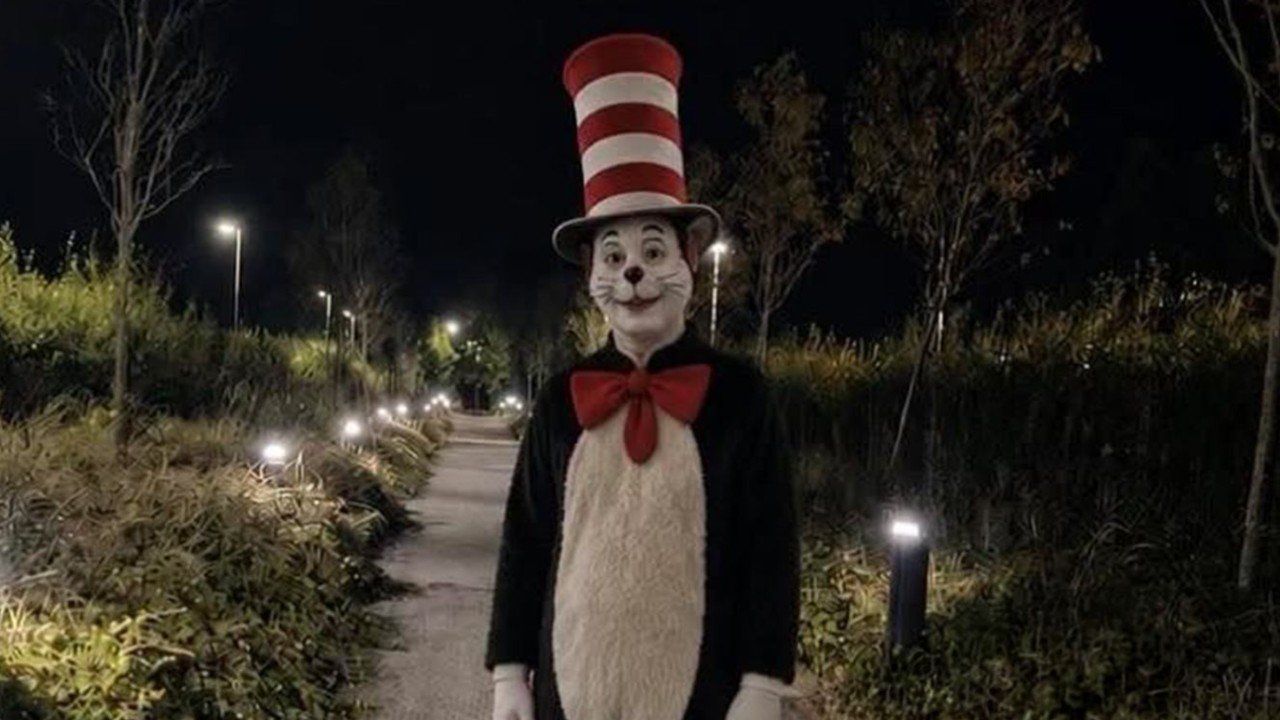
The hoax officially ignited on Monday, August 18th, 2026, when a series of supposedly authentic Snapchat images began circulating across localized social media channels in Ireland. The posts claimed to show an individual dressed in the full, uncanny prosthetic makeup and striped top hat of the 2003 Cat in the Hat, lurking in shadows, peering through windows, and pacing driveways in the County Wexford area.
One of the earliest documented vectors of the rumor appeared on the "Arklow & Gorey Open Forum" Facebook page. A concerned local parent posted:
"Has anyone seen online on Snapchat a cat in the hat apparently lurking outside peoples windows and driveways in Wexford area just want to know if it’s real because it has scared the life out of my kids."
Simultaneously, a Redditor under the username FineRecommendation86 uploaded screenshots of the Snapchat warnings to the r/cork subreddit, amplifying the panic to a broader Irish digital audience. Within hours, regional curiosity exploded onto the national stage when TikTok creator @bainne_maru published a video breaking down the viral images. The post garnered over 552,000 views in less than two weeks, transforming a hyper-local rumor into a nationwide talking point.
August 20, 2026: Official Law Enforcement Interventions
As panic threatened to disrupt communities—with parents keeping children indoors and neighborhood watch groups going on high alert—An Garda Síochána stepped in. On August 20th, Irish authorities officially confirmed that the circulating images and videos were entirely fabricated via artificial intelligence.
Major media outlets, including The Mirror, picked up the police statements, hoping to quell the growing hysteria. Yet, rather than extinguishing the fire, the debunking efforts only served to fuel the Streisand effect, pushing the narrative past Irish borders and into the United Kingdom and the United States.
August 22–27, 2026: International Metastasis and Viral Exploitation
With the narrative free from geographic constraints, foreign content creators and influencers seized upon the fictional stalker for clout.
- The Ring Doorbell Hoax (August 22): TikToker
@liannemarie84uploaded an AI-generated video purporting to be captured by a home security system. The synthetic clip showed the Cat in the Hat pacing outside a front door, holding up a menacingly handwritten note. The video amassed over 800,000 views in under a week. - The Sheffield Menace (August 23): The popular Instagram community page
onlinesheffieldshared an AI-generated image of the feline stalker perched ominously atop a parked vehicle near the Meadowhall shopping center, falsely claiming a knife-wielding attacker was roaming South Yorkshire. - The Comparison to 2016 (August 24): Content creator
@christopherkielypublished an analysis video comparing the modern digital panic to the 2016 creepy clown sightings, pulling in 3.8 million views and cementing the hoax as a recognized cultural milestone. - Influencer Chasing (August 27): High-profile Instagram influencer Natalie Reynolds posted a staged video featuring an actor dressed as the character stalking her vehicle, netting tens of thousands of views and demonstrating how monetization and algorithmic engagement incentives actively reward the propagation of hoaxes.
Supporting Context & Metrics
The "Cat in the Hat" hoax did not happen in a vacuum; it represents a terrifying evolution in how modern folklore is weaponized for digital engagement.
The Mechanics of AI-Generated Urban Legends
Prior to the widespread commercial availability of high-fidelity generative video and image tools, urban legends relied on blurry, ambiguous smartphone photography—think grainy images of Bigfoot or the Loch Ness Monster. These artifacts allowed viewers to project their fears onto the media, but they were relatively easy to debunk upon closer inspection.
The 2026 panic leveraged hyper-realistic text-to-video and text-to-image models capable of rendering complex textures, such as the faux-fur fabric of the 2003 costume, dynamic night-vision lighting, and convincing motion blur. By grafting these synthetic horrors onto recognizable domestic infrastructure (Ring doorbells, suburban driveways, UK high streets), the hoax bypassed initial skepticism.
Quantitative Reach and Algorithmic Amplification
Though comprehensive economic impact studies are ongoing, preliminary platform metrics underline the sheer velocity of the trend:
- TikTok Engagement: Hashtags associated with the hoax (#catinthehatscary, #catinthehatserialkiller) collectively surpassed 45 million views within a ten-day window in late August.
- Cross-Platform Migration: The narrative successfully bridged the gap between insular local Facebook groups (traditionally populated by older demographics prone to community-safety panics) and hyper-fast TikTok and Instagram Reels algorithms utilized by Gen Z.
- Institutional Response Rate: Major legacy news organizations, including The Telegraph, found themselves forced to produce dedicated vertical video debunks on TikTok to reach younger audiences who consume news exclusively through short-form video feeds.
Official Statements and Institutional Reactions
The rapid escalation of the hoax prompted swift condemnation from public safety officials and media literacy advocates.
In a joint statement released via social media channels on August 20th, An Garda Síochána emphasized the dangers of unverified digital media:
"An Garda Síochána is aware of several AI-generated images and video clips circulating on social media platforms concerning fictional sightings in various parts of the country. We can confirm these claims are entirely false and represent a coordinated digital hoax. We remind members of the public to exercise critical thinking and verify information through trusted news outlets before sharing distressing content online."
Echoing these sentiments, a spokesperson for The Telegraph‘s digital safety desk noted during their coverage of the event:
"Clips of the figure loitering outside homes at night have amassed millions of views… highlighting a troubling modern trend where generative AI is weaponized to exploit parental fears and manufacture public panic for algorithmic gain."
Sociologists and folklorists have similarly pointed out that the hoax serves as a case study in modern mass hysteria. Dr. Helen Vance, a researcher specializing in digital subcultures, remarked: "We are moving past the era where seeing is believing. The Cat in the Hat panic proves that audiences are now willing to suspend disbelief not because the evidence is convincing, but because the narrative framework of the ‘creepy urban predator’ provides an addictive emotional thrill."
Future Outlook: The Post-Truth Era of Internet Hoaxes
As the dust settles on the late-August frenzy, the "Cat in the Hat" serial killer trend leaves behind a sobering roadmap for the future of digital misinformation.
The ease with which a beloved, if critically maligned, children’s movie character could be weaponized into an international terror symbol demonstrates the profound volatility of modern media ecosystems. As generative AI tools become cheaper, faster, and more accessible, localized panics are expected to become more frequent, sophisticated, and difficult to police.
For law enforcement agencies, community organizers, and social media platforms, the challenge moving forward will not simply be fact-checking after the fact, but actively designing algorithmic tripwires to catch synthetic moral panics before they graduate from local Facebook forums to international headlines. Until then, suburban parents, late-night drivers, and anyone peering out their windows after dark may find themselves sharing a nervous glance—wondering if the next viral phantom outside their Ring camera is just another algorithmically generated ghost.