By Global Investigative Desk
Published September 1, 2026
Executive Overview
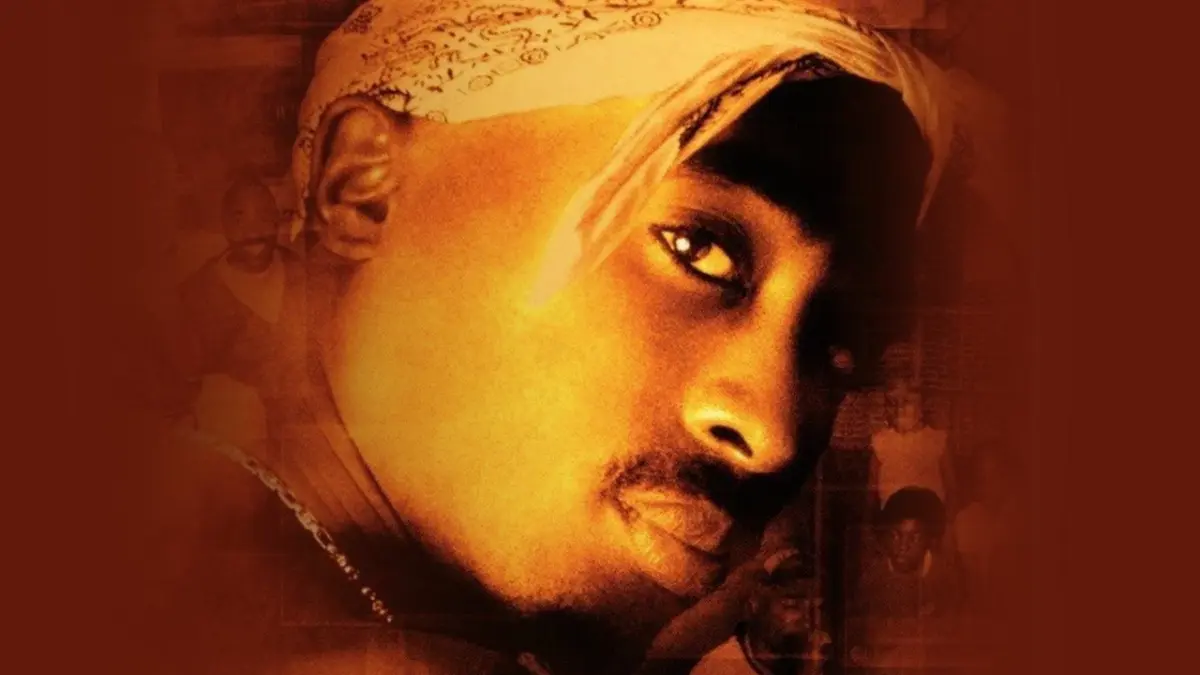
Nearly three decades after a bullet-riddled BMW shocked the music world and forever changed the landscape of hip-hop, a Las Vegas jury has reached a definitive verdict. Duane “Keffe D” Davis, now 63 years old, has been found guilty of the first-degree murder of legendary rapper, actor, and cultural icon Tupac Shakur. The jury deliberated for less than three hours before delivering a verdict that brings a monumental legal conclusion to one of the most infamous, analyzed, and enduring unsolved murder mysteries in modern American history.
The conviction centers on a charge of first-degree murder with the use of a deadly weapon, coupled with a special gang enhancement—indicating that the crime was committed with the intent to promote, further, or assist a criminal street organization. While prosecutors did not argue that Davis personally pulled the trigger during the fatal September 7, 1996, drive-by shooting near the Las Vegas Strip, the state successfully proved that Davis acted as the mastermind, orchestrating the confrontation, procuring the weapon, and directing the vehicle that delivered the fatal shots.
For thirty years, the murder of Tupac Shakur spawned countless conspiracy theories, documentaries, investigative books, and public speculations. The closure provided by this courtroom verdict marks a watershed moment not only for the legal system and law enforcement agencies that pursued the truth across generations, but also for the global community of fans, scholars, and family members who have spent a lifetime demanding accountability. Davis now faces a maximum sentence of life in prison, effectively locking away the last living architect of the tragedy that silenced one of the 20th century’s most vital artistic voices.
Detailed Chronology: From the Las Vegas Strip to the Courtroom
To understand the weight of the verdict delivered by the jury, one must trace the tragic sequence of events back to the autumn of 1996, and follow the arduous, decades-long path that ultimately led to the courtroom.
September 7, 1996: The Fateful Night in Las Vegas
On the evening of September 7, 1996, Las Vegas was buzzing with high-stakes energy. Earlier that night, Tupac Shakur—alongside Death Row Records founder Marion "Suge" Knight—had attended the Mike Tyson vs. Bruce Seldon heavyweight boxing match at the MGM Grand. Following the fight, a physical altercation broke out in the hotel lobby involving Shakur’s entourage and Orlando Anderson, a reputed member of the Southside Crips gang from Compton, California. Security cameras captured the scuffle, during which Anderson was beaten.
Later that evening, Shakur and Knight were driving in a black 1996 BMW 750iL, headed to a post-fight party at Club 662. As the vehicle stopped at a red light near East Flamingo Road and Koval Lane, a white Cadillac pulled up alongside the passenger side. Gunshots erupted from the Cadillac, striking Shakur multiple times. Knight sustained a minor graze wound. Shakur was rushed to the University Medical Center of Southern Nevada, where he was placed on life support and underwent multiple surgeries. He succumbed to his internal injuries six days later, passing away on September 13, 1996, at the age of 25.
The Decades of Stagnation and Public Confessions
In the immediate aftermath of the shooting, the investigation stalled. Despite widespread rumors and whispers within the hip-hop community and police circles, an arrest remained elusive for years. Orlando Anderson, identified by many investigators as the primary suspect who fired the shots from the Cadillac, was killed two years later in an unrelated gang shootout at a Compton car wash in 1998, effectively closing off the most direct path to a shooter.
For years, the case appeared destined to remain an unsolved Hollywood legend. However, the investigation received an unexpected second wind largely due to Duane Davis himself. Over the course of nearly two decades, Davis—Orlando Anderson’s uncle—embraced public notoriety. He discussed his involvement in documentaries, podcasts, police interviews, and his own 2019 memoir, Compton Street Legend.
In these various forums, Davis openly boasted about being the shot-caller who secured the firearm used in the drive-by, describing in vivid detail how he handed the gun to the backseat passenger of the white Cadillac. Armed with these self-incriminating public statements, Las Vegas police revitalized their cold case efforts, culminating in a dramatic raid on Davis’s home in Henderson, Nevada, in July 2023, and his subsequent arrest.
The Trial and Deliberation
During the trial, prosecutor Binu Palal anchored the state’s case not on forensic evidence from a decades-old crime scene, but on the mountain of voluntary admissions Davis had made over the years.

"For nearly 18 years, Duane Davis has told the police, television, books, YouTube interviewers—anybody that will listen, he has told—he is responsible for the murder of Tupac Shakur," prosecutor Binu Palal told the jury during closing arguments. "Tell him you hear him—find him guilty."
The defense attempted to argue that Davis’s media accounts were exaggerated fabrications designed to make money and court celebrity status in the true-crime ecosystem. However, the jury was unpersuaded. After deliberating for less than three hours, they returned a unanimous verdict of guilty on all counts, bringing an end to the factual debates surrounding the coordination of the assassination.
Supporting Context & Metrics: The Magnitude of a Cultural Titan
While the trial focused heavily on gang politics, street retaliation, and criminal conspiracy in 1990s Los Angeles and Las Vegas, the broader cultural context underscores why this verdict resonated globally. Tupac Shakur was not merely a celebrity; he was a defining voice of a generation whose artistic footprint continues to expand decades after his physical departure.
Musical Legacy and Commercial Impact
During his lifetime, Shakur released four critically acclaimed and commercially massive solo studio albums:
- 2Pacalypse Now (1991) – A raw, politically charged debut that established his voice as a fierce advocate for the marginalized.
- Strictly 4 My N.I.G.G.A.Z. (1993) – Featuring anthems like "Keep Ya Head Up," cementing his crossover commercial appeal.
- Me Against the World (1995) – Debuted at Number 1 on the Billboard 200 while Shakur was incarcerated, marking a deeply introspective masterpiece.
- All Eyez on Me (1996) – The historic double-album released via Death Row Records, featuring timeless classics like "California Love" and "How Do U Want It," which has since been certified Diamond by the RIAA, selling over 10 million copies in the United States alone.
Following his death, a prolific vault of unreleased material yielded several more multi-platinum releases, including The Don Killuminati: The 7 Day Theory (1996) and Until the End of Time (2001). To date, Shakur has sold over 75 million records worldwide, making him one of the best-selling music artists of all time.
Cinematic Contributions
Beyond music, Shakur possessed a magnetic screen presence that positioned him as one of the most promising young actors of the 1990s. His filmography includes:
- Juice (1992): Playing the volatile and troubled Bishop, Shakur earned rave reviews for his breakout acting performance.
- Poetic Justice (1993): Starring alongside Janet Jackson in a romantic drama directed by John Singleton.
- Above the Rim (1994): Portraying the complex basketball figure Birdie.
- Gridlock’d and Gang Related (1997): Posthumous theatrical releases that showcased his comedic range and dramatic depth respectively.
An Unprecedented Posthumous Milestone
In a testament to his enduring cultural footprint, it was recently announced that Shakur is set to make his video game debut in the upcoming 2027 title Stranger Than Heaven developed by RGG Studio. Addressing inevitable questions regarding ethics and authenticity, studio head Masayoshi Yokoyama confirmed that both Shakur’s estate and his family have fully approved the inclusion of his likeness. Notably, the character will be voiced by a professional voice actor rather than relying on synthetic artificial intelligence, ensuring a respectful tribute to his legacy as the entertainment world crosses the 30-year threshold since his passing.
Official Statements and Reactions
The swift verdict sent shockwaves through the entertainment industry, legal circles, and communities touched by Shakur’s life and art.
- Law Enforcement & Prosecution: Representatives from the Las Vegas Metropolitan Police Department expressed relief that meticulous, persistent detective work finally yielded accountability. Investigators noted that while the case faced immense hurdles due to the passage of time and the deaths of key participants, the unyielding digital and public footprint left by Davis proved insurmountable for the defense.
- The Hip-Hop Community: Icons, producers, and contemporary artists took to social media and public platforms to reflect on the verdict. Many expressed a bittersweet sense of closure, emphasizing that while no prison sentence can bring back the artist, the legal validation of his murder being thoroughly prosecuted offers a necessary chapter of finality.
- Legal Analysts: Constitutional and criminal defense experts have pointed out that Davis’s case serves as a historic textbook example of the dangers of public boasting. By leveraging his own marketing of his criminal history for book sales and interview clout, Davis essentially constructed the roadmap that the state used to secure his conviction.
Future Outlook: Sentencing and Closing a Chapter in American History
With the jury having returned a guilty verdict on the charge of first-degree murder with a deadly weapon and gang enhancements, Duane “Keffe D” Davis is scheduled to appear before a judge for formal sentencing. Facing a mandatory maximum sentence of life in prison, it is widely anticipated that Davis will spend the remainder of his natural life behind bars. Given his age and health history, this verdict effectively ensures that no further trials will take place regarding the physical execution or orchestration of the shooting.
As the 30th anniversary of Tupac Shakur’s death approaches, this legal milestone closes the book on the most persistent whodunit in modern pop culture history. While conspiracy theories will undoubtedly persist among dedicated subcultures, the court of law has spoken with absolute clarity. The man who sat in the front seat of the white Cadillac and facilitated the assassination of a generational artist has been held fully accountable under the law.
Tupac Shakur’s physical journey was cut tragically short on a Las Vegas boulevard in September 1996, but his voice, his art, and his cultural impact remain immortal. Today, that legacy is accompanied by a rare and profound commodity: legal justice, delivered at last.