Executive Overview
Dyson, a company globally recognized for reimagining household appliances through advanced aerodynamics, precision engineering, and bold consumer electronics entries, has officially expanded its portfolio into personal oral hygiene. The newly announced Dyson CameraJet is a $499 three-in-one motorized device that merges mechanical brushing, water flossing, and real-time computer vision into a single, highly integrated ecosystem.
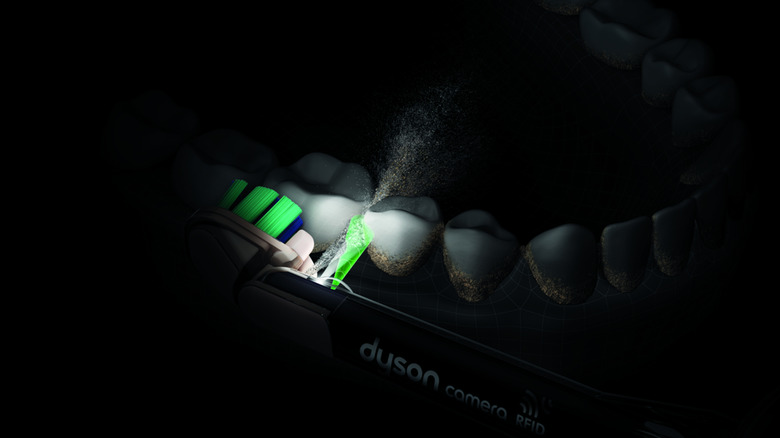
Priced at a premium compared to established competitors like the Philips Sonicare Prestige 9900 and the Oral-B iO Series 10, the CameraJet attempts to justify its cost through an unorthodox inclusion: an onboard 0.1-megapixel macro lens camera paired with a machine learning engine. This vision system scans the user’s mouth at a rate of 28 live images per second, intelligently targeting the interdental spaces between teeth to deliver precise, cone-shaped fluid bursts.
By simultaneously addressing brushing, flossing, and rinsing, Dyson aims to eliminate the tedium and frequent negligence associated with multi-step oral hygiene routines. However, the device’s high entry cost, unconventional design, and the integration of a camera into a toothbrush have sparked intense industry debate regarding whether this represents a genuine leap forward in preventative healthcare or an exercise in excessive over-engineering.
Detailed Chronology
From Air Movement to Oral Health
Dyson’s trajectory into the oral care market did not happen overnight, though it follows a well-established corporate playbook. For decades, the British technology company perfected the mechanics of fluid dynamics, air amplification, and digital motor design. These core competencies initially fueled its disruption of the vacuum cleaner market before being successfully pivoted into personal care categories.
The launch of the Dyson Supersonic hairdryer in 2016 proved that consumers were willing to pay premium prices for meticulously engineered personal care devices. This was followed by the Dyson Airwrap styling tool, the controversial Dyson Zone air-purifying headphones, and the audio-only OnTrac headphones. Each of these product launches challenged conventional product design paradigms.
The development of the CameraJet represents a logical, albeit unexpected, extension of this philosophy. According to company disclosures, the foundational mechanics of the device—specifically its fluid dynamics and plaque-removal capabilities—were refined through a rigorous five-year collaboration with the National University of Singapore’s Faculty of Dentistry. During this extensive R&D phase, Dyson engineers developed proprietary synthetic plaque substitutes to rigorously test how fluid streams interact with dental enamel and gum lines.
Unveiling the CameraJet
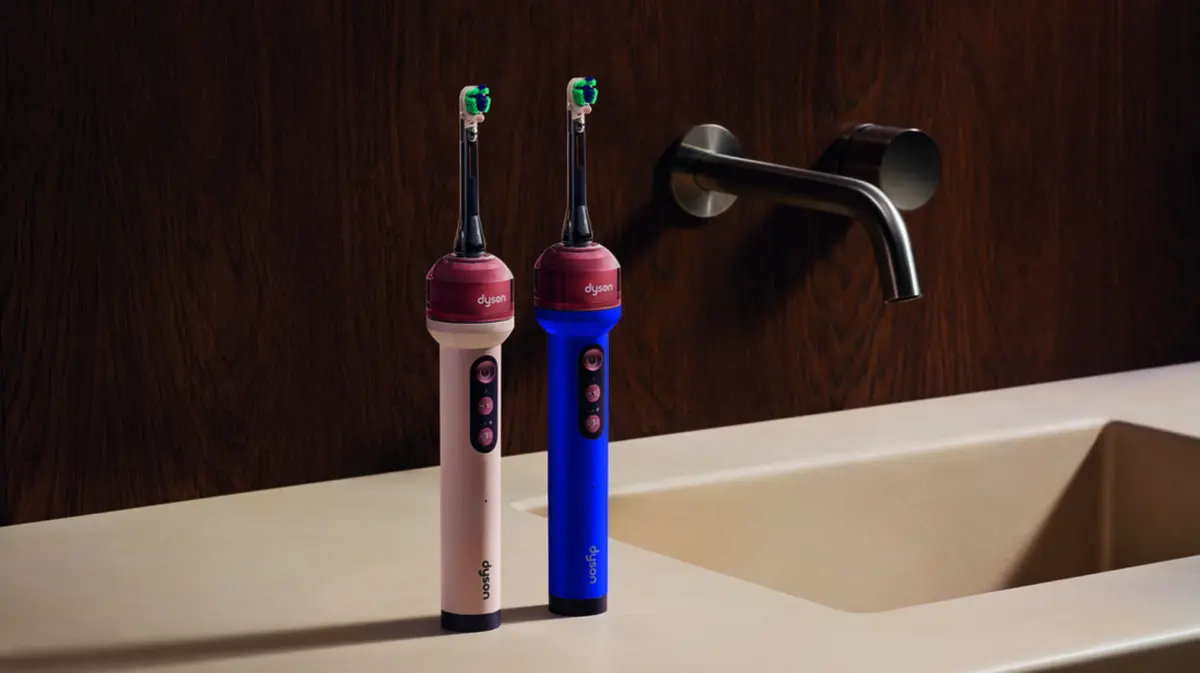
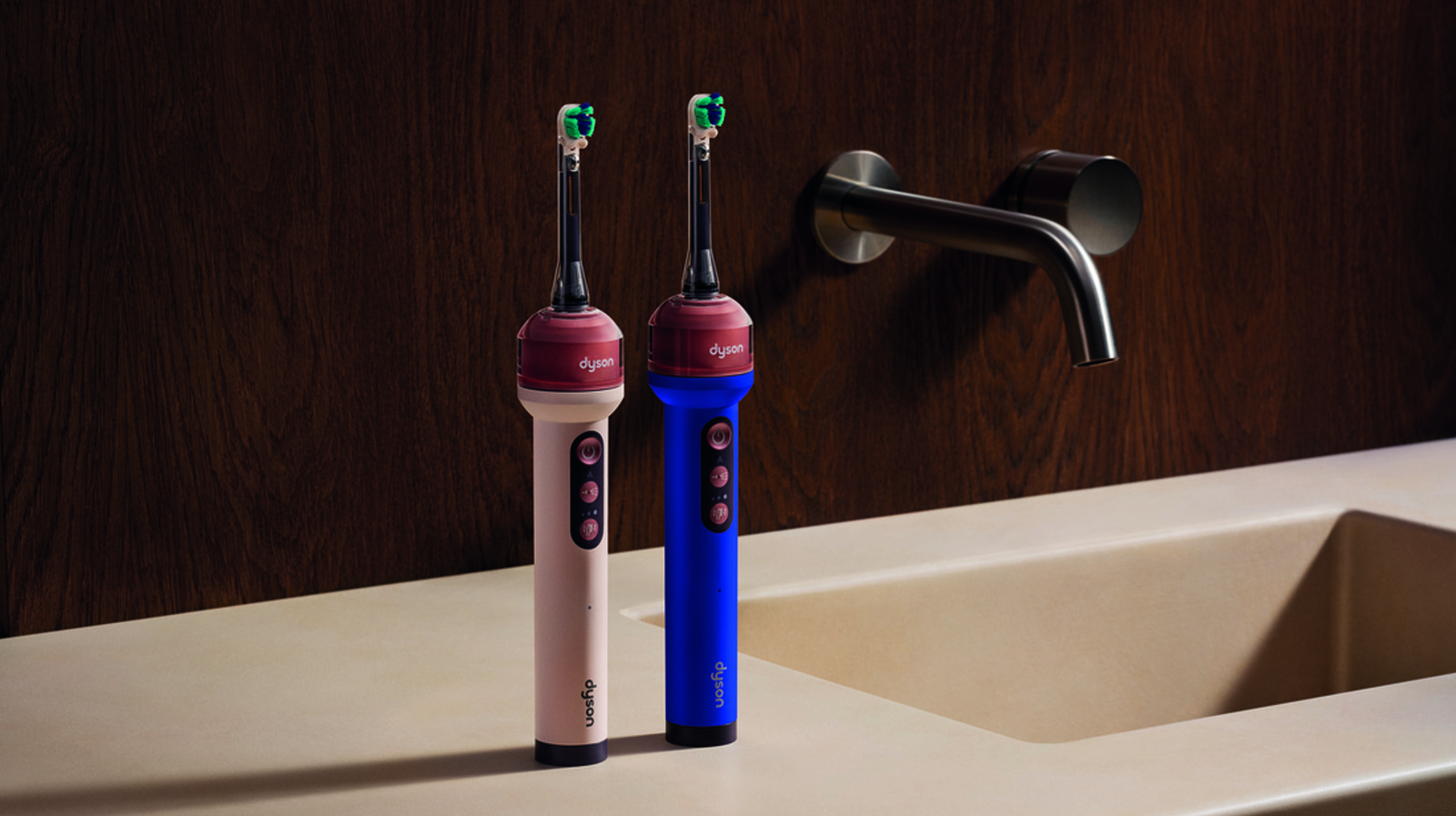
The formal announcement of the CameraJet introduces a device that looks unlike any conventional toothbrush on the market. Featuring an integrated water reservoir and an onboard camera positioned just beneath the brush head, the product bridges the gap between mechanical sonic toothbrushes and countertop water flossers.
The engineering team faced significant mechanical hurdles during development. Chief among them was maintaining consistent fluid pressure regardless of the user’s orientation. To solve this, Dyson implemented an "anti-gravity tank" featuring an internal diaphragm pump and a pressure chamber. This allows the device to pump water accurately into the user’s mouth even when held at awkward angles or completely upside down.
Furthermore, the integration of artificial intelligence required substantial software development. The device’s underlying computer vision architecture relies on 16 million lines of code and a machine learning model trained on a proprietary dataset of 470,000 dental images. This combination enables the CameraJet to recognize dental gaps in real time and trigger micro-bursts of mouth rinse within 100 milliseconds of detection.
Supporting Context & Metrics
The Technology Under the Hood
To understand the technical complexity of the Dyson CameraJet, one must examine the specific hardware and software specifications driving its performance:
- Optical Sensor: A 100k-pixel macro lens camera (0.1 megapixels) mounted directly beneath the brush head.
- Computer Vision Performance: The "Gap Optical Targeting" system analyzes 28 live frames per second to locate interdental spaces.
- Response Time: The system detects and deploys fluid jets within 100 milliseconds of identifying a gap.
- Fluid Delivery: Employs an anti-gravity tank with a diaphragm pump and pressure chamber, ensuring consistent flow across all orientations.
- Reservoir Capacity: The neck-mounted water tank holds 12.5ml (approximately 0.42 fluid ounces, or two and a half teaspoons), designed to dispense micro-bursts without flooding the user’s mouth.
- Software Integration: Operates via the MyDyson companion app, providing live-viewing capabilities, real-time brushing analytics, feedback reports, and customizable intensity settings.
- Data Privacy: Dyson explicitly states that no images captured by the onboard camera are recorded, stored locally on the device, or uploaded to cloud servers.
- Brush Head Engineering: Features a dual-bristle configuration with softer outer bristles for gumline care and slightly firmer inner bristles for surface stain removal. Each head incorporates a sonic dampener and an RFID tag to track usage cycles and prompt replacements.
Comparative Market Positioning
Priced at $499, the Dyson CameraJet enters an elite tier of the oral care market. For context, established flagships such as the Philips Sonicare Prestige 9900 and the Oral-B iO Series 10 typically retail around $399.
While competitors rely heavily on magnetic drive systems, pressure sensors, and Bluetooth-enabled coaching apps to improve brushing habits, they generally require a separate countertop appliance for water flossing. Dyson’s value proposition lies in consolidation: by merging a high-performance sonic toothbrush with an automated, AI-driven water flosser and an intraoral camera, the company attempts to justify its $100 premium over traditional smart toothbrushes.
Official Statements
Founder Perspective
In an official company statement, Dyson founder James Dyson emphasized the holistic health benefits driving the new product’s development:
"By combining a camera, machine learning, precision fluid dynamics, advanced brushing technologies, connectivity, and Wi-Fi, Dyson CameraJet introduces an entirely new way to keep your mouth healthy."
The company’s engineering representatives have also stressed that the fluid dynamics of the CameraJet were specifically tuned to protect sensitive oral tissue. Rather than utilizing a high-pressure, needle-like stream common in traditional desktop water flossers—which can occasionally cause gum irritation or bleeding—Dyson’s fluid dynamicists designed a cone-shaped spray profile. This wider distribution sweeps away plaque at a lower, safer pressure threshold.
Addressing Privacy and Usability Concerns
The inclusion of a camera inside the human mouth has inevitably raised privacy and surveillance concerns among early observers. In response, Dyson has been forthright regarding its data governance policies. Representatives confirmed that the camera feed is strictly localized for real-time algorithmic targeting and live-viewing within the companion app. No visual data is saved, archived, or transmitted to external servers, mitigating potential concerns regarding biometric data harvesting.
Future Outlook
Industry Implications and Consumer Reception
The launch of the Dyson CameraJet marks a pivotal test for the intersection of personal care and consumer electronics. If the device succeeds in bridging the behavioral gap between brushing and flossing, it could establish a new category benchmark for smart health appliances. Consumers who find traditional flossing tedious or difficult to maintain may find immense value in an automated system that handles multiple hygiene tasks simultaneously.
However, several challenges lie ahead. At $499, the CameraJet is undeniably a luxury item, limiting its initial adoption to tech enthusiasts and affluent consumers. Furthermore, users must be selective with their oral hygiene supplies; the device requires SLS-free, low-foaming mouth rinses and specialized toothpastes to prevent foam from obstructing the macro lens’s field of view. Dyson’s decision to manufacture proprietary non-foaming toothpaste and low-foaming mouth rinses creates an ongoing consumable ecosystem similar to its hair care and vacuum product lines.
The Verdict Awaits Rigorous Testing
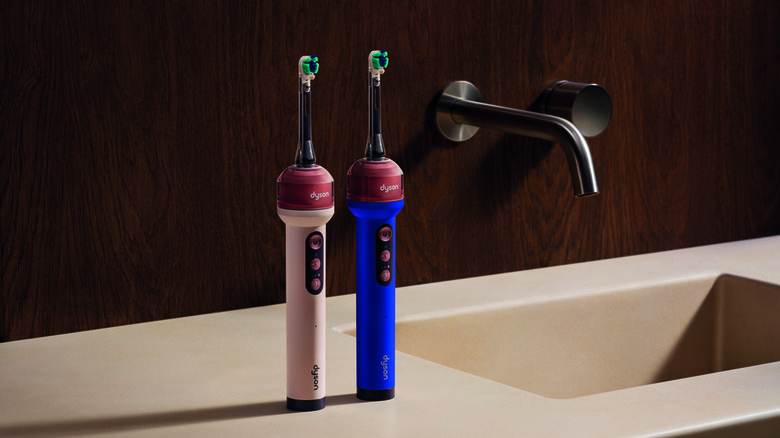
As the Dyson CameraJet rolls out in Ceramic Ultra Blue and Ceramic Pink colorways—complete with a rapid-refill docking station, charging cable, two standard brush heads, and a travel case—the ultimate test will occur in real-world bathrooms and dental clinics.
Reviewers and dental professionals will soon evaluate whether the fusion of artificial intelligence, fluid dynamics, and intraoral imaging translates into superior clinical outcomes, or if it remains an ingenious yet overly complex gadget. Until comprehensive long-term reviews and dental evaluations are published, the CameraJet stands as a bold testament to Dyson’s engineering ambition—proving once again that the company is never afraid to shake up an established industry, one stream of air or water at a time.