Executive Overview
Twenty years ago, a quiet paradigm shift in software architecture and enterprise economics took place. On a summer day that would permanently alter the trajectory of the technology industry, Jeff Barr authored a modest blog post introducing the Amazon Elastic Compute Cloud (Amazon EC2) Beta. At its inception, the service offered a remarkably straightforward proposition: resizable Linux virtual servers hosted in the cloud, billed flexibly by the hour, and restricted to a single instance type (m1.small) operating within a solitary geographic region (US East).
What began as a minimal yet functionally potent utility has since matured into the invisible digital backbone of the modern internet. Over the past two decades, Amazon EC2 has evolved from a novel concept for developers into a massive, globally distributed computing engine. It now powers everything from simple web applications and bootstrapped startups to trillion-parameter artificial intelligence training clusters and mission-critical enterprise systems.
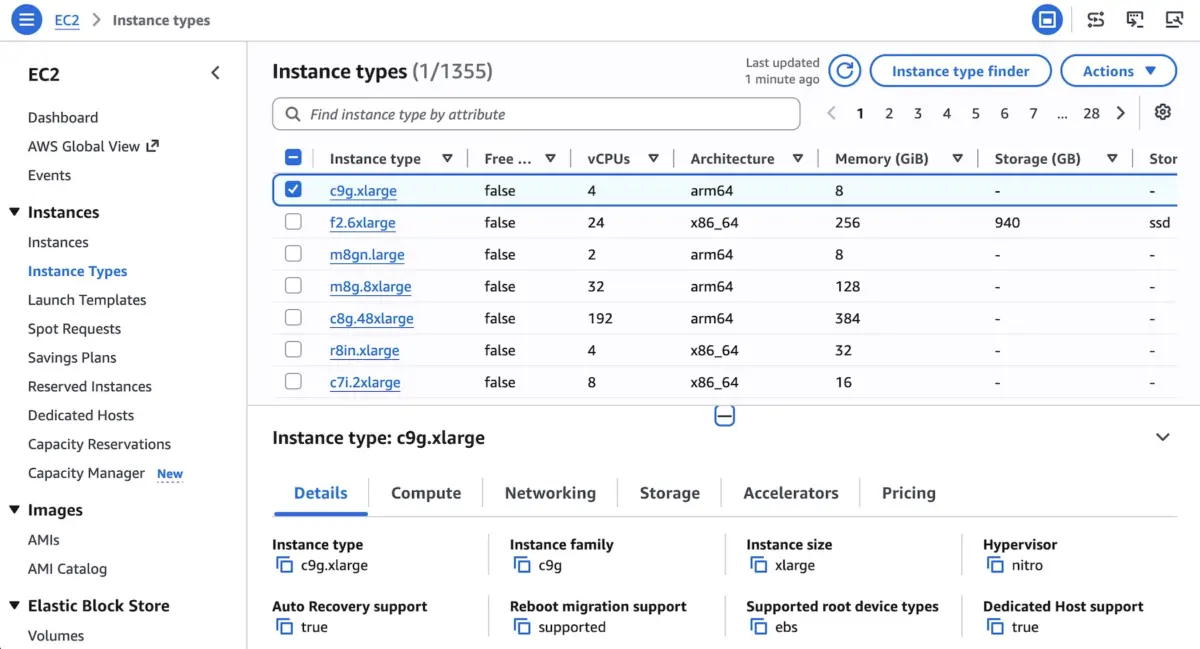
Today, EC2 supports more than 1,200 distinct instance types across 39 geographic regions worldwide. It has transcended the boundaries of traditional data centers through specialized edge deployments like AWS Outposts, Local Zones, and Wavelength. More importantly, EC2 serves as the underlying substrate for almost every subsequent AWS innovation—from containers and serverless architectures to managed big data analytics and advanced machine learning platforms like Amazon SageMaker and Amazon Bedrock.
As we reflect on two decades of cloud computing, the story of Amazon EC2 is not merely one of technical scaling; it is a masterclass in foundational product design. By prioritizing speed to market, an iterative approach driven by customer feedback, and a relentless focus on core compute performance, AWS established a blueprint that defined the modern cloud era.
Detailed Chronology: Milestones That Built the Modern Cloud
To understand the ubiquity of Amazon EC2 today, one must trace the evolutionary stepping stones that transformed it from a basic virtual private server alternative into a comprehensive, high-performance computing ecosystem. In his 15th-anniversary retrospective, Jeff Barr highlighted the foundational building blocks that customers continue to rely on daily. Over the subsequent five years, that foundation has expanded into specialized accelerators, custom silicon, and hybrid deployments.
The Foundation Years (2006–2009)
- August 2006 (The EC2 Beta Launch): The spark that ignited the cloud revolution. Developers could finally provision computing power via an API rather than waiting weeks for hardware procurement.
- August 2008 (Amazon Elastic Block Store – EBS): Prior to EBS, instance storage was ephemeral, disappearing when an instance terminated. EBS introduced persistent, low-latency block storage volumes that could be attached to EC2 instances, making database workloads and stateful applications viable in the cloud.
- 2009 (Elastic Load Balancing, Auto Scaling, and CloudWatch): Scalability and high availability moved from manual interventions to automated processes. Applications could now dynamically scale out or in based on traffic patterns while administrators monitored performance health in real time.
- 2009 (Amazon Virtual Private Cloud – VPC): Security and isolation took a quantum leap forward. VPC allowed customers to provision a logically isolated section of the AWS cloud where they could launch resources in a virtual network of their own design, complete with custom IP address ranges, subnets, route tables, and gateway configurations.
The Era of Hardware Acceleration and Custom Silicon (2017–2018)
- 2017 (The AWS Nitro System): A critical turning point in cloud engineering. By offloading virtualization functions traditionally handled by the hypervisor onto dedicated AWS Nitro hardware and software cards, AWS unlocked near bare-metal performance, enhanced security, and rapid innovation cycles for new instance types.
- 2018 (AWS Graviton Processors): Breaking away from traditional x86 dominance, AWS introduced custom Arm-based Graviton processors. Designed specifically for cloud-native, scale-out workloads, Graviton delivered superior price-to-performance ratios, setting a new standard for energy efficiency and cost optimization in data centers.
- 2018 (AWS Outposts): Acknowledging that not all workloads could immediately move to the public cloud, AWS Outposts extended native AWS infrastructure, services, and APIs to virtually any on-premises data center or co-location facility.
The Edge and Ultra-Low Latency Frontier (2019–Present)
- 2019 (AWS Local Zones): Designed to bring compute, storage, database, and other select AWS services closer to large population and industry centers, enabling applications requiring single-digit millisecond latencies to serve end-users seamlessly.
- 2019 (AWS Wavelength): A pioneering integration embedding AWS compute and storage inside 5G telecommunications networks. Wavelength eliminated the network hops between mobile devices and the cloud, opening the door for ultra-low latency applications like real-time multiplayer gaming, autonomous vehicle systems, and augmented reality.
- The AI and Accelerated Computing Expansion (2021–2026): Over the last five years, EC2 has adapted aggressively to the generative AI boom. Through custom machine learning accelerators (such as AWS Trainium and Infernce chips), massive GPU clusters, and high-performance networking fabrics, EC2 became the primary crucible for training and deploying state-of-the-art foundation models.
Supporting Context & Metrics: The Scale of Modern Compute
The quantitative growth of Amazon EC2 over the past 20 years offers a staggering perspective on the evolution of enterprise IT. What began as a single instance type (m1.small) in a single region has burgeoned into an intricate matrix of compute options engineered for virtually every conceivable workload.
Breadth of Instance Families
Today, customers can choose from more than 1,200 distinct instance types, meticulously categorized across several specialized families:
- General-Purpose Instances: Balanced compute, memory, and networking resources ideal for microservices, web servers, and small-to-midsize databases.
- Compute-Optimized Instances: High-performance processors tailored for compute-bound applications, batch processing, scientific modeling, and media transcoding.
- Memory-Optimized Instances: Engineered for high-throughput workloads, real-time big data analytics, in-memory caches, and massive relational databases.
- Storage-Optimized Instances: Optimized for high sequential read and write access to very large data sets, supporting NoSQL databases and distributed file systems.
- Accelerated Computing Instances: Equipped with hardware accelerators, graphics processing units (GPUs), and AWS-designed Trainium/Inferencing chips to accelerate graphics pipelines, high-performance computing (HPC), and artificial intelligence model training and inference.
Global Infrastructure Footprint
From its lone US East origin, EC2 now operates across 39 geographic regions worldwide, encompassing dozens of Availability Zones (AZs). This global distribution ensures fault tolerance, data sovereignty compliance, and low-latency access for multinational enterprises. Furthermore, edge services like Outposts, Local Zones, and Wavelength extend this cloud fabric directly to factory floors, hospital rooms, financial exchanges, and telecommunication network cores.
The Foundational Engine of AWS
It is easy to view specialized AWS services as distinct entities, but underneath the abstraction layers lies the unwavering power of EC2. Every major cloud service family in the AWS ecosystem—including Amazon ECS, Amazon EKS, AWS Lambda, AWS Fargate, AWS Batch, Amazon EMR, Amazon SageMaker AI, and Amazon Bedrock—ultimately relies on EC2 capacity.
Whether a developer deploys a containerized web application via Kubernetes, executes a serverless function, or trains a trillion-parameter large language model, the execution path inevitably traces back to an EC2 instance launch. Over twenty years, this underlying compute layer has sustained architectural transformations from monoliths to microservices, and from traditional software to cognitive computing.

Official Statements & Industry Perspectives
Reflecting upon the milestone, cloud computing pioneers and AWS leadership have emphasized that the core philosophy of EC2 remains entirely unchanged despite two decades of staggering technological acceleration.
Channy Yun, a prominent voice within the AWS community, captured the sentiment of the engineering culture behind the platform:
"We made strong foundational decisions in 2006, and we left room for the service to grow. Twenty years later, that strategy of creating services that are minimal-yet-useful, launching quickly, and iterating rapidly in response to your feedback continues to guide how we build. The next twenty years of cloud computing will demand capabilities we have not yet imagined. Amazon EC2 will continue to be the foundation where your workloads run."
The enduring value proposition articulated by early AWS architects continues to resonate with modern Chief Technology Officers and software engineers alike: the ability to secure resizable compute capacity in a matter of minutes, pay strictly for resources consumed, and scale infinitely on demand without being encumbered by restrictive, long-term hardware commitments.
Industry analysts point out that while competitors have emerged in the hyperscale cloud space, Amazon’s early mover advantage and obsessive focus on custom silicon development (such as the Nitro system and Graviton processors) have allowed EC2 to maintain a distinct performance-to-cost advantage. By vertically integrating hardware and software engineering, AWS transformed EC2 from a commodity utility into a deeply differentiated technology stack.
Future Outlook: The Next Twenty Years of Cloud and AI Computing
As Amazon EC2 enters its third decade, the computing landscape is undergoing its most profound transformation since the invention of the cloud itself. The rise of artificial intelligence, edge intelligence, quantum computing horizons, and ubiquitous 5G connectivity are rewriting the rules of infrastructure design.
The AI-First Compute Paradigm
The primary driver of infrastructure demand over the next decade will unquestionably be artificial intelligence. Training and running increasingly sophisticated foundation models requires compute densities and networking speeds that would have seemed fantastic even five years ago. EC2 is positioned at the epicenter of this shift. By integrating custom silicon like AWS Trainium alongside cutting-edge GPUs and ultra-low-latency networking fabrics (such as Elastic Fabric Adapter), EC2 is evolving into a specialized supercomputing fabric available on demand to any organization, regardless of size.
Decentralization and Ubiquitous Infrastructure
While centralized hyperscale regions will continue to handle massive batch processing and centralized data storage, the boundary of the cloud is dissolving. Through continuous refinement of AWS Outposts, Local Zones, and Wavelength, the future of EC2 points toward a truly omnipresent compute grid. Enterprises will increasingly process data at the exact point of creation—whether that is an autonomous vehicle traversing a city street, a medical device monitoring a patient in real time, or a smart factory optimizing assembly lines.
Sustainability and Efficiency
As data centers scale to meet global computing demands, energy efficiency has become a paramount concern. The roadmap for EC2 heavily emphasizes sustainable computing, spearheaded by custom silicon initiatives like AWS Graviton. By designing processors specifically tailored for cloud efficiency, AWS is curbing the energy footprint of enterprise computing while delivering superior performance per watt.
Conclusion
Twenty years ago, a simple blog post about resizable Linux virtual servers changed how humanity approaches software engineering. Today, Amazon EC2 stands not just as a pioneer of the cloud, but as the living foundation of the digital world. As we look toward the horizon of generative AI, quantum advancements, and edge ubiquity, EC2 will remain the indispensable engine where the next generation of technological breakthroughs takes flight.