The modern digital landscape presents an unprecedented paradox for creators, entrepreneurs, and marketing teams: the demand for frequent, high-consistency, multi-platform content has never been higher, yet the human bandwidth required to sustain this output is rapidly reaching a breaking point. Most content creators find themselves trapped in a binary paradigm. They either resist automation entirely, burning out under the immense pressure of manual production, or they completely surrender creative control to black-box machine learning models, churning out sterile, easily identifiable "AI slop."
In a recent episode of the AI Explored podcast, AI strategist Nicky Saunders joined host Michael Stelzner to dismantle this false dichotomy. Together, they explored a sophisticated, middle-path methodology: building a custom AI Creative Director using Claude. Rather than replacing human ingenuity, this system acts as a persistent, 24/7 integration layer. It seamlessly transforms raw, unscripted voice journals—recorded during daily walks—into a cohesive suite of platform-optimized content, including social media threads, newsletters, video scripts, and visual carousels.
This comprehensive guide breaks down Saunders’ framework, detailing how creators can establish clear creative visions, train specialized Claude "skills," orchestrate automated workflows via the "DraftLoop" pipeline, maintain essential human-in-the-loop guardrails, and leverage advanced language models for high-impact short-form copy.
Detailed Chronology: The Evolution of the AI Creative Partnership
To understand how to successfully deploy an AI creative director, one must first trace the evolution of how creators interact with generative tools. The journey from basic prompt-and-response mechanics to an integrated, multi-app creative pipeline did not happen overnight.
Phase 1: The Shift from Replacement to Integration
When generative AI first entered the mainstream creative consciousness, the immediate reaction was polarized. Creators feared displacement, while tech evangelists promised total automation. Saunders emphasizes that the most successful contemporary professionals view AI neither as a sovereign creator nor as a glorified spell-checker. Instead, they treat it as an integration layer within pre-existing creative workflows.
Just as previous technological revolutions—from desktop publishing to digital video editing—fundamentally transformed without eliminating the human artist, AI now serves as what Saunders terms a "twenty-four-seven brain-warming buddy." When inspiration strikes at 2 a.m. and human colleagues are unavailable, an AI partner preserves nascent ideas, offers early-stage validation, and provides an objective sounding board devoid of human ego dynamics or office politics.
Phase 2: Establishing Foundational Vision and Visual Style
Moving from casual brainstorming to systematic content production requires rigorous foundational work. Saunders compares deploying an AI without context to hiring a human contractor and simply saying, "I want this done." Without a clear creative vision and style guide, the resulting output inevitably devolves into generic, cookie-cutter copy.
Defining the Vision: Vision requires identifying the emotional resonance of the content, the intended audience takeaway, and clear parameters on what not to do. When vision is ambiguous, creators can initiate a diagnostic dialogue with Claude, using prompts like: "I know I need to create this asset, but I’m not sure what the goal is. Can we talk through what it could do for my audience?"
Curating Visual Inspiration: Style must be demonstrated rather than merely described. Creators can aggregate visual references—ranging from Pinterest boards and Instagram carousels to airport magazine covers and product packaging—into a dedicated Claude project. By uploading these assets, the AI learns to identify precise design terminology (such as color saturation levels and composition patterns), equipping the creator with the vocabulary needed to refine their aesthetic direction continuously.
Phase 3: Codifying Brand Voice and Platform Conventions
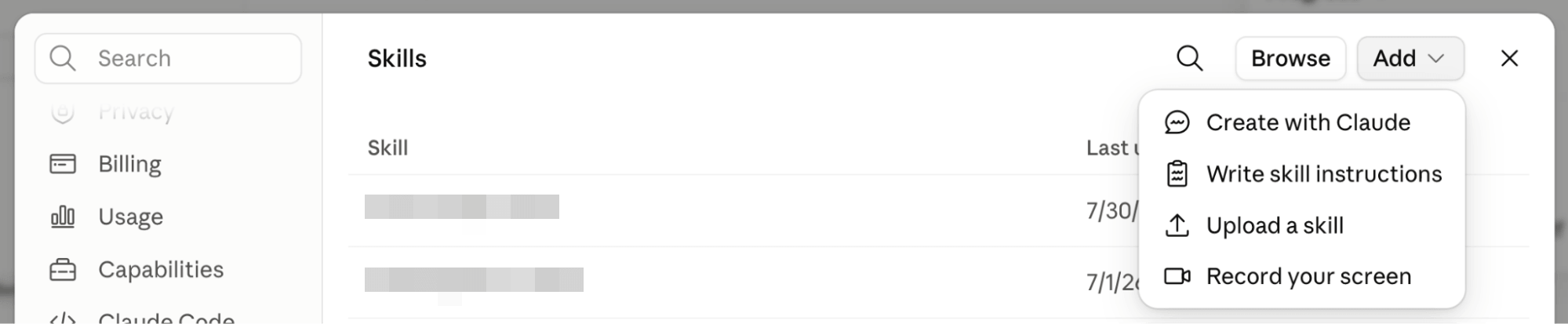
With vision and style established, the workflow transitions to creating persistent instruction sets known as Claude skills. Unlike standard chat windows that wipe memory clean with every new session, skills act as stored, reusable rules and reference documents that Claude automatically pulls into relevant conversations.
The Brand Voice Skill: Built by ingesting hundreds of pages of natural speech patterns—including Zoom transcripts, podcast recordings, newsletter archives, and social media threads—this skill trains Claude to replicate the creator’s authentic cadence, vocabulary, and tone. Saunders notes that a well-trained voice skill achieves an 80% to 85% alignment with natural speech out of the box, leaving only minor human polishing required.
The Content Style Skill: Recognizing that a Substack essay demands a drastically different structure than an X (formerly Twitter) thread or an Instagram caption, this secondary skill maps out platform-specific conventions, formatting rules, and presentation styles.
Phase 4: Sourcing Raw Material with Apify
To efficiently feed these skills and training projects, advanced creators utilize data scraping and automation infrastructure. Saunders highlights Apify, a data extraction tool featuring an MCP (Model Context Protocol) connector for Claude. Apify allows users to pull public data from platforms like YouTube (including full video transcripts and comments) and Instagram, as well as competitor profiles for comprehensive market research. Operating at an accessible price point starting at $29 per month, Apify pipelines raw data directly into connected cloud storage repositories like Google Drive or Notion, keeping Claude continuously updated.
Phase 5: Executing the "DraftLoop" Workflow
The culmination of this chronological progression is Saunders’ proprietary DraftLoop system—an automated daily content pipeline connecting Claude Cowork, Notion, Higgsfield, and HeyGen.
The Daily Voice Journal: Every morning during a routine walk, Saunders records an unscripted, highly authentic voice memo using Notion’s AI meeting notes. Drawing inspiration from Julia Cameron’s The Artist’s Way, this freeform debrief captures raw thoughts, emotional states, current frustrations, and daily inspirations. Even moments of creative block ("I don’t know what to talk about") are interrogated using the "five whys" technique to unearth underlying business insights.
Automated Processing & Human Review: At 8 a.m. daily, a scheduled task inside Claude Cowork scans the Notion journal entry. The AI instantly extracts core themes and generates a comprehensive package of draft assets: newsletter editions, tweet threads, video script outlines, and carousel text. Crucially, the system pauses here. At 11 a.m., the human creator reviews the proposed assets, selects the winning angles, and directs the AI to initiate production.
Visual & Video Synthesis: Approved written concepts are routed to visual generation tools. Higgsfield, integrated via MCP, generates custom images, quote carousels, and animated avatar videos directly within the chat interface. Meanwhile, HeyGen generates preliminary video previews featuring an AI avatar version of the creator, allowing them to audit how a script sounds when spoken aloud before final recording.
Supporting Context & Metrics
The necessity for systematic, AI-assisted creative workflows is underscored by broader industry trends regarding how marketing professionals are adopting artificial intelligence.
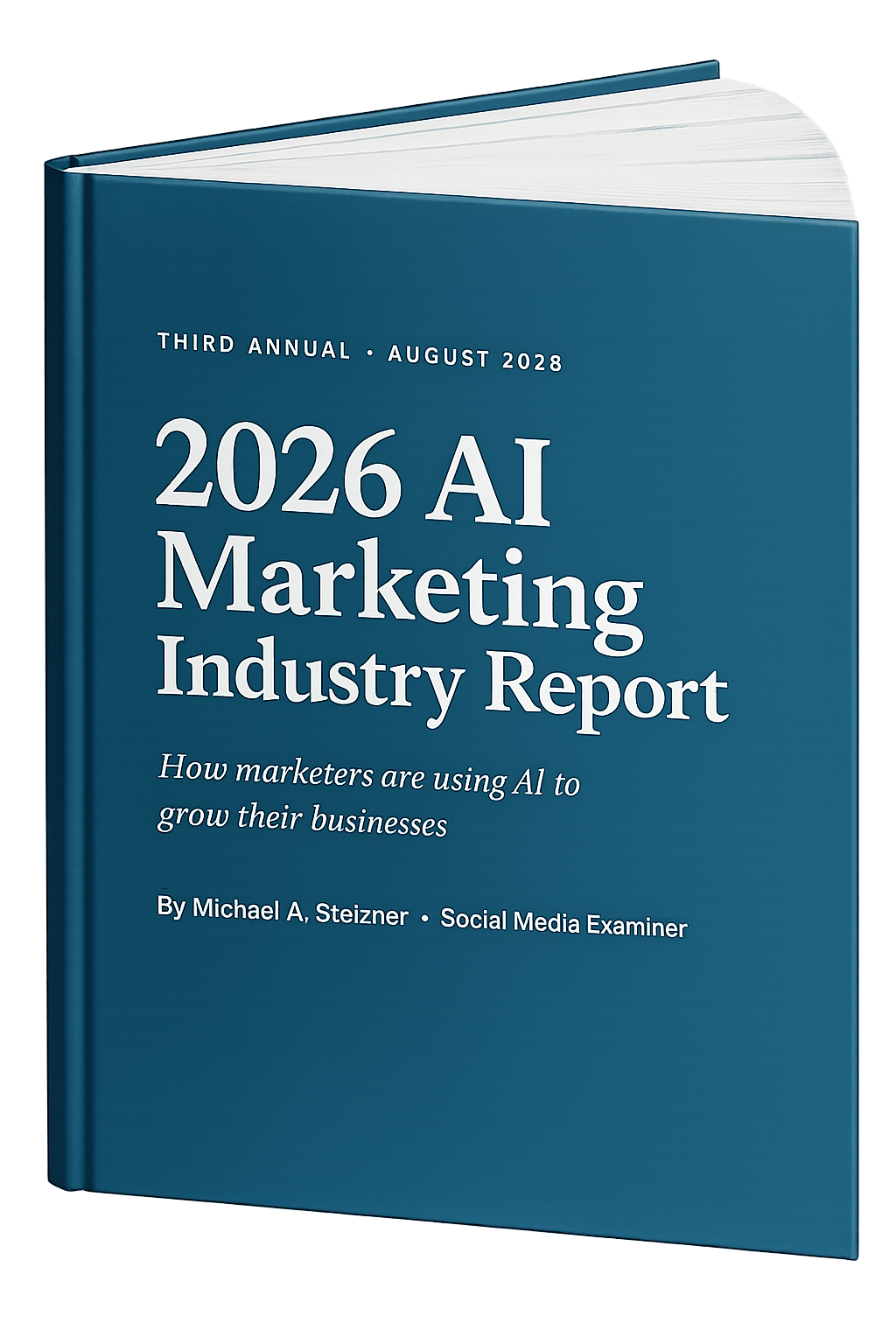
According to recent data from the AI Marketing Industry Report, which surveyed 681 marketing professionals:
85% of marketers are learning how to leverage artificial intelligence entirely through independent experimentation.
Only 7% receive formal AI training from their respective employers.
More than half (50%+) of working marketers spend their own personal funds on specialized software subscriptions and tools.
These statistics illuminate a stark reality: while enterprise adoption remains sluggish and fragmented, frontline creators and independent business owners are aggressively pioneering their own operational efficiencies. Systems like Saunders’ DraftLoop represent a direct response to this skills gap, transforming isolated tool experimentation into structured, enterprise-grade creative pipelines.
Furthermore, advanced users are discovering significant performance disparities across different foundational models. Saunders specifically highlights Claude’s resource-intensive Fable 5 model (operating within advanced subscription tiers) as an exceptional engine for high-precision, short-form copy. Despite the emergence of newer flagships like Opus 5, Fable 5 consistently outperforms competitors when tasked with crafting punchy tweet hooks, high-converting carousel headlines, and compelling email subject lines—proving that model selection must be strategically tailored to specific micro-tasks within the broader workflow.
Official Statements & Industry Perspectives
The philosophy underpinning the AI Creative Director model challenges prevailing fears of automation by centering human agency at the core of the creative process.
"The biggest misconception about AI content creation is that it has to be all-or-nothing… People tend to fall into two camps: those who reject AI entirely and insist on doing everything manually, and those who want to hand over every creative decision to a machine. The real opportunity sits in between."
— Nicky Saunders, AI Strategist and Creator of the DraftLoop System
Saunders stresses that because every piece of content processed through her system originates from her personal voice journals, lived experiences, and unscripted reflections, the final output cannot be classified as conventional "AI slop." Instead, it is fundamentally human content that artificial intelligence has merely helped restructure, format, and distribute.
"AI works best as an integration layer within existing creative workflows. The same pattern has played out with every major technology shift. The creators and business owners who learn to weave new tools into their process, rather than choosing sides, end up more consistent, more productive, and less stressed about content droughts."
Michael Stelzner, founder of Social Media Examiner and host of the AI Explored podcast, echoes these sentiments, emphasizing that contemporary marketers are no longer searching for novelty tools, but rather for practical frameworks that deliver measurable operational clarity amidst weekly software updates.
Future Outlook: The Next Frontier of AI-Assisted Creativity
As generative architectures evolve toward deeper agentic workflows and native multi-modal processing, the role of the AI Creative Director will expand well beyond text and static imagery. Several key trajectories are poised to define the next era of content creation:
Autonomous Cross-Platform Repurposing: Future iterations of systems like DraftLoop will feature predictive analytics loops. Rather than simply reacting to daily journal entries, AI agents will continuously monitor live engagement metrics across platforms, proactively recommending the repurposing of top-performing historical content into fresh formats before human creators even notice a dip in reach.
Advanced Model Specialization: As demonstrated by the preference for specialized models like Fable 5 in short-form copywriting, creators will increasingly utilize multi-model pipelines. A single creative workflow might route narrative generation through one foundational model, visual storyboard creation through another, and semantic data extraction through a specialized open-source model via tools like Apify.
Strict Human-in-the-Loop Governance: Despite accelerating automation capabilities, industry leaders universally agree on the necessity of strict boundaries. Direct API access for automated publishing will likely remain heavily restricted by top creators. Retaining manual control over final publication safeguards brand reputation, mitigates platform policy violations, and ensures that the authentic human voice remains uncompromised by algorithmic drift.
Ultimately, building an AI Creative Director is not about abdicating artistic responsibility to a server farm. It is about constructing a resilient operational bridge between human inspiration and digital scale—allowing creators to focus less on the mechanical friction of formatting and more on the art of authentic storytelling.