Executive Overview
The portable gaming landscape has experienced a monumental resurgence over the last half-decade, driven by custom silicon advances, high-density batteries, and an insatiable consumer appetite for AAA gaming on the go. Yet, a persistent friction point remains: the inherent compromise between the ergonomic layout required for action-adventure or sports titles and the tactile precision demanded by strategy games, first-person shooters (FPS), and traditional productivity workflows.
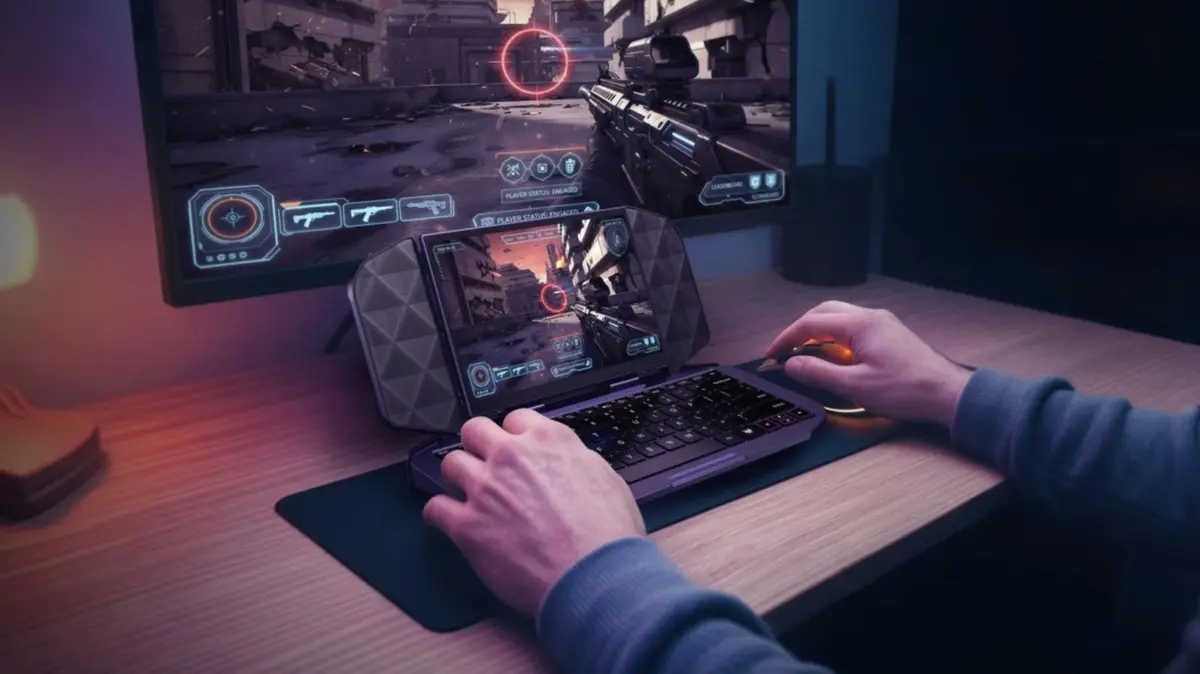
Enter Acer and its striking new experimental hardware philosophy. Unveiled at a major technology showcase, the Acer Project DualPlay Mini is an ambitious, highly experimental conceptual device that challenges the fundamental taxonomy of portable computing. Emblazoned with the aggressive gaming aesthetics of Acer’s Predator sub-brand, the DualPlay Mini is not merely another portable console; it is a mechanical chameleon designed to seamlessly transform from a handheld gaming rig into a micro-laptop.
While the device currently exists strictly within the realm of conceptual prototyping—with vital specifications such as total weight and final pricing remaining intentionally obscured—it offers a tantalizing glimpse into a potential future where consumers no longer need to choose between a dedicated gaming handheld and a ultra-portable productivity machine. Marking Acer’s 50th corporate anniversary with subtle design nods embedded within its chassis, the DualPlay Mini underscores the company’s willingness to push physical engineering to its limits. This in-depth report examines the mechanics, architectural ambitions, potential market implications, and broader industry trends surrounding Acer’s most eccentric portable concept to date.
Detailed Chronology: From Concept Genesis to the IFA Showcase
The trajectory of the portable PC gaming market has accelerated at a breathtaking pace. Following the commercial validation established by Valve’s Steam Deck, mainstream and boutique manufacturers alike rushed to capture market share. Brands including ASUS, Lenovo, MSI, and Acer entered the fray, each iterating on thermal management, display fidelity, and ergonomic weight distribution. However, as the hardware matured, the software limitations of a strictly controller-based interface quickly became apparent. Genres heavily reliant on keyboard and mouse inputs—such as complex real-time strategy (RTS) titles, massively multiplayer online role-playing games (MMORPGs), and competitive tactical shooters—remained notoriously difficult to play comfortably on standard handheld form factors.
Acer’s journey toward addressing this dilemma began in earnest with the development of its mainstream portable ecosystem, culminating in devices like the Predator Atlas 8. Drawing from thermal breakthroughs and industrial design lessons learned during the engineering of the Atlas series, Acer’s internal research and development teams began exploring dual-purpose utility. The core question posed by the engineering division was simple yet profoundly difficult to execute: Could a single chassis physically house the ergonomic handgrips of a controller while simultaneously deploying a functional keyboard and mouse interface without sacrificing structural integrity?
The result of this internal R&D cycle was Project DualPlay Mini.
Unveiled to the public during a major industry showcase—the Internationale Funkausstellung Berlin (IFA)—the concept immediately captured the attention of media and attendees alike. Unlike traditional handhelds that rely on software remapping or external Bluetooth accessories to bridge the gap between gaming and productivity, the DualPlay Mini relies on an intricate, mechanical "flip-and-swivel" transformation architecture. By allowing the chassis to physically reconfigure its physical layout, Acer bypassed the software-first compromises that plague hybrid devices, opting instead for a mechanical marvel that shifts states in a matter of seconds.
Supporting Context & Metrics: Architecture, Cooling, and Design Engineering
To understand why the Project DualPlay Mini has generated such intense industry chatter despite its strictly conceptual status, one must analyze the engineering hurdles inherent in its design. The device is built around a philosophy of fluid transition: moving between intense gaming sessions and intensive work environments without requiring the user to pack supplementary peripherals.
The Mechanical Transformation: Flip-and-Swivel Design
At its core, the DualPlay Mini features a proprietary transformation mechanism. In its standard handheld configuration, it mimics the footprint of a heavy-duty portable gaming console. Ergonomic side grips house traditional dual-analog thumbsticks, a D-pad, and face buttons, offering the tactile feedback expected by modern gamers.
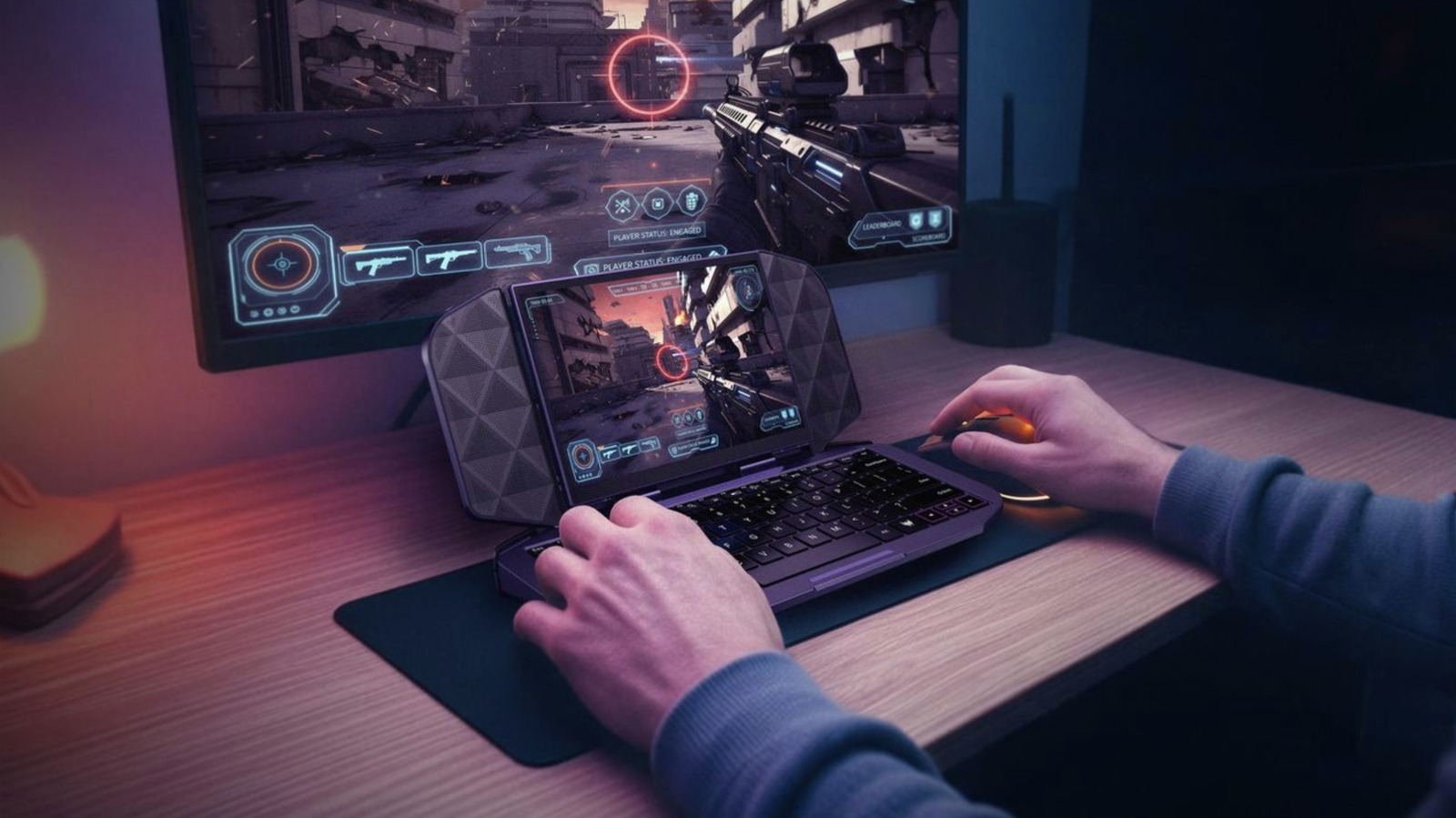
However, through a carefully orchestrated series of hinges and sliding tracks, the device can be manipulated into a tiny laptop layout. In this secondary mode, the controller elements shift or recede to reveal a fully functional, backlit physical keyboard, accompanied by a miniature trackpad or mouse-control option. This dual-state capability bridges a long-standing chasm in mobile computing. Users can transition from playing a fast-paced action title on a train to drafting documents or engaging in competitive tactical shooters that demand the lightning-fast precision of a mechanical keyboard and mouse.
Thermal Architecture: Taming the Thermal Beast
Packing high-performance processing components into a condensed, multi-part chassis presents a nightmarish thermal challenge. Handheld devices already struggle with heat dissipation due to their cramped internal volumes, and adding moving mechanical parts further complicates airflow channels.
Acer leveraged its advanced engineering experience from the Predator Atlas 8 series, equipping the DualPlay Mini with a sophisticated dual-fan cooling architecture. While specific thermal dissipation metrics (such as TDP limits and decibel output under load) have not been officially published, the inclusion of a robust dual-fan layout indicates that Acer intends the device to handle sustained computing loads. Efficiently venting heat away from the primary compute deck while the device is folded into its micro-laptop mode is a critical engineering feat, ensuring that users do not experience thermal throttling or uncomfortable chassis temperatures during extended typing or gaming sessions.
Connectivity and Expansion
A true productivity machine cannot live by its built-in screen alone. Recognizing that a micro-laptop screen—while likely boasting high refresh rates and vibrant color accuracy characteristic of modern Predator displays—may occasionally prove too small for intensive multitasking, Acer designed the DualPlay Mini with external display connectivity in mind. Users can dock or wire the device to external monitors, transforming the micro-laptop into the central hub of a desktop-class workstation. Furthermore, the inclusion of a backlit keyboard ensures that late-night productivity sprints or dark-room gaming sessions remain unhindered.
The Weight Dilemma: The Elephant in the Room
Perhaps the most telling detail regarding the concept’s current developmental phase is the deliberate omission of one critical metric: weight.
As noted in early hands-on reports, the exact heft of the Project DualPlay Mini remains unknown—a reality that industry analysts agree is "probably for the best." Engineering a handheld console requires keeping the total mass low enough to prevent wrist fatigue during long gaming sessions. Conversely, outfitting a device with structural hinges, sliding mechanisms, a secondary keyboard layout, and an advanced dual-fan cooling system inevitably adds significant mass. If the DualPlay Mini were to tip the scales at an excessive weight, its viability as a comfortable, portable handheld would be severely compromised. Acer’s decision to withhold this data underscores the experimental nature of the hardware; they are currently prioritizing functional proof-of-concept over lightweight material optimization.
Commemorative Branding
Subtly woven into the industrial design of the chassis is a nod to Acer’s corporate longevity. Etched clearly onto the back panel are the words "Acer 50 since 1976." This discreet branding marks the company’s upcoming golden jubilee, serving as a reminder that even as Acer pushes into experimental, futuristic form factors, its engineering roots span half a century of personal computing evolution.
Official Statements and Industry Perspective
Acer’s communication surrounding Project DualPlay Mini has been carefully calibrated to manage consumer expectations while highlighting the innovative spirit of the Predator brand.
In an official press release distributed during the unveiling, Acer articulated the foundational ethos of the project:
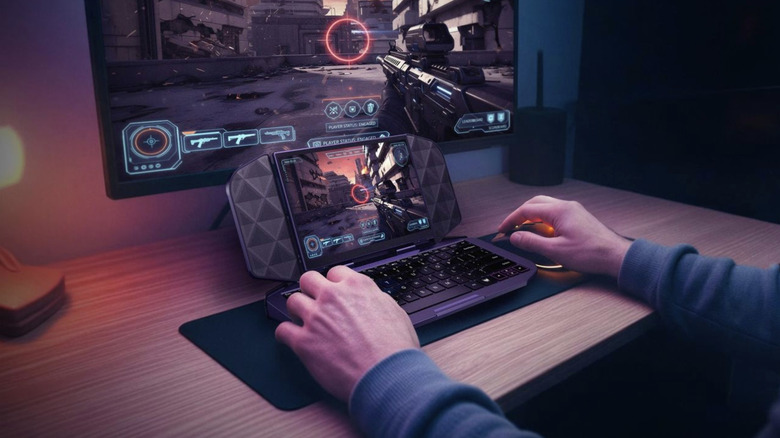
"The Predator-branded concept is designed to move fluidly between gaming and productivity without requiring a separate device for each."
This statement cuts to the heart of modern consumer electronic fatigue. In an era where tech enthusiasts often carry a smartphone, a dedicated handheld gaming console (such as a Steam Deck or ROG Ally), a tablet, and a productivity laptop, the appeal of device consolidation is immense. Acer envisions a future where a single pocketable or bag-friendly device can satisfy the demands of an enterprise worker by day and a hardcore gamer by night.
Industry analysts and hardware experts have responded with a mixture of intense fascination and pragmatic skepticism. On one hand, the mechanical ingenuity of the "flip-and-swivel" mechanism represents a breath of fresh air in an industry that has increasingly gravitated toward uniform, slate-like handheld designs. On the other hand, veteran tech journalists frequently point out the historical graveyard of conceptual hardware. Complex mechanical parts—particularly those subjected to the physical stresses of daily folding, sliding, and grip manipulation—are inherently prone to long-term wear and tear.
Acer has been entirely transparent about the fact that Project DualPlay Mini is currently a concept device. There is no guarantee that it will ever transition from an IFA showcase booth to retail store shelves. However, historically, concepts of this magnitude serve as crucial testing grounds for consumer reaction. Features developed for experimental prototypes frequently find their way into future commercial iterations, meaning elements of the DualPlay Mini’s cooling architecture, hinge design, or hybrid interface could heavily influence Acer’s consumer roadmap for the late 2020s.
Future Outlook: What Project DualPlay Mini Signals for Portable Computing
The emergence of Acer’s Project DualPlay Mini forces both consumers and competitors to re-evaluate the trajectory of portable tech. As mobile processors narrow the performance gap with desktop counterparts, the limiting factor for mobile computing is no longer raw computational power—it is interface versatility.
1. The Death of Single-Purpose Portable Hardware?
As battery densities improve and silicon architecture becomes more energy-efficient, the line separating a "gaming console" from a "personal computer" is vanishingly thin. Handhelds run full operating systems; laptops feature discrete graphics chips capable of modern ray tracing. Devices like the DualPlay Mini suggest that the future belongs to morphing, multi-modal hardware. Consumers increasingly reject the financial and logistical burden of carrying multiple single-purpose gadgets.
2. The Mechanical Challenge of Moving Parts
While foldable phones have normalized hinges and flexible screens in the consumer sphere, mechanical sliding assemblies in high-performance PCs remain rare due to durability concerns. If Acer—or any competitor inspired by this design—ever decides to commercialize a hybrid handheld-to-laptop device, the engineering focus will immediately pivot to stress testing. Dust resistance, hinge longevity, and structural rigidity under drop-test conditions will dictate whether such form factors can survive the rigors of everyday consumer use.
3. Software Ecosystem Adaptation
Hardware is only as good as the software that controls it. For a device like the DualPlay Mini to truly succeed in a commercial setting, operating systems must become even more fluid in detecting physical state changes. Seamlessly shifting Windows or a specialized Linux-based gaming UI from a controller-optimized interface to a keyboard-and-mouse workspace instantly, without manual user intervention, requires deep software-hardware integration. Acer’s exploration of this concept may prompt software giants like Microsoft to further optimize operating systems for transitional micro-form-factor PCs.
Conclusion
Acer’s Project DualPlay Mini may never find its way into retail packaging, and its undisclosed weight remains a lingering question mark regarding its practical ergonomics. Yet, as a statement of intent, it succeeds brilliantly. By challenging conventional industrial design and aggressively tackling the friction between mobile gaming and desktop productivity, Acer has proven that the golden anniversary of the company is being met not with complacency, but with bold, unapologetic experimentation. Whether the DualPlay Mini becomes a revolutionary product category or remains an ambitious footnote in tech history, it has successfully expanded our imagination of what a portable computer can be.