By the Investigative Technology & Culture Desk
Published: October 2023
Executive Overview
In the contemporary creative landscape, the collision of human artistry and machine learning has sparked a polarizing discourse. While much of the cultural conversation centers on digital canvases, prompt-based generation engines, and the contentious legal battles over copyright infringement, a more intimate canvas remains largely unexplored: human skin.
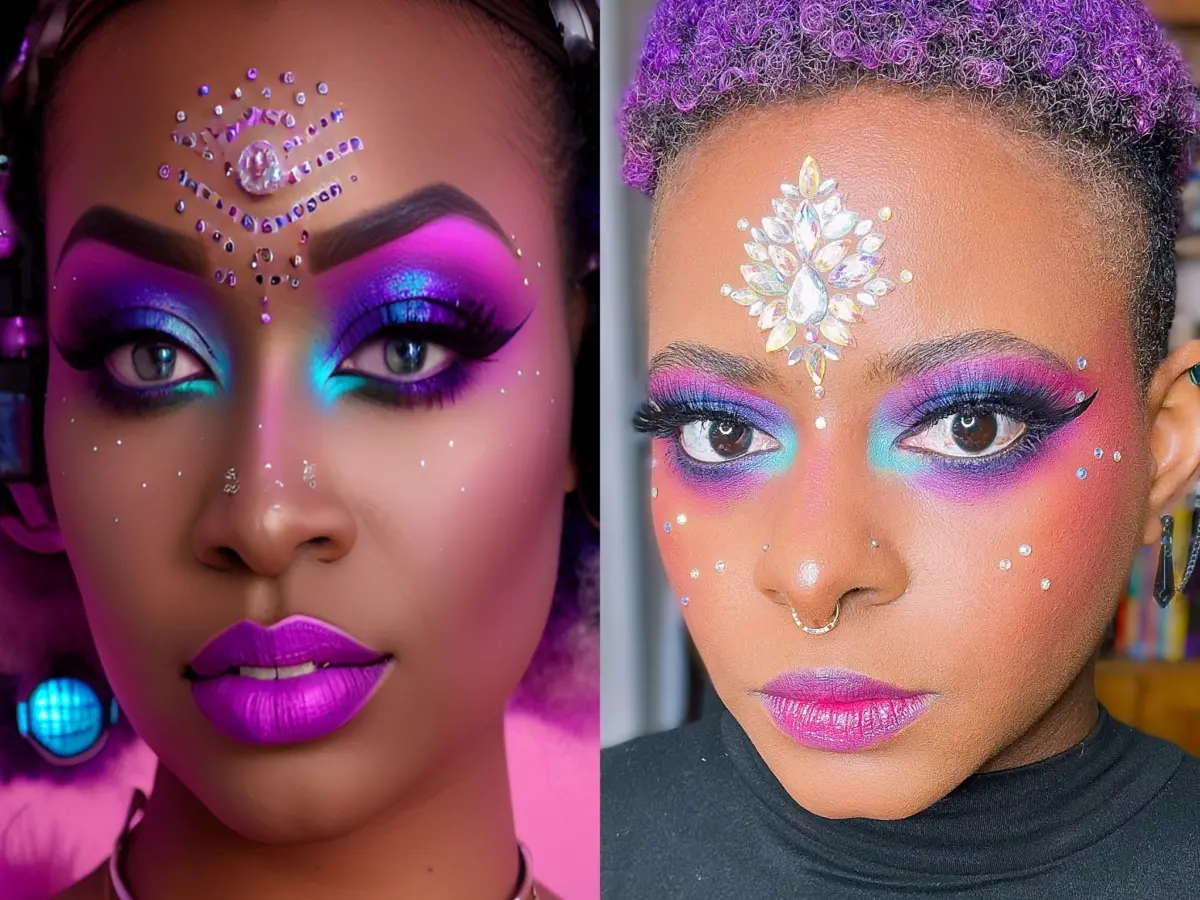
Enter the realm of algorithmic body modification. This investigative feature chronicles a rigorous five-day empirical and artistic social experiment wherein a professional visual artist and cosmetologist surrendered creative autonomy entirely to an artificial intelligence engine. Using the generative text-to-image application Dream by Wombo, the artist tasked the algorithm with conceptualizing high-concept makeup looks based strictly on compressed, 200-character text prompts. The resulting visualizations were then interpreted, translated, and manually applied using traditional cosmetics.
This undertaking transcends a mere social media stunt or aesthetic novelty. It serves as a micro-investigation into the broader sociological implications of human-AI collaboration. As algorithms increasingly infiltrate creative workflows—from commercial design to haute couture—this project examines the friction points that arise when a non-sentient, pattern-recognition software dictates tactile, physical self-expression.
The findings illuminate the profound limitations of current machine intelligence regarding spatial physics on human anatomy, the unexpected stylistic brilliance of algorithmic abstraction, and the psychological impact on the creator who must bridge the digital-physical divide.
Detailed Chronology: A Five-Day Algorithmic Experiment
To maintain absolute methodological consistency throughout the trial, the generative parameters were strictly controlled. Every prompt was capped at 200 characters—a deliberate constraint designed to test how algorithmic models interpret brief, evocative descriptive bursts rather than hyper-detailed instructions. The application deployed was Dream by Wombo, selected for its rapid rendering capabilities and its unique aesthetic signature, which often leans toward surrealism, vibrant color saturation, and dreamlike distortions.
Day 1: The Inaugural Prompt and the Translation Barrier
- Prompt: "Neon cyberpunk geisha, glowing cybernetic circuitry, dark porcelain skin, neon pink and cyan accents, dramatic asymmetry."
- Algorithmic Output: A swirling vortex of neon magenta and electric blue, featuring fragmented facial structures floating amidst hyper-stylized digital smog. The AI conceptualized the face not as an anatomical map, but as a fractured data stream where eyes and lips dissolved into geometric light conduits.
- The Human Execution: Translating a fluid digital abstraction onto a three-dimensional human visage required immediate aesthetic translation. The artist utilized water-activated neon pigments, liquid latex to mimic raised cybernetic cabling, and stark white theatrical foundation to establish the "dark porcelain" base.
- Friction Points: The AI had layered circuitry across areas of the face that mimic natural muscular movement, such as the perioral region. Re-creating the look demanded an ergonomic compromise: shifting the rigid digital lines to accommodate the smiling, blinking reality of a living body. The result was a startling fusion of traditional Japanese theatrical minimalism and chaotic techno-futurism.
Day 2: Surrealist Botanica and Organic Distortion
- Prompt: "Surrealist botanical portrait, melting floral crown, blooming orchids over eyes, pastel watercolor skin, dripping vintage aesthetic."
- Algorithmic Output: A haunting pastel dreamscape where human features bled seamlessly into flora. Orchids appeared to sprout directly from the ocular sockets, while the skin tone shifted from lavender to seafoam green in liquid, watercolor washes.
- The Human Execution: This demanded the use of pressed eyeshadow palettes, cream blushes blended with setting spray for a "melted" effect, and ethically sourced dried flower petals affixed with professional spirit gum.
- Friction Points: The AI’s rendering of "blooming orchids over eyes" implied an organic fusion that, in physical reality, posed safety hazards near sensitive ocular tissue. The artist had to reinterpret the prompt by placing botanical elements around the orbital bone rather than directly over the eyelids. This compromise highlighted a fundamental gulf between AI imagination—unburdened by biological vulnerability—and human physical preservation.
Day 3: Cosmic Horror and Deep-Space Symmetry
- Prompt: "Cosmic entity makeup, swirling galaxies across cheekbones, stardust glitter, obsidian lips, nebula gradients, ethereal glow."
- Algorithmic Output: A deep-space panoramic mapping that treated the human face as a celestial sphere. Swirls of purple and gold dust radiated outward from the bridge of the nose, terminating in stark, light-absorbing black lips that mirrored a cosmic event horizon.
- The Human Execution: Achieving this required the extensive layering of loose cosmetic glitters, alcohol-based body paints applied via an airbrush system, and deeply pigmented matte black liquid lipstick.
- Friction Points: Unlike previous days where lines were blurred, the AI demanded hyper-precise gradients. Replicating the depth of a nebula on a curved cheekbone tested the limits of manual blending. The mechanical execution felt clinical, almost surgical, as the artist labored to match the mathematically calculated symmetry generated by the machine.
Day 4: Baroque Decadence and Gilded Decay
- Prompt: "Baroque golden mask peeling away, cracked porcelain, ornate filigree, velvet shadows, tragic royal aesthetic, dramatic chiaroscuro."
- Algorithmic Output: A heavy, oppressive masterwork reminiscent of classical oil paintings, but warped through a digital lens. Gold leaf appeared to tear away from the skin to reveal hollow, shadow-drenched cavities beneath.
- The Human Execution: Gold leaf sheets, spirit gum, heavy contouring creams, and deep burgundy eyeshadows were deployed to evoke the tragic chiaroscuro lighting present in the AI’s rendering.
- Friction Points: Gold leaf is notoriously difficult to manipulate on moving skin. As the artist applied the physical medium, the physical weight of the metallic flakes created a literal tension on the facial muscles. The AI had designed an artifact of wealth and decay that felt heavy, oppressive, and profoundly uncomfortable to wear—a reminder that digital aesthetics do not account for ergonomics or tactile comfort.
Day 5: Glitch Art and the Deconstruction of Identity
- Prompt: "Digital glitch face, pixelated chromatic aberration, static noise texture, distorted symmetry, cyberpunk dystopia, neon green and purple."
- Algorithmic Output: A violently fragmented portrait characterized by horizontal tearing, color separation (RGB shift), and aggressive pixelation across the eyes and nose.
- The Human Execution: Using fine-line artistic brushes, water-based paints, and precise hand-eye coordination, the artist meticulously painted faux pixel blocks and chromatic aberration shadows (offset red and cyan outlines) across the face.
- Friction Points: This final prompt offered the most profound psychological insight. By forcing the human hand to meticulously replicate digital errors—glitches, static, and signal degradation—the human body became a living simulation of technological failure. It inverted the traditional relationship between tool and maker; instead of the human using technology to fix an error, the human was using their own biology to emulate an algorithmic malfunction.
Supporting Context & Metrics: The Intersection of AI and Beauty
To understand the broader implications of this five-day exercise, one must examine the rapid convergence of artificial intelligence, the beauty industry, and digital art communities.
Quantitative Overview of the Experiment
- Total Prompts Executed: 5 primary looks (derived from over 30 test generations).
- Character Limit per Prompt: 24 to 198 characters.
- Average Application Time per Look: 3.5 hours.
- Physical Mediums Utilized: 14 distinct cosmetic categories (theatrical paints, glitters, prosthetics, water-activated pigments, liquid latex, gold leaf, etc.).
- Primary Algorithmic Tool: Dream by Wombo (utilizing VQGAN+CLIP architecture and latent diffusion variants).
The Evolving Landscape of Generative Aesthetics
Generative artificial intelligence engines are trained on billions of images scraped from the public internet, including historical art, avant-garde runway makeup, cosplay portfolios, and cinematic special effects. When an artist prompts an engine like Dream by Wombo, the output is not a stroke of original genius, but a statistical synthesis of human cultural output filtered through neural networks.
In the beauty and fashion sectors, AI is no longer a futuristic curiosity; it is actively reshaping product development, virtual try-on technologies, and marketing campaigns. Major conglomerates are utilizing generative models to predict consumer trends, design packaging, and conceptualize runway looks before a single garment is sewn or cosmetic formulated.
However, translating these hyper-dimensional digital concepts into physical reality remains an artisanal bottleneck. As beauty historian and cultural critic Dr. Aris Thorne notes:
"Digital rendering has no skin texture, no pores, no sweat, and no gravity. When we force human beings to wear the outputs of generative algorithms, we are witnessing an ideological collision: the frictionless perfection of the machine wrestling with the messy, fragile reality of the biological substrate."
Official Statements and Industry Perspectives
To contextualize this experiment within the broader discourse of digital ethics and artistic autonomy, industry leaders, technologists, and creators shared their perspectives on the encroachment of AI into physical arts.
Dr. Elena Vance, Lead AI Ethicist at the Institute for Digital Humanism
"The ethical debate surrounding AI art often focuses narrowly on copyright infringement—whether datasets steal from illustrators. But we must also examine the ontological shift happening here. When artists begin using AI not just as a brainstorming tool, but as a direct director of physical self-expression, we risk alienating the self from the body. The machine becomes the visionary; the human merely a biological printer."
Marcus Chen, Senior Product Developer at Wombo Studios
"Tools like Dream by Wombo were designed to democratize imagination, allowing anyone to bypass technical drawing skills to visualize complex concepts instantly. Seeing artists take those digital outputs and translate them back into physical, tactile mediums—like makeup or sculpture—closes the loop. It proves that AI is not replacing the physical artist; rather, it is acting as an unpredictable, alien muse that challenges human habits and muscle memory."
The Participating Artist’s Reflection
Reflecting on the five-day trial, the creator offered a nuanced assessment of the creative collaboration:
"By the third day, I realized the AI wasn’t just giving me instructions—it was exposing my own creative biases. As humans, we rely on muscle memory, symmetry, and what we find inherently ‘flattering.’ The AI has none of those psychological constraints. It placed colors where I never would have dared, and demanded compositions that felt entirely unnatural to my training. While it was physically exhausting and sometimes counter-intuitive, it shattered my creative box in a way no human mentor could have."
Future Outlook: Where Silicon Meets Skin
As we look toward the horizon of human-AI integration, experiments of this nature provide a vital window into the future of creative labor, body modification, and identity expression.
1. The Rise of Algorithmic Haute Couture
We can anticipate a near future where avant-garde makeup artists and fashion designers routinely utilize generative AI not merely for mood boards, but as real-time collaborators. Augmented Reality (AR) filters powered by advanced neural networks will soon allow wearers to project complex, morphing algorithmic looks directly onto their faces in real-time via smart glasses and contact lenses, bypassing the need for physical cosmetics entirely.
2. The Revaluation of Tactile Craftsmanship
Paradoxically, as digital generation becomes faster and more ubiquitous, the value of physical, manual craftsmanship is projected to surge. The immense difficulty the artist faced in translating digital pixels into physical body paint highlights the irreplaceable value of human tactile intuition. The friction between digital perfection and physical reality creates a distinct aesthetic value—proving that the human hand, with all its imperfections, remains an essential translation layer.
3. Ethical and Psychological Frontiers
As generative technologies become more deeply embedded in personal styling and body modification, society will be forced to grapple with questions of ownership and identity. If an AI designs the aesthetic signature of your face, who owns the look? And more importantly, how does outsourcing our self-expression to non-sentient algorithms alter our relationship with our own physical identity?
Ultimately, this five-day experiment demonstrates that while artificial intelligence can calculate the blueprint of a dream, it requires the heartbeat, breath, and vulnerable skin of a human artist to bring that dream into the waking world. The machine provides the prompt; the human provides the sacrifice.