Executive Overview
In a mobile technology landscape dominated by an endless sea of uniform black slabs and iterative, uninspired upgrades, disruption is rare. For years, the smartphone industry has suffered from a monolithic design hegemony, where flagship devices from major manufacturers vary little beyond camera bump geometry and minor display curvature. However, innovation occasionally bubbles up from unexpected places. Enter RugOne—an ambitious offshoot of established rugged device manufacturer Ulefon—which is attempting to rewrite the rulebook on mobile photography and device versatility.
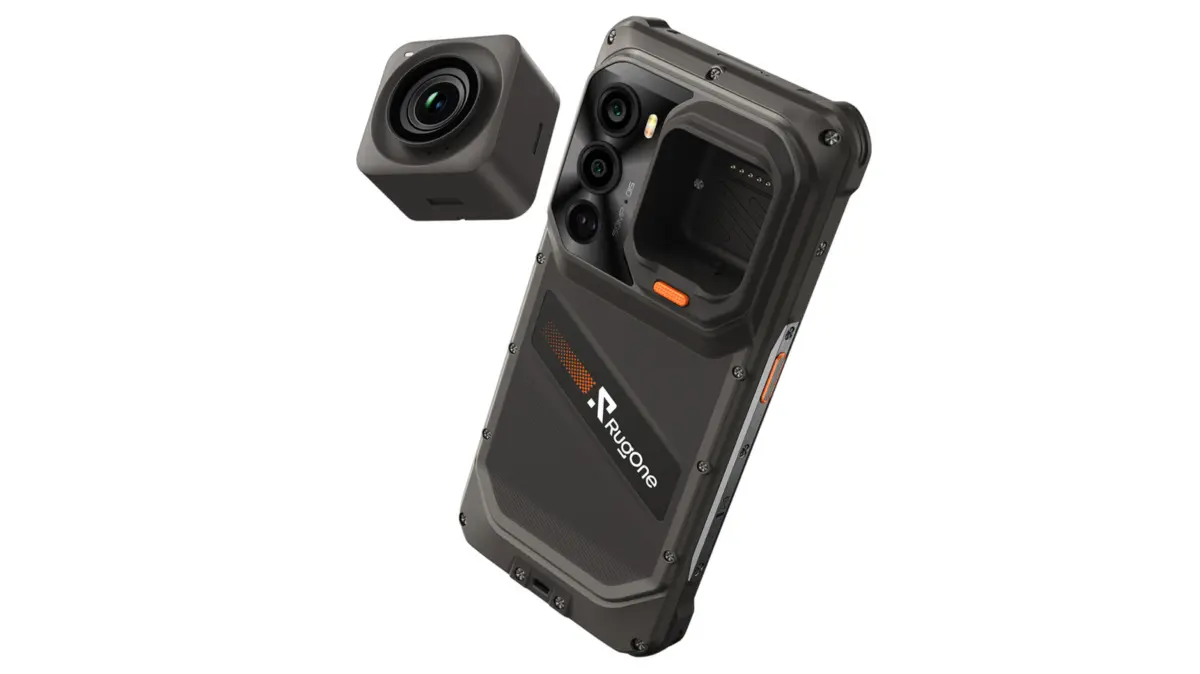
Making its official debut at IFA 2026 in Berlin, the RugOne Xsnap 7 Pro is not merely another heavy-duty handset designed to survive construction sites and wilderness trails. Instead, it introduces a genuinely novel mechanical innovation: a magnetic, removable camera module that detaches from the phone chassis to function as a standalone action camera. This clever dual-purpose hardware fusion challenges the traditional boundaries between pocket computers and extreme sports recording equipment.
Combining robust internal specifications, advanced night-vision capabilities, elite durability certifications, and a modular ecosystem, the Xsnap 7 Pro aims to capture the attention of outdoor enthusiasts, content creators, and tech minimalists alike. As the device transitions from its initial Mobile World Congress (MWC) teaser to its imminent global commercial rollout via Kickstarter and mainstream retail channels, the industry is watching closely to see if modular ruggedness can carve out a lucrative, permanent niche in an increasingly stagnant marketplace.
Detailed Chronology: From MWC Teaser to IFA 2026 Debut
The journey of the Xsnap 7 Pro reflects a calculated strategy of public anticipation and iterative refinement. The device’s conceptual roots first broke cover earlier in the year at MWC 2026, where RugOne displayed an early prototype that immediately turned heads among mobile journalists and gadget enthusiasts. At the time, the concept of a smartphone sporting an extractable action camera module felt like a futuristic pipe dream—a fascinating design exercise that might never survive the rigors of mass production and commercial viability.
Fast forward to Berlin, September 2026: the prototype has evolved into a fully realized retail product. Unveiled officially on the showroom floor of IFA 2026, the Xsnap 7 Pro has transitioned from a proof-of-concept gimmick to a concrete market entry. While initial hands-on reporting has been somewhat constrained by the frantic pace of trade show schedules—with early evaluation samples arriving just as press coverage kicks off—the industry response has been overwhelmingly intrigued.
The timeline shifts next to the financial and distribution front. RugOne has bypassed traditional, purely retail-first launches in favor of a hybrid funding and distribution model. Early-bird sales are scheduled to open via Kickstarter on September 7, offering early supporters a discounted preorder entry point of €799 (approximately $930 USD). Following the crowdfunding campaign, the Xsnap 7 Pro is slated for a broader global retail rollout in October 2026. It will be available directly through RugOne’s online storefront and major platforms like Amazon, carrying a standard retail price of $999 USD and offered in two distinct colorways: Sand Dune and Classic Black.
Supporting Context & Metrics: Hardware, Modularity, and Durability
To understand the engineering achievement of the Xsnap 7 Pro, one must examine the intricate specifications governing both its smartphone core and its detachable optical module.
The Detachable Action Cam Module
At the heart of the device’s novelty is its almost cube-shaped detachable camera module. Weighing a mere 39 grams, the module attaches securely to the back of the phone via a robust magnetic interface. When separated from the host device, it operates independently as a portable action camera:
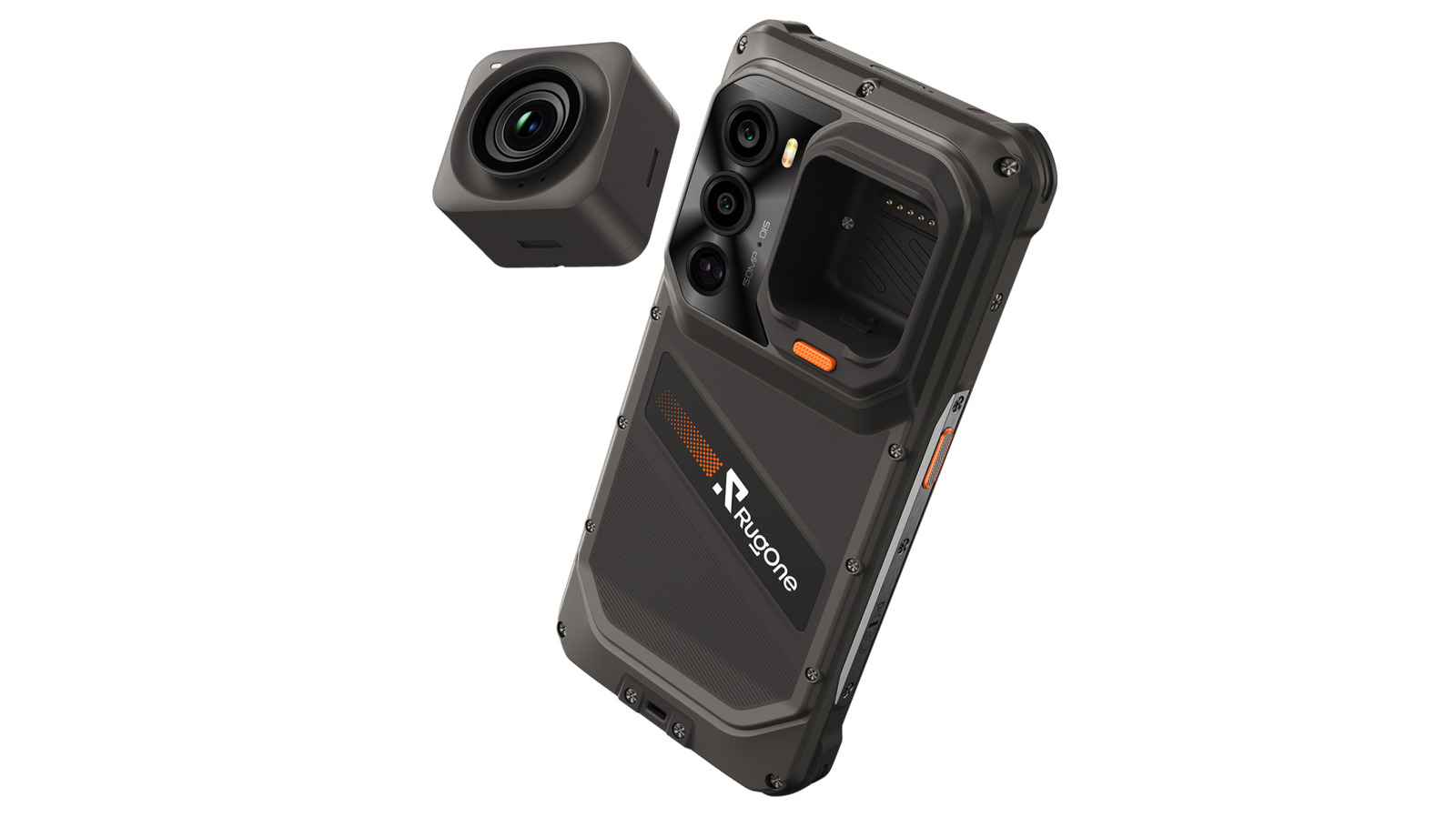
- Video Capabilities: Records up to 2.7K resolution video at 30 frames per second. While it may not directly challenge the 4K/8K dominance of top-tier GoPro or DJI flagship action cameras, its form factor makes it remarkably versatile for casual vlogging and fast-paced point-of-view capture.
- Power & Storage: Houses an internal battery capable of running for up to 40 minutes on a full charge and includes 64GB of built-in storage.
- Connectivity & Range: Broadcasts a live preview feed to RugOne’s companion smartphone app at a distance of up to 50 meters.
- Software Suite: Features advanced algorithmic tools including distortion correction, horizon lock, and a specialized Freeframe shooting mode. Freeframe captures the entire sensor area, allowing creators to dynamically crop into vertical or horizontal framing post-capture without losing critical image data.
- Environmental Sealing & Mounts: Waterproof up to five meters without requiring any supplementary protective casing. RugOne bundles a companion magnetic pendant for body-worn perspective shots, and the module remains compatible with third-party accessories utilizing a universal mount.
The Smartphone Foundation
Strip away the action camera module, and the Xsnap 7 Pro remains a formidable, high-performance rugged smartphone:
- Display: A spacious 6.67-inch display boasting a peak brightness of 1,700 nits and a smooth 120Hz adaptive refresh rate, ensuring optimal outdoor legibility under direct sunlight.
- Internal Processing: Powered by the capable MediaTek Dimensity 8400 processor, delivering snappy multitasking and efficient power management.
- Primary Optics: Features a 50-megapixel "AI main camera" equipped with optical image stabilization (OIS) for stable video and sharp daylight photography.
- Night Vision: Incorporates a dedicated 64MP infrared night-vision camera backed by infrared (IR) LEDs, designed to capture crisp black-and-white details in pitch-black environments—ideal for nighttime wildlife observation and tactical exploration.
- Rugged Certifications: Built to survive extreme environments with IP68 and IP69K ratings. It can withstand complete water submersion up to two meters deep for up to 30 minutes and survive punishing 1.5-meter drop tests onto solid concrete.
Official Statements and Industry Perspective
While formal press conferences at IFA 2026 have yielded a steady stream of product demonstrations, executive commentary from RugOne and its parent company, Ulefon, highlights a clear philosophy: functional differentiation.
Industry analysts point out that smaller manufacturers cannot compete with Apple, Samsung, or Google in brute marketing spend or pure camera sensor size alone. Instead, brands like RugOne must pioneer functional form factors that solve real-world problems for niche demographics.
"We are not trying to build a phone for everyone; we are building a device for those who demand more from their gear," notes a representative close to RugOne’s product development team. By integrating an action camera directly into the chassis of a heavy-duty phone, RugOne addresses a frequent pain point for outdoor adventurers, construction professionals, and extreme sports enthusiasts: the necessity of carrying, charging, and managing multiple disparate electronic devices.
Early feedback from tech journalists covering the Berlin convention suggests that while the 2.7K resolution and 40-minute battery life of the removable module place it in a casual or secondary action-cam category rather than a professional studio tier, the sheer convenience of having a magnetic, wearable camera constantly docked to your phone is an undeniable engineering triumph.
Future Outlook: Will Modular Ruggedness Catch On?
As the Xsnap 7 Pro prepares for its September Kickstarter launch and subsequent October retail debut at $999, the broader implications for the smartphone industry warrant careful consideration. Modular smartphones have a notoriously checkered history. From the ambitious but ill-fated Google Project Ara to the modular attachments seen on the LG G5 and Motorola’s Moto Mods, consumers have historically proven hesitant to embrace ecosystems built around detachable, proprietary hardware pieces that risk becoming obsolete upon the next phone upgrade.
However, the Xsnap 7 Pro approaches modularity from a different angle. Rather than asking users to swap out processors, batteries, or specialized sensor backs for the phone’s internal operation, RugOne has isolated the modular component to an auxiliary use case: content creation and action sports. If the magnetic connection proves durable over months of hard field use, and if the companion software remains stable, the Xsnap 7 Pro could establish a compelling new product category.
Should the device achieve commercial traction on Kickstarter and Amazon, it may force larger manufacturers to reconsider how they approach utility and form factor design. For now, RugOne stands as a defiant outlier in 2026—proving that with a bit of engineering creativity, the smartphone industry can still occasionally surprise us.