Executive Overview
A profound structural shift is currently shaking the foundations of the enterprise software ecosystem. Across Silicon Valley and the public markets, venture capitalists, boardrooms, and institutional investors are witnessing a sweeping phenomenon: the mass return of original founders to the helm of pre-AI, multi-billion-dollar Business-to-Business (B2B) software companies.
This is not a knee-jerk reaction to a single botched quarter or a temporary macroeconomic downturn. Rather, it represents what industry insiders are calling "The Last Stand."
This pattern is predominantly manifesting in mid-to-large-scale firms—companies boasting upwards of $50 million in Annual Recurring Revenue (ARR) that are large enough to sustain baseline operations yet fundamentally too sluggish to capture the exponential growth driven by agentic artificial intelligence. For infrastructure providers selling consumption-priced services (such as Twilio), the AI boom acted as an immediate volume catalyst. However, for legacy application providers whose economic engine relies heavily on traditional seat-based licensing models, generative AI has emerged as an existential headwind.
As these established software giants face margin compressions, plateauing growth rates, and disrupted pricing models, professional, hired-gun CEOs are stepping down. In their place, original founders are reclaiming the corner office. From UiPath to Workday and Intercom, these creators are returning because executing an AI pivot requires a level of reckless, existential risk tolerance that only a founder possesses.
Detailed Chronology: The Return of the Creators
The blueprint for this movement is marked by rapid executive musical chairs, falling share prices, and desperate strategic re-imaginings. Three marquee case studies underscore this unprecedented corporate migration.
1. Daniel Dines and UiPath: A Four-Month Interregnum
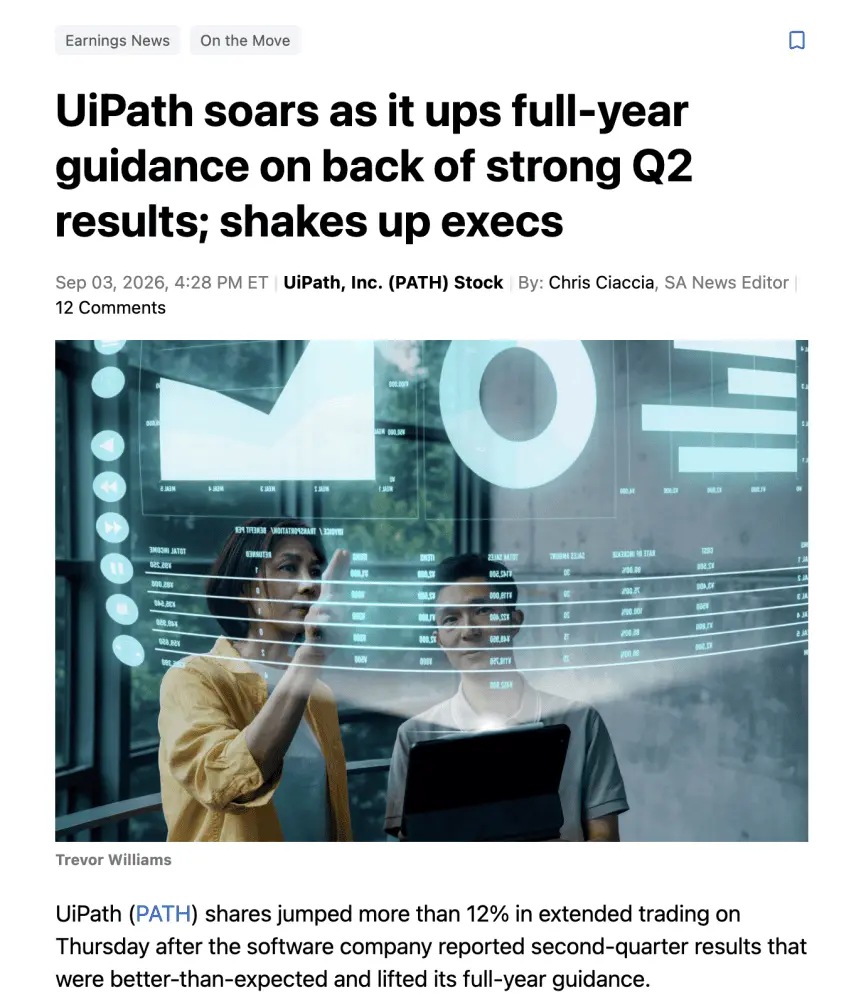
The bellwether for the founder’s return occurred at robotic process automation (RPA) pioneer UiPath. Co-founded by Daniel Dines in 2005, Dines ran the enterprise as CEO or co-CEO until January 31, 2024, when he handed the daily operational reins to seasoned enterprise executive Rob Enslin, transitioning himself to the roles of Chief Innovation Officer and Executive Chairman. Enslin assumed the sole CEO position on February 1.
The tenure of the hired CEO, however, was shockingly brief. On May 29, 2024, UiPath shocked the market by announcing that Enslin was resigning effective June 1, and that Dines was stepping back into the Chief Executive seat immediately.
The catalyst for this hasty reversal was evident in the quarterly earnings reported that very day. Despite posting an ARR of $1.508 billion (up 21%) and revenues of $335 million (up 16%), management slashed its forward guidance for both the upcoming quarter and the full fiscal year. The market reacted with immediate fury: UiPath’s stock, which had flirted with $27 in February, plummeted roughly 35% to trade below $12. Generative AI had begun cannibalizing RPA use cases faster than anticipated, and Dines was forced to retake the chair before the second full quarter of the transition could even conclude.
2. Aneel Bhusri and Workday: Steering a $10 Billion Giant
A similar narrative played out at enterprise cloud application titan Workday. On February 9, 2026, Workday announced that co-founder Aneel Bhusri would return to the CEO role, replacing Carl Eschenbach. Eschenbach had originally joined as co-CEO in December 2022, took over as sole CEO in February 2024, and was ousted two years later. Workday leadership subsequently confirmed that Bhusri’s return was permanent, rather than a temporary placeholder while conducting an executive search.
Bhusri framed the move squarely around the technological imperative of artificial intelligence, famously noting that AI represents a paradigm shift far greater than SaaS itself—one that will unilaterally crown the next generation of enterprise market leaders.
The financial backdrop to Bhusri’s return was stark. Workday’s equity valuation had slid roughly 15% heading into 2026, sitting more than 40% below its 2024 peaks. By the time Workday reported its Q2 FY27 earnings on August 27, subscription revenue stood at $2.471 billion (up 13.9%), but management’s forward guidance for fiscal 2028 pegged subscription growth at a decelerating 11%. For a $10 billion revenue juggernaut boasting an elite 97% gross retention rate, 13% growth signaled a comfortable stasis—but in an AI-driven economy, stasis is the prelude to decline.
3. Eoghan McCabe, Intercom, and the "Fin" Pivot
Perhaps the most radical execution of the founder’s return belongs to Eoghan McCabe of Intercom. McCabe stepped away from the CEO post in 2020, only to return at the close of 2022—just weeks before OpenAI introduced ChatGPT to the global stage. Recognizing that the company required an existential reboot, McCabe and his team rapidly pivoted away from legacy chat widgets to leverage early large language models (LLMs), successfully pioneering the customer-facing AI agent category.
In May 2026, McCabe executed a maneuver that professional CEOs are almost never empowered to make: he entirely rebranded the 15-year-old company—dropping the Intercom moniker and renaming the enterprise Fin, after its flagship AI agent. Fifteen years of global brand equity and the ubiquitous chat bubble plastered across millions of websites were cast aside for the future of autonomous software.
Just weeks later, on June 15, Salesforce announced a definitive agreement to acquire Fin for approximately $3.6 billion. At the time of the deal, Fin supported roughly 30,000 customers and generated upward of $400 million in recurring revenue. While emerging AI startups like Sierra and Decagon command astronomical, speculative multiples, McCabe’s grounded execution resulted in a respectable B2B software exit—proving that a founder willing to cannibalize their own core business can still secure a massive windfall.
Supporting Context & Metrics: The Anatomy of a Slow Death
Why do professional executives consistently fail to navigate the AI transition in legacy B2B firms? The root cause lies in structural alignment, risk appetite, and the fundamental mathematics of the enterprise software business model.
The Professional CEO’s Dilemma
A non-founder CEO is typically hired to drive operational discipline, expand international sales channels, and hit predictable quarterly revenue targets. They arrive with a carefully audited playbook, a compensation structure tied directly to those predictable milestones, and a board of directors expecting steady, incremental margin expansion.
Generative AI, however, violently shatters every single line of that playbook. Successfully pivoting a pre-AI B2B giant requires:
- Preemptive Cannibalization: Intentionally destroying your own high-margin seat-based pricing model before an agile AI-native competitor does it for you.
- Margin Destruction: Absorbing severe gross margin compression for six to eight consecutive quarters while training proprietary models, restructuring infrastructure, and retraining customer success teams.
- Product Euthanasia: Killing legacy software modules that still bill millions in ARR because they represent dead-end technology.
- Wall Street Transparency: Convincing public market institutional investors that financial metrics must go down before they can structurally go back up.
A professional CEO who attempts these radical pivots risks immediate termination by panicking institutional boards—and receives virtually no gratitude if the gamble pays off. Conversely, a founder treats this destruction of legacy assets as Day One all over again.
The Governance Prerequisites
A founder cannot simply parachute back into a company at will; execution of "The Last Stand" depends entirely on corporate governance structures.
- At Workday, Aneel Bhusri and co-founder Dave Duffield retain control over 68% of the voting power, and Bhusri never truly left the campus, serving continuously as Executive Chairman.
- At UiPath, Daniel Dines maintained immense influence as Chief Innovation Officer and Executive Chairman during Enslin’s brief tenure, which explains why his bureaucratic reinstatement took a mere four months rather than a nine-month executive search.
- Conversely, Eoghan McCabe at Intercom represents the hard case: he was fully detached from day-to-day operations for two years, requiring direct intervention and pleas from board members to step back into the fray.
If a company’s founders have completely liquidated their equity stakes, departed the board, and severed operational ties, this strategic escape hatch is permanently sealed. Those companies are left at the mercy of search committees and private equity buyouts.
Official Statements and Market Reactions
The tension between organic internal reinvention and external private equity intervention reached a fever pitch in mid-2026.
The Silver Lake Pursuit of Workday
When public markets lose faith in a legacy software giant’s ability to transition into the AI era, private equity steps into the vacuum. On August 13, 2026, Reuters dropped a bombshell report revealing that private equity titan Silver Lake had been engaged in quiet takeover talks regarding taking Workday private for months.
The market’s reaction was instantaneous and electric. Workday shares surged roughly 18% in a single session—marking the company’s best single-day performance since 2016—and inflated its market capitalization from roughly $43 billion to nearly $51 billion in hours. Investors effectively signaled that they believed Workday’s complex AI structural rebuild stood a vastly superior chance of survival away from the relentless scrutiny of quarterly public guidance and short-term earnings pressures.
Inside the Numbers: Bhusri’s Rebuild
Despite hovering in the shadow of potential private equity acquisition, Bhusri’s seven-month operational sprint back in the CEO seat has yielded tangible, aggressive financial transformations. In Workday’s Q2 FY27 earnings report:
- AI initiatives drove more than $100 million in new Annual Contract Value (ACV), accounting for over 25% of total new ACV.
- Standalone AI SKU ARR reached approximately $600 million, representing a staggering year-over-year increase of more than 200%.
- Over 5,500 enterprise customers are now actively utilizing at least one native Workday AI agent.
- Management announced impending shifts toward an upcoming consumption-based credit pricing model to align with modern agentic software delivery.
Yet, despite these massive operational victories, Workday’s forward growth projections remain anchored at 11%. Rebuilding the foundation halts the corporate death spiral, but restarting hyper-growth is a grueling, multi-year uphill battle.
Future Outlook: The Window is Closing
The overarching lesson from UiPath, Workday, and Intercom is sobering. Daniel Dines felt compelled to resume the CEO role at UiPath when the company was still growing at a robust 21% year-over-year. He did not wait for the top-line revenue metrics to enter negative territory; he recognized the seismic threat of agentic AI early and acted decisively.
For pre-AI B2B enterprise firms currently grinding down toward single-digit or low double-digit growth rates while their founders watch passively from honorary board seats, the strategic window for redemption is closing rapidly.
The returns of these founders have successfully halted corporate decline, stabilized gross retention rates, and rebooted legacy platforms for the modern era. However, true top-line reacceleration remains an elusive horizon. As the enterprise software landscape marches further into the generative age, one immutable truth remains clear: When the Last Stand arrives, professional management teams are not enough. Enterprises need their creators back—because no one else possesses the audacity to tear down the old empire to build the new one.