Executive Overview
In the contemporary cinematic landscape, where horror cinema is frequently cleaved into either sterile elevated prestige or formulaic jumpscare factory fodder, rare is the picture that manages to marry genuine dread with the dizzying, flushed highs of adolescent infatuation. Enter Leviticus, the audacious, genre-defying queer coming-of-age feature from Australian writer-director Adrian Chiarella. Set against the sun-baked, stifling backdrop of suburban Melbourne, the film follows Naim (Joe Bird), a closeted, socially awkward teenager whose burgeoning obsession with the outgoing, vest-wearing Ryan (Stacy Clausen) is violently interrupted by an inexplicable supernatural curse.
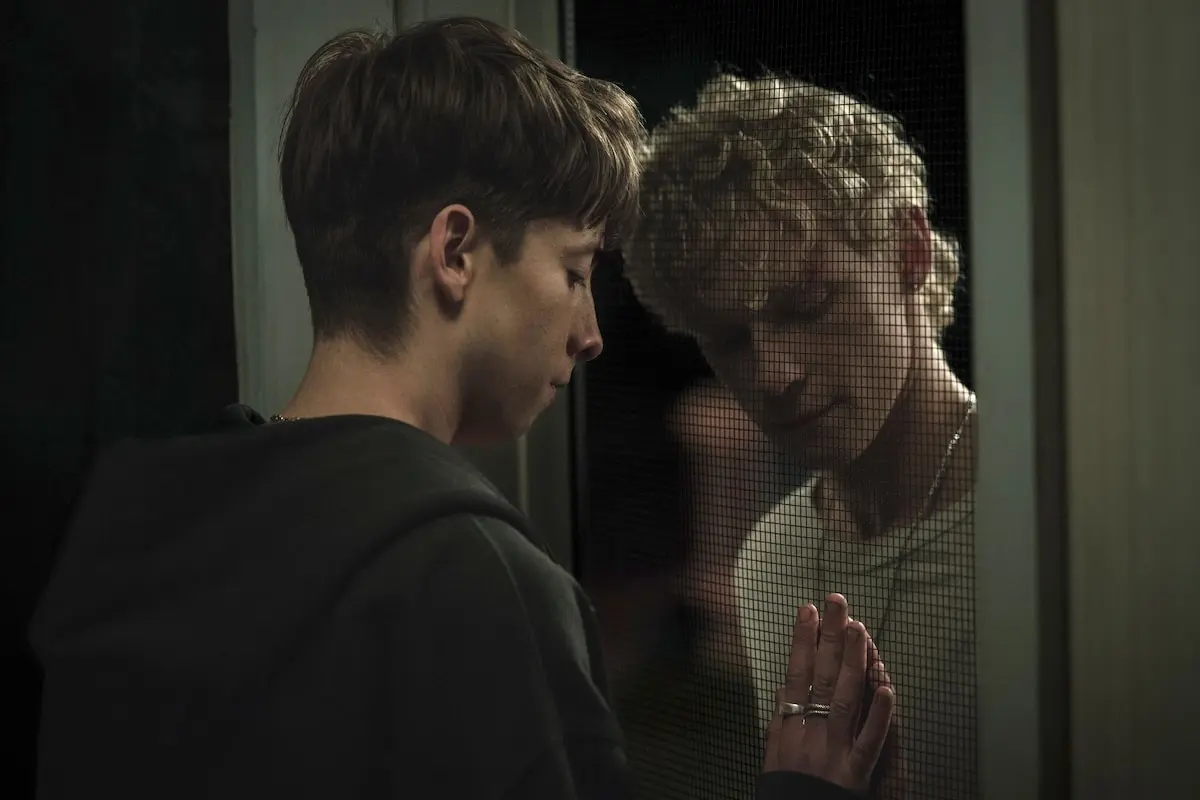
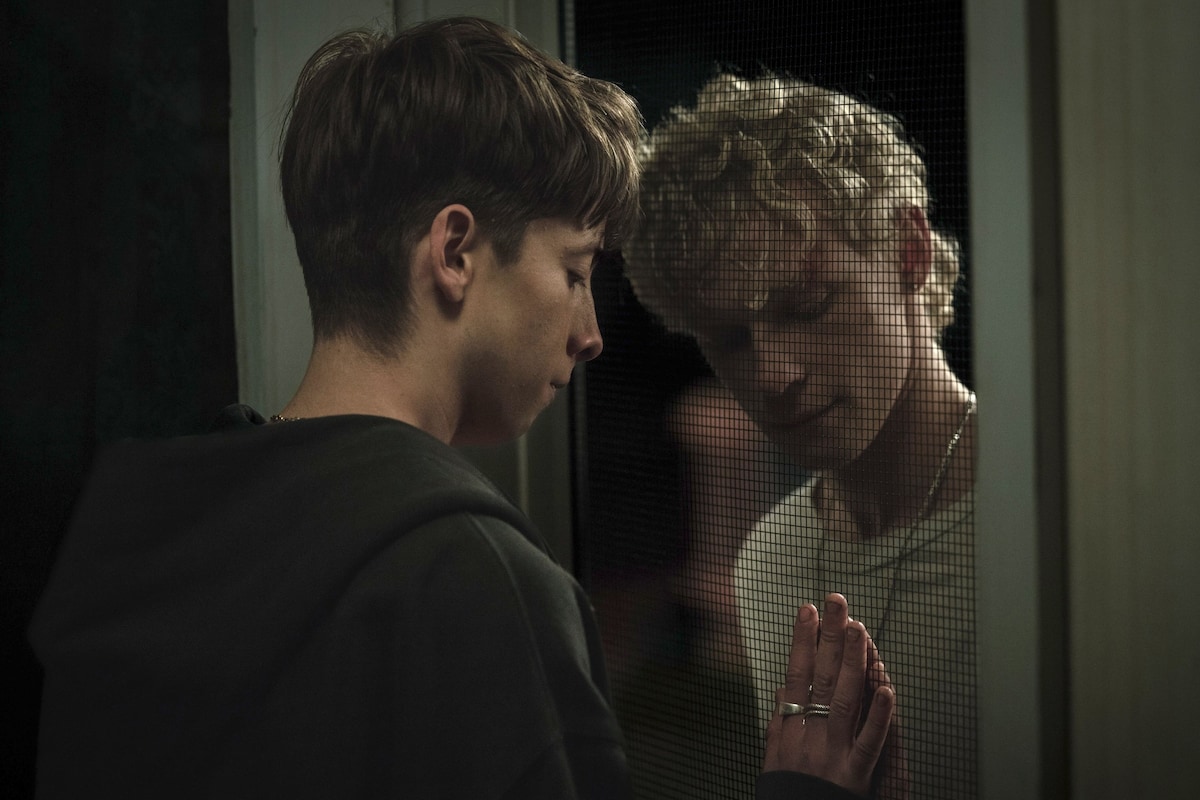
The premise is as ingenious as it is psychologically potent: Naim and Ryan find themselves hunted by a shapeshifting, bloodthirsty demon that imitates the person its target desires most. Because the entity can only be perceived by its intended victim, and because it mimics the physical form of their number-one crush, the narrative forces an ironic twist of survival strategy—it is mathematically safer for the boys to remain locked in each other’s physical presence around the clock. Every breathless moment teeters precariously on the razor’s edge between a classic cinematic jump scare and a romantic comedy set-piece. Is that Ryan crawling through the bedroom window at night to hide in the blankets, or a flesh-eating mimic wearing his face?
Since its celebrated premiere at the Sundance Film Festival, Leviticus has transcended traditional box-office expectations to cultivate an incandescent, near-fanatical cult following. Driven largely by young queer audiences who have latched onto the visceral metaphor of two boys risking everything to protect one another, the film has sparked an unprecedented wave of repeat viewings. In major cultural hubs from Sydney to London, passionate cinephiles are returning to theaters dozens of times over. As Chiarella and breakout star Joe Bird navigate an intensive international press tour, Leviticus stands proudly as a landmark achievement—proving that the intersection of terror and true love is fertile ground for cinematic innovation.
Detailed Chronology: The Genesis and Evolution of Leviticus
The Roots of Trauma and Catharsis
The conceptual architecture of Leviticus did not emerge from a sterile screenwriting seminar, but from the visceral, formative memories of its creator. Speaking candidly in a London hotel lounge in early September, Adrian Chiarella traced the origins of the project back to his own adolescence as a half-Italian, half-Chinese youth navigating the jagged realities of real-world homophobia in Australia.
"It all came from my own dreams and nightmares of experiencing real-world homophobia as a teenager," Chiarella reflects. For the young director, traditional narrative structures often felt culturally localized or inaccessible, yet genre cinema offered a universal language. "Horror movies were so important to me. I’ve spoken to other LGBTQ+ people who also turned to horror movies for comfort."
This comfort in the macabre translated directly onto the page, resulting in a script that balances grounded adolescent yearning with supernatural peril. The narrative kicks into motion when Naim, weighed down by a deeply religious mother (played with agonizing nuance by Mia Wasikowska) who drags him to church to purge his internal conflicts, spots Ryan kissing the local pastor’s son, Hunter. Consumed by a toxic cocktail of jealousy, internalized shame, and fear, Naim retaliates by outing the pair to their parents. The resulting homophobic "exorcism"—a harrowing sequence that sends Ryan and Hunter into violent convulsions on the floor—serves as the inciting incident that rips the community’s fragile veneer away.
The Awakening of the Curse
Shortly after the fallout of the exorcism, Naim witnesses Ryan being strangled by an invisible assailant. Through trial, error, and sheer terror, the teenagers decode the terrifying operational parameters of the curse:
- The supernatural entity relentlessly emulates the victim’s absolute number-one crush.
- The entity remains completely invisible to anyone outside the targeted individual.
- Consequently, the safest place for Ryan to be is directly beside Naim, weaponizing their mutual romantic tension into a bizarre, high-stakes game of psychological endurance.
For Joe Bird, an 18-year-old Australian actor who previously turned heads as the younger brother in the breakout horror hit Talk to Me, reading the script was an immediate, watershed moment. "When I read the script for the first time, I saw in the first five pages that they kiss," Bird recalls. "I was like: this is a queer story. It’s a beautiful film that’s needed in the world right now."
Supporting Context & Metrics: Decoding the Metaphor
Cinematic Lineage and Subtext
While structural comparisons to David Robert Mitchell’s It Follows are inevitable—both films utilize an unstoppable, sexually charged supernatural force that cannot be reasoned with—Leviticus carves out an entirely unique thematic footprint. In Chiarella’s vision, the monster operates as a multi-layered metaphor for adolescent desire: much like the awakening of queer identity in a hostile environment, there is ultimately no point in trying to deny its existence.
Furthermore, the monster acts as a chilling mirror to societal indifference. "The monster also reflects how present homophobia is in today’s society," notes Bird. "When these boys ask for help, they’re told it’s not real. The violence never stops." This systemic abandonment is underscored by the deliberate isolation of the protagonists; family members and peers alike are either incapable or unwilling to offer aid.
The Complexity of Arlene
Crucially, Leviticus refuses to indulge in simplistic cinematic tropes regarding villainy and redemption. This is nowhere more evident than in the character of Arlene, Naim’s mother. Played by Mia Wasikowska, Arlene is written not as a cartoonish bigot, but as a three-dimensional, grieving widow who genuinely believes that her son is spiritually better off enduring the supernatural affliction than embracing his true self.
Chiarella deliberately chose this path to reflect the arduous, nonlinear trajectory of familial reconciliation. "I wanted to show that it’ll take many years of healing for her to change her mind," the director explains. "You see films that engage with these themes, and the moment of redemption with the parents happens too quickly." Wasikowska’s layered performance anchors the horror in domestic tragedy, proving that emotional estrangement can be just as terrifying as any monster roaming the Melbourne suburbs.
The Box-Office and Fandom Phenomenon
Though indie horror features frequently struggle to capture sustained theatrical legs, Leviticus has rewritten the rules of engagement through grassroots community mobilization. Distributed by NEON, the film has sparked a fervor reminiscent of classic midnight movie cult favorites.
- The Repeat Viewing Metric: While an average theatergoer attends a film once, Leviticus has birthed a hardcore subculture of repeat attendees. The production team has routinely encountered fans who have seen the film double-digit numbers of times.
- The Record Holders: During the promotional tour, Bird and Chiarella met a dedicated viewer in Sydney who had checked into cinema screenings a staggering 28 times.
- Demographic Engagement: The core engine of this phenomenon is young queer audiences who see the narrative not merely as a monster movie, but as an ultimate validation of romance under duress—two teenagers literally willing to stare down death for the right to love each other.
Official Statements & Industry Insights
Crossing Cultural Boundaries Through Fear
Chiarella’s unique multicultural heritage—born in Australia to a half-Italian, half-Chinese family—has deeply informed his cinematic philosophy. Growing up navigating distinct cultural and linguistic expectations within his own extended family, he discovered early on that comedy does not always neatly translate across borders.
"If I told a joke, it might not appeal to all of my relatives," Chiarella reflects. "But if I saw something frightening on the way home from school, it’d hook and terrify any member of my family, whether they’re from Malaysia, China, Italy, or Britain. It was instilled in me from a young age that horror movies will travel around the world." When asked if his diverse family appreciates Leviticus, the director smiles wryly and admits, "Some more than others."
Behind-the-Scenes Chemistry and Intimacy Coordination
The unique tonal tightrope of Leviticus—balancing legitimate body-horror terror with swooning romantic yearning—required intense collaboration between the director, the cast, and behind-the-scenes professionals.
To execute the scenes where the monster impersonates Ryan to disarm Naim, Bird and co-star Stacy Clausen worked closely with an intimacy coordinator. "Me and Stacy had to work with an intimacy coordinator to figure out how the monster will latch onto desire," Bird explains. "It’s like a predator luring in its prey before it pounces."
This tension reaches its zenith in scenes where the creature closes the distance with a lingering, romantic kiss before its caressing hands slide menacingly toward Naim’s throat. This blurring of lines fosters a complex emotional landscape where the viewer shares Naim’s simultaneous delight and dread.
The on-screen chemistry has evidently bled into real-world fan engagement. Reflecting on the sharp-eyed community online, Bird notes, "I’m sure the Leviticus fandom has noticed that Naim and Ryan share a glance at each other when Shannon Berry’s character says it looks like the person you’re most into. Me and Stacy are definitely happy it was reciprocated."
The Comedic Relief off Screen
Despite the grim subject matter of the film, the working relationship between director and star is marked by mutual admiration and sharp wit. Listening to Chiarella break down his cinematic influences, Bird leans forward with a grin. "I’m begging him to do a comedy next," the young actor declares. "The world needs to know that he’s one of the funniest people I’ve ever met."
Future Outlook: The Legacy of Leviticus
As Leviticus continues its triumphant rollout in UK cinemas and international territories, questions inevitably turn toward the future. While fans across social media have clamored for a cinematic sequel or franchise expansion, Chiarella remains noncommittal about spearheading a follow-up himself, though he notes he would happily welcome another filmmaker’s interpretation of the universe.
For now, the journey of the film remains intimately tied to its theatrical experience. At every stop on their relentless international tour, Chiarella and Bird participate in post-screening Q&A sessions, walking out in front of packed audiences as Frank Ocean’s evocative track "Self Control" plays over the closing credits.
For Bird, those final moments have become a bittersweet ritual. "Me and Adrian have seen the last five minutes of the film about 60 times because of Q&As," the actor confesses. "I love Self Control, and it always makes me cry. I’m always about to go on stage, and I’m wiping away my tears."
Ultimately, Leviticus proves that horror cinema is at its most potent when it uses supernatural scaffolding to explore the very real, very human agonies of marginalized youth. It is a terrifying nightmare wrapped in a tender embrace—a film that reminds us that while monsters may wear the faces of those we love, true love is the only weapon powerful enough to look the darkness in the eye and refuse to blink.
Leviticus is out in UK cinemas now.