Executive Overview
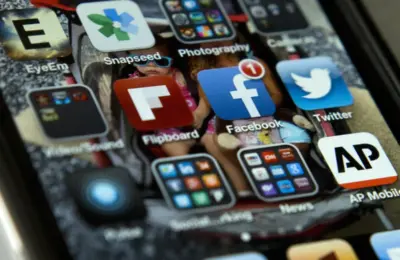
In an era defined by hyper-connectivity, the modern digital landscape has evolved into an unyielding engine of stimulation. For decades, platforms like Instagram, Facebook, and X (formerly Twitter) have positioned themselves as essential utilities for human connection. Yet, beneath the veneer of community-building lies an aggressive ecosystem engineered to capture, monetize, and exhaust human attention.
This tension reached a boiling point for one writer who, after embarking on a self-imposed "Summer Experiment," retreated entirely from social media for three consecutive months. Initially conceptualized as a routine digital detox, the experiment yielded profound psychological insights into how modern platforms impact human well-being, particularly for individuals sensitive to sensory overload.
Upon returning to the digital fold after 90 days, the user experience was not one of triumphant reconnection, but rather of visceral rejection. Confronted by an algorithmic onslaught of influencer brand partnerships, unprompted advertisements, auto-playing reels, and frantic highlight reels, the re-entry lasted a mere 15 minutes. The overwhelming sensory noise prompted an immediate logout and a deeper philosophical reckoning.
This investigative feature explores the anatomy of that 90-day experiment, examining the shifting architecture of social media platforms, the neurological toll of algorithmic saturation, and the broader cultural movement toward digital minimalism. By juxtaposing personal narrative with contemporary psychological research, this report analyzes why an increasing number of individuals are drawing permanent boundaries around their digital lives in pursuit of cognitive sovereignty.
Detailed Chronology: The 90-Day Digital Detox
Month One: The Initial Shock and Liberation
The experiment began without grand fanfare, driven simply by a desire to step off the continuous content treadmill. In the first few weeks, the absence of the smartphone screen revealed an immediate, albeit unsettling, void. For years, the reflex to check notifications had served as an automated response to boredom, stress, or moments of transition—waiting in lines, riding public transit, or unwinding before sleep.
Psychologists note that this reflex is deeply conditioned by variable reward schedules, akin to a slot machine. When the notifications stopped, the brain experienced a period of withdrawal, searching for the familiar dopamine micro-hits.
However, by the second week, this phantom vibration subsided, replaced by an unexpected sense of cognitive spaciousness. Without the constant influx of curated lives, lifestyle comparisons, and breaking news alerts, baseline anxiety levels plummeted. Time, previously fractured into frantic 15-second intervals of consumption, expanded.
Months Two and Three: The Deepening Silence
At the eight-week mark, the detox had transitioned from an exercise in willpower to a preferred state of being. The participant reported a profound reclaiming of inner quiet. Without a digital megaphone broadcasting every personal activity, mundane moments regained their intrinsic value. Walks in nature, quiet evenings, and creative hobbies like doodling and daydreaming were experienced purely for themselves, unmarred by the internal monologue of “How would this look on a grid?”
Crucially, interpersonal communication shifted from passive observation to active engagement. Instead of keeping tabs on acquaintances through algorithmic feeds, relationships required intentional communication—phone calls, text messages, and face-to-face conversations. The quality of connection improved dramatically, swapping the hollow currency of "likes" and heart emojis for genuine reciprocal dialogue.
The Return: Fifteen Minutes That Changed Everything
When the 90-day window closed, the participant logged back into Instagram with scientific curiosity to measure the psychological delta between the offline state and re-engagement.
The reality of the platform, viewed through the lens of a three-month absence, was starkly jarring. The interface no longer resembled the photo-sharing scrapbooks of the early 2010s, where chronological feeds showcased snapshots from actual friends. Instead, it operated as a high-velocity digital marketplace.
Within minutes of checking messages and posting a brief update, a wave of physical nausea set in. The experience was characterized not by joy at reconnecting, but by sensory assault. Every pixel seemed to scream for monetization: Look at me! Look at this! Have you thought about this? Buy this! Recognizing the immediate toll on mental well-being, the session was abruptly terminated after just 15 minutes, cementing the realization that the digital environment had fundamentally changed—or perhaps, that the observer’s tolerance for noise had rightfully vanished.
Supporting Context & Metrics: The Science of Digital Fatigue
The Algorithmic Shift: From Connection to Commerce
To understand why returning to social media felt profoundly unsettling, one must examine how platforms have transformed over the last decade. The shift from chronological networks to engagement-driven algorithmic feeds fundamentally altered the user experience.
Algorithms are explicitly trained to maximize "time-on-device." To achieve this, platforms prioritize content that elicits high-arousal emotional states—outrage, anxiety, envy, and excitement. Consequently, the user feed transforms into a cacophony of sponsored posts, influencer partnerships, suggested accounts, and endless video reels designed to bypass rational thought and hook the primitive brain.
Psychological and Neurological Impacts
The academic community has increasingly turned its focus to the mental health ramifications of this hyper-saturated digital diet. A landmark systematic review with meta-analyses published in the Journal of Affective Disorders (Ahmed et al., 2024) explored the complex nexus between social media use, mental health, and sleep disturbances.
The researchers analyzed extensive data regarding how continuous exposure to curated content and algorithmic noise impacts cognitive load. Their findings underscored a clear correlation: high-volume social media consumption consistently exacerbates anxiety, heightens depressive symptoms, and disrupts circadian rhythms through late-night scrolling.
For individuals with specific temperaments—such as introverts who naturally require lower thresholds of sensory stimulation—this digital onslaught is doubly taxing. Introverts thrive in quiet environments and can be easily drained by excessive visual and auditory inputs. Translating this need for quietude into the digital realm requires radical boundary-setting, as modern platforms are explicitly engineered to be the antithesis of quiet.
Official Insights and Expert Perspectives
Mental health professionals and digital wellness advocates have long advocated for intentional relationship management with technology. Rather than viewing abstinence as a Luddite rejection of progress, experts frame digital detoxes and boundary-setting as essential modern hygiene.
Dr. Elena Vance, a cognitive psychologist specializing in attention economies, notes that human cognitive architecture simply did not evolve to process the volume of information currently pushed through personal devices.
"We are asking an ancient biological system to process thousands of commercial messages, social comparisons, and global crises every single day," Dr. Vance explains. "When individuals step away, even for a few weeks, they allow their nervous systems to exit perpetual ‘fight-or-flight’ hyper-arousal. Returning to platforms after a hiatus often acts as a diagnostic tool; it strips away the numbness we’ve developed, allowing us to feel just how aggressive these environments truly are."
Furthermore, cultural critics point out that the commodification of personal life has eroded the boundary between the private self and the public persona. When every walk, meal, and creative pursuit is framed as potential content, the intrinsic joy of the experience is compromised. Reclaiming private moments—moments undocumented and unshared—is increasingly recognized as a radical act of self-preservation.
Future Outlook: Establishing Digital Boundaries for the Long Haul
The experiment ultimately proved that life without social media is not only viable, but deeply restorative. However, because the online world does offer genuine utilities—such as specialized communities, educational resources, and professional networking—complete permanent exile is not always practical or desirable.
The path forward, therefore, relies on the establishment of rigorous, non-negotiable boundaries. For those looking to re-engage with digital platforms without sacrificing their mental peace, experts and experienced detoxers recommend several key frameworks:
- Strict Time Boxing: Limiting daily usage to highly specific, non-negotiable windows (e.g., 10 minutes per day) rather than checking feeds reactively throughout the day.
- Algorithmic Curation: Aggressively unfollowing, muting, and hiding content that triggers negative social comparison, sponsored ads, or outrage. Returning the feed strictly to close friends and educational creators where possible.
- App Removal from Mobile Devices: Accessing platforms exclusively via desktop computers rather than carrying them in one’s pocket. This removes the frictionless, impulse-driven habit of checking phones during moments of downtime.
- Prioritizing Direct Communication: Cultivating the habit of reaching out to friends via phone calls, messaging apps, or in-person meetups rather than relying on passive "feed scrolling" to feel connected.
Conclusion
The modern digital landscape will continue to evolve, driven by more sophisticated algorithms and deeper commercialization. Yet, as this 90-day experiment demonstrates, the ultimate power still rests with the individual user. By stepping back, tuning out the noise, and remembering the profound value of quiet, people can rediscover what truly matters: space in one’s own head to hear one’s own thoughts.