Executive Overview
It is one of the peculiar paradoxes of the contemporary golden age of television that the most audacious, visually arresting, and emotionally staggering TV show of 2026 actually premiered three years prior. First broadcast in Spain in late 2023, La Mesías—created, written, and directed by the visionary filmmaking duo Javier Ambrossi and Javier Calvo, collectively known as Los Javis—has finally arrived on UK shores. Its delayed international landing is largely attributable to the sudden, meteoric rise in global prestige experienced by its creators, whose upcoming queer epic La bola negra has positioned them at the very pinnacle of international cinema.
Yet, long before global festivals took notice of their cinematic output, Los Javis were already crafting an eight-hour television masterwork that defies easy categorization. La Mesías is a sprawling, multi-generational, coming-of-age thriller that stitches together seemingly disparate cultural and psychological threads: UFO abductions, Christian Electronic Dance Music (CEDM), isolated religious cults, adolescent angst, viral internet culture, drug trafficking, and profoundly complex familial trauma that zigzags across decades.
In an era of risk-averse television dominated by algorithmic reboots and uniform aesthetics, La Mesías stands as a monument to unbridled artistic ambition. Its episodes can pivot seamlessly from an intense, dialogue-driven chamber play to a high-octane, Mad Max-esque desert car chase. As television increasingly leans toward digestible, passive viewing experiences, Los Javis have crafted a demanding, deeply rewarding odyssey about the pain of survival, the refuge of art, and the intricate architecture of trauma.
Detailed Chronology: Unraveling the Enigma of La Mesías
To step into the world of La Mesías is to enter a labyrinth of memory, delusion, and zealotry. Comprising seven dense, film-length episodes, the narrative unfurls across dual timelines, anchored primarily by the fractured psyche of Enric (played in adulthood by Roger Casamajor).
2013: The Extraterrestrial Awakening
The series opens in 2013. Enric is a middle-aged, emotionally stunted loner eking out a marginalized existence. He is utterly convinced that he was once abducted by extraterrestrials during his youth—a belief he shares with a community of fellow UFO obsessives at a desolate hotel near the imposing Montserrat Mountain.
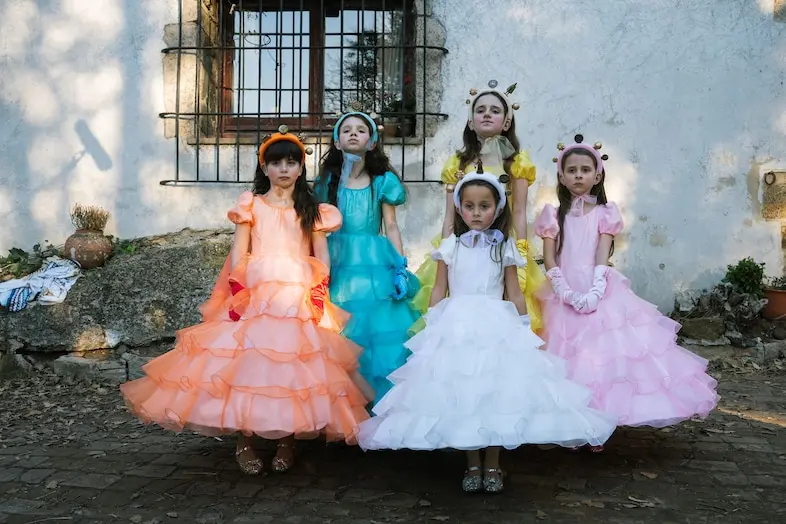
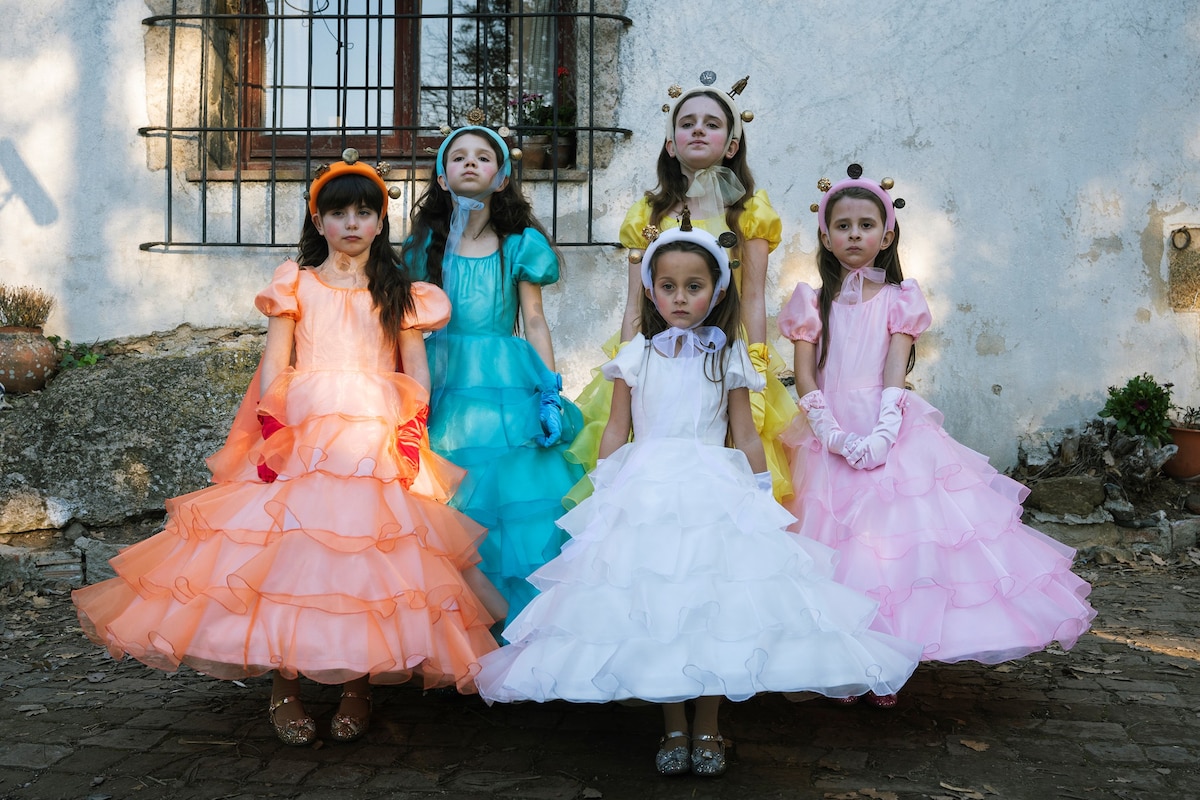
The inciting incident of Enric’s destabilization occurs while watching television. A music video flashes across the screen featuring Stella Maris, an all-girl Christian pop group performing high-energy, synthesized hymns of redemption. The sight of these young singers causes Enric to physically break down in terror and disbelief: the girls are his estranged, heavily brainwashed younger sisters.
Determined to make contact, Enric seeks out Irene (Macarena García), his only other sibling who managed to successfully escape the suffocating orbit of their mother. Yet, when Enric tracks her down, the door is summarily slammed in his face. In typical La Mesías fashion, this harrowing depiction of familial estrangement is juxtaposed with the bizarre, deadpan surrealism of Enric being comforted by a physical manifestation of a green alien. It establishes an idiosyncratic tonal baseline that persists throughout the run.
1989–1997: The Cult of Montserrat
To understand how the siblings arrived at this juncture, the narrative frequently plunges backward into the past, rendered in gorgeous, nostalgic 16mm stock that captures the shifting textures of 1989 and 1997.
When Enric is 10 years old, his volatile mother, Montserrat (portrayed with terrifying charisma by Ana Rujas), abandons her husband, absconding with young Enric and Irene. Initially, Montserrat’s rebellion against conventional domesticity manifests in chaotic ways: she engages in transient one-night stands, dabbles in drug trafficking, and encourages her children to chafe against societal norms.
However, as the years progress, Montserrat’s psychological instability morphs into dangerous messianism. Partnering with a YouTube-obsessed husband (Albert Pla)—who serves as a digital enabler to her escalating delusions—she transforms into a tyrannical cult leader. She isolates her eight children (with Biel Rossell and Irene Balmes playing the teenage Enric and Irene) inside a fortified domestic compound, completely severing them from the outside world under the guise of divine protection.
The children are permitted only one outlet for expression: performing synchronized Christian pop music at regional festivals. In their mother’s eyes, their performances are not mere entertainment, but a spiritual weapon wielded to purge the world of sin.
Supporting Context & Metrics: A Record-Breaking Phenomenon
The critical and cultural footprint of La Mesías within Spain cannot be overstated. Upon its release, the series achieved unprecedented critical acclaim, shattering records for the most awards ever won by a single television series in Spanish history.
Its fictional pop group, Stella Maris, transcended the boundaries of the screen to become a genuine cultural touchstone. The group performed on the main stage at the prestigious Primavera Sound festival in 2024, captivating audiences who chanted lyrics born from the show’s dark, satirical, yet earnest exploration of religious pop music. Pop royalty like Rosalía took to social media to declare her adoration for the series, cementing its status as a zeitgeist-defining cultural event.
The Spark for International Stardom
This domestic triumph served as the catalyst for Los Javis’s international ascent. According to Javier Calvo, the surprising resonance of La Mesías with French audiences paved the way for their subsequent project, La bola negra, to compete for the Palme d’Or at the Cannes Film Festival. There, the duo walked away with the coveted Best Director prize, and industry prognosticators are already forecasting major Oscar contention for the film.
"It felt natural to go from La Mesías to La bola negra," reflects Javier Ambrossi. "It taught us to go bold with our imaginations and really listen to the story."
Calvo echoes this sentiment regarding their visual evolution: "We learned from La Mesías to be visual. We can use fewer shots, but they have to be beautiful, with people moving in a graceful way, and the camera being artistic."
Official Statements: Inside the Creative Minds of Los Javis
Speaking over video calls from separate locations in Madrid, Ambrossi (42) and Calvo (35) radiate a palpable, enduring passion for their masterwork, even years after completing production.
"I love La Mesías," Calvo states, leaning toward the camera. "I’m so proud of the anxiety, the darkness, and the way we worked with the little kids. We wrote 500 pages, then did six months of shooting that ended up in India. It’s a lot of genres. We dared to make it difficult for us."
For Ambrossi, television represents a unique sanctuary for creative risk-taking. "Television is a chance to experiment. We wanted to go super-bold and try everything. People like that it’s a show with a weird vibe. No one wants to see the same thing all over again."
The Queer Metaphor and Universal Trauma
Though La Mesías does not explicitly feature LGBTQ+ protagonists—unlike their earlier groundbreaking biographical drama Veneno, which chronicled the life of trans icon Cristina Ortiz Rodríguez—both creators view the series through a deeply queer lens.
"It’s a metaphor for being LGBTQ+," Ambrossi explains. "You’re trapped for a long time in a house, or in your body, feeling alone. You’re in an environment that doesn’t make you feel free, that doesn’t allow you to be yourself. LGBTQ+ people connect to that."
This theme of confinement and liberation struck a chord that extended far beyond the queer community. Calvo notes the overwhelming volume of viewer feedback: "It’s amazing how many people say they relate to the trauma. They tell us, ‘My mother was the same.’"
The Collaborative Engine
The creative synergy between Ambrossi and Calvo—who were romantic partners for 13 years before amicably ending their relationship while maintaining an unbreakable professional bond—is legendary in the Spanish industry. Astonishingly, their intense writing process takes place entirely in real-time on a single laptop.
"The writing took us almost one year and a half," Ambrossi reveals. "We’re in the same room, on the same Final Draft. Javi is more into writing the dialogue and details with his fingers, and I tend to be at the whiteboard, creating the structure for episodes. It’s like four hands at the same time."
Yet, their methodology leaves room for organic discovery on set. "We started shooting before we wrote the ending," Calvo admits with a smile. "We follow what the actors are doing. It makes the process more alive."
Future Outlook: Art as an Escape Hatch
At its core, La Mesías investigates the redemptive, life-saving power of art for the profoundly isolated. In one standout sequence set in 1997, a teenage Enric steals a VCR and a cassette of Singing in the Rain. Away from the suffocating gaze of his mother, the children stage their own amateur musical production. Later, when Enric is locked in solitary confinement, he hallucinates that he is Gene Kelly, running up walls and tapdancing across the ceiling in defiance of his prison.
Both creators draw a direct line between those cinematic fantasies and their own turbulent upbringings.
"I was a little kid trapped in my town," Calvo recalls. "Pedro Almodóvar’s movies opened a window for me, and told me there was another world waiting for me."
Ambrossi shares a nearly identical origin story: "I was in a very religious, traditional environment, and it was movies and books that were the window for me to understand that there were gay people. No one told me. Movies told me. It’s something we keep in our minds and souls."
This lifelong reverence culminated in their collaboration on Pedro x Javis, a three-part documentary about Almodóvar. Reflecting on the master’s influence on La Mesías, Calvo notes, "On La Mesías, he was a friend. But on La bola negra, he’s a producer."
Navigating the Wilderness Outside the Cult
As La Mesías reaches its complex climax, the adult Enric and Irene are forced to confront a sobering truth: while their mother’s compound was a house of horrors, the outside world is similarly riddled with misery, heartbreak, and violence. In their indoctrinated bubble, the children were, in a perverse sense, shielded from the cruelties of modern existence.
This philosophical paradox lies at the heart of the series’ concluding message.
"Sometimes you doubt it," Calvo muses. "Is Enric trapped in the world the same way he was trapped in that house? In the end, the show says: you have to see what’s outside, and find your own way."
Ambrossi agrees, summarizing the harrowing yet vital journey of human maturation: "Yes. You have to suffer in order to grow up. You have to find the bad stuff, too."
La Mesías is currently streaming on MUBI.