Executive Overview
The landscape of artificial intelligence-generated imagery has matured past the era of digital hallucinations, malformed human hands, and uncanny valley textures. Modern multimodal models are technologically capable of producing commercial-grade visuals that rival high-end studio photography. Yet, despite these monumental leaps in hardware and algorithmic design, digital feeds remain inundated with what industry practitioners call "AI slop"—homogenous, predictable, and unmistakably synthetic imagery.
According to AI strategist Lauren deVane, this failure of execution does not lie with the underlying technology. "Mozart exists," deVane argues, comparing novice AI generation to a child aggressively hammering piano keys in a dentist’s office. "We just are judging [the medium] based on this kid smashing keys."
The root cause of generic AI visuals is a synthesis of underspecified human prompting, lazy defaults within generative platforms, and a fundamental misunderstanding of how modern foundational models process contextual input. When users issue sparse instructions—such as asking for a flyer or a generic product shot—advanced large language-backed image generators default to statistical averages.
To overcome this creative bottleneck, marketers must transition from casual prompters to digital art directors. By leveraging rigorous structural frameworks—such as the Seven Pillar Prompt Framework—and integrating multi-model production hubs like Magnific, brands can unlock unprecedented design consistency, scale production across hundreds of SKUs, and generate visual assets that truly reflect an original brand identity.
Detailed Chronology: The Evolution of Generative Visuals
To understand how to fix modern AI imagery, one must first trace the rapid evolution of the technology itself. Early iterations of text-to-image software relied primarily on diffusion architectures. These models functioned much like sculptors working from a block of marble: they started with a randomized field of digital noise and systematically chipped away at it based on textual instructions until an image materialized. While revolutionary for their time, these legacy models struggled heavily with anatomical coherence, complex spatial logic, and text rendering.
As developers integrated large language models (LLMs) directly into image-generation pipelines—exemplified by OpenAI’s GPT Image and allied tools—the paradigm shifted entirely. Current models do not merely search a static library of stock photos; instead, they analyze billions of pixel-pattern relationships mapped to textual metadata. More importantly, because they are backed by sophisticated LLMs, they possess deep contextual reasoning. They can interpret real-time events, parse multi-layered conceptual briefs, and analyze uploaded reference imagery with high precision.

Despite these advanced capabilities, user habits have lagged behind technological advancements. When platforms introduced native text-rendering capabilities—allowing systems to interpret paragraphs of typography directions, style guides, and compositional layouts—most operators continued to rely on rudimentary shorthand.
Issuing commands like "make me a flyer with this information" forces the AI to fall back on its internal training biases. Without explicit human intervention regarding font selection, negative space, framing, and color grading, the algorithm chooses the path of least resistance: safe, predictable, and ultimately forgettable visual assets.
Supporting Context & Metrics: The State of AI Marketing Mastery
The friction between advanced AI capabilities and everyday execution occurs against a backdrop of widespread systemic skill gaps within the marketing industry.
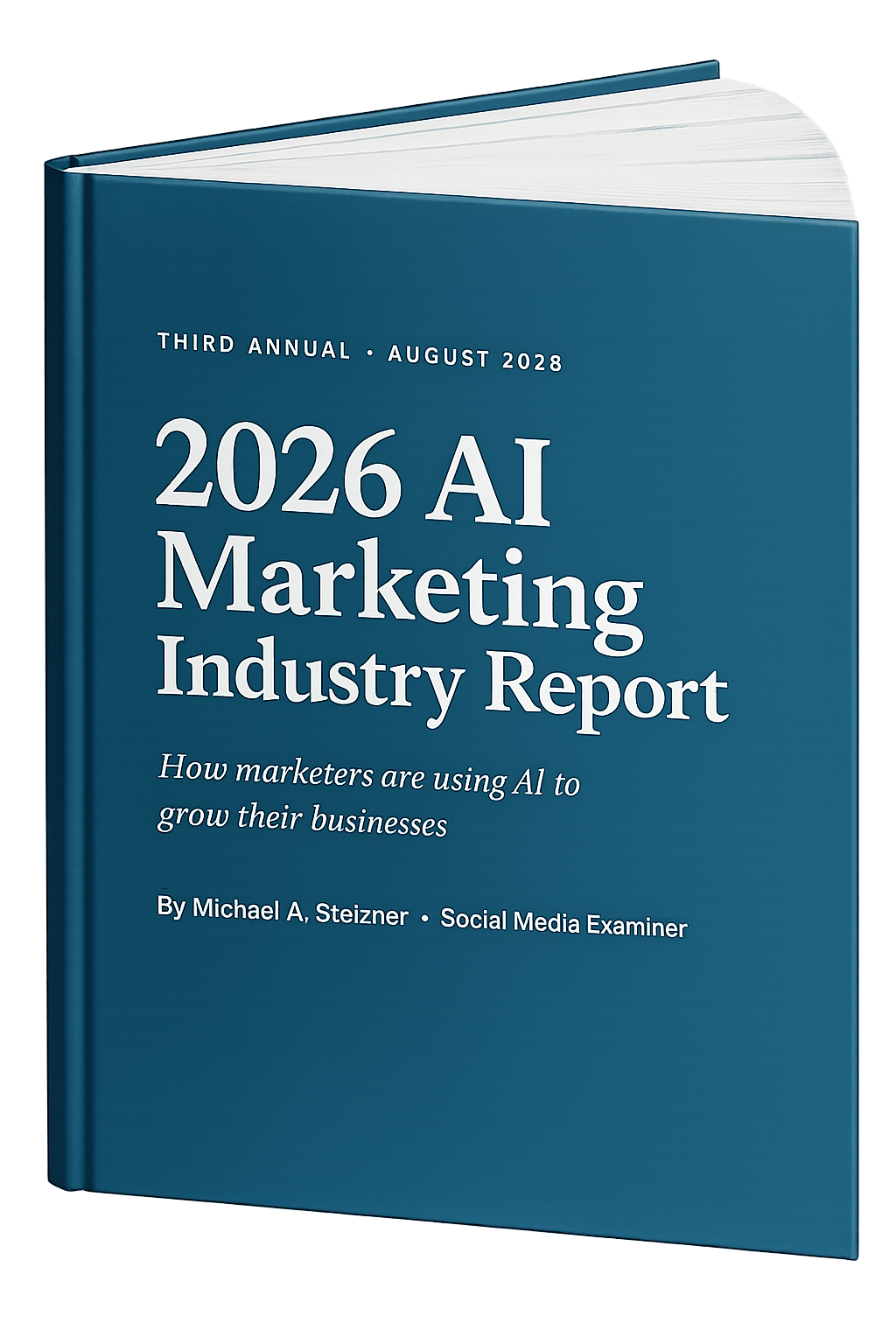
Recent industry analytics highlight a profound disconnect in how professionals acquire artificial intelligence expertise:
- The Self-Taught Majority: Research indicates that roughly 85% of marketers are forced to learn AI applications entirely on their own, experimenting independently through trial and error.
- Corporate Deficit: Only 7% of marketing professionals report receiving formal, structured AI training or enablement from their employers.
- Out-of-Pocket Investment: Demonstrating a high degree of professional drive, more than half of all surveyed marketers willingly spend their own personal funds on specialized software subscriptions and prompt engineering tools to maintain a competitive edge.
This DIY approach explains why so many brands fall into the trap of generic outputs. Without institutional training or formal frameworks, practitioners struggle to translate intuitive design taste into concrete textual parameters.
Furthermore, the operational stakes for mastering these tools are high. Modern brands face relentless demands for content velocity. Traditional commercial photography workflows—reliant on quarterly production shoots, rigid studio schedules, and expensive location scouting—are structurally incapable of keeping pace with modern multi-channel digital campaigns. Brands requiring fresh ad creative every few weeks, or consumer packaged goods (CPG) companies managing hundreds of distinct product variations, must look to generative workflows to remain competitive.
Official Insights & Strategic Frameworks
Transitioning from mediocre synthetic images to bespoke, brand-aligned visual assets requires a systematic approach to preparation, referencing, and prompt engineering. Industry leaders emphasize three critical operational pillars: pre-prompt discipline, structural frameworks, and multi-model execution.
1. Pre-Prompt Preparation and Taste Articulation
Before drafting a single line of a prompt, a marketer must bridge the gap between having taste and being able to articulate taste. Recognizing high-end visual design intuitively is very different from describing the exact lighting, camera angles, color temperatures, and compositional rules that make that design successful.
To accelerate this learning curve, practitioners can utilize custom-built AI skills designed to act as "taste accelerators." By uploading reference boards of inspirational imagery to platforms like ChatGPT or Claude, users can task the AI with reverse-engineering the aesthetic. The model analyzes the common visual denominators—such as cinematic lighting, low-angle framing, or restricted color palettes—and translates them into a reusable vocabulary.

When feeding reference images into an engine, precision is paramount:
- Human Subjects: Provide one clean face shot and one full-body image. Avoid uploading excessive variants, which can confuse the model regarding scale and focal length.
- Product Imagery: Upload the core product, official logo files, and brand patterns. While models inherently recognize global trademarks like Nike or Adidas, smaller brands must explicitly supply visual assets and instruct the model to preserve logos without warping.
- Color Accuracy: Eschew vague color descriptions like "blue and orange." Instead, provide exact hexadecimal (HEX) values to ensure strict adherence to corporate brand guidelines.
- Character Sheets: For persistent characters that must appear across multiple scenes, prompt the system to generate a comprehensive contact sheet displaying front, side, and full-body profiles simultaneously. This single reference sheet can anchor all future prompts.
2. The Seven Pillar Prompt Framework
To eliminate ambiguity and prevent the AI from defaulting to generic tropes, Lauren deVane developed the Seven Pillar Prompt Framework. This methodology acts as a creative control panel, addressing seven distinct dimensions of an image:
- Medium: Explicitly define the output format—whether it is a macro photograph, a vector illustration, a 3D clay render, or fine art line drawings.
- Subject and Action: Move beyond simple nouns. Instead of "a woman," specify "a woman standing in front of a mirror with a contemplative, resolute expression, droplets of condensation catching the rim."
- Setting and Scene: Displace default backgrounds with hyper-specific environmental details. Replace "a coffee shop" with "a dimly lit, mid-century Scandinavian cafe featuring exposed cedar beams and rain streaking across vertical window panes."
- Composition: Dictate the physical framing, perspective, and layout—such as wide-angle establishing shots, tight macro focus, overhead flat-lays, or asymmetric minimalist grids.
- Lighting: Define the mood via specific illumination sources, such as soft morning light filtering through linen curtains, hard cyberpunk neon sidelight, or a single warm tungsten bulb.
- Aesthetic and Vibe: Translate broader stylistic influences into descriptive qualities (e.g., symmetry, desaturated earth tones, retro-futuristic grain) rather than merely dropping names of directors or artists.
- Intent: Instruct the model on the psychological objective of the image—whether it is to evoke calm authority, urgency, or joyful nostalgia—allowing the underlying LLM to translate emotion into visual expression.
Future Outlook: Multi-Model Workflows and Creative Control
Looking ahead, the future of generative media belongs to multi-model ecosystems that decouple image creation from single-platform limitations. Moving beyond standalone interfaces, advanced creators are utilizing specialized hubs like Magnific to maximize creative output and operational efficiency.

The technical advantages of multi-model ecosystems are significant:
- High-Volume Generation: While standard interfaces often return single images per prompt, advanced platforms can generate up to eight simultaneous variations. Given the inherent variability of generative AI, having multiple options drastically accelerates the discovery of usable assets.
- Model Cross-Comparison: Operators can run identical prompts concurrently across distinct foundational models—such as GPT Image and Google’s Imagen—to determine which architecture handles specific stylistic nuances or text-rendering tasks best.
- Model Context Protocol (MCP) Integration: Cutting-edge workflows now integrate directly into environments like Claude via MCP connectors. This allows users to chat natively with an AI assistant—instructed via custom skills to think like a creative director or director of photography—while the backend automatically routes execution through high-end image engines. Assets can then be written directly into code, sales pages, or local storage directories without manual file exporting.
- Professional Software Interoperability: With the introduction of direct plugins for industry-standard suites like Adobe Photoshop and Illustrator, the friction between generative AI and traditional graphic design pipelines is rapidly dissolving.
The Path Forward for Brands
As generative AI continues its rapid ascent, the competitive advantage will no longer belong to those who merely use the technology, but to those who master the art of programmatic direction. Brands that abandon lazy, generalized prompting in favor of rigorous structural frameworks, precise referencing, and advanced multi-model toolsets will transform AI from a generator of generic digital clutter into an engine of limitless, bespoke visual branding.