Executive Overview
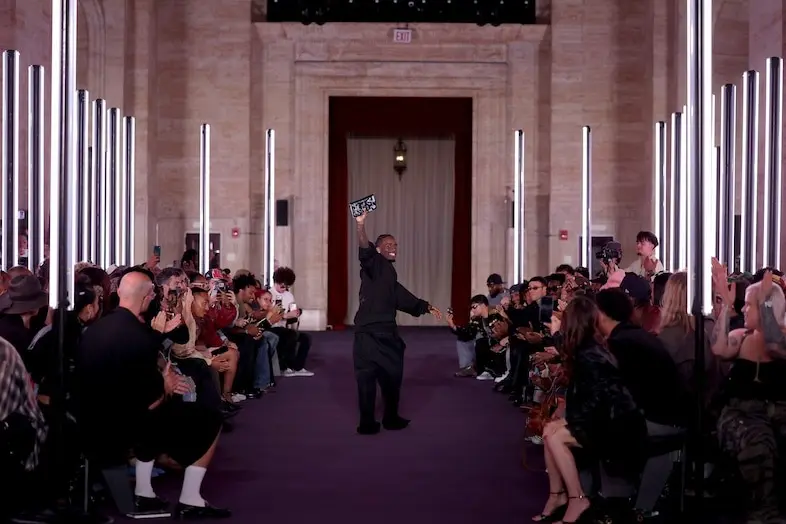
The intersection of digital culture and traditional luxury reached a watershed moment at New York Fashion Week (NYFW) for the Spring/Summer 2027 season, laying bare the profound anxieties currently rippling through the global fashion industry. VIVET, a fledgling independent label spearheaded by 24-year-old internet titan Kai Cenat, commanded a staggering live audience of over 180,000 concurrent viewers during its inaugural runway presentation.
For an industry perpetually hunting for fresh cultural energy and demographic engagement, such historic viewership numbers for an emerging brand should have signaled an unmitigated triumph. Instead, the event detonated a firestorm of digital polarization.
The backlash against Cenat—the reigning monarch of Twitch streaming—exposed a deep-seated institutional anxiety regarding merit, access, and traditional gatekeeping. Critics rushed to dissect Cenat’s lack of formal institutional training, framing his presence on the official NYFW calendar as an encroachment by tech-enabled unearned privilege into a sacred, labor-intensive craft.
Conversely, defenders and industry analysts argued that the fierce opposition was less about the garments on the runway and more about an archaic establishment panicking as its traditional roadmaps are rendered obsolete.
This comprehensive report examines the seismic fallout of VIVET’s SS27 debut, analyzing the broader mechanics of digital-age fashion criticism, the socio-economic realities of breaking into modern design, and the evolving definition of what it means to be a "legitimate" fashion designer in the 21st century.
Detailed Chronology: The Anatomy of a Digital Takeover
The path to VIVET’s controversial NYFW showcase was marked by a deliberate pivot from digital broadcast studios to traditional manufacturing hubs—a trajectory that defied standard influencer vanity projects.
Phase 1: The Manufacturing Apprenticeship (Late 2025 – Mid 2026)
Unlike many social media personalities who slap their monikers on print-on-demand streetwear or white-labeled direct-to-consumer drops, Cenat spent the nine months preceding his debut quietly embedding himself within the traditional production pipeline. Diverting from his daily streaming schedule, the creator relocated portions of his operational focus to Italy, working alongside specialized artisans to study pattern-making, leather construction, and luxury textile manufacturing. While skeptics routinely questioned the depth of this education, insiders noted that this foundational immersion exceeded the preparation undertaken by many celebrity-backed fashion ventures of the past.
Phase 2: The NYFW SS27 Reveal (September 12–14, 2026)
VIVET’s debut was structured across three distinct stylistic acts, presented to a hybrid audience of traditional fashion editors, digital creators, and industry insiders. The collection featured an assortment of architectural boxy hoodies, heavy-duty leather biker trousers, voluminous fur gilets, technical drawstring joggers, and contemporary tailoring. Highlighting the production’s seriousness, supermodel Alton Mason closed the show draped in a floor-sweeping fur coat.
While the styling drew heavy, undeniable inspiration from the brutalist silhouettes of Demna’s Balenciaga and the earth-toned, oversized utility of early Yeezy collections, the execution demonstrated a cohesive, if derivative, vision. Over 180,000 viewers tuned into the live broadcast on Saturday afternoon, shattering standard streaming benchmarks for independent runway debuts.
Phase 3: The Online Backlash and Industry Polarization (September 14, 2026 onward)
Within hours of the final walk, social media platforms—particularly Instagram and X (formerly Twitter)—became battlegrounds. The discourse sharply divided into two irreconcilable camps.
On one side, legacy purists and emerging designers struggling for funding condemned the show as "ragebait" and an insult to those who endured years of debt at institutions like Central Saint Martins or Parsons. On the other side, digital-first commentators argued that Cenat had successfully forged an independent economic pipeline, bypassing a broken and exclusionary institutional framework entirely.
Supporting Context & Metrics: The Numbers and Realities Behind VIVET
To understand why VIVET’s debut provoked such visceral reactions, one must examine the quantitative reality of modern creative economies and the structural shifts defining NYFW.
The Audience Disconnect
- 180,000+: The peak concurrent viewership for VIVET’s livestreamed debut, outstripping the digital footprints of legacy fashion houses showing concurrently during the same time slots.
- 9 Months: The duration of Cenat’s targeted leather construction and pattern-making study in Italy prior to the collection’s development.
- 24: Cenat’s age, positioning him as a representative of a hyper-accelerated generation accustomed to building independent global empires without legacy media validation.
The Economics of Modern Design
The barriers to entry in contemporary fashion have reached unprecedented heights. Traditional pathways require immense financial capital: runway production in New York City routinely costs upwards of tens of thousands of dollars, while sourcing sustainable, high-grade textiles without established supply chain relationships is economically prohibitive for working-class designers.

This financial bottleneck forms the core of the legitimate grievance held by many young designers. When an ultra-wealthy content creator can bankroll a luxury manufacturing operation and secure a prime slot on an official calendar after nine months of study, it highlights a stark inequality of opportunity.
However, fashion critics note that misdirecting this anger toward Cenat misses the systemic failure of the industry itself. The luxury market has long relied on generational wealth, aristocratic backing, and corporate conglomerates to subsidize young talent. Cenat’s capital may have been accumulated via Twitch subscriptions and brand partnerships rather than ancestral wealth or venture capital, but the end result—access to capital—remains functionally identical.
Official Statements and Industry Perspectives
The polarized critical landscape generated a rare cross-section of commentary from established industry voices, digital theorists, and cultural critics.
The Purist Critique: Gatekeeping as Quality Control
Traditionalists argued that fashion is an academic and tactile discipline requiring years of physical mastery. Commentators on luxury fashion forums pointedly asked, "Did he actually sew anything?" and asserted that the heavy lifting of the collection was executed entirely by anonymous junior designers and technical interns behind the scenes.
While this critique is standard for nearly all contemporary luxury houses—where creative directors rarely touch a sewing machine—it reflects a deeper fear that the traditional currency of craft is being devalued in favor of pure algorithmic reach.
The Progressive Defense: Democratizing the Pathway
Ayáìṣẹ́ Jó, known widely as the fashion critic Fashion Roadman and an alumnus of Central Saint Martins, offered a pragmatic counter-perspective via Instagram:
"A lot of people who went to fashion school feel entitled to opportunities just because of a degree. Kai created his own platform, lane, and audience separate to the industry and is utilizing it."
This sentiment was echoed by institutional assessments, such as The Business of Fashion, which provocatively dubbed Cenat "Gen Z’s answer to Virgil Abloh." While that comparison drew immediate ire from purists who viewed it as premature, it underscored a shifting paradigm: the modern creative director is frequently an orchestrator of culture, a community builder, and a visual curator, rather than a traditional tailor.
Future Outlook: Where Does Fashion Go From Here?
The fallout from VIVET’s NYFW debut signals a permanent mutation in how fashion brands are launched, marketed, and evaluated. As the boundaries between entertainment, technology, and luxury continue to dissolve, the industry faces several critical crossroads over the coming seasons:
1. The Death of the Linear Career Roadmap
The notion that a young designer must follow a rigid trajectory—attending an elite European design school, interning for a conglomerate house, working in obscurity for a decade, and finally launching a brand—is officially obsolete. Future generations of creators will increasingly leverage existing community platforms, gaming ecosystems, and streaming audiences to bootstrap their independent labels directly.
2. The Hyperbolic Cycle of Digital Criticism
As noted by industry observers, contemporary fashion criticism suffers from an addiction to binary, hyper-accelerated narratives. Garments are rarely allowed to simply exist; they are instantly anointed as "iconic" or dismissed as "the worst thing ever created." This breathless cycle starves emerging designers of the developmental breathing room required to refine their aesthetic vision. Moving forward, digital critics will need to cultivate a more nuanced vocabulary that evaluates creators on a trajectory of growth rather than demanding immediate, flawless mastery.
3. The Re-evaluation of the "Worthy" Insider
The fashion establishment has long commodified internet culture when it serves its marketing metrics—inviting streamers and influencers to sit front-row to boost digital engagement. The discomfort surrounding VIVET arises precisely because Cenat stopped playing the role of the promotional amplifier and instead claimed the role of the author.
As more digital natives transition from consumer to producer, the fashion industry must decide whether it will continue to erect walls of institutional snobbery or adapt to a more inclusive, decentralized ecosystem. Ultimately, the success or failure of VIVET should not be decided by algorithmic outrage or elitist gatekeeping, but by whether the brand can sustain its creative evolution long after the initial streaming novelty fades.