Executive Overview
For decades, the boundaries of domestic privacy were clear: the inside of a dishwasher was a mysterious, steamy black box; the health of your molars was left to biannual dental visits; and what happened in the kitchen refrigerator remained strictly between you and your late-night cravings. Today, however, that boundary is dissolving under the relentless march of consumer technology.
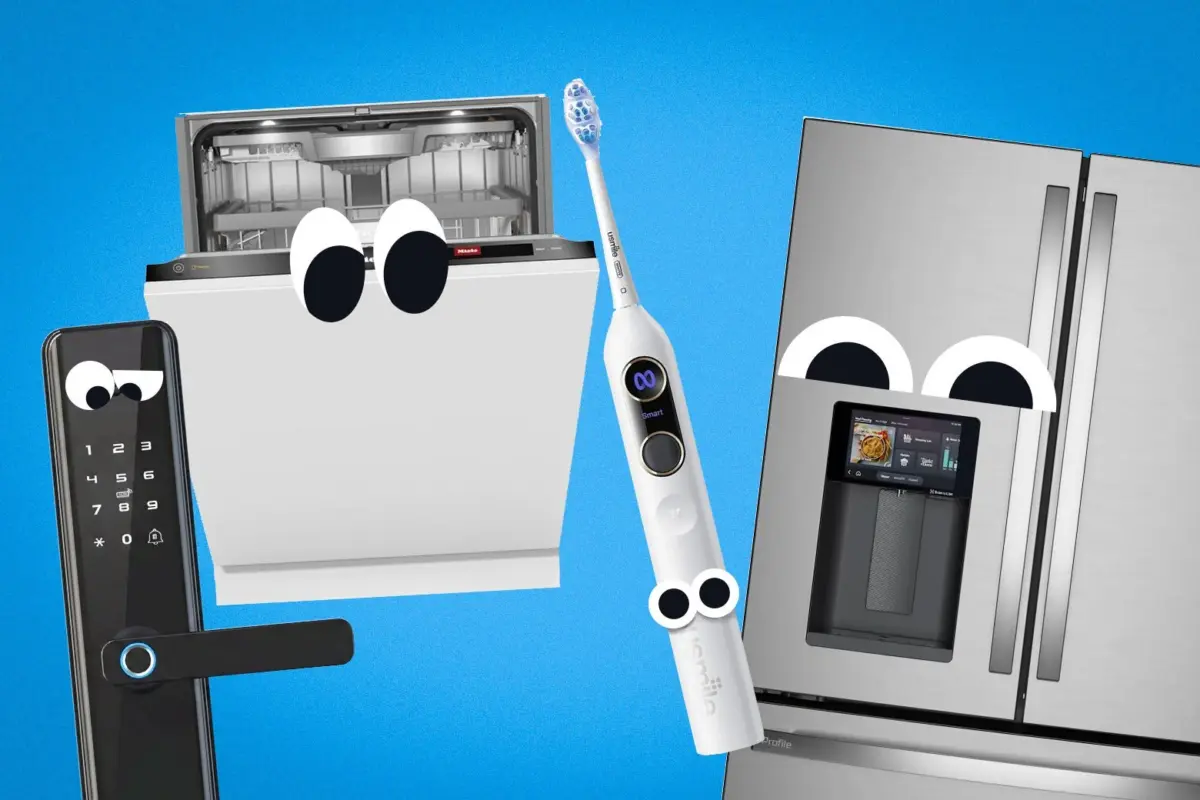
At the international home appliance exhibition IFA in Berlin, major manufacturers pulled back the curtain on a new wave of smart home hardware. Among the headliners was Miele, which unveiled a smart dishwasher equipped with an internal camera designed to monitor water spray patterns, monitor dish placement, and optimize cycles according to the user’s "personal preferences." Not to be outdone, Dyson recently rolled out a $500 electric toothbrush featuring a 100,000-pixel macro-lens camera intended to livestream real-time footage of your dental hygiene directly to your smartphone screen.
These developments are not isolated anomalies; they represent the bleeding edge of a broader, more aggressive industrial trend. Smart ovens, interconnected refrigerators, AI-powered doorbells, and even intimate lifestyle products are increasingly outfitted with lenses, sensors, and data-collection mechanisms.
On the surface, this proliferation of domestic optics is marketed as the ultimate convenience—a frictionless path to peak productivity and household efficiency. Yet, this hardware explosion arrives at a profound cultural and psychological crossroads. Consumers today are caught in a deep dissonance: while they express unprecedented anxiety over corporate surveillance, data harvesting, and artificial intelligence training models, they simultaneously demonstrate a profound, almost compulsive desire to master, track, and optimize every microscopic detail of their lives.
This report investigates the rapid integration of cameras into everyday home appliances, analyzing the technological drivers, consumer paradoxes, and long-term societal implications of a world where even your toothbrush is watching.
Detailed Chronology: The Evolution of the Smart Domestic Panopticon
To understand how we arrived at the era of the camera-equipped toothbrush, it is necessary to trace the steady creep of digital lenses into domestic spaces over the past two decades.
-
Pre-2000s: The Analog Threshold
The domestic space was defined by mechanical friction. Appliances operated via analog dials, gears, and timers. Monitoring required physical presence, and the inner workings of machines were largely obscured from human sight. The camera phone was just beginning to emerge, but computational photography was virtually nonexistent in consumer hardware. -
The 2010s: The Rise of Connected Comfort
As Wi-Fi became ubiquitous in residential architecture, manufacturers shifted toward internet-connected appliances. The early focus was remote control rather than internal surveillance. Smart thermostats like Nest allowed users to adjust temperatures from afar, while early smart refrigerators experimented with external touchscreens and basic inventory apps. Privacy concerns during this era centered primarily on smart speakers (such as Amazon Alexa and Google Home) listening in on private conversations. -
The Early 2020s: The Computer Vision Influx
With the maturation of artificial intelligence, machine learning, and ultra-compact, low-cost camera sensors, manufacturers began integrating computer vision directly into household hardware.- Smart Doorbells & Security: Companies like Ring and Google Nest normalized the continuous external monitoring of front porches and neighborhoods, laying the groundwork for ambient surveillance culture.
- Smart Ovens: Brands like June introduced interior cameras to computer-vision-identify foods, automatically setting cooking times and temperatures without human input.
- Refrigerators: Prototype iterations from tech giants and traditional manufacturers alike began testing internal cameras designed to scan food expiration dates and track household purchasing habits.
-
IFA 2026 and Beyond: The Micro-Optics Era
The current wave represents a hyper-localization of surveillance. At IFA 2026, the introduction of Miele’s camera-equipped dishwasher shifted the paradigm from general home security to granular domestic process tracking. Simultaneously, Dyson’s release of its camera-enabled electric toothbrush signaled that no space—no matter how private, dark, or mundane—is immune to optical documentation.
Supporting Context & Metrics: The Psychology of "Busyness" and Data Distrust
The normalization of domestic surveillance cannot be understood through technology alone; it must be analyzed through the lens of modern socio-economic pressures, cultural habits, and the paradoxical relationship consumers maintain with personal data.
The Cult of Productivity and the Fear of Friction
In contemporary global culture, time has become a hyper-financialized asset. In the age of chronic busyness, the psychological penalty for inefficiency has grown exponentially. A dishwasher cycle that fails to clean a casserole dish on the first try is no longer a minor annoyance; it is an interruption of workflow, a waste of energy, and an avoidable drain on financial resources.
Similarly, preventative health metrics dictate that a poorly brushed molar today translates directly into thousands of dollars in dental bills down the line. By installing cameras inside these appliances, manufacturers are selling the illusion of absolute control. The pitch is simple: eliminate the unknowns, outsource your decision-making to computer vision algorithms, and protect yourself against future stress.
This drive toward optimization persists even among those pushing back against technological acceleration. While a growing counter-cultural movement attempts to embrace "analog hobbies," solve Sudoku in print, or inject "friction" back into daily life, the overarching cultural velocity continues to accelerate. Consumers feel pressured to pin down and control the minutiae of their environments precisely because the macro-environment feels increasingly chaotic and out of reach.
The Consumer Data Paradox
The influx of these devices occurs at a uniquely dissonant moment in consumer history. Public distrust of corporations handling personal data has hit a fever pitch. Consider the following modern trends:
- Physical Resistance: Citizens across Western cities have resorted to smashing automated license plate readers and surveillance towers (such as Flock safety cameras) on public streets.
- Cultural Backlash: Wearables and smart glasses equipped with AI and cameras—such as Meta’s Ray-Bans—have faced immediate public pushback, with critics derisively labeling them "pervert glasses."
- Corporate Suspicion: Widespread consumer anxiety regularly flares up over whether tech giants are secretly harvesting personal email archives or private messages to train proprietary generative AI models.
Market research consistently shows that nearly three-quarters of consumers believe retail and tech companies collect excessive personal data. Yet, despite this deep-seated paranoia, millions willingly invite connected, data-gathering devices into their bedrooms, kitchens, and bathrooms. The convenience economy successfully overrides privacy concerns on a daily basis.
Official Statements & Industry Perspectives
Manufacturers defend these innovations not as surveillance tools, but as vital evolutionary steps toward sustainable, personalized living.
Industry representatives at IFA 2026 emphasized that internal appliance cameras serve a dual purpose: resource conservation and hyper-customization. In marketing documentation for Miele’s latest smart ecosystem, the company highlights its mission to "eliminate household decisions." By leveraging computer vision to analyze soil levels, water hardness, and load distribution in real time, the smart dishwasher dynamically adjusts its water and energy consumption. Proponents argue that in an era of climate change and fluctuating energy grids, such micro-optimizations are essential for ecological sustainability.
On the personal care front, Dyson’s defense of its high-end, camera-integrated oral hygiene technology hinges on precision health outcomes. Company engineers argue that traditional brushing relies on guesswork, leaving hidden plaque behind in interdental spaces. By providing users with a real-time, macro-lens visual feed of their own mouths, the device aims to bridge the gap between home care and professional periodontal standards.
Independent technology ethicists and privacy advocates, however, offer a starkly contrasting view. Speaking anonymously regarding the normalization of micro-optics in appliances, one digital rights researcher noted:
"We are witnessing the domestication of the panopticon. By framing surveillance as self-care, productivity, and environmental stewardship, manufacturers have bypassed the traditional defenses consumers put up against data harvesting. When a camera is sold as a tool to help you clean your teeth better or wash a plate more efficiently, people momentarily forget that a lens inside the home is still a lens."
Future Outlook: Where Is This Headed?
As the line between appliance and recording device continues to blur, several critical questions emerge regarding the future of consumer technology, behavioral psychology, and regulatory oversight.
1. The Normalization Curve
History suggests that consumers possess a high capacity for resistance followed by absolute capitulation. In the 18th century, early British users of the umbrella faced public shaming and accusations of effeminacy. Elevators, escalators, and early personal laptops were met with profound suspicion regarding safety, utility, and social disruption. Today, a broken elevator is viewed as a major systemic failure.
It is entirely plausible that within a decade, a dishwasher without a camera or a toothbrush without a live-feed monitor will be viewed as archaic, inefficient, or incomplete. The current absurdity of a $500 streaming toothbrush may soon look like the humble, primitive precursor to standard health-monitoring bathroom infrastructure.
2. The Creep of Secondary Data Monetization
While a Dyson toothbrush or a Miele dishwasher may not currently double as state police surveillance tools, the software ecosystems powering them are increasingly cloud-connected. As these devices map the interiors of our homes, track our consumption patterns, and log our daily hygienic habits, the data generated represents a goldmine for third-party analytics, insurance providers, and targeted advertisers. The central vulnerability of the Internet of Things is not necessarily malicious actors hacking your feed, but the routine, legal monetization of your most intimate domestic routines by the corporations you already trust.
3. The Erosion of Human Agency and Tolerance for Imperfection
Perhaps the most profound long-term impact of camera-equipped appliances is psychological. When every dish is pre-inspected by an algorithm, and every stroke of a toothbrush is audited in real time, what happens to human autonomy and our tolerance for the imperfect?
As we outsource more of our daily oversight to digital lenses, we risk cultivating an environment where natural error is treated as a moral or financial failure. The desire to become "pearly, hairless, omniscient idealized beings" pushes society toward an exhausting hyper-perfectionism. Ultimately, the rise of the watching toothbrush and the spying dishwasher forces consumers to confront a sobering question: How much of our privacy, our agency, and our mental peace are we willing to trade just to ensure our dishes come out spotless?