EXECUTIVE SUMMARY
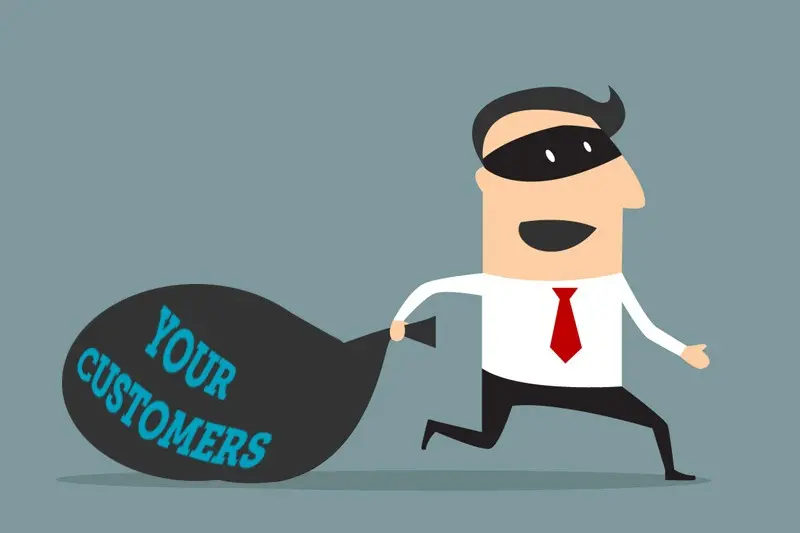
In the hyper-competitive landscape of modern Software-as-a-Service (SaaS), business complacency is an existential threat. Founders and revenue leaders often operate under the comforting illusion that once a contract is signed and onboarding is complete, a customer is safely secured within their ecosystem. However, industry insights reveal a starkly different reality: your competitors are likely actively cold calling your existing customer base, and according to seasoned industry veterans, they would be failing in their fiduciary duty to their own investors if they weren’t.
This investigative report examines the strategic mechanics of aggressive competitor outreach, drawing upon expert guidance from foundational SaaS advisory platforms like SaaStr. We analyze why outbound prospecting into rival customer accounts—often dubbed the "Steal Team" strategy—remains a cornerstone of aggressive market share acquisition. Furthermore, this article explores the dangerous phenomenon of competitors recycling lost deals, tracking how enterprise and mid-market players maintain long-tail nurturing campaigns against accounts they previously failed to close. Finally, we provide actionable frameworks for modern revenue leaders to bulletproof their retention metrics, neutralize aggressive poaching tactics, and turn customer success into an impenetrable fortress.
1. Detailed Chronology: The Evolution of the Competitive Outbound Playbook
To understand why your competitors are aggressively dialing your clients today, we must examine how outbound sales methodologies have evolved over the past two decades. The modern software market is saturated, and inbound channels, while still valuable, are increasingly expensive due to rising customer acquisition costs (CAC) and saturated digital advertising auctions.
Phase 1: The Era of Inbound Complacency (Early 2010s)
In the formative years of the cloud software boom, many startups adopted a defensive posture. The prevailing wisdom dictated that if a company built a superior product and executed efficient inbound marketing, customers would naturally gravitate toward them and remain loyal. Competitor poaching was largely viewed as "sleazy" or inefficient. Sales teams focused almost entirely net-new greenfield accounts, viewing existing customer bases of rival firms as untappable or legally perilous territory.
Phase 2: The Rise of Account-Based Marketing (ABM) and Precision Targeting (Mid-2010s)
As venture capital flooded the SaaS ecosystem, growth expectations skyrocketed. Companies could no longer rely solely on organic growth. Revenue leaders began adopting Account-Based Marketing (ABM) platforms and advanced data enrichment tools (such as ZoomInfo, Cognism, and Clearbit). For the first time, sales organizations could map out organizational charts with surgical precision.
With this data infrastructure in place, the barrier to identifying and contacting users of competing software vanished. Sales development representatives (SDRs) could easily filter LinkedIn to find every company using a specific CRM, project management tool, or ERP system. Competitor customer lists transformed from abstract concepts into actionable, highly targeted calling lists.
Phase 3: The Institutionalization of the "Steal Team" (Present Day)
Today, hyper-growth companies no longer leave competitive displacement to chance. Mature SaaS organizations routinely establish specialized outbound units—colloquially referred to as "Steal Teams" or competitive response units. These are not entry-level SDRs making random dials; they are highly compensated, senior-level account executives and outbound specialists whose sole key performance indicator (KPI) is unseating competitors.
These teams study rival feature roadmaps, dissect customer complaints on review sites like G2 and Capterra, and craft hyper-personalized messaging designed to exploit specific points of friction between a customer and their current vendor. Cold calling rival customers has transitioned from a fringe tactic to an institutionalized, highly budgeted component of modern go-to-market (GTM) strategy.
2. Supporting Context & Metrics: The Math Behind Competitor Cold Calling
Why do revenue leaders allocate precious capital to calling customers who are already locked into annual or multi-year contracts with a competitor? The answer lies in the shifting unit economics of customer acquisition and the psychological reality of software buyers.
The Low-Yield, High-Value Dynamic
SaaS veterans frequently point out that the immediate yield on cold calling happy competitor customers is low. If a company’s client base is genuinely satisfied with their current vendor, an unsolicited cold call from a competitor will likely be met with polite dismissal or outright rejection.
However, enterprise software operates on a power-law distribution. While the conversion rate on initial cold calls to a rival’s client base may hover in the single digits, the Lifetime Value (LTV) of a displaced enterprise account is immense. Consider the following metrics and strategic realities:
- Displacement Economics: Winning a customer away from a competitor not only expands your own Annual Recurring Revenue (ARR) but simultaneously inflicts a double-digit financial and psychological blow to your rival.
- The Attrition Factor: No software product has a 100% Net Retention Rate (NRR) across the board. Industry benchmarks indicate that average SaaS churn ranges between 5% and 15% annually, with enterprise segments seeing lower churn and SMB segments seeing significantly higher attrition. Competitors know that a certain percentage of your customer base is already experiencing buyer’s remorse, implementation fatigue, or frustration with your support team at any given moment.
- The "Lost Deal" Long Game: Perhaps the most overlooked metric in SaaS sales is the velocity of lost deals. When a startup loses a competitive bake-off, the natural human reaction for the losing sales rep is to archive the opportunity in the CRM, lick their wounds, and move on to the next prospect. This is a catastrophic strategic error.
According to market intelligence, competitors often maintain nurturing sequences for lost deals spanning 2 to 3 years. Why? Because software contracts are typically signed on 12-to-36-month terms. A company that chose your competitor over you two years ago is now approaching their renewal window. If their satisfaction levels have dipped even slightly—or if their primary champion at your competitor has left the company—that dormant lead suddenly becomes a warm, receptive target. The competitor already possesses the organizational map, the stakeholder names, and the pain points identified during the original sales cycle. Re-engaging them requires a fraction of the effort needed to source a brand-new lead.
3. Official Perspectives: Insights from Industry Leaders
The directive from top-tier startup mentors is unequivocal: Assume your competitor is cold calling your existing customers.
Industry authorities emphasize that founders must shed any naive notions of corporate etiquette. In a zero-sum market where venture capitalists demand aggressive growth, your competitors are not waiting for permission to pitch your clients.
"Just assume your competitor is cold calling all your existing customers. They should be. Be most worried if they are doing it well." — SaaStr Advisory
When industry experts evaluate the maturity of a startup’s go-to-market motion, one of the primary litmus tests is how aggressively they defend their turf while simultaneously attacking others. Early-stage startups often worry about burning bridges or provoking retaliation. However, seasoned executives recognize that competitive displacement is simply the natural friction of a dynamic market economy.
Furthermore, leadership experts warn against the psychological trap of "out-of-sight, out-of-mind" regarding lost deals. Too many early-stage founders treat a lost enterprise deal as a permanent defeat. In reality, enterprise software ecosystems are fluid. Decision-makers change roles, budgets expand or contract, and product roadmaps evolve. A competitor who lost a deal today is laying the groundwork to win that same account during the next renewal cycle. If your organization fails to maintain rigorous, proactive engagement with your customers post-sale, you leave the door wide open for a patient, persistent competitor to step in.
4. Future Outlook: How to Bulletproof Your Customer Base Against Poaching
Knowing that competitors are actively prospecting your client base should not induce panic; rather, it should serve as a powerful catalyst for operational hardening. To neutralize competitor cold calling and insulate your recurring revenue, revenue leaders must implement a comprehensive defensive strategy across product, customer success, and sales.
1. Shift from Customer Satisfaction to Customer Value Realization
Merely keeping customers "happy" via friendly check-ins and responsive support tickets is no longer enough to withstand a well-crafted competitor pitch. Competitors often offer flashier interfaces, novel AI features, or aggressive discounting to tempt your clients.
To combat this, your Customer Success (CS) organization must ruthlessly focus on Value Realization. Are your customers achieving the specific business outcomes, ROI, and efficiency gains they were promised during the sales cycle? Regularly quantifying and presenting this value through executive business reviews (EBRs) ensures that when a competitor calls, your client can readily articulate why leaving your platform would be a financial and operational mistake.
2. Build and Empower a "Retention Task Force"
Just as your competitors may deploy a "Steal Team" to win your accounts, you should establish an internal retention mechanism. Identify your most critical accounts (the top 10% to 20% of your ARR) and assign dedicated executive sponsors from your leadership team. These sponsors should maintain direct lines of communication with C-level stakeholders at your client accounts, ensuring that any brewing dissatisfaction is addressed long before a competitor gets on the phone with them.
3. Implement Early-Warning Churn Analytics
Modern data analytics allow revenue teams to detect the behavioral precursors of churn. By monitoring product utilization metrics—such as login frequency, feature adoption depth, and seat utilization—you can identify accounts that are quietly disengaging. When usage metrics begin to trend downward, automated alerts should trigger immediate, high-touch intervention from customer success managers (CSMs) to resolve friction points before a competitor spots the opening.
4. Weaponize Your Own "Lost Deal" Resurrection Playbook
Finally, adopt the very tactics your competitors are using against you. Audit your CRM for every lost deal over the past 36 months. Categorize them by contract expiration dates and assign proactive nurturing campaigns to your account executives. Reach out to lost prospects 90 days before their current annual contract with your competitor is set to renew. Offer them product updates, new feature releases, and migration incentives.
Conclusion
The SaaS battleground is relentless. The moment a prospect signs a contract with your company, they instantly become a primary target on your competitor’s outbound calling list. By shedding the illusion of absolute customer loyalty, recognizing the long-tail nature of competitive prospecting, and heavily investing in proactive value realization and retention engineering, modern SaaS leaders can transform their customer base from a vulnerable target into an impenetrable, revenue-generating stronghold.