Executive Overview
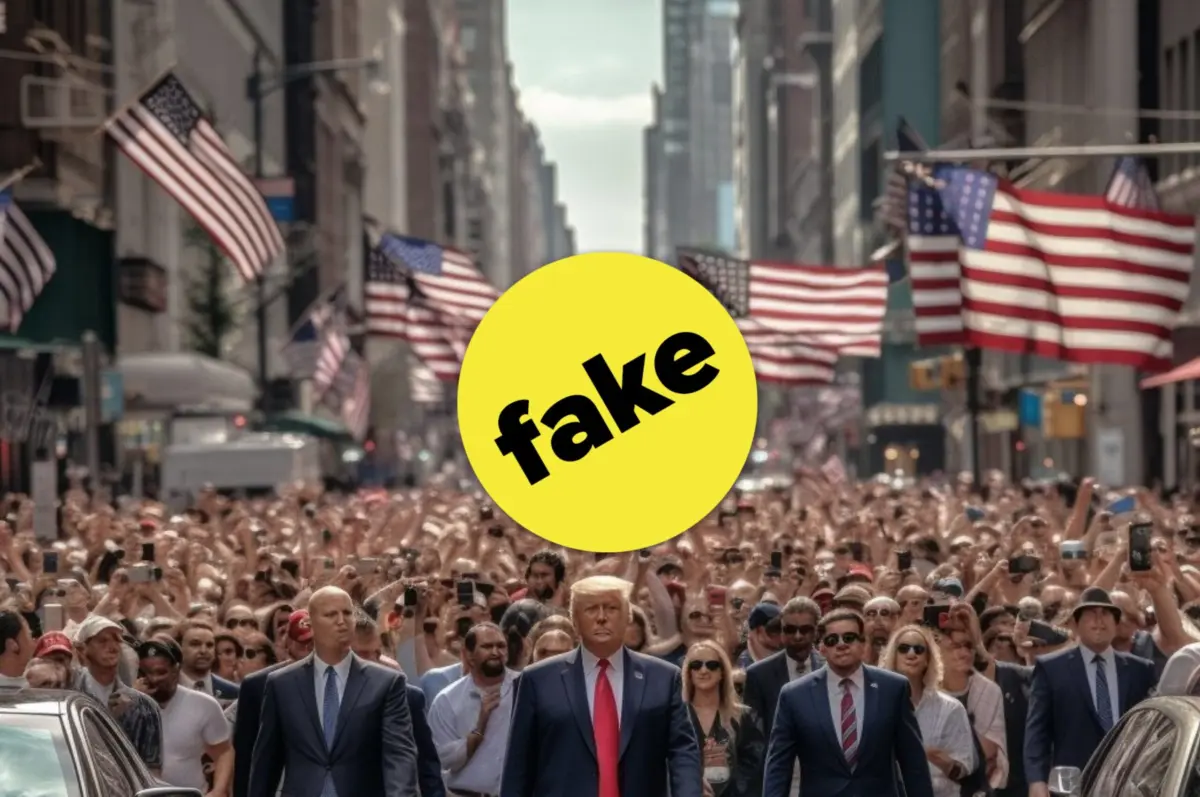
The rapid democratization and evolution of generative artificial intelligence have precipitated a profound crisis of authenticity in the modern digital ecosystem. Today, high-fidelity synthetic images—commonly referred to as "deepfakes" or AI-generated visuals—can be conjured in mere seconds by anyone with an internet connection and a prompt.
As software models grow exponentially more sophisticated, the boundary between objective reality and algorithmic fabrication has effectively dissolved. This paradigm shift presents unprecedented challenges for journalists, policymakers, and everyday internet users.
At the center of this storm is a stark reality: human perception is no longer a reliable defense against digital deception. According to industry experts, the proliferation of hyper-realistic synthetic media carries severe systemic risks. It has the potential to manipulate public opinion on a mass scale, undermine the institutional credibility of trusted news sources, and imperil the democratic process itself by weaponizing disinformation.
In response, a burgeoning cottage industry of detection tools has emerged, attempting to stem the tide of visual falsehoods. Yet, these countermeasures are locked in an escalating technological arms race against increasingly advanced generative algorithms. Compounding the crisis is the systemic failure of major social media platforms. Burdened by corporate restructuring, depleted trust and safety teams, and inconsistent enforcement of manipulated media policies, these networks have transformed into fertile breeding grounds for viral synthetic falsehoods.
This comprehensive investigation explores the anatomy of the AI imagery crisis, examining the technological leaps driving the trend, the inadequacy of current detection mechanisms, the regulatory and corporate blind spots, and the long-term implications for global information integrity.
Detailed Chronology: The Evolution of Synthetic Media and Detection
To understand the current state of digital disinformation, one must trace the rapid, compounding timeline of generative artificial intelligence over the past half-decade. What began as uncanny, easily identifiable digital artifacts has rapidly matured into indistinguishable visual replicas of reality.
Phase One: The Uncanny Valley (2018–2021)
During the early developmental stages of Generative Adversarial Networks (GANs) and early diffusion models, AI-generated images were plagued by distinct, recognizable flaws. Subjects frequently exhibited nightmarish facial distortions, asymmetrical features, and a notorious inability to render human hands and fingers accurately. During this era, users could easily spot a fake by counting fingers or looking for unnatural blurring in background textures.
Phase Two: Mainstream Breakthrough and Commercialization (2022–Early 2023)
The public release and commercialization of powerful diffusion-based engines—such as OpenAI’s DALL-E 2, Midjourney, and Stability AI’s Stable Diffusion—fundamentally altered the landscape. Suddenly, professional-grade visual generation was democratized.
As these tools iterated rapidly, the telltale technical errors began to diminish. While warped hands and botched facial geometry still occurred, their frequency dropped dramatically. The internet was suddenly flooded with viral, hyper-realistic imagery: satirical photos of politicians, fabricated historical events, and hyper-stylized portraits that blurred the line between art and reality.
Phase Three: The Detection Race and Institutional Vulnerability (Mid 2023–Present)
As synthetic imagery bled into mainstream news cycles, the inadequacy of human visual discernment became glaringly apparent. In response, a wave of software startups emerged. Platforms such as Optic.xyz launched web-based utilities designed to let users upload images and run forensic algorithmic checks to determine their synthetic origins.
Concurrently, tech platforms faced mounting pressure to adapt their content moderation frameworks. However, this period coincided with massive structural upheaval across the technology sector—most notably at Twitter (now X)—where sweeping layoffs decimated trust and safety departments. The simultaneous dismantling of legacy verification systems and the rise of algorithmic content generation created a "perfect storm" for unchecked disinformation campaigns.
Supporting Context & Metrics: The Mechanics of Deception
The proliferation of AI-generated imagery is not merely a technological novelty; it is an escalating socioeconomic and geopolitical threat backed by shifting digital behaviors and systemic infrastructural vulnerabilities.
The Breakdown of Human Perception
Human beings are inherently visual creatures wired to trust what they see. Historically, the adage "seeing is believing" served as a foundational pillar of empirical journalism and public trust. Generative AI exploits this cognitive shortcut.
As Andrey Doronichev, CEO and co-founder of Optic.xyz, notes, “It has become increasingly challenging for the average human eye to distinguish between AI-generated and real photos.”
When confronted with a visually compelling image, cognitive biases often override skepticism, particularly if the image confirms pre-existing beliefs or aligns with partisan narratives. Bad actors leverage this psychological vulnerability, utilizing emotionally charged synthetic imagery to short-circuit critical thinking.
The Limitations of Forensic Detection Tools
In the wake of the synthetic media boom, a cottage industry of detection tools has emerged. These platforms utilize machine learning algorithms trained to spot artifacts invisible to the human eye—such as unnatural pixel grids, compression inconsistencies, metadata anomalies, and subtle lighting discrepancies.
However, none of these tools—including industry-leading applications like Optic—are foolproof. As generative models adopt advanced upscaling and noise-injection techniques, the forensic footprints left by AI are becoming vanishingly faint.
Furthermore, bad actors constantly refine their outputs to bypass detection algorithms. For the average consumer navigating a fast-paced social media feed, relying on third-party forensic tools in real-time is largely impractical.
Recognizing the Red Flags
While automated tools are fallible, internet users must develop digital literacy frameworks to spot potential fakes. Experts advise looking for persistent, albeit shrinking, indicators of artificial generation:
- Anatomical Inconsistencies: Look closely at hands, ears, teeth, and hair strands, which can still occasionally present unnatural blending or structural errors.
- Background Logic: Examine background text, reflections in glass or water, and architectural symmetry, where generative models frequently lose logical consistency.
- The "Too Good to Be True" Rule: If an image of a public figure or breaking news event evokes an extreme emotional reaction and cannot be verified by established, mainstream news wire services, skepticism is warranted.
Official Statements and Industry Perspectives
The policy vacuum surrounding generative AI has sparked intense debate among advocacy groups, technology executives, and legal scholars. As institutional trust hits historic lows, key stakeholders are raising alarms over the systemic unpreparedness of the digital public square.
The Watchdog Perspective: Media Matters for America
Civil society and media watchdogs have been among the most vocal critics of how tech platforms handle synthetic media. Kayla Gogarty, deputy research director at Media Matters for America, emphasizes that the dangers extend far beyond internet hoaxes into tangible real-world harm.
“As there has been a recent rise of AI-generated media, it has become clear that platforms are unprepared for this moment in which fake images and misinformation could lead to real-world harm,” Gogarty stated in an interview.
Gogarty specifically highlights the systemic vulnerabilities engineered into major social media platforms, noting that the dismantling of robust content moderation has exacerbated the crisis.
“Particularly concerning is Twitter,” Gogarty noted, pointing out that under the leadership of Elon Musk, the platform has abandoned much of its legacy content moderation apparatus. Furthermore, changes to the platform’s verification system—replacing traditional journalist and institutional badges with paid checkmarks—have made it exceedingly difficult for users to evaluate account credibility. When anyone can purchase a verified badge, malicious accounts can easily masquerade as legitimate news organizations while disseminating synthetic imagery.
The Tech Entrepreneur’s Dilemma: Optic.xyz
From the perspective of AI infrastructure developers, the challenge is both technical and philosophical. Andrey Doronichev of Optic.xyz frames the issue as an existential threat to democratic institutions. By lowering the barrier to entry for the creation of convincing falsehoods, generative AI democratizes propaganda.
Platforms caught in the middle face an unenviable dilemma: build ever-stricter gating mechanisms that stifle creative expression and open-source innovation, or adopt a laissez-faire approach that effectively surrenders the information ecosystem to bad actors.
Future Outlook: Navigating the Post-Truth Horizon
As we look toward the future, the societal implications of hyper-realistic generative AI demand systemic reforms across technology, journalism, legislation, and education. The trajectory of this technology suggests several critical developments and necessary interventions:
1. Cryptographic Provenance and Watermarking
To restore trust in digital media, the tech industry is increasingly turning to cryptographic content provenance standards. Coalitions such as the Coalition for Content Provenance and Authenticity (C2PA) are working to embed tamper-proof metadata into images at the point of capture (in cameras) or generation (in AI models).
By utilizing blockchain technology and cryptographic signatures, platforms and consumers will eventually be able to trace an image’s entire lineage—verifying whether it was captured by a human photographer or synthesized by an algorithm. However, widespread adoption across all hardware and software ecosystems remains an uphill battle.
2. Regulatory Scrutiny and Legislative Action
Governments worldwide are beginning to grapple with the legal ramifications of deepfakes and AI-generated disinformation. From the European Union’s landmark Artificial Intelligence Act to proposed legislative frameworks in the United States, lawmakers are under pressure to establish strict accountability standards for platforms that host and amplify unverified synthetic media.
Key policy debates will center on platform liability, mandatory labeling of AI-generated content, and criminalizing malicious deepfakes intended to interfere with elections or commit financial fraud.
3. The Evolution of Journalistic Standards
In a post-truth information landscape, traditional journalism must adapt its verification workflows. Newsrooms are investing heavily in specialized digital forensics desks equipped to analyze incoming user-generated content for algorithmic manipulation.
Simultaneously, legacy news organizations must redouble their efforts to educate the public, emphasizing the importance of sourcing news directly from verified, transparent editorial institutions rather than decentralized social media feeds.
Conclusion
The proliferation of AI-generated imagery represents a defining stress test for modern society. As algorithms grow more powerful and human perception remains biologically constrained, technological countermeasures alone will not suffice.
Safeguarding the integrity of public discourse requires a concerted, multi-pronged approach: rigorous cryptographic standards, proactive and adequately resourced platform moderation, agile regulatory frameworks, and a culturally ingrained skepticism among internet users. Until these defenses mature, the digital public square will remain vulnerable to the alluring, destabilizing mirage of synthetic reality.