Executive Overview
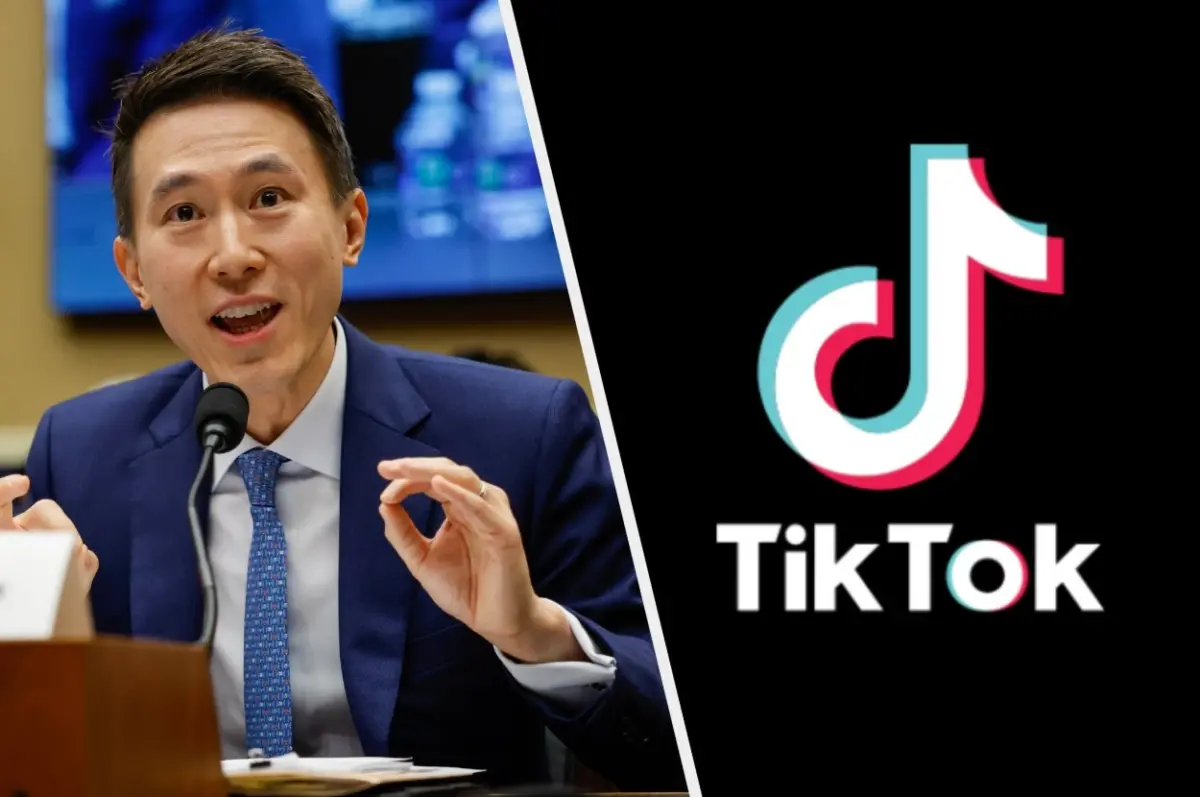
In an era characterized by deep political polarization and gridlock on Capitol Hill, the United States Congress recently found a rare moment of absolute consensus. On a Thursday morning in Washington, D.C., the House Energy and Commerce Committee convened for what would become a grueling, five-hour legislative interrogation of TikTok CEO Shou Zi Chew. Representing an application deeply embedded in the daily lives of 150 million active American users, Chew stepped into the legislative crosshairs to defend the video-sharing giant against mounting allegations of national security threats, foreign surveillance, and data privacy manipulation.
At the center of the storm is ByteDance, TikTok’s Beijing-based parent company. Lawmakers from both sides of the political aisle relentlessly scrutinized the platform’s structural ties to the Chinese government, questioning whether the short-form video app functions as a benign engine for creative expression or a sophisticated instrument of foreign influence and data collection. Despite Chew’s repeated assurances, rigorous defensive positioning, and frequent references to domestic structural overhauls, the hearing made one reality abundantly clear: the political runway for TikTok in the United States is rapidly running out.
The ramifications of this legislative showdown extend far beyond corporate boardrooms and Silicon Valley. With multiple bills actively moving through Congress—ranging from targeted bans to sweeping federal powers designed to restrict foreign technology—the fate of TikTok has evolved into a central battlefield in the modern geopolitical cold war over data sovereignty, national security, and the digital economy.
Detailed Chronology: The Five-Hour Grilling on Capitol Hill
The Opening Salvos
The tone for the proceedings was established immediately during the committee’s opening statements. Committee Chair Cathy McMorris Rodgers, a Republican from Washington, did not mince words as she laid out the foundational grievances of the legislative body.
"We do not trust TikTok will ever embrace American values, values for freedom, human rights, and innovation," Rodgers asserted directly to the room. "TikTok has repeatedly chosen the path for more control, more surveillance, and more manipulation. Your platform should be banned."
This uncompromising stance set a hostile precedent for the duration of the hearing. As the 40-year-old, Singapore-born CEO took his seat, he faced a formidable wall of skepticism that would test his diplomatic resolve and corporate communication strategies.
Defending the Platform: Chew’s Core Arguments
Throughout the marathon session, Chew maintained a calm, measured demeanor, attempting to systematically dismantle the narrative that TikTok operates as an extension of the Chinese Communist Party (CCP).
Chew emphasized foundational reassurances regarding data security:
- Absence of Evidence: Chew testified repeatedly that there has never been any concrete evidence demonstrating that the Chinese government has accessed American user data.
- Dismissal of Device Bans: Addressing the recent decisions by the United States, Canada, and several European nations to ban TikTok on government-issued mobile devices, Chew characterized these actions as responses driven by "hypothetical and theoretical risks" rather than proven vulnerabilities.
- Corporate Autonomy: In his official written statement, Chew issued an unambiguous declaration: "Let me state this unequivocally: ByteDance is not an agent of China or any other country."
The Bipartisan Pile-On
Despite Chew’s persistent denials, lawmakers remained entirely unconvinced. In a surreal display of legislative unity, numerous committee members jokingly and earnestly thanked the CEO for accomplishing what many modern politicians deemed impossible: bridging the fierce partisan divide between Democrats and Republicans.
"You have unified Republicans and Democrats and, if only for a day, we’re actually unified because we have serious concerns," remarked Rep. August Pfluger (R-TX), encapsulating the collective sentiment of the committee room.
Project Texas and the Credibility Gap
Chew’s primary defense against data privacy and security inquiries was "Project Texas"—a multi-billion-dollar corporate restructuring initiative designed to route all American user traffic through domestic servers managed by the software firm Oracle. Under this operational framework, Chew insisted that no China-based employees would retain access to American user data once the project reached completion.
However, lawmakers immediately attacked the initiative as an insufficient safeguard against extraterritorial legal coercion.
"What you’re saying about Project Texas just doesn’t pass the smell test," challenged Rep. Angie Craig (D-MN). "My constituents are concerned that TikTok and the Chinese Communist Party are controlling their data and seeing our own vulnerabilities… What you’re doing down in Texas is all well and good, but it is not enough to be convinced that our privacy is not at risk."
Skepticism intensified when lawmakers raised past reporting regarding unauthorized data access. Investigative reports previously revealed that China-based ByteDance employees had accessed nonpublic U.S. TikTok user data—including the personal data of journalists covering the company—on several occasions between September 2021 and January 2022.
When pressed by Rep. Neal Dunn (R-FL) on whether ByteDance had ever engaged in spying on American citizens, Chew offered a semantical defense that drew immediate backlash: "I don’t think that ‘spying’ is the right way to describe it."
Supporting Context & Metrics: The Scale of the Controversy
To fully understand the gravity of the Congressional hearing, one must examine the staggering scale of TikTok’s footprint in the United States and the complex legislative architecture currently mobilizing against it.
The U.S. Footprint
- 150 Million Users: Nearly half of the entire United States population maintains an active presence on the platform, making it a critical cultural, social, and economic infrastructure.
- Small Business Economy: Millions of American entrepreneurs, creators, and small businesses rely on TikTok’s algorithm and marketplace dynamics for their primary source of revenue.
- Information Ecosystem: For Gen Z and millennial demographics, TikTok has increasingly replaced traditional search engines and news outlets as the primary mechanism for information consumption.
Legislative Countermeasures
Congress has introduced multiple distinct legislative pathways aimed at mitigating perceived risks:
- Targeted Bans: Several bills explicitly target TikTok, aiming to force its removal from American app stores entirely.
- Broad Executive Authority: Other legislative proposals would empower the executive branch to systematically review, restrict, or ban any foreign-owned technology deemed to present an unacceptable national security risk to the United States.
- The Forced Sale Mandate: Reports indicate that the Biden administration has issued an ultimatum to ByteDance: divest its ownership stake in TikTok to non-Chinese entities or face a total, nationwide ban. Meanwhile, the Chinese commerce ministry has publicly stated that Beijing would strongly oppose any forced sale of the platform.
Official Statements and Institutional Reactions
The fallout from the hearing reverberated far beyond the committee room, drawing swift and decisive commentary from top congressional leaders and national security architects.
House Leadership Weighs In
Shortly before the proceedings concluded, House Speaker Kevin McCarthy (R-CA) reinforced his commitment to legislative action against the platform.
"I think you see a bipartisan concern here with what’s happening on TikTok, especially what’s happening to the data for Americans," McCarthy stated in a post-hearing interview with CNN.
The Senate Perspective: The RESTRICT Act
Following the hearing, a powerful joint statement was released by Senators Mark Warner (D-VA) and John Thune (R-SD), the primary sponsors of the bipartisan RESTRICT Act—a leading legislative vehicle designed to address foreign technology threats.
"Under People's Republic of China law, all Chinese companies, including TikTok, whose parent company is based in Beijing, are ultimately required to do the bidding of Chinese intelligence services, should they be called upon to do so. Nothing we heard from Mr. Chew today assuaged those concerns. It is vital for Congress to establish a process to review and mitigate the harms posed by foreign technology products that come from places like China and Russia. We are encouraged by the quick momentum and strong bipartisan support for our legislation and expect that it will only grow following today’s testimony."
— Senators Mark Warner and John Thune
Future Outlook: What Lies Ahead for TikTok in America?
As the dust settles on Shou Zi Chew’s grueling appearance before the House Energy and Commerce Committee, the long-term viability of TikTok operating within the United States remains profoundly uncertain.
The Path of Legal and Corporate Resistance
TikTok and its legal representatives are expected to mount a fierce defense against any imminent federal bans, likely turning to the federal court system to argue First Amendment protections for its 150 million American users. Furthermore, ByteDance faces a complex strategic dilemma: complying with a forced sale under terms dictated by Washington, or watching one of its most valuable global assets locked out of the lucrative U.S. market entirely.
The Broader Digital Landscape
Beyond the geopolitical tensions surrounding Beijing, the hearing highlighted broader societal concerns that plague the entire social media ecosystem. Throughout the session, lawmakers and industry analysts noted that challenges concerning content moderation, algorithmic amplification, and the severe mental health impacts of social media on adolescents are not unique to TikTok. However, because of its foreign corporate ownership structure, TikTok has been forced to shoulder the cumulative weight of Washington’s long-overdue reckoning with the digital age.
Ultimately, Shou Zi Chew’s trip to Capitol Hill failed to alter the trajectory of a Washington establishment increasingly galvanized around techno-nationalism and data security. Whether through an outright legislative ban, a forced corporate divestiture, or sweeping new regulatory frameworks, the relationship between American consumers and foreign-controlled digital infrastructure has crossed a definitive threshold. The era of unchecked, cross-border digital expansion is officially drawing to a close.