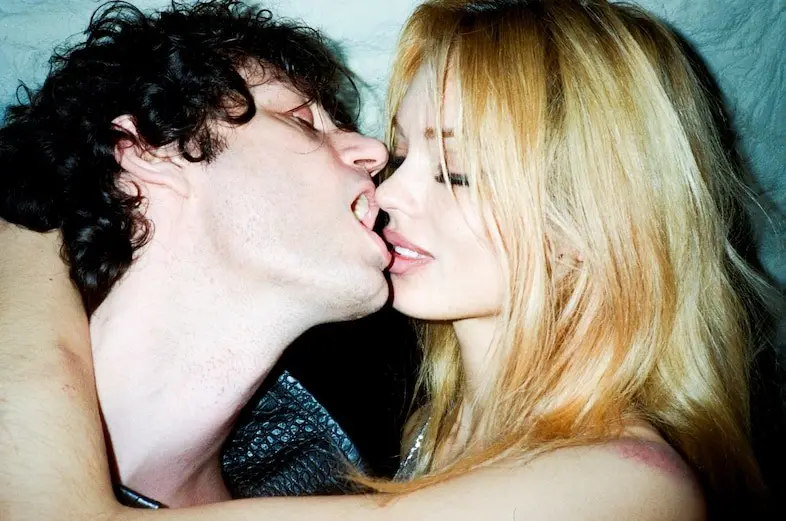
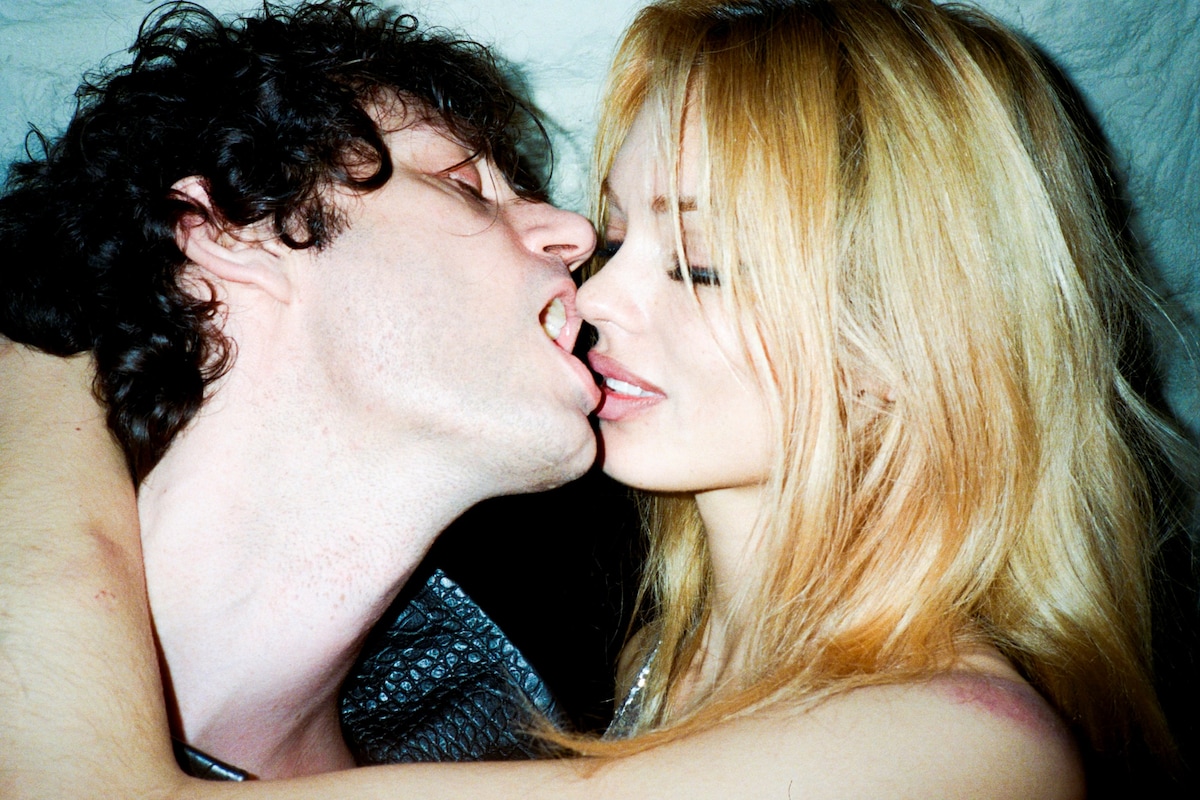
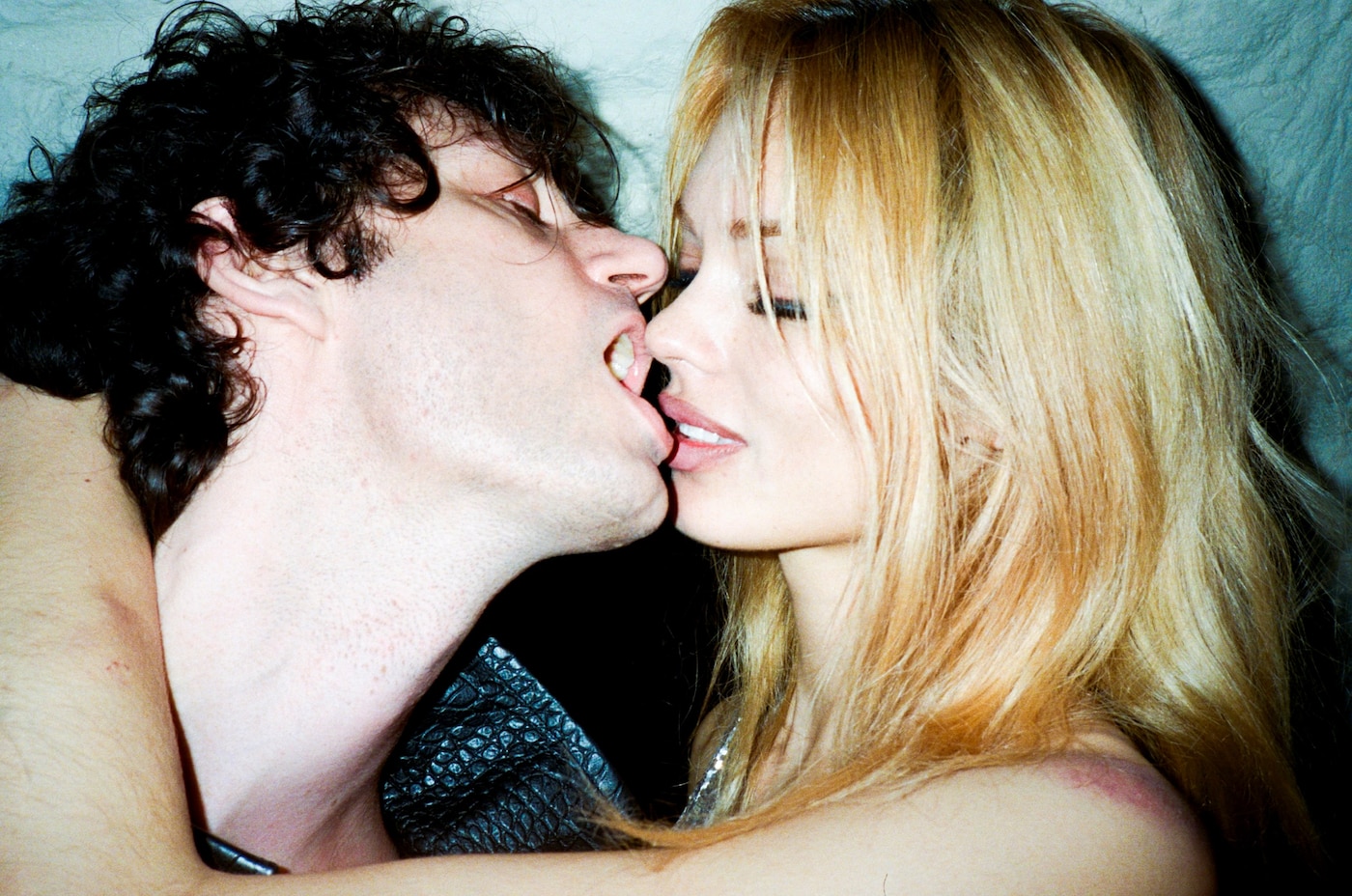
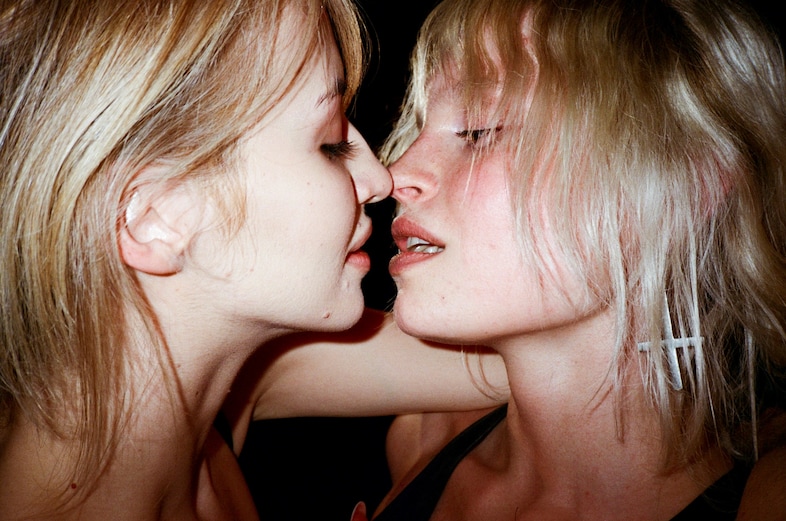
In an era defined by frictionless digital connection and the pervasive curation of our social lives, physical presence has quietly become a radical act. We swipe, like, and direct message with dizzying velocity, yet we are increasingly haunted by an ambient, low-grade alienation. Into this landscape of algorithmic detachment steps Paris-based photographer Arthur Samier with his striking debut monograph, Choose Love, published by Patrick Rémy Studio.
Far more than a standard documentation of European nightlife, Choose Love is a visual polemic against the emotional anesthesia of the smartphone era. Capturing the transient, sweat-slicked, and emotionally charged reality of Parisian clubs, bars, and underground after-hours, Samier’s lens uncovers the profound truths hidden in plain sight amid the strobe lights. Through a nuanced exploration of human contact, the book acts as both a time capsule of contemporary youth culture and an urgent reminder of what we stand to lose when physical proximity is replaced by a screen.
As the book prepares for its release and accompanying exhibition at Paris’s Galerie Bertrand Grimont, this feature explores how Samier’s work challenges our digital habits, redefines the mythology of Parisian nightlife, and elevates raw, messy human intimacy into an art form.
Detailed Chronology: From Fleeting Nights to a Cohesive Vision
The genesis of Choose Love was remarkably organic, born not from a calculated commercial pitch, but from an instinctive compulsion to record the transient magic of the urban night.
For years, Arthur Samier operated as a quiet observer within the pulsing arteries of Paris’s nocturnal landscape. Armed with his camera, he moved fluidly through legendary venues—spaces like Maxim’s, Les Bains Douches, Bus Palladium, and the historic Palace—not as a dispassionate commercial photographer hunting for lifestyle trends, but as an insider seeking out genuine moments of human friction.
Initially, Samier had no intention of producing a published monograph. He was simply accumulating visual fragments of his nocturnal adventures. He photographed friends, newly minted acquaintances, frantic dance floors, quiet interludes in smoking areas, and solitary figures standing adrift in the center of a roaring crowd. It was only over an extended period, as he began to review the archive, that a distinct structural thread revealed itself.
The individual images began to converse with one another, forming a unified body of work. Samier realized that his lens was not merely documenting parties; it was charting the emotional architecture of the night. Love, desire, friendship, acute loneliness, and unbridled freedom emerged as the core pillars of the project.
The culmination of this multi-year archival process is Choose Love, a carefully edited sequencing of moments that balance the kinetic energy of club culture with the quiet stillness of human vulnerability. Scheduled to arrive via Antenne Books following a preview exhibition at Galerie Bertrand Grimont in the heart of Paris’s 3rd arrondissement, the monograph marks the arrival of a distinct new voice in contemporary art photography.
Supporting Context & Metrics: The Biological and Cultural Cost of Algorithmic Living
To fully appreciate the gravity of Choose Love, one must examine the modern sociological and biological landscape that prompted its creation. We live in a documented paradox: human beings are physically connected to communication networks 24/7, yet rates of reported loneliness, anxiety, and social detachment are at an all-time high.
From a neurobiological standpoint, digital interactions offer a diminished return on emotional investment. When individuals share physical space, touch hands, or lock eyes without a technological intermediary, the human body orchestrates a complex symphony of biochemical responses. Physical touch and mutual proximity trigger the release of oxytocin—famously dubbed the "bonding hormone"—while kissing and embraces stimulate dopamine, serotonin, and endorphins. These organic chemicals forge deep, resilient neural pathways of empathy and mutual understanding.
Conversely, the dopamine loops engineered by social media apps and dating platforms offer a chimerical substitute. They promise endless choices, fostering a cultural mindset where potential partners and friends are viewed as infinitely swipable commodities rather than complex human beings. This abundance of superficial choice ultimately scatters our attention, anaesthetizing us to the rich, messy reality of physical vulnerability.
Arthur Samier’s photography directly confronts this psychological malaise. By focusing on the raw, unfiltered interactions that occur when people surrender to the night, Choose Love provides a visual counter-narrative to the sanitized, hyper-curated perfection of Instagram feeds. It reminds viewers that true intimacy cannot be optimized, filtered, or downloaded—it requires physical risk, presence, and the courage to show up in the flesh.
Official Statements: In the Words of the Artist
The philosophy underpinning Choose Love is articulated with poignant clarity by Samier himself, who views the nocturnal environment as a vital sanctuary for human expression.
Reflecting on the unique properties of the night, Samier notes:
"At night, bodies come closer. We dance, kiss, touch, laugh, meet. At night, people seem to loosen their grip on who they are supposed to be. The social roles, routines, and images we carry during the day become less important. People become more spontaneous, more vulnerable, sometimes more reckless."
For Samier, the night functions as a temporary parallel universe operating under alternative rules, where the rigid constraints of daytime society dissolve. This temporal space accelerates emotional exchange, allowing strangers to forge profound connections in a matter of hours—connections that are often all the more romantic for their impermanence.
"You can meet someone at two in the morning, share a cigarette, kiss them, tell them something deeply personal and, a few hours later, they might be a stranger again," Samier explains. "That impermanence is part of what I find so romantic about the night. It permits people to live intensely, even if only for a few hours. And photography allows me to hold on to those fleeting moments before they disappear."
Crucially, Samier’s focus remains anchored in the emotional ambiguity of these encounters. He is drawn not to the loud, empty spectacles of modern nightlife, but to the subtle, elusive grace notes that often go unnoticed in a crowded room.
"I’m often drawn to moments when something escapes control: a kiss, two people moving closer, someone dancing alone, a gaze getting lost in the crowd," he says. "What really interests me is when contradictory emotions appear at the same time. A photograph can look incredibly joyful and still contain a certain melancholy. A beautiful face can seem completely elsewhere. That ambiguity is what moves me."
Addressing the core thesis of the book, Samier connects his artistic vision directly to the cultural perils of the digital age:
"In a world where dating apps and Instagram create an illusion of endless possibilities, I’m interested in what we risk losing: real human and physical contact. Having too many choices can actually scatter us… Choose Love is an invitation to choose encounter over distance, presence over the screen, risk over indifference. To choose love, even when it is fragile, temporary, or imperfect."
Furthermore, the project is deeply rooted in the romantic mythology of Paris itself. Samier acknowledges the persistent ghosts and nocturnal heritage of the French capital, noting that while venues and generations inevitably shift, Paris retains a peerless talent for nocturnal reinvention. Moreover, he observes a distinctly Parisian commitment to personal presentation:
"The venues change, the generations change, but the city’s ability to reinvent itself at night remains. And Parisians know how to dress. There is a particular attention to clothing, silhouettes, and appearance at night that I find difficult to find elsewhere with the same intensity."
Future Outlook: The Legacy of Choose Love in Contemporary Photography
As Choose Love makes its transition from private archive to published monograph and gallery exhibition, its cultural resonance extends far beyond the borders of Paris. In a contemporary art world frequently dominated by digital manipulation, AI-generated imagery, and hyper-clean studio aesthetics, Samier’s gritty, honest, and profoundly human documentation offers a refreshing and necessary corrective.
The monograph serves as a timely reminder of the enduring power of the photobook as a physical artifact. By curating moments of genuine human touch into a bound volume, Samier mirrors the tactile intimacy he champions on the dance floor. Readers do not merely look at Choose Love; they hold it, turning pages in the physical world just as the subjects in the photographs hold one another against the digital tide.
Looking ahead, Choose Love is poised to become a definitive cultural touchstone for post-pandemic and post-digital nightlife documentation. It captures a generation caught between the cold mechanics of virtual connectivity and an unquenchable, primal hunger for physical touch.
For those fortunate enough to experience the exhibition at Galerie Bertrand Grimont or secure a copy of the monograph via Antenne Books, Arthur Samier’s work offers an enduring invitation: to step away from the glowing screen, venture into the shadows of the nocturnal city, and choose the messy, magnificent reality of human love.