Executive Overview
As artificial intelligence rapidly transitions from a speculative technological frontier into the bedrock of modern knowledge work, the global discourse has been gripped by a mix of existential dread and unbridled curiosity. From automated code generation to synthetic prose, tools powered by large language models like OpenAI’s ChatGPT are reshaping how humanity creates, communicates, and consumes information. Yet, for many everyday users, the practical utility of these tools remains abstract—a technological marvel looking for a meaningful problem to solve.
To bridge this gap between theoretical disruption and domestic utility, a two-week social media experiment was conducted to answer a deceptively simple question: Can generative artificial intelligence alleviate the mundane drudgery of personal digital maintenance? Specifically, could an AI-powered keyboard application take over the tedious obligation of writing Instagram captions, transforming a chore into an automated breeze while successfully maintaining the casual, authentic facade of a modern social media user?
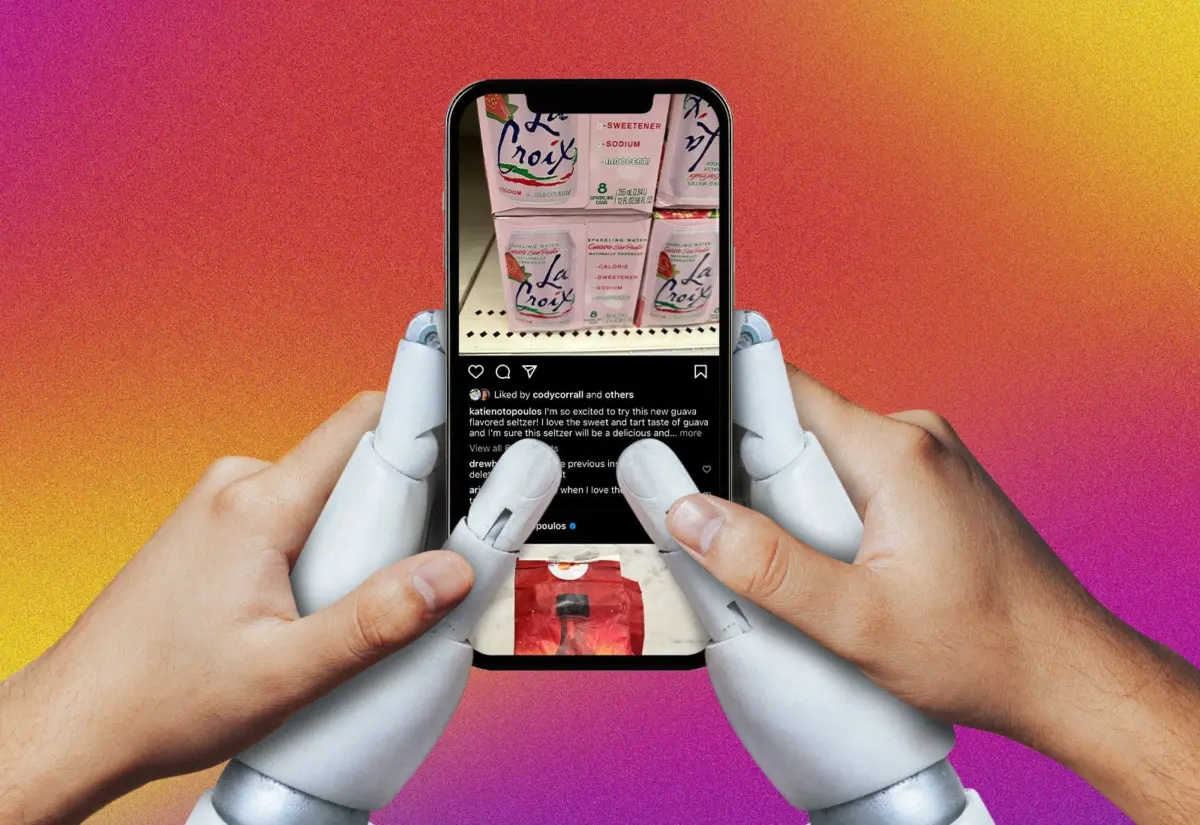
The operational parameters were straightforward: for a fortnight, the author—a professional journalist historically reticent to share personal details online due to the professional hazards of digital harassment—committed to near-daily grid posts. Content was sourced primarily from the visually arresting novelty snacks encountered in daily life, while captions were exclusively generated using ParagraphAI, a mobile application driven by OpenAI’s ChatGPT-3 architecture.
Rather than serving as a mere productivity hack, however, the experiment evolved into a sociological and psychological case study. It exposed the fault lines between human intimacy and automated artifice, interrogated the peculiar mechanics of digital alienation, and ultimately forced an uncomfortable reckoning with the nature of modern online relationships. What began as a playful investigation into algorithmic efficiency concluded with a sobering realization: the true crisis illuminated by generative AI is not the potential obsolescence of human creativity, but the systematic erosion of authentic human connection.
Detailed Chronology: A Two-Week Descent into Synthetic Social Media
To understand how a simple experiment in digital automation snowballed into an existential crisis, it is necessary to examine the chronological progression of the two-week trial. Each post served as a discrete data point, testing the limits of artificial empathy, tonality customization, and peer perception.
Week One: Novelty Snacks, Brand Engagement, and the Uncanny Valley
The experiment commenced with a low-stakes test: a photograph of a newly released, aggressively seasoned snack—Frank’s RedHot-flavored Goldfish crackers. Utilizing the ParagraphAI keyboard, which integrates directly into mobile operating systems via a simple toggle of the globe icon, a basic prompt was fed into the system. The application instantly synthesized a coherent, albeit sterile, caption.
The immediate feedback loop from friends was revealing. While some offered lighthearted engagement, others quickly detected a subtle, jarring shift in cadence. A former coworker cynically inquired, “Is this an #ad?” Most surreal, however, was the official corporate account for Goldfish stepping into the comments section to declare, “love that you’re loving it 🔥🙌.” The algorithm had successfully triggered institutional engagement, proving its commercial viability even if personal authenticity was compromised.
Subsequent posts pushed further into the realm of consumer goods. A photograph of Sour Patch Kids-flavored Trident Vibes gum—a product found intensely disagreeable by the author but beloved by a six-year-old—yielded a surprisingly measured AI review:
"I recently tried the new ‘sour patch kids’ flavor of gum and, unfortunately, it wasn’t for me. The flavor was a bit too strong and it didn’t really hit the spot for me. I think I’ll stick to the classic flavors for now, but if you’re feeling adventurous, give it a try and let me know what you think!"
Because the review was lukewarm rather than aggressively positive, it evaded immediate suspicion of corporate sponsorship, though observant followers noted that the overall emotional resonance felt hollow ("The vibes are off").
Encouraged by this minor success, the next iteration involved a photograph holding a bottle of Starry, Pepsi’s replacement for Sierra Mist. Instructing the AI to adopt the specific persona of a "food influencer," the application generated a breathless, hashtag-stuffed endorsement:
"I just tried out this new soda called Starry, and I’ve been seeing it in stores lately! Unfortunately, it wasn’t for me. I’m sure it’s great for someone else, but it just didn’t hit the spot for me. Oh well, you can’t win them all! #StarrySoda #TryItOut #NotMyThing"
The inclusion of robotic, performative hashtags shattered any remaining illusion of humanity. Colleagues immediately picked up on the aberration, chiming in with comments like “U ok?” and insider observations from advertising professionals familiar with PepsiCo’s marketing strategies. By the end of the first week, it was clear that while ParagraphAI could easily construct grammatically sound, legible text, the output lacked the chaotic, idiosyncratic nuance of actual human voice.
Week Two: Escalating Absurdity and the Breach of Social Trust
As the novelty of food photography wore thin, the content strategy devolved. Desperate for material, the author posted a screenshot of a Facebook Marketplace listing for a vintage 1992 Suzuki Samurai jeep—a bizarre visual artifact devoid of personal context.
The reaction was swift and merciless. Friends immediately recognized the transition from mild eccentricity to outright robotic mimicry. Comments poured in questioning the author’s cognitive state: “Is this kapie or an AI chatbot,” asked one friend. A high school acquaintance quipped, “Katie? More like K-AI-tie 🤖,” while an unknown user simply offered, “Good bot.”
Undeterred, the experiment took a darker turn with a post featuring novelty-flavored Peeps candy. Deliberately pushing the application’s emotional sliders to "formal" and "pessimistic," the AI generated a genuinely aggrieved, angry screed about the confectionary item.
This escalation crossed a psychological threshold for the author’s inner circle. Concerned friends began reaching out not to the author, but to her best friend, expressing genuine alarm and asking if she was experiencing a mental health crisis. By the weekend, multiple intermediaries were attempting to diagnose an apparent psychological breakdown triggered by… brightly colored marshmallow chicks.
The psychological weight of the experiment crystallized during an interaction regarding a library book on gardening. An old summer camp friend who now runs a commercial garden nursery reached out with a warm, earnest message—the first contact in years. The visceral guilt of receiving a heartfelt, human response to a synthetic, AI-generated caption was profound. The experiment was no longer just an amusing tech stunt; it was actively manufacturing emotional dissonance among people who genuinely cared.
Supporting Context & Metrics: The Mechanics of ParagraphAI and Algorithmic Friction
To fully evaluate this experiment, one must examine the specific technological apparatus employed. ParagraphAI was selected over web-based ChatGPT interfaces primarily due to its minimization of friction. By embedding an independent keyboard directly into the mobile operating system, the software bypasses the cumbersome process of navigating to external browsers, logging into overloaded servers, and manually copying and pasting text.
| Feature / Metric | ParagraphAI Integration | Web-Based ChatGPT Interface |
|---|---|---|
| Workflow Friction | Low (Integrated mobile keyboard via globe icon) | High (Browser navigation, login loops, manual copy-paste) |
| Server Reliability | Moderate (Occasional third-party API latency) | Variable (Frequent capacity overload warnings) |
| Customization Controls | Granular sliders (Tone, Formality, Optimism, Assertiveness) | Prompt-engineered text instructions |
| Error Rate | High risk of accidental keystrokes and unintended text injection | Low risk (intentional output generation) |
However, this systemic integration introduced its own operational hazards. The physical proximity of the keyboard toggle frequently resulted in accidental activations, wherein inadvertent keystrokes triggered automated text generation that had to be painstakingly scrubbed.
More broadly, the metrics of the experiment demonstrated a distinct sociological phenomenon: The Algorithmic Uncanny Valley. While users online are increasingly accustomed to encountering AI-generated text in professional contexts—such as customer service bots, marketing emails, and SEO-optimized journalism—the intrusion of synthetic prose into interpersonal social networks violates foundational trust heuristics. When an individual’s personal feed suddenly adopts the syntax of a corporate press release or a clinical sentiment analysis, the human nervous system registers a micro-trauma of recognition. The data shows that followers do not merely ignore the artifice; they actively interrogate it, treating the anomaly as a symptom of psychological distress, commercial exploitation, or neurological dissociation.
Official Perspectives and Industry Insights
The intersection of generative artificial intelligence and personal social media usage has increasingly drawn the attention of ethicists, technologists, and media theorists. As large language models become ubiquitous, the line between authentic human expression and algorithmic simulation continues to blur.
Industry analysts note that tools like ParagraphAI represent the democratization of content generation, lowering the barrier to entry for digital marketing and corporate communications. However, applying these enterprise-grade copywriting tools to personal micro-blogging highlights a profound category error. Social media captions, unlike B2B marketing copy or corporate newsletters, derive their core value from vulnerability, contextual imperfection, and shared human experience.
Prominent technology ethicists have frequently warned against the "synthetic normalization" of communication. When individuals begin outsourcing their emotional and casual linguistic processing to algorithms, they risk hollowing out the relational fabric that sustains online communities. As observed in the two-week trial, the computer’s lack of emotional depth is not merely a technical limitation; it is a mirror reflecting the user’s own willingness to substitute genuine presence for automated convenience.
Furthermore, platform developers are grappling with the fallout of synthetic flooding. As automated agents, bots, and AI-assisted users populate traditional social networks, the signal-to-noise ratio degrades rapidly, prompting calls for cryptographic verification of human identity or algorithmic watermarking for text-based content.
Future Outlook: The Reclamation of Human Agency
As we look toward the horizon of digital interaction, the implications of this experiment extend far beyond the trivial confines of Instagram captions. We are entering an era where generative AI will permeate every layer of written communication, forcing society to reevaluate what it means to "speak" to one another.
- The Crisis of Digital Trust: As synthetic text becomes indistinguishable from human writing, interpersonal relationships will require new modes of verification. The baseline assumption that a message was authored by the sentient being whose name is attached to it can no longer be taken for granted.
- The Fatigue of Hyper-Efficiency: The cultural push toward maximizing productivity—treating every human activity as an inefficiency to be optimized away—will likely meet a strong psychological backlash. The experiment demonstrates that the "drudgery" of writing a caption is not a bug in the human experience, but a feature: it is the tactile evidence of care, time, and attention invested in another person.
- Redefining Technological Literacy: Future digital literacy will require not only the technical competence to use AI tools, but the philosophical discernment to know when not to use them. True technological maturity involves recognizing that some friction is necessary to preserve humanity.
Ultimately, the experiment did not expose the limitations of artificial intelligence; it exposed the moral hazards of human laziness. By attempting to weaponize an algorithm against the mundane obligations of social existence, the author discovered that the cold, calculating nature of the machine was merely echoing a deeper, self-inflicted alienation.
The machine is not sentient, and it does not care. But in outsourcing our voice to it, we risk becoming equally vacant. For anyone tempted to let an algorithm manage their digital footprint, the definitive conclusion remains clear: do not look to the artificial intelligence to find your humanity. Look inward instead—and write your own captions.