Executive Overview
The launch of Insomniac Games’ highly anticipated Marvel’s Wolverine has been nothing short of a cultural lightning rod. As players worldwide dive into the gritty world of the iconic mutant, the discourse surrounding the title has dominated gaming forums, social media algorithms, and critical roundtables. From debates over art direction and character design choices to scrutinizing specific gameplay mechanics—such as the much-discussed scent-tracking segments—the title has faced heavy scrutiny.
At the center of this whirlwind is actor Liam McIntyre, who takes on the monumental task of voicing and motion-capturing the titular hero, Logan. Following early reviews and extended gameplay footage releases, a vocal faction of the fan base took to social media to voice their discontent, critiquing everything from Insomniac’s face-scan technology to whether McIntyre’s physical visage aligns with their preconceived notions of the character.
However, rather than retreating from the online crossfire, McIntyre has met the wave of criticism with characteristic humor and profound professional resilience. Drawing parallels to the most intimidating crucible of his early career—stepping into the sandals of the legendary Spartacus following the tragic passing of Andy Whitfield—McIntyre has made it clear that online fan discourse is "no skin off his nose." As Marvel’s Wolverine officially opens its claws to the public, this report examines the anatomy of the game’s launch controversy, McIntyre’s weathered response, and the broader context of taking on legendary pop-culture mantles.
Detailed Chronology: From First Look to Launch Day Backlash
The friction surrounding Marvel’s Wolverine did not materialize overnight; it has been brewing across months of promotional rollouts, media previews, and technical deep-dives provided by Insomniac Games.
The Build-Up and Early Previews
Ever since Insomniac Games—heralded for their monumental success with the Marvel’s Spider-Man franchise—first announced their partnership with PlayStation and Marvel Games to develop a standalone Wolverine project, expectations reached a fever pitch. Fans anticipated the studio’s signature polished mechanics, cinematic storytelling, and faithful yet distinct adaptations of beloved comic book lore.
However, as the release window drew closer, marketing efforts began showcasing extended gameplay footage. While many praised the visceral combat and darker tone, a segment of the community began dissecting every frame. Debates erupted online concerning the game’s art direction, color grading, and specific environmental interactions. Further fuel was added to the fire when developers addressed minor mechanical inquiries, including the implementation of Logan’s tracking scent trails, sparking a flurry of internet memes and heated debates over design choices.
The Face of the Mutant
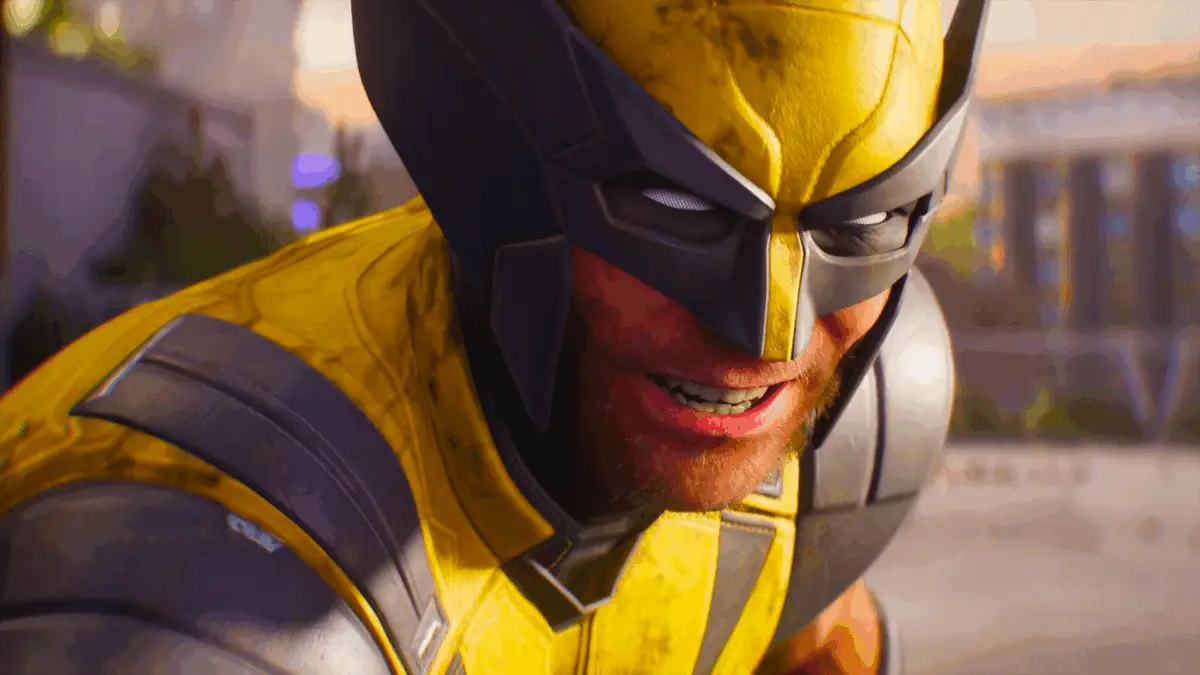
Compounding the gameplay debates was the casting and digital rendering of Logan himself. For over two decades, live-action cinematic adaptations have inextricably linked the public consciousness of Wolverine to Hugh Jackman’s iconic, towering portrayal. When Insomniac revealed their original take on the character—utilizing McIntyre’s performance—it naturally required an adjustment period for audiences.
Some players vocalized criticism online, arguing that McIntyre’s facial scans and the subsequent in-game model didn’t capture the rugged aesthetic they expected, or that the resemblance fell short. While many actors might shy away from the direct line of sight of internet criticism, McIntyre—who has been actively and enthusiastically engaging with his community since his casting was first confirmed—saw the chatter firsthand.
The Social Media Response
Realizing that fans were surprised to find him actively reading their posts, McIntyre took to X (formerly Twitter) to address the noise directly. Replying to a concerned community member, the actor offered a lighthearted reality check about the nature of online fandoms.
"Ha. Man, my career started with the responsibility of taking over for the incredible Andy Whitfield in Spartacus (RIP to that legend). I’ve read things you couldn’t believe 🙂
I just hope everyone has fun. I’m proud as hell of this game. It’s a blast."
This measured, appreciative response immediately shifted the tone of the conversation among many fans, reminding the community of McIntyre’s extensive professional background and his genuine enthusiasm for the project. In subsequent posts leading up to launch day, McIntyre expressed deep gratitude toward Marvel Games and Insomniac, emphasizing that portraying such an iconic character has been a once-in-a-lifetime journey.
Supporting Context & Metrics: Navigating High-Stakes Castings
To fully understand McIntyre’s unflappable attitude toward the Marvel’s Wolverine backlash, one must examine his career trajectory and the unique pressures associated with inheriting beloved fictional properties.
The Spartacus Crucible
McIntyre’s reference to his breakout role on Starz’s hit historical drama Spartacus is a masterclass in perspective. In 2010, the series captivated audiences with Spartacus: Blood and Sand, anchored by the magnetic and universally praised performance of Andy Whitfield in the titular role. Tragically, before filming for the second season could commence, Whitfield was diagnosed with stage IV non-Hodgkin lymphoma, a severe blood cancer that ultimately claimed his life in 2011.

Stepping into the sandals of a beloved lead character whose original actor passed away under such heartbreaking circumstances is arguably one of the most daunting tasks in modern television history. When McIntyre was announced as the new Spartacus for Spartacus: Vengeance, he faced immense scrutiny, skepticism, and fan resistance. Yet, through dedication, respect for his predecessor, and powerful performances, McIntyre won over the audience, ultimately leaving a revered legacy on the show. Having survived that baptism by fire, internet commentary regarding a video game character design registers as a relatively minor hurdle.
The Shadow of Cinematic Giants
Furthermore, stepping into the role of Wolverine places an actor in the shadow of one of the most successful superhero castings in entertainment history. Hugh Jackman portrayed Logan across nine films spanning over two decades, cementing a definitive interpretation of the character for multiple generations of moviegoers.
Any new adaptation—whether animated, comic-based, or interactive—faces an inherent uphill battle when attempting to redefine a pop-culture titan. Insomniac’s version was never meant to be a digital carbon copy of Jackman; rather, it is an independent interpretation within the broader Marvel video game universe. McIntyre’s performance embraces this challenge, offering a grizzled, ferocious, yet nuanced take on Logan that stands on its own merits.
Critical Reception and Commercial Metrics
From a critical standpoint, Marvel’s Wolverine has entered the market to a mixed, albeit generally favorable, consensus. Major outlets have published their evaluations, with IGN awarding the title a 6 out of 10. Reviewers noted that while the game delivers "standard superhero fare" with slick and satisfying combat mechanics, certain structural elements and pacing choices wear thin before the story reaches its conclusion.
Despite the mixed critical reception—which often amplifies online discourse and polarizes community sentiment—pre-order metrics and digital storefront wishlists indicate massive commercial interest. Insomniac Games has established a powerhouse reputation for PlayStation publishing, and historical consumer data suggests that player engagement will remain high as millions log on to experience the campaign firsthand.
Official Statements & Community Reactions
The dialogue surrounding Marvel’s Wolverine extends far beyond standard internet trolling, highlighting a passionate, deeply invested community alongside creators who remain fiercely proud of their work.
Liam McIntyre’s Perspective
McIntyre’s public communications have consistently balanced humility with unyielding pride for the collaborative effort behind the game. In his statements shared via social media, the actor has repeatedly chosen to deflect negativity by focusing on the collective joy of gaming:
- "I just hope everyone has fun. I’m proud as hell of this game. It’s a blast."
- "I don’t know what the fates have in store for us tomorrow, but I just want to say thank you to everyone for this once in a lifetime opportunity. Thank you to @MarvelGames and @insomniacgames for trusting me with such a beloved character. I’m so proud. What a journey."
These remarks have resonated deeply with reasonable segments of the fanbase, earning McIntyre widespread respect for his professional maturity and grace under pressure.
Developer and Publisher Stance
While Insomniac Games and Marvel Games have largely allowed the game to speak for itself, developers have previously addressed specific technical concerns raised during media preview cycles. By engaging transparently with the community—such as clarifying gameplay loops and navigation systems—the studio has demonstrated a commitment to listening to player feedback while staying true to their creative vision. The studio’s track record with the Spider-Man series proves their capacity for post-launch support, refinement, and iterative improvement based on constructive player metrics.
Future Outlook: What Lies Ahead for Insomniac’s Mutant Universe?
As Marvel’s Wolverine officially opens its digital and physical doors to players worldwide, the immediate future of the franchise hangs in the balance of public reception and long-term player engagement.
Community Consensus vs. Initial Noise
Launch days for massive AAA superhero titles are invariably accompanied by hyper-fixated online discourse. While vocal minorities often dominate social media feeds with hyperbole—focusing on minute graphical details or stylistic choices—the true test of a game’s legacy lies in how millions of quiet players experience the narrative from start to finish. As players explore the campaign, uncover hidden narrative beats, and master the brutal combat loops, the initial wave of meme-driven controversy typically gives way to more nuanced, gameplay-driven discussions.
Potential for Expansion and Post-Launch Support
Given Insomniac’s pedigree, the release of Marvel’s Wolverine marks not an endpoint, but a foundational stone for a potential new gaming universe. Should the title achieve the commercial milestones anticipated by Sony and PlayStation, fans can look forward to potential expansions, narrative DLCs, and integration into future crossover projects.
For Liam McIntyre, his immortalization in the pantheon of Marvel gaming is secure. Regardless of the fluctuating opinions of internet critics, his vocal passion, resilience in the face of trolls, and deep respect for the craft ensure that his rendition of Logan will leave a lasting impression on the gaming landscape. As players finally unsheathe their adamantium claws tonight, the ultimate verdict rests not in the preview builds or social media hot takes, but in the hands of the players themselves.