Executive Overview
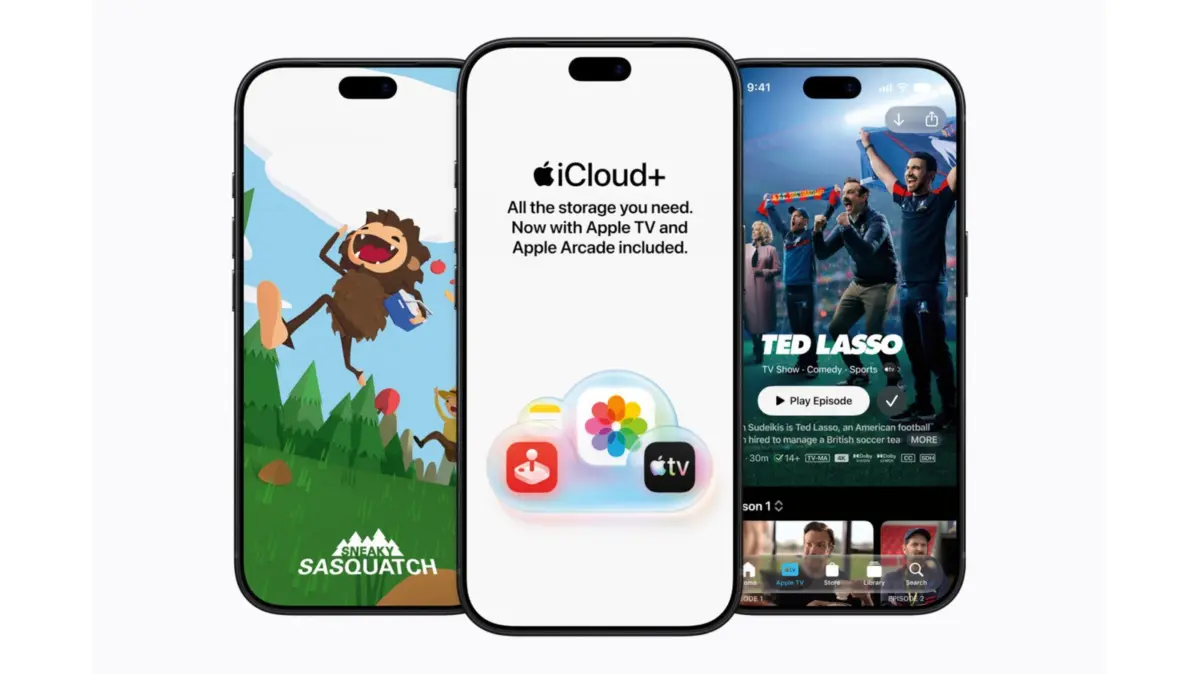
In a strategic shift that challenges its traditional multi-tier service bundling model, Apple has announced a sweeping expansion of its iCloud+ subscriptions. Moving beyond cloud storage and advanced privacy features, the tech giant is now bundling access to Apple TV and Apple Arcade directly into standard iCloud+ tiers across more than 100 countries. Furthermore, select regions will see the inclusion of Apple Music Select, providing users with a curated suite of ad-free internet radio stations.
Historically, Apple has relied on its comprehensive Apple One subscription tier to cross-pollinate its digital services, grouping iCloud storage with entertainment offerings like Apple Music, Apple TV+, and Apple Arcade for a minimum of $20 per month. However, this high-barrier pricing model faced distinct market friction in emerging and developing economies where standalone iCloud+ tiers start at nominal local equivalents to the US base price of $1 USD.
By integrating premium entertainment services into low-cost cloud storage subscriptions, Apple is fundamentally rewriting its international growth playbook. The move signals a transition from high-margin consolidation to user acquisition and ecosystem penetration at scale. Notably, this massive rollout also introduces Apple TV to 59 new global markets.
Regrettably for consumers in major Western markets, the expanded iCloud+ bundle is conspicuously absent from the United States, Canada, and parts of the European Union. Instead, the initiative focuses heavily on high-growth regions across the Middle East, Africa, Asia-Pacific, and Eastern Europe—including India, Saudi Arabia, Singapore, Türkiye, and the United Arab Emirates.
Detailed Chronology of the Expansion
The rollout of the newly enhanced iCloud+ tiers represents the culmination of a multi-year recalibration of Apple’s international commercial strategy. While Cupertino has long dominated hardware sales in mature markets like North America and Western Europe, its software and services divisions face intense competition and different consumer spending baselines abroad.
Phase 1: Identifying the Emerging Market Ceiling
For years, Apple’s primary vehicle for service adoption was Apple One. While successful in saturated markets where consumers readily pay for bundled media ecosystems, Apple One encountered steep resistance in developing economies. In many regions, spending $20 or more monthly purely for bundled digital services vastly exceeded the threshold for casual digital consumption, particularly when competing local streaming services or free alternatives were readily available.
Conversely, base-tier iCloud+—essential for device backups, photo storage, and basic device functionality—saw steady adoption due to its minimal cost (often equivalent to $1 per month). Apple recognized an untapped opportunity: millions of active device users were paying for cloud storage but bypassing paid entertainment services entirely.
Phase 2: Strategic Restructuring and Beta Testing
Behind closed doors, Apple engineers and regional executives developed a localized strategy. Rather than forcing consumers to graduate to a costly Apple One bundle, the company decided to invert the funnel. By elevating the value proposition of the entry-level and mid-tier iCloud+ plans, Apple could hook users into its media ecosystem through the gateway of cloud storage and privacy utilities.
As part of this rollout, the company also engineered Apple Music Select, a specialized tier tailored for these markets that grants subscribers access to select ad-free internet radio stations without incurring the full overhead of a traditional, on-demand Apple Music subscription.
Phase 3: The Global Unveiling
In September 2026, Apple officially unveiled the expansion via its regional newsrooms. The update immediately impacted more than 100 countries, simultaneously expanding Apple TV’s formal commercial footprint into 59 previously unsupported territories.
While the change went live overnight for millions of international Apple ID holders, the absence of the update in the United States and other tier-one economic zones underscored that this is a targeted geographic strategy rather than a universal price cut.
Supporting Context & Metrics: iCloud+ vs. Apple One
To understand the economic significance of this shift, one must examine the fundamental divergence between iCloud+ and Apple One architectures.
| Feature / Metric | Standard iCloud+ (Base Tier) | Apple One (Individual Tier) | New Enhanced iCloud+ (Select Countries) |
|---|---|---|---|
| Approximate Monthly Cost | ~$1.00 USD | $19.95+ USD | ~$1.00 USD (Local Equivalent) |
| Cloud Storage | 50GB – 12TB | 50GB – 200GB+ | 50GB – 12TB (Tier Dependent) |
| Privacy Features | Private Relay, Hide My Email | Private Relay, Hide My Email | Private Relay, Hide My Email |
| Apple TV Access | None | Included | Included |
| Apple Arcade Access | None | Included | Included |
| Apple Music Access | None | Included (Full) | Apple Music Select (Radio) |
| Target Geography | Global | Mature Markets / Global | 100+ Emerging Markets |
The Economics of Ecosystem Lock-In
Apple’s historic philosophy treats services as a high-margin recurring revenue engine. Services revenue has steadily climbed to become one of the company’s most reliable financial pillars, buffering against cyclical fluctuations in hardware upgrade cycles.
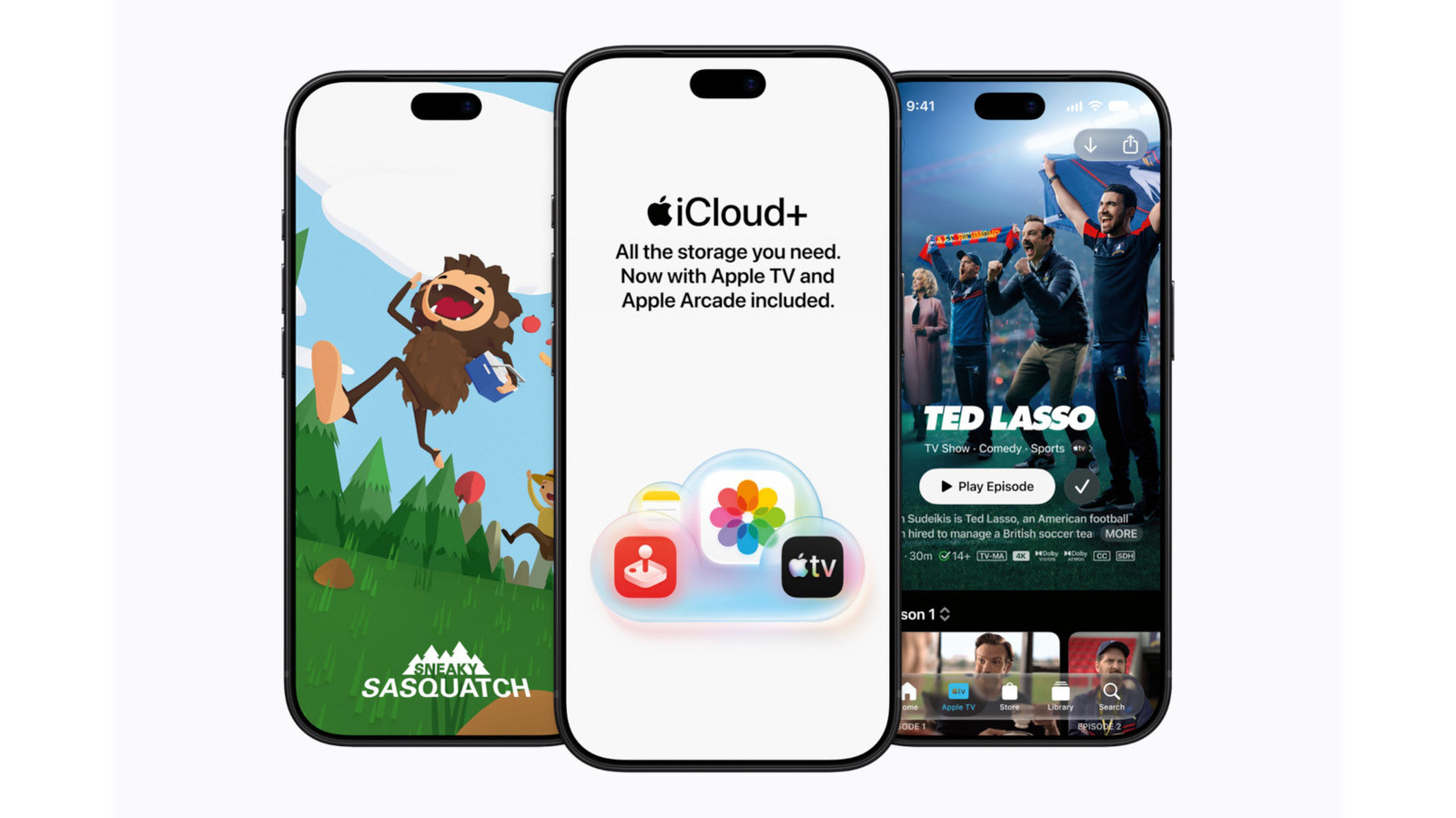
However, user acquisition costs in developing economies differ radically from those in the US. By embedding Apple TV and Apple Arcade into low-cost iCloud+ tiers, Apple is effectively absorbing the marginal cost of content distribution to achieve massive top-of-funnel scale. Once millions of users in regions like India, Southeast Asia, and the Middle East are actively engaged with Apple Arcade games and Apple TV originals, the long-term potential for cross-selling, in-app purchases, and hardware retention multiplies exponentially.
Official Statements and Industry Reception
Apple’s official announcements emphasize accessibility, value, and ecosystem expansion. In corporate communications directed at regional markets, Apple representatives highlighted that the initiative aims to bring world-class entertainment and secure cloud infrastructure together under a single, highly accessible umbrella.
Industry Analysts Break Down the Move
Market research firms have widely praised the maneuver as a pragmatic course correction. For years, critics argued that Apple’s rigid global pricing strategies alienated price-sensitive consumer bases where Android ecosystems dominate market share.
"Apple is playing the long game," notes a prominent tech industry analyst. "In markets where hardware is already a luxury investment, forcing users to choose between cloud storage and digital entertainment creates unnecessary friction. By removing that barrier and bundling TV and Arcade into iCloud+, Apple is directly attacking the value proposition of competing regional streaming and gaming services."
Furthermore, analysts point out that expanding Apple TV’s footprint into 59 new countries through this bundle solves a chicken-and-egg problem for content distribution. Launching a standalone streaming service in developing markets requires massive localized marketing budgets. By piggybacking on the already high-demand utility of iCloud+ storage, Apple bypasses traditional customer acquisition hurdles.
Comprehensive List of Included Regions
The geographic scope of this rollout is remarkably vast, spanning multiple continents and diverse emerging economies. Crucially, the United States, Canada, the United Kingdom, and Western European nations are excluded from this specific promotional pricing and bundling architecture.
The complete list of over 100 countries and territories receiving the enhanced iCloud+ bundle includes:
- Asia-Pacific & South Asia: Bhutan, Fiji, India, Maldives, Micromesia, Nauru, Nepal, Pakistan, Palau, Papua New Guinea, Singapore, Solomon Islands, Sri Lanka, Tonga, Vanuatu.
- Middle East & North Africa: Algeria, Bahrain, Egypt, Iraq, Israel, Jordan, Kuwait, Lebanon, Libya, Morocco, Oman, Qatar, Saudi Arabia, Tunisia, Türkiye, United Arab Emirates, Yemen.
- Sub-Saharan Africa: Angola, Benin, Botswana, Burkina Faso, Cameroon, Cape Verde, Chad, Democratic Republic of the Congo, Eswatini, Gabon, Gambia, Ghana, Guinea-Bissau, Kenya, Lesotho (implied via regional grouping), Liberia, Madagascar, Malawi, Mali, Mauritania, Mauritius, Mozambique, Namibia, Niger, Nigeria, Republic of the Congo, Rwanda, São Tomé and Príncipe, Senegal, Seychelles, Sierra Leone, South Africa (select tiers), Tanzania, Uganda, Zambia, Zimbabwe.
- Latin America & Caribbean: Anguilla, Antigua and Barbuda, Bahamas, Barbados, Belize, Bermuda, British Virgin Islands, Cayman Islands, Dominica, Grenada, Guyana, Jamaica, Montserrat, Saint Kitts and Nevis, Saint Lucia, Saint Vincent and the Grenadines, Suriname, Turks and Caicos, Trinidad and Tobago.
- Eastern Europe & Central Asia: Albania, Azerbaijan, Armenia, Bosnia and Herzegovina, Georgia, Kazakhstan, Kosovo, Kyrgyz Republic, Moldova, Montenegro, North Macedonia, Serbia, Tajikistan, Turkmenistan, Ukraine, Uzbekistan.
Future Outlook: What This Means for Global Consumers and Apple’s Strategy
The introduction of Apple TV and Apple Arcade to low-cost iCloud+ plans marks a profound philosophical pivot for Apple. For years, the company maintained strict boundaries between its utility-driven software (iCloud) and its lifestyle-driven entertainment subscriptions (Apple One, Apple TV+, Apple Music).
Will Western Markets Ever See This Bundle?
As of now, Apple has given no indication that it intends to bring this heavily discounted bundle to the United States or other mature markets. In the US, where Apple One boasts strong adoption and consumer spending power remains high, cannibalizing $20+ monthly subscriptions with a $1 super-bundle would deal a temporary blow to immediate services revenue.
However, market pressures in the West could eventually force a reconsideration. As subscription fatigue sets in globally and consumers increasingly scrutinize recurring monthly micro-charges, tiered regional strategies may become the norm rather than the exception.
The Road Ahead for Competitors
Local and international streaming, cloud, and gaming competitors in the newly integrated markets must now reckon with a formidable new rival. Services that previously competed comfortably against standalone Apple TV or Apple Arcade subscriptions now find themselves locked in combat against an omnipresent utility: device cloud backup. When a consumer’s mandatory photo and file storage solution suddenly includes prestige television and award-winning mobile gaming for virtually no extra cost, the competitive calculus shifts dramatically.
Ultimately, Apple’s gamble is clear: sacrifice short-term average revenue per user (ARPU) in developing territories to secure deep, generational ecosystem loyalty across billions of new digital consumers. If execution matches ambition, this quiet update to iCloud+ may well be remembered as one of Apple’s most consequential global growth plays of the decade.