Executive Overview
In an era defined by the rapid proliferation of generative artificial intelligence, hyper-realistic synthetic media, and sophisticated digital manipulation tools, the boundary between what is real and what has been artificially fabricated has dissolved. For photojournalists, legal systems, historians, and the public at large, verifying the authenticity of digital imagery has become an escalating crisis of trust.
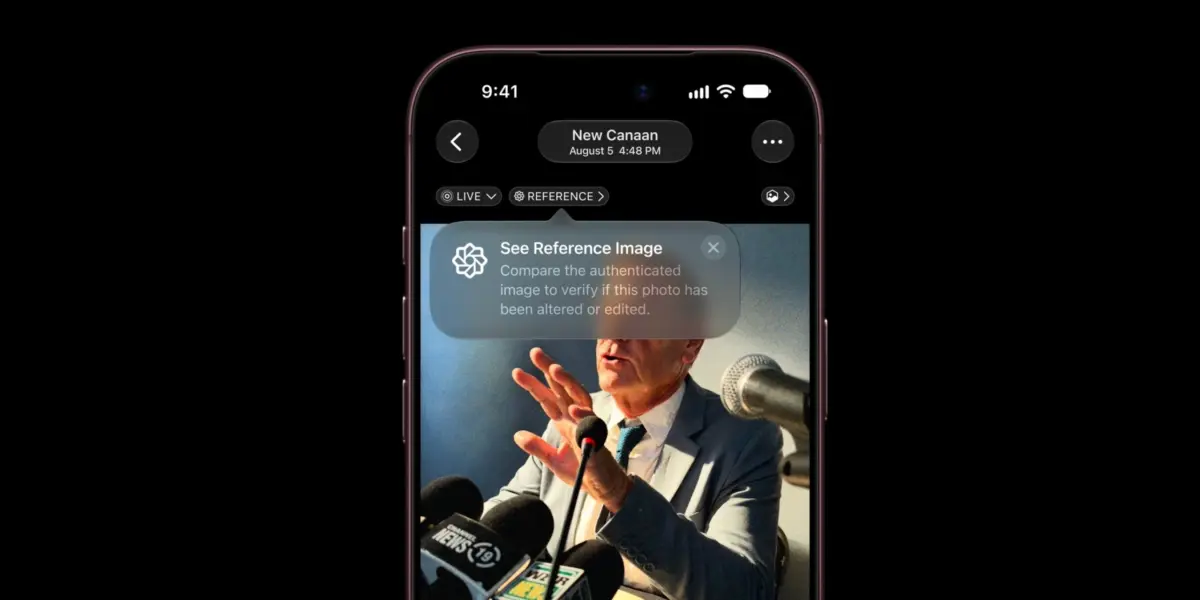
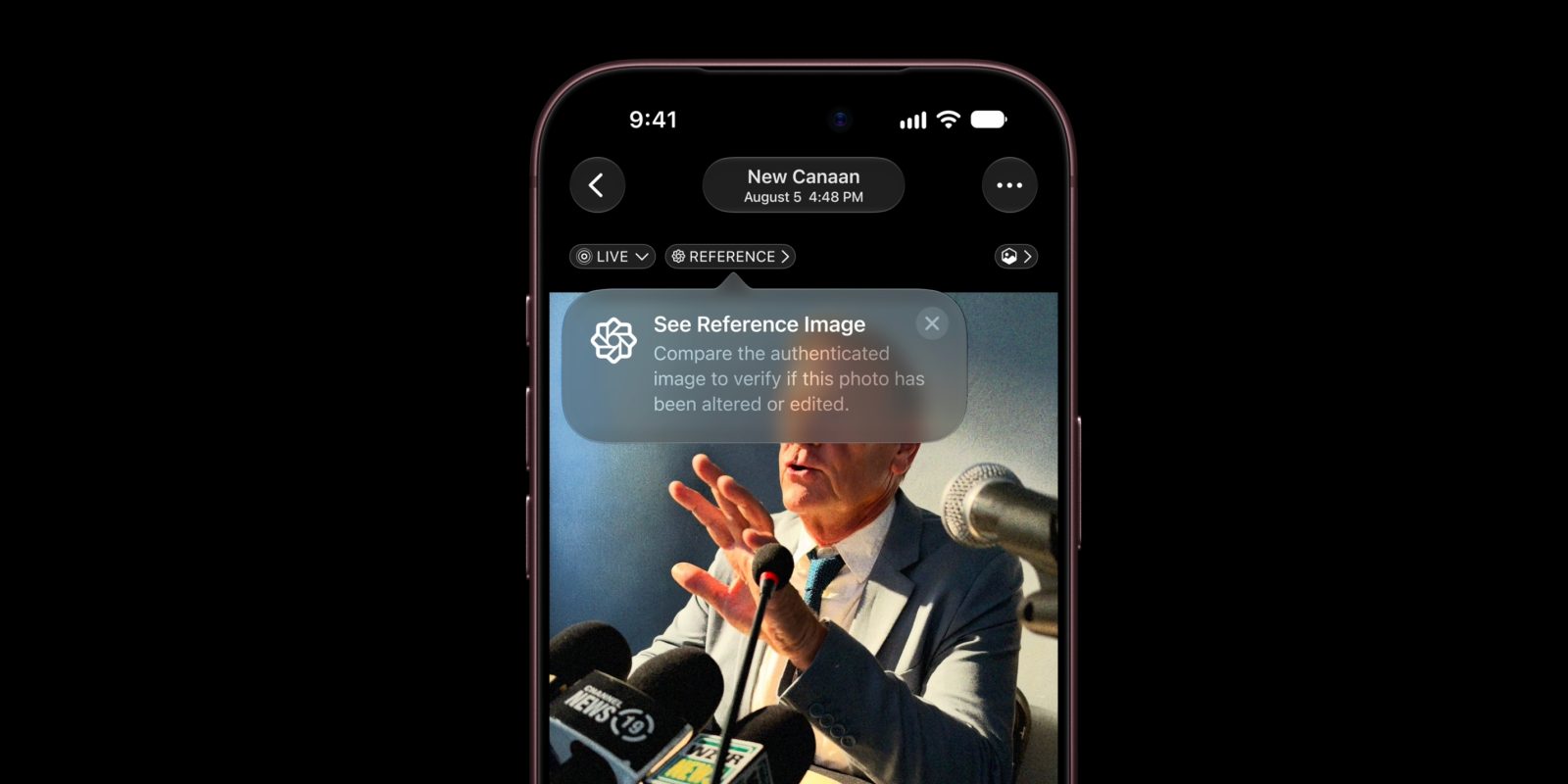
Addressing this pressing challenge head-on, Apple has published a comprehensive deep dive on its Security Research blog detailing the architecture, underlying technology, and design philosophy behind its newly introduced Reference Image camera mode, debuting on the iPhone 18 Pro. Titled “Apple Reference Image: A New Approach for Verified Photography,” the post outlines a pioneering chain-of-verification framework.
While existing industry standards—most notably the Coalition for Content Provenance and Authenticity (C2PA)—have attempted to tackle the issue of media provenance, Apple argues that these frameworks remain fundamentally vulnerable to downstream tampering and compromise at various points along the traditional editing chain. To bridge this gap, Apple has engineered a multilayered cryptographic ecosystem. By fusing hardware-level sensor binding, secure temporal bounding, Private Cloud Compute (PCC) processing, and post-quantum cryptographic signatures, the company has established what it proudly terms the industry’s first "quantum-secure" digital image provenance system. Crucially, this robust verification is achieved without sacrificing the photographer’s personal privacy, ensuring that individuals operating in high-risk environments can prove their images are authentic without exposing their identities.
Detailed Chronology: How the iPhone 18 Pro Secures an Image
To understand the sheer technical ambition of Apple’s Reference Image mode, one must examine the lifecycle of a photograph taken with the feature enabled. The verification chain does not begin when the user presses the shutter button; rather, it is anchored deeply within the device’s manufacturing lifecycle and continues through cloud processing and final delivery.
Phase 1: Manufacturing Initialization and Hardware Binding
The foundation of the Reference Image trust model is established long before the consumer ever unboxes their iPhone 18 Pro. During the assembly process in the factory:
- Key Generation: Upon initial activation and testing of the camera sensor, the sensor itself generates a secure cryptographic signing key pair.
- Key Separation: The sensor rigorously retains its private key within its own secure hardware boundaries, never exposing it to the broader operating system. Meanwhile, the public verification key is exported to the factory recording station.
- Factory Certification: The factory station signs this public key using a dedicated factory certificate authority (CA) and permanently records it into the device’s immutable hardware manifest.
This meticulous process ensures that every photo captured in Reference Image mode is irrevocably bound to that specific physical camera sensor at the silicon level, long before the raw pixel data ever reaches iOS for processing.
Phase 2: Capture and Sensor-Level Signing
When a user switches to Reference Image mode on the iPhone 18 Pro and captures a scene, the physical camera sensor instantly locks down the raw captured pixel data alongside essential sensor metadata.
- The sensor utilizes its internally stored private key to sign this package directly.
- By applying this signature at the sensor level, Apple prevents malicious software, compromised operating system kernels, or third-party applications from intercepting and altering the pixel data or metadata as it travels through the system’s software pipelines.
Phase 3: Cryptographic Temporal Bounding
A common vulnerability in digital provenance systems is the manipulation of timestamps, which can be altered or spoofed by a compromised device operating system. Apple circumvents this risk by implementing a sophisticated temporal bounding mechanism:
- Instead of relying on a local OS-provided clock, the iPhone periodically receives secure cryptographic timestamp tokens from an external, trusted source, establishing a verified lower bound for time.
- Immediately after a photo is captured, the device requests an additional cryptographic timestamp token, establishing an upper bound.
- This dual-token verification window guarantees that the photograph was captured precisely within a known, mathematically proven timeframe.
Phase 4: Secure Enclave Integration and PCC Processing
Once the sensor has signed the raw data and temporal bounds are established, the iPhone’s dedicated Secure Enclave steps in to sign ancillary metadata originating outside the camera sensor itself.
The raw package—referred to by Apple as a "secure digital negative"—is then securely transmitted to Apple’s Private Cloud Compute (PCC) architecture. PCC performs several rigorous validation checks:
- It verifies the signatures to confirm that the camera sensor and the Secure Enclave belong to the exact same physical iPhone.
- It validates the cryptographic timestamps to ensure the capture window is legitimate.
- It checks the sensor’s current status against active revocation lists to ensure the sensor has not been flagged or compromised.
Once these validation checks successfully pass, PCC develops the secure digital negative into the final JPEG Reference Image. To future-proof the asset, PCC signs the final output using a hybrid combination of traditional cryptography and post-quantum cryptography, safeguarding the image’s verifiable integrity against future decryption threats posed by quantum computing advancements.
Supporting Context & Metrics: The Triad of High-Assurance Provenance
Apple’s security research paper categorizes the requirements of a high-assurance photographic provenance system into three non-negotiable pillars: Semantic Authenticity, Resilience to Compromise, and Privacy Preservation.

+-------------------------------------------------------------------------+
|                  THE TRIAD OF HIGH-ASSURANCE PROVENANCE                 |
+---------------------------+---------------------+-----------------------+
| 1. Semantic Authenticity  | 2. Compromise Res.  | 3. Privacy Preservation|
|---------------------------+---------------------+-----------------------|
| - Secure digital negative | - Revocable sensors | - Anonymous capture   |
| - Signed raw pixels       | - Dynamic rev. lists| - Zero-identity leak  |
| - Verified PCC processing | - Hardware-bound keys| - Conflict zone safety|
+---------------------------+---------------------+-----------------------+
1. Semantic Authenticity
Traditional image formats are easily decoupled from their contextual origins. Apple Reference Image creates an unbreakable bond between the visual content (the pixels) and the metadata (when, how, and with what hardware it was captured). This "secure digital negative" contains raw pixel data paired with cryptographically signed parameters, ensuring that what the viewer sees is an unmanipulated representation of reality as captured by the lens.
2. Resilience to Compromise and Revocation Lists
No security system is entirely immune to sophisticated physical or software-based attacks over a device’s multi-year lifespan. To counter this, Apple has built a dynamic revocation infrastructure:
- Sensor-Level Revocation: If Apple’s confidence-scoring algorithms or security audits identify a specific sensor model or individual sensor unit as compromised or behaving anomalously, that sensor’s ID is instantly flagged.
- PCC Enforcement: Once a sensor is revoked, Private Cloud Compute will categorically refuse to sign any subsequent Reference Images captured by it.
- Retroactive Invalidation: Individual Reference Images can also be independently revoked if determined to be fraudulent after the fact. Apple devices regularly and automatically fetch updated revocation lists in the background, ensuring verifiers always have access to up-to-date authenticity data.
3. Privacy Preservation in Hostile Environments
Perhaps one of the most socially impactful aspects of the Reference Image architecture is its uncompromising stance on user privacy. In many geopolitical scenarios—such as documenting human rights abuses in conflict zones, police misconduct, or government corruption—photographers face severe personal danger.
Apple explicitly designed the Reference Image framework to ensure that an outside observer analyzing a verified photo cannot determine:
- The identity of the photographer.
- The specific serial number or identity of the device that took the photo.
- Whether two different Reference Images were captured by the same device or distinct devices.
This allows whistleblowers, journalists, and activists to definitively prove that their visual evidence is authentic and unadulterated without sacrificing their anonymity or putting their personal safety at risk.
Official Statements and Industry Implications
While industry initiatives like the C2PA (backed by heavyweights such as Adobe, Microsoft, and Google) have made commendable strides in establishing open standards for content credentials, Apple’s intervention highlights a fundamental architectural flaw in software-reliant verification models: if the pipeline can be intercepted before or during software processing, the integrity of the metadata can be undermined.

By shifting the root of trust down into the physical manufacturing of the camera sensor and leveraging isolated hardware components like the Secure Enclave alongside Private Cloud Compute, Apple is setting a radically higher bar for the consumer electronics industry.
Security analysts have noted that Apple’s integration of post-quantum cryptography is a particularly forward-looking masterstroke. As quantum computing research advances toward capabilities capable of breaking current RSA and ECC encryption standards, digital signatures generated today risk becoming forgeable in the coming decades. By embedding quantum-secure defense mechanisms directly into the PCC signing protocol, Apple ensures that historical archives of verified photographs captured on the iPhone 18 Pro will remain mathematically tamper-proof for generations to come.
Future Outlook: Where Does Verified Photography Go From Here?
The launch of Reference Image mode on the iPhone 18 Pro marks a watershed moment, transitioning verifiable photography from an experimental enterprise tool into a mainstream consumer feature. However, the ultimate success of this ecosystem will depend on broader adoption and integration across the digital landscape.
- Ecosystem Integration: For Reference Images to achieve their full potential, media outlets, social media platforms, search engines, and legal institutions must integrate the verification tools needed to parse Apple’s secure signatures and display authenticity badges to end-users.
- Standardization and Interoperability: While Apple’s proprietary hardware-to-cloud chain is exceptionally secure, the tech industry will eventually need to harmonize these rigorous hardware-bound methods with open standards like C2PA to prevent market fragmentation.
- Expansion Across the Lineup: While currently anchoring the flagship iPhone 18 Pro, consumer expectations suggest that this technology will inevitably cascade down to standard iPhone models, iPads, and Mac webcams in future hardware generations.
As synthetic media continues to flood the digital commons, threatening to plunge society into an era of pervasive epistemic doubt—where "seeing is no longer believing"—Apple’s Reference Image architecture offers a glimmer of technological hope. By combining hardware immutability, rigorous cloud-based validation, quantum-resistant cryptography, and strict user privacy, Apple has not merely updated a camera setting; it has helped safeguard the very concept of visual truth.