The wearable technology landscape has long been defined by a fundamental trade-off: do you opt for the constant, granular physiological tracking of a screenless fitness band like a WHOOP or Oura Ring, or do you prioritize the immediate convenience, communication features, and rich app ecosystem of a traditional smartwatch like the Apple Watch?
For years, many dedicated fitness enthusiasts chose a hybrid path—wearing a screenless tracker on one wrist for deep health analytics and an Apple Watch on the other for daily utility. However, this dual-wielding approach came with undeniable friction, both social and logistical.
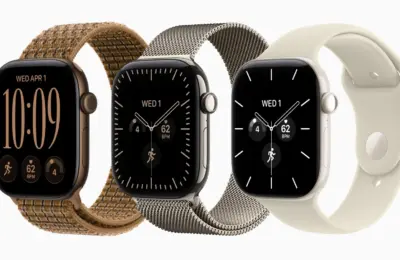
Enter the Apple Watch Series 12 paired with the iOS 27 Apple Health overhaul. Marking a massive turning point in Apple’s health-tracking strategy, this hardware and software generation directly addresses the historic complaints of data-hungry athletes and wellness tracking aficionados. By massively accelerating heart rate sampling rates, introducing sophisticated recovery metrics, and completely redesigning the iOS Health app interface, Apple has bridged the gap that previously drove users into the arms of dedicated fitness bands.
This deep-dive analysis explores how the Apple Watch Series 12 redefines wrist-based health intelligence, examining the technological shifts, software redesigns, and user experiences convincing former WHOOP loyalists to return to the Apple ecosystem.
Detailed Chronology: The Evolution of Apple’s Health Tracking
To understand why the Apple Watch Series 12 represents such a monumental leap forward, it is essential to examine the evolutionary trajectory of Apple’s health-tracking philosophy.
The Early Years: Activity Rings and Basic Metrics
When the original Apple Watch launched, its health suite was largely built around gamification—the iconic Activity rings (Move, Exercise, Stand). While revolutionary for mainstream fitness adoption, these metrics offered little insight into internal recovery, autonomic nervous system balance, or deep physiological strain. Heart rate data was captured intermittently, often spaced out by several minutes during periods of rest, leaving blind spots for users trying to understand their baseline recovery.
The Mid-Era: Sleep Tracking and ECG Milestones
As the hardware matured through the Series 4 to Series 10 iterations, Apple introduced groundbreaking clinical-grade tools: the Electrocardiogram (ECG), blood oxygen monitoring, and eventually, native sleep tracking.
Yet, persistent limitations remained. Apple’s sleep tracker, for instance, operated on a duration-heavy algorithm. If a user spent eight hours in bed, the software routinely rewarded them with a high sleep score, ignoring critical underlying metrics such as sleep fragmentation, heart rate variability (HRV) dips, and actual restorative sleep stages. Meanwhile, dedicated competitors like WHOOP were pioneering continuous, second-by-second strain and recovery models that treated sleep quality as a complex physiological equation rather than a simple clock-watching exercise.
The Series 12 Turning Point
With the introduction of the Apple Watch Series 12, Apple has shifted from passive wellness logging to active, continuous physiological monitoring. Coupled with the massive system-level redesign in iOS 27, the Series 12 is the first device in the lineup to directly challenge the data-frequency dominance of specialized recovery bands without sacrificing the communicative power of a full smartwatch.
Supporting Context & Metrics: Closing the Data Gap
The core friction point for power users switching between a WHOOP and an Apple Watch has always centered on two metrics: sampling frequency and actionable recovery data. The Apple Watch Series 12 changes this dynamic through significant hardware and software optimizations.
Heart Rate Sampling Frequency
Previous Apple Watch Models: Historically tracked heart rate roughly once every 5 minutes during periods of rest or low activity.
Apple Watch Series 12: Samples heart rate once every 5 seconds.
WHOOP Benchmark: Samples continuously at once every 1 second.
While dedicated athletes seeking ultra-fine granularity for high-intensity interval training (HIIT) or elite marathon pacing might still point out that a 1-second sampling rate holds a theoretical advantage, everyday wellness tracking and moderate fitness enthusiasts will find a 5-second interval more than sufficient. This dramatic tenfold increase in resting data collection allows the Apple Watch to accurately capture sudden spikes or drops in autonomic nervous system tone, feeding much cleaner data into overall health algorithms.
The New Readiness App and Recovery Scores
Perhaps the most significant software inclusion on the Series 12 is the debut of the native Readiness app.
Historically, Apple users relied on third-party applications like Athlytic or Bevel to calculate a daily recovery or strain score. The Series 12 brings this functionality natively to the wrist. By synthesizing overnight heart rate variability (HRV), resting heart rate, sleep metrics, and recent activity strain, the Readiness app generates a clean, intuitive 1-to-10 health score.
This functions identically to the recovery scores popularized by WHOOP, addressing the exact complaint that traditional Apple sleep scores were overly simplistic. Users can now wake up and instantly gauge whether their body is primed for a heavy workout or requires active rest, all without installing fragmented third-party software.
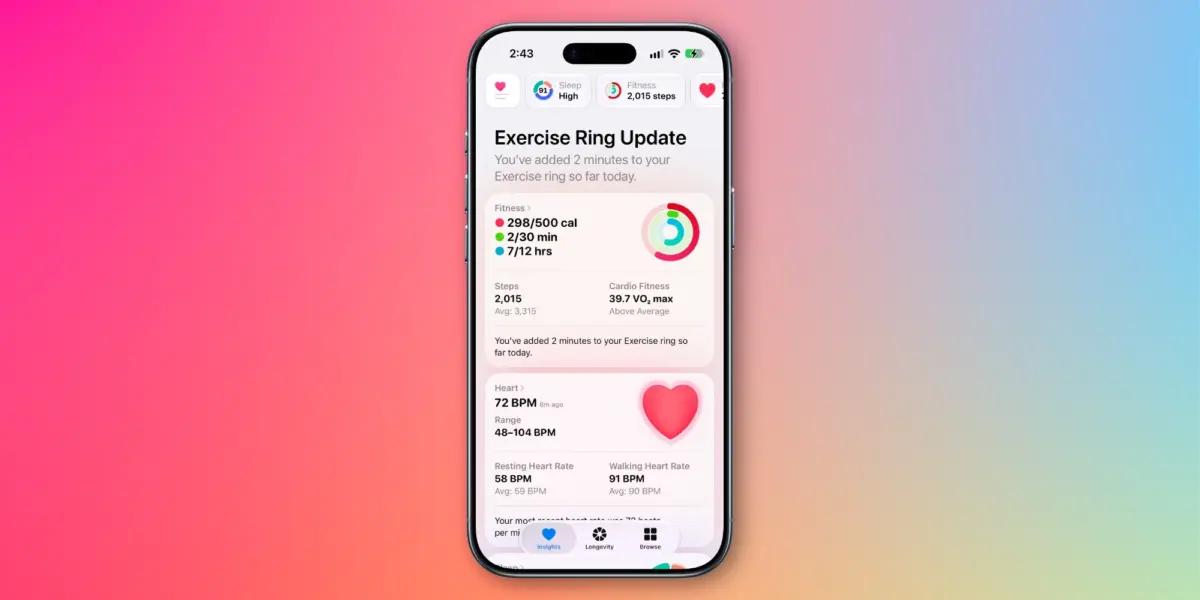
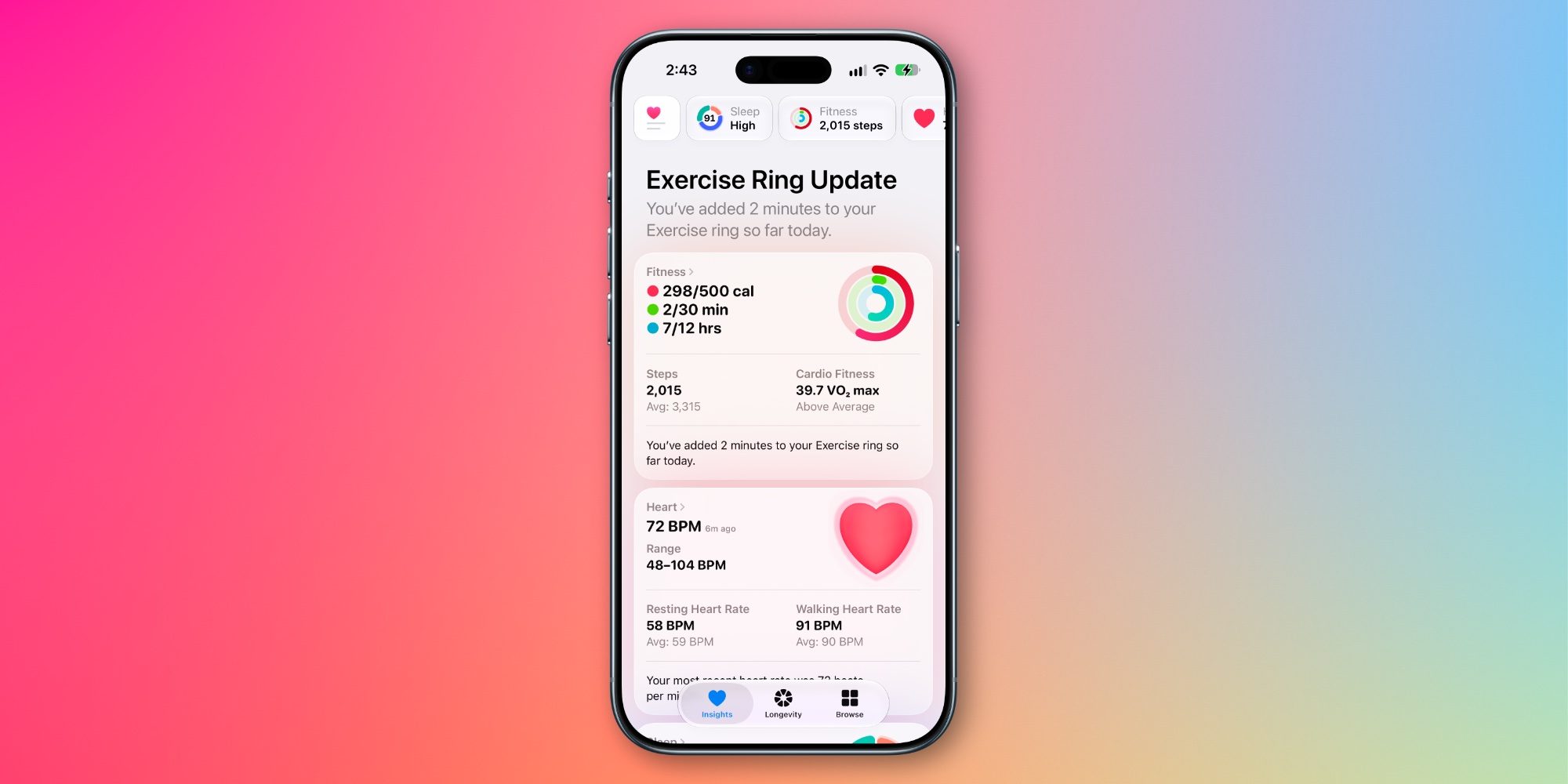
The iOS 27 Health App Overhaul
Hardware improvements are only as good as the interface presenting them. The companion Apple Health app in iOS 27 represents a complete architectural overhaul.
Previous iterations of the Health app were often criticized for being overly clinical, burying crucial insights deep within dense menus and multi-layered charts. The iOS 27 redesign introduces a streamlined, modular interface that aggregates complex data points into digestible, beautifully organized cards. Trends, anomalies, and daily summaries are surfaced proactively, transforming raw telemetry into actionable human insights.
Official Statements and Industry Perspective
While Apple’s internal engineering teams have emphasized the synergy between watchOS and the new iOS 27 architecture, industry analysts and long-term tech reviewers are already weighing in on the strategic implications of the Series 12.
"For years, the debate between a dedicated recovery band and a smartwatch felt like choosing between two entirely different philosophies of health. With the Series 12, Apple is effectively saying you no longer have to compromise. You can have the rich, second-tier physiological insights of a recovery tracker wrapped inside the world’s most capable wearable."
— Leading Wearables Analyst
Fitness tech commentators who spent months testing alternatives like WHOOP note that while screenless bands excel at minimalist design and battery longevity (often lasting days on a single charge), they inherently lack the utility of a display.
As one long-term user noted during early testing:
"Even when I was wearing my WHOOP religiously, I kept my Apple Watch on my other wrist because I refused to constantly pull my iPhone out of my pocket just to check a notification, control my music, or glance at directions. The Series 12 finally eliminates the need for that awkward two-wrist configuration."
Future Outlook: What This Means for the Wearables Market
The launch of the Apple Watch Series 12 signals a maturing wearables market where form factors are increasingly converging in functionality.
The Pressure on Dedicated Recovery Bands
Companies like WHOOP, Oura, and Fitbit built their empires on filling the white space left by smartwatches—specifically, continuous tracking, long battery life, and recovery-centric software. As Apple narrows the gap in data collection frequency and introduces native recovery scoring, companies that rely entirely on screenless form factors will need to innovate rapidly through material science, biometric sensor expansion (such as non-invasive glucose or hydration tracking), or AI-driven coaching to maintain their competitive moat.
Battery Life: The Final Frontier
Despite the triumphs of the Series 12, one fundamental engineering constraint remains: battery life. While screenless bands can easily operate for 4 to 7 days without a charge, the Apple Watch still demands a daily top-up. For continuous 24/7 health tracking, users must strategically schedule charging windows—typically during morning routines or while showering. Future iterations of watchOS and silicon efficiency will likely need to tackle this hurdle before the Apple Watch can completely capture the ultra-endurance demographic.
Conclusion: Should You Make the Switch?
The Apple Watch Series 12, supported by the polished ecosystem of iOS 27, successfully bridges the divide between daily smartwatch utility and deep, clinical-grade health intelligence. For users who abandoned Apple in search of cleaner recovery metrics, better sampling frequencies, and actionable readiness scores, the Series 12 provides a compelling, frictionless argument to return to a single-device routine.
As the boundaries between lifestyle tracking and advanced health diagnostics continue to blur, Apple has proven that it is listening closely to its most demanding power users—redefining what a smartwatch can achieve on the wrist.