Executive Overview
In an era dominated by corporate tech giants folding to political pressure, a nostalgic digital relic has found new life through a surprising act of defiance. Following the Trump administration’s controversial decision to mandate the renaming of Lake Ontario to "Lake America"—a move ostensibly designed to bully Canada over trade terms—industry titans Apple and Google swiftly updated their cartographic systems to reflect the presidential decree.
However, MapQuest, the early-internet pioneer long overshadowed by Big Tech competitors, chose a different path. Rejecting the moniker, the company committed to preserving the body of water’s original name across its navigation platforms.
The gamble paid off spectacularly. MapQuest recorded over 2 million app downloads in a single week, backed by a fivefold increase in user engagement. In an exclusive interview, MapQuest General Manager Doug Berger details how a small, agile team capitalized on public outrage, outmaneuvered corporate monoliths, and turned a geopolitical stunt into a remarkable corporate resurgence.
Detailed Chronology: From the Gulf of Mexico to Lake Ontario
The trajectory of MapQuest’s unexpected revival can be traced through a series of escalating political maneuvers and corporate compliances that began more than a year prior.
Phase 1: The "Gulf of America" Precedent
Roughly eighteen months before the Lake Ontario controversy, the Trump administration successfully pushed to rechristen the Gulf of Mexico as the "Gulf of America." While the White House framed the move as an assertion of nationalist pride, critics viewed it as political theater. When the decree was issued, major mapping platforms—including Apple Maps and Google Maps—faced immediate criticism for quietly updating their databases to align with the federal government’s wishes.
Amid the fallout, MapQuest adopted a lighter, yet distinctly independent tone. Rather than aggressively updating its boundaries, the company posted a tongue-in-cheek message on social media: "We still haven’t figured out how to update our maps." Furthermore, MapQuest introduced a feature allowing users to customize the name of the gulf to their preference. This early maneuver acted as a testing ground, demonstrating that consumers appreciated a touch of corporate independence from federal mandates.
Phase 2: The Escalation to the Great Lakes
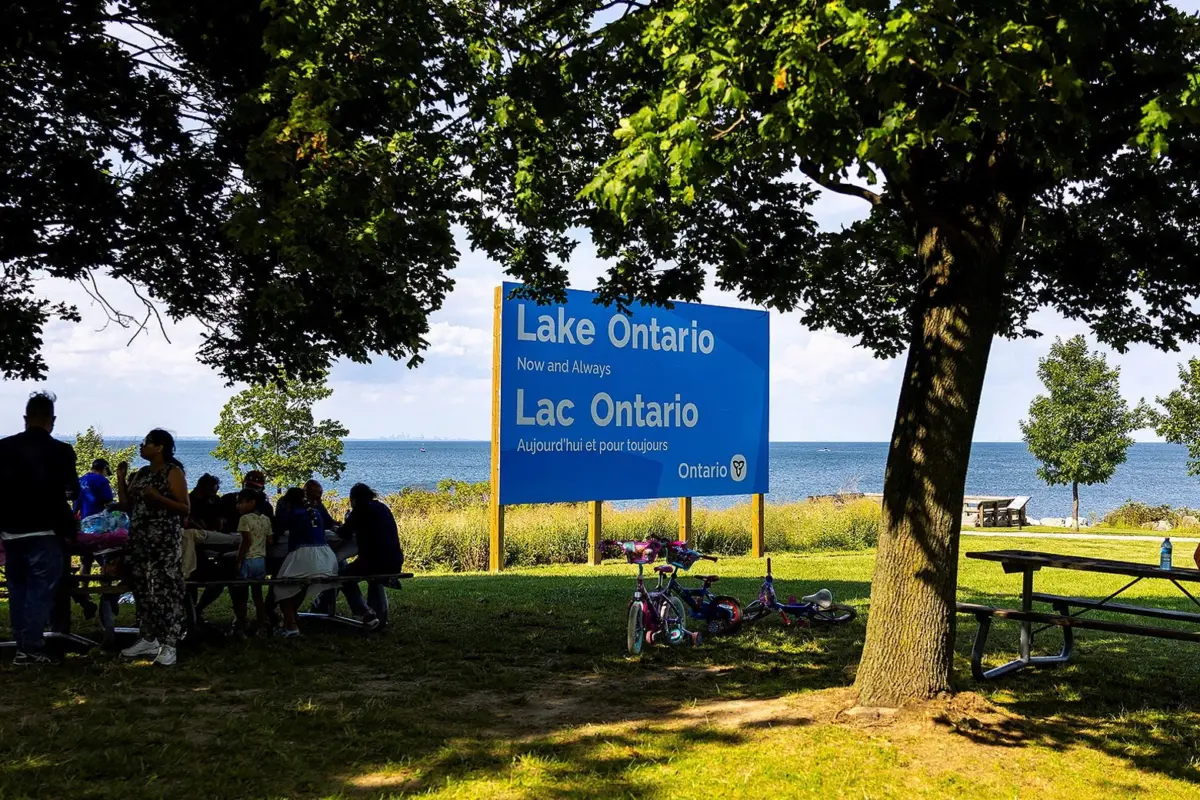
The stakes escalated significantly when the administration turned its focus northward. Targeting Lake Ontario—one of the five Great Lakes serving as a vital fresh-water lifeline for both the United States and Canada—the president rebranded the body of water as "Lake America."
Public policy experts noted that the move was calculated to exert pressure on Canada amid tense trade negotiations, echoing earlier threats to annex sections of the northern neighbor. Instead of buckling under pressure, Canadian officials immediately retaliated with targeted economic measures and tariffs. Simultaneously, American voters across red and swing states—many of whom harbor deep cultural and economic ties to the Great Lakes region—expressed severe backlash.
Phase 3: The Big Tech Fold and MapQuest’s Stand
As public anger mounted, Apple and Google once again elected to comply with the federal directive, updating their applications to display "Lake America." Millions of frustrated users, seeking an alternative to what they viewed as corporate capitulation, began searching for mapping tools that preserved geographic integrity.
MapQuest seized the moment. Blaring a clear and defiant message across social media, television, and its own mobile app, the company announced it would keep the original name of Lake Ontario regardless of federal pressure. The response was immediate. Within days, MapQuest’s mobile application surged to the top of app store charts, transforming a legacy brand into a symbol of digital resistance.
Supporting Context & Metrics: The Scale of the Upset
The resurgence of MapQuest is not merely a symbolic victory; it represents a massive quantitative shift in digital mapping traffic.
Traffic and Download Statistics
- The Gulf vs. The Great Lakes: During last year’s "Gulf of Mexico" controversy, MapQuest saw a respectable bump, securing between 300,000 and 500,000 new downloads.
- The Current Surge: The Lake Ontario stand shattered previous metrics. MapQuest recorded over 2 million app downloads in a single week following its announcement.
- Sustained Engagement: According to General Manager Doug Berger, the influx of users has not been limited to a one-time protest download. Daily active usage and user retention rates have stabilized at roughly five times higher than pre-controversy baselines. App store reviews have flooded in by the thousands, mirroring the enthusiastic sentiment seen across social platforms.
The Modern MapQuest Ecosystem
While the mobile application is currently capturing headlines and driving explosive growth, MapQuest’s underlying business model has evolved significantly since its acquisition by advertising and technology company System1.
While everyday consumers increasingly rely on the mobile app for turn-by-turn navigation, the platform’s desktop web version remains a powerful tool for specialized users. Small businesses, logistics planners, and road-trip enthusiasts frequently utilize MapQuest’s desktop route-planning and visualization tools to manage daily schedules and complex itineraries. This dual-pronged ecosystem has provided the infrastructure necessary to handle the sudden, massive influx of traffic without catastrophic system failures.
Official Statements: Inside the Mind of MapQuest Management
In an exclusive conversation, Nitish Pahwa spoke with Doug Berger, general manager of MapQuest, to discuss the mechanics behind the company’s defiance, its data sourcing methods, and its plans for the future.
On the Scale of the Public Reaction
When asked to compare the current response to last year’s event, Berger emphasized the sheer magnitude of the public’s engagement:
"The reaction has been extraordinary from the public and from people downloading the app—a much bigger response than we saw last year with the Gulf of Mexico change. Back then, we had between 300,000 and 500,000 downloads. This time, we just announced that we’ve had over 2 million app downloads since last Thursday—in one week. People are engaging a lot more with us on social media, and we’re excited to have all the new people joining us."
Demystifying Digital Mapping Data
Addressing consumer misconceptions about how mapping apps operate—often conflating them with weather applications that pull directly from static government databases—Berger explained the complex web of data curation:
"There are a bunch of different layers to that question. One way I describe it is that we license and source data from a lot of different sources, whether governments or private institutions or aggregators. Points of interest are a huge part of the experience, so we like to source from a diverse set of sources and have systems on our side that bring the data together in a way that is digestible by humans and made most familiar to people. That extends to the map layer as well: No one source has every single component of a map… There’s no single place that has the best version of that, so we have to prioritize where we draw from the most. And you see that in this moment in regard to Lake Ontario."
Customer Validation vs. Federal Pressure
When pressed on whether the company received direct pressure from the federal government—similar to reports that Interior Department officials contacted Apple and Google—Berger remained tight-lipped:
"We have not heard from any federal institutions. I’ll leave it at that."
On the decision-making process behind taking such a firm, public stance, Berger credited direct consumer feedback:
"If you rewind back to the Gulf of Mexico/Gulf of America moment, we tweeted out a lighthearted joke… The response to that was insane. It was fun to watch. But people were speaking through their downloads at that time as well. So when this moment came along with Lake Ontario, it was a pretty easy decision for the company, thinking about what’s in our best interest and the best interests of our users. And our move was pretty quickly validated. Could we have changed it? On the technical side of things, sure. But we were listening to our customers."
Future Outlook: Can MapQuest Maintain Momentum?
The central challenge facing MapQuest moving forward is longevity. Historically, brands that experience viral, politically charged spikes in popularity often see sharp declines once the news cycle shifts. However, company leadership insists that the current wave is fundamentally different.
Beyond Protest: Building Long-Term Utility
Berger points out that user retention metrics suggest a permanent shift in consumer habits:
"People are not just downloading the app in protest or anything like that. They are coming back the next day and the day after that. They’re actually using the MapQuest app to the point that engagement rates are about five times higher than they were before last week."
Strategy and Product Development
Operating with an extremely lean team compared to the massive corporate workforces backing pre-installed operating system default maps, MapQuest is looking to agility as its primary competitive advantage.
- Rapid Feature Rollouts: The engineering team is actively accelerating the deployment of user-requested features.
- Direct User Input: MapQuest is exploring the implementation of a public product roadmap, allowing users to vote on upcoming features and provide direct input into the app’s development.
- Focus on Core Competencies: Rather than engaging in broader political battles, the core strategy moving forward is simple: "heads down, work on the product, and make it the best service possible."
Conclusion
The "Lake America" controversy will undoubtedly be studied as a unique intersection of geopolitics, corporate compliance, and consumer activism. While tech giants prioritized diplomatic and regulatory appeasement, MapQuest chose to align its brand with geographic tradition and user sentiment. In doing so, a foundational name from the early days of the commercial internet has successfully charted a course back to relevance, proving that in a crowded digital landscape, taking a principled stand can be the ultimate growth strategy.