Executive Overview
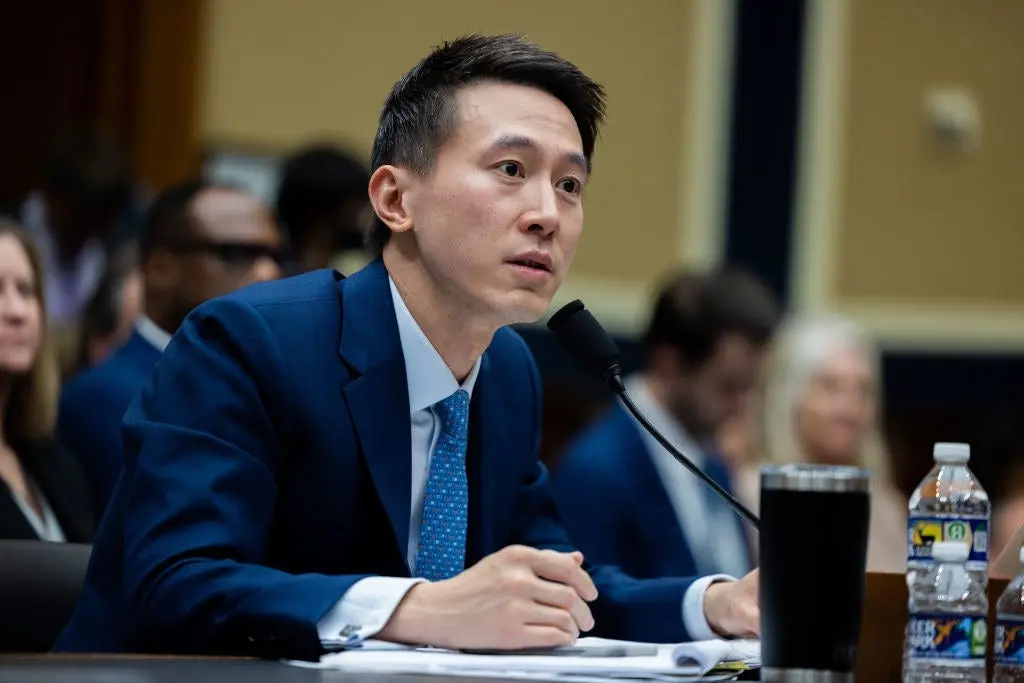
In an era where technology, geopolitics, and internet culture routinely collide, few moments have captured the public imagination quite like TikTok CEO Shou Zi Chew’s marathon testimony before the United States House Energy and Commerce Committee. For five intense hours, the 40-year-old executive sat squarely in the political crosshairs, tasked with defending a platform that boasts over 150 million monthly active users in the United States alone. Lawmakers from both sides of the aisle pressed Chew on data privacy, national security, and the shadowy influence of the app’s Beijing-based parent company, ByteDance.
Yet, while Washington politicians painted a dire picture of an existential threat to American democracy, a entirely different narrative was unfolding in real-time across the digital landscape. Rather than eroding his standing, the high-stakes, adversarial hearing catalyzed an unprecedented cultural phenomenon. Chew transformed, almost overnight, from an understated corporate executive into a viral internet sensation. TikTok was flooded with "fan edits," meme-driven video collages, and tongue-in-cheek declarations dubbing him the "finest CEO of our generation" and "TikTok daddy."
This surreal juxtaposition—between severe legislative scrutiny and organic, meme-fueled adoration—underscores the profound disconnect between Washington’s traditional political machinery and the digitally native generations who view platforms like TikTok as vital cultural and economic lifelines. Behind the viral gloss, however, lies a serious existential crisis for one of the world’s most popular apps. With multiple bills moving through Congress aiming to ban the platform outright or grant sweeping executive powers to prohibit foreign-owned technology, Chew’s performance on Capitol Hill may well determine the future of social media in the West. This report provides an exhaustive examination of the hearing, the unprecedented digital reaction, the underlying national security concerns, and the high-stakes road ahead for ByteDance and its American operations.
Detailed Chronology: Five Hours on the Hot Seat
The proceedings before the House Energy and Commerce Committee on March 23, 2023, were designed to be a reckoning. For months, bipartisan pressure had been mounting against TikTok and its parent company, ByteDance. Lawmakers arrived armed with skepticism, deeply concerned that the Chinese government could leverage the platform to harvest American user data, shape public opinion, or conduct surveillance operations.
Shou Zi Chew entered the hearing room aiming to project absolute transparency and calm under fire. In his opening written statement, Chew attempted to preemptively dismantle the committee’s core anxieties with unequivocal clarity:
"Let me state this unequivocally: ByteDance is not an agent of China or any other country."
Despite his prepared remarks, the hearing quickly devolved into a grueling gauntlet. Lawmakers fired rapid-fire questions that ranged from complex inquiries regarding corporate governance and data localization to remarkably rudimentary queries. At various points, members of Congress asked whether the app accessed users’ home Wi-Fi networks and whether ByteDance had actively spied on American citizens at the behest of Beijing—questions that frequently exposed a fundamental technological gap between the aging legislative body and the digital infrastructure they sought to regulate.
Throughout the five-hour ordeal, Chew repeatedly pushed back against the committee’s assertions, pointing out that there was no concrete evidence proving the Chinese government had ever accessed American user data. He argued that an outright ban of the application would inflict devastating collateral damage on millions of American small businesses and creators who rely on the ecosystem for their livelihoods. Furthermore, Chew championed "Project Texas"—a comprehensive, multi-billion-dollar corporate restructuring plan designed to firewall US user data within domestic servers overseen by American-led independent monitors—as a definitive, meaningful solution to national security concerns.
Yet, members of the committee remained largely unconvinced. Lawmakers cited past admissions by ByteDance regarding data access and argued that structural firewalls could easily be breached under Chinese national security laws. As the hearing wore on, the atmosphere grew increasingly tense, characterized by interruptions and sharp exchanges that left little room for nuanced technical explanations.
Supporting Context & Metrics: The Anatomy of a Crisis
To fully grasp the gravity of Shou Zi Chew’s congressional appearance, one must examine the dense web of legislative threats and corporate history surrounding TikTok and ByteDance.
The Legislative Landscape
At the time of the hearing, no fewer than three distinct bills were actively moving through Congress, each posing a direct threat to TikTok’s continued operation in the United States:
- Outright Ban Legislation: Two separate bipartisan bills were introduced with the explicit intent of prohibiting TikTok from operating within American app stores and network infrastructures.
- The RESTRICT Act: A broader piece of legislation granting the executive branch sweeping powers to review, block, and prohibit information and communications technology products and services deemed to pose an undue national security risk—a mechanism tailor-made to target foreign-adversary-backed apps.
Corporate Missteps and Trust Deficits
Lawmakers’ skepticism was not born out of a vacuum. Investigative reporting by outlets like BuzzFeed News previously revealed that between 2021 and 2022, certain ByteDance employees in China had inappropriately accessed nonpublic US user data on multiple occasions. In December, ByteDance confirmed the findings of an internal investigation, acknowledging that the personal data of several journalists—including reporters covering the company—had been accessed without authorization. Although ByteDance stated that the employees involved had been terminated and that Project Texas was designed to permanently prevent such breaches, the disclosures severely undermined the company’s credibility on Capitol Hill.
Influencer Mobilization
Recognizing the existential nature of the threat, TikTok engaged in proactive advocacy ahead of the hearing. On March 23, the platform sponsored a rally outside Capitol Hill, bringing together content creators to protest a potential ban. According to Wired, TikTok covered travel and accommodation expenses for more than over 30 influencers participating in the Washington, DC, press conference—a move critics pointed to as an orchestrated effort to manufacture grassroots public outrage.
The Viral Metamorphosis
Ironically, the most effective PR campaign for Chew happened entirely organically. Until his appearance, Chew maintained a relatively low profile. According to analytics from Social Blade, his personal TikTok account (@shou.time) hovered at just under 18,000 followers on March 22. In the days following his testimony, his follower count exploded, surging by more than 70,000 new followers as users flooded the platform with supportive tributes.
Gen Z and millennial creators utilized green-screen video collages to mock the technological illiteracy of the committee while praising Chew’s composure. Captions such as "This app is single-handedly keeping the global economy from tanking so help me understand the problem" went viral. Others contrasted Chew favorably with Meta CEO Mark Zuckerberg—who had also faced hostile congressional inquiries in the past—with comments joking that Zuckerberg "could never be this fine." (In reality, Chew is married to Vivian Kao, whom he met in 2008 while attending Harvard Business School).
Official Statements and Industry Reactions
The fallout from the hearing triggered a war of words between corporate representatives, political leaders, and the platform’s massive user base.
Following the adjournment of the committee, a TikTok spokesperson issued a scathing statement to BuzzFeed News, characterizing the entire proceeding as political theater rather than a genuine legislative inquiry:
"Shou came prepared to answer questions from Congress, but, unfortunately, the day was dominated by political grandstanding that failed to acknowledge the real solutions already underway through Project Texas or productively address industry-wide issues of youth safety."
Users on the platform echoed these sentiments, expressing intense frustration over how elderly lawmakers handled the technology executive. Comments highlighting the generation gap dominated comment sections:
- "They won’t let the poor man talk or explain anything," wrote one prominent creator.
- "All these 80+ year old gov people have never touched this app let alone be asking questions about it," noted another.
Conversely, congressional leaders doubled down on their distrust. House Energy and Commerce Committee Chair Cathy McMorris Rodgers forcefully stated during the proceedings: "We do not trust TikTok ever embrace American values," encapsulating the bipartisan consensus that voluntary compliance and corporate restructuring may not be enough to satisfy national security demands.
Future Outlook: What Lies Ahead for TikTok in America?
Shou Zi Chew’s grueling day on Capitol Hill marked a watershed moment, but the war over TikTok’s future in the United States is far from over. The juxtaposition of a viral cultural hero meme-ified by millions against a backdrop of hardened legislative hostility highlights a profound schism in modern governance.
As the legal and political battles continue to unfold, several critical questions remain unanswered:
- Will Project Texas Satisfy Regulators? The multi-billion-dollar initiative to isolate American data under the watchful eye of third-party monitors like Oracle is operational in scope, but whether the Committee on Foreign Investment in the United States (CFIUS) will accept it—or demand a full divestiture and forced sale of ByteDance’s American assets—remains the central multi-billion-dollar question.
- The Constitutionality of a Ban: Should Congress pass an outright ban or grant the executive branch the authority to shut down the app, legal scholars anticipate immediate and fierce First Amendment challenges. Prohibiting a communication platform utilized by over 150 million Americans would spark unprecedented constitutional litigation regarding free speech and government overreach.
- The Evolution of Corporate Diplomacy: Chew’s unexpected transformation into an internet icon demonstrates the power of direct-to-consumer digital diplomacy. By maintaining his composure under hostile questioning, he successfully humanized a corporate monolith in the eyes of its users, turning a traditional PR disaster into a masterclass in community alignment.
Ultimately, whether Shou Zi Chew’s calm demeanor and Project Texas proposal are enough to stave off regulatory execution remains to be seen. What is certain, however, is that the intersection of geopolitics, social media algorithms, and digital culture will never be the same.