Date: 17 September 2026 Author: Catie Owen, Regional Content & Insights Lead Reading Time: ~5 minutes
Executive Overview
The Scottish Government has introduced a stringent regulatory framework targeting large-scale digital infrastructure, marking a pivotal turn in how the nation manages the rapid expansion of the technology sector. Under a new planning direction issued on 16 September 2026, any proposed data centre development with a capacity expected to exceed 50 megawatts (MW) will now be legally required to submit a comprehensive Environmental Impact Assessment (EIA).
This decisive policy intervention is designed to get ahead of an emerging industry before unchecked growth strains local ecosystems, public utilities, and national climate targets. Driven by the explosive global demand for artificial intelligence (AI) and high-performance computing, the policy aims to strike a delicate balance between welcoming inward economic investment and preserving Scotland’s environmental integrity, community wellbeing, and net-zero ambitions.
Detailed Chronology: Building a Regulatory Fortress
The introduction of mandatory EIAs for facilities exceeding 50MW does not happen in a vacuum; it represents the culmination of escalating regulatory scrutiny by Edinburgh officials over the past several months.
The August 2026 Notification Framework
The trajectory toward stricter oversight crystallized in August 2026, when the Scottish Government issued an initial planning directive. That policy established that local planning authorities must notify Scottish ministers of any incoming data centre development applications within just seven days of validation. This move gave central government officials early visibility over prospective builds, preventing regional authorities from approving large-scale digital hubs without national oversight.
The September 2026 Mandate
Building directly upon the August foundation, the 16 September directive went a step further by removing ambiguity. Instead of relying on discretionary triggers, the government established a bright-line rule: any facility targeting a threshold above 50MW must automatically undergo the rigorous, time-intensive process of an Environmental Impact Assessment.
According to government officials, smaller proposals falling below the 50MW threshold—and thus outside the scope of this specific new directive—will still face rigorous evaluation. They will continue to be assessed under pre-existing EIA regulations, with requirements determined on a strict, case-by-case basis.
Supporting Context & Metrics: The AI Boom and Infrastructure Pressures
The impetus behind Scotland’s proactive policy shift lies in the compounding resource demands of modern digital infrastructure. As generative AI models, cloud computing, and massive data storage needs proliferate globally, data centres have transformed from quiet, behind-the-scenes server rooms into massive, power-hungry industrial behemoths.
The Triad of Pressures: Energy, Water, and Hardware
In the explanatory letter accompanying the new planning direction, Dr. Fiona Simpson, Scotland’s Chief Planner and Director, laid bare the stark realities of the AI revolution. Dr. Simpson noted that the exponential scaling of artificial intelligence fundamentally alters national infrastructure considerations across three primary vectors:
Energy Consumption: Data centres draw immense amounts of continuous electrical power, placing strain on regional grids and complicating national transitions to renewable energy.
Water Usage: Large-scale server farms require vast quantities of water for cooling systems, posing potential risks to local watersheds and public water supplies.
Hardware and Embodied Carbon: The manufacture, transport, and replacement cycles of server hardware generate substantial upstream carbon footprints.
Landscape and Emissions Footprint
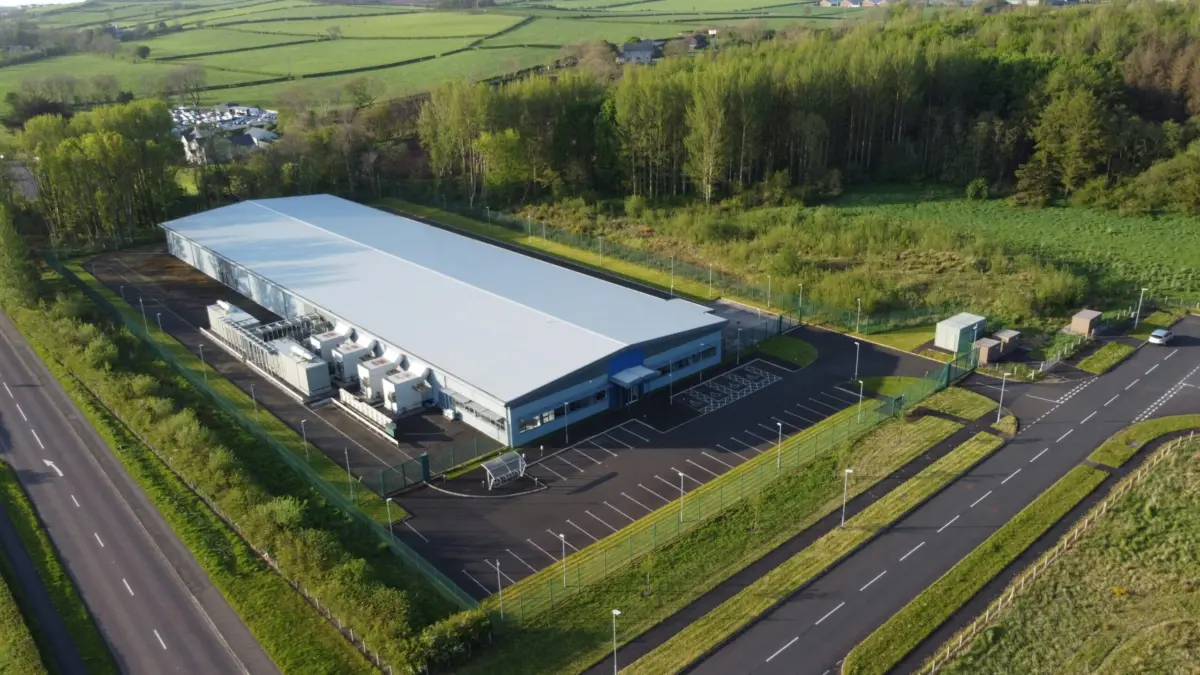
Beyond resource scarcity, the physical manifestation of these mega-facilities presents a unique challenge for Scotland’s distinct topography and landscape aesthetics. Dr. Simpson emphasized that emissions stemming from data centres are not limited to their operational phase—which is often powered by a mix of renewables and backup fossil fuels—but begin deep in the construction phase. Furthermore, the sheer scale of modern server compounds introduces heavy industrial architecture into rural or semi-rural Scottish landscapes, forcing planners to weigh economic utility against visual and ecological preservation.
Official Statements and Policy Rationale
The government’s leadership has been outspoken about the necessity of catching the industry in its infancy, arguing that correcting environmental degradation or grid instability after the fact is far more costly than establishing rules upfront.
Balancing Prosperity and Preservation
Public Finance Minister Hannah Mary Goodlad underscored the dual mandate of the Scottish Government: fostering innovation while safeguarding public interest.
"The Scottish Government recognises that data centres are a rapidly evolving sector attracting a broad range of views, opinions and concerns, and that evidence on the environmental impact of data centres continues to develop,"Goodlad stated.
"As this is an emerging industry, we have the opportunity to get this right from the start. The guidance issued today is the next step in that process."
Goodlad further emphasized that economic ambitions must align with broader societal goals:
"We must balance the economic and employment interests in developing data centres with national energy, climate and community wealth building ambitions, which are vital to our future prosperity, as well as the potential impact on local communities."
Creating a Level Playing Field
By institutionalizing the EIA requirement, the Scottish Government believes it is providing clarity for both local communities and international developers. Rather than facing fragmented, unpredictable approval processes across different council regions, developers now face a transparent, standardized benchmark.
"Ensuring that an Environmental Impact Assessment is always part of the application process will create a level playing field for developers and will ensure potentially significant environmental effects are considered from the outset,"Goodlad added.
To ensure these policies are rooted in rigorous science, the Scottish Science Advisory Council (SSAC) played a crucial advisory role, providing independent recommendations to Scottish Ministers and the Chief Scientific Adviser for Scotland.
Future Outlook: What This Means for Developers and the Digital Economy
Scotland’s regulatory tightening reflects a broader European reckoning with the hyper-growth of digital infrastructure. As grid operators across the UK and the European Union grapple with capacity constraints, regional governments are increasingly asserting control over where and how data centres are built.
The Rise of the ‘Green Data Centre’
For data centre developers and operators eyeing Scotland as a strategic hub—particularly given its abundant renewable energy potential in wind and marine power—the message is clear. The era of frictionless, rapid-approval mega-developments is over.
Advanced Heat Reuse: Integrating data centre cooling systems with district heating networks to warm local homes and businesses.
Renewable Microgrids: Direct sourcing of green energy via dedicated wind or solar power purchase agreements (PPAs) to avoid pulling heavily from strained public grids.
Water-Free Cooling: Investing in closed-loop liquid cooling or air-cooling technologies that minimize hydrological footprints.
Ultimately, Scotland’s framework serves as a test case for whether proactive regulation can successfully steer hyper-scale tech investments toward true sustainability without choking off the digital economy entirely. As the industry gathers at events like Capacity Europe 2026 to discuss the future of global connectivity, Scotland’s bold mandate will undoubtedly serve as a primary blueprint—and a cautionary tale—for governments worldwide seeking to harness the data revolution on their own terms.