Executive Overview
In the fast-paced, algorithmically driven ecosystem of modern social media, visual internet trends rise and fall with dizzying speed. However, every so often, a digital phenomenon strikes a universal chord, transcending language barriers, cultural divides, and geographic boundaries. The Parent Split-Face Trend—alternatively recognized across platforms as the Family Resemblance Trend, the Mom Effect, or the Dad Effect—stands as the definitive viral sensation of late summer and early autumn 2026.
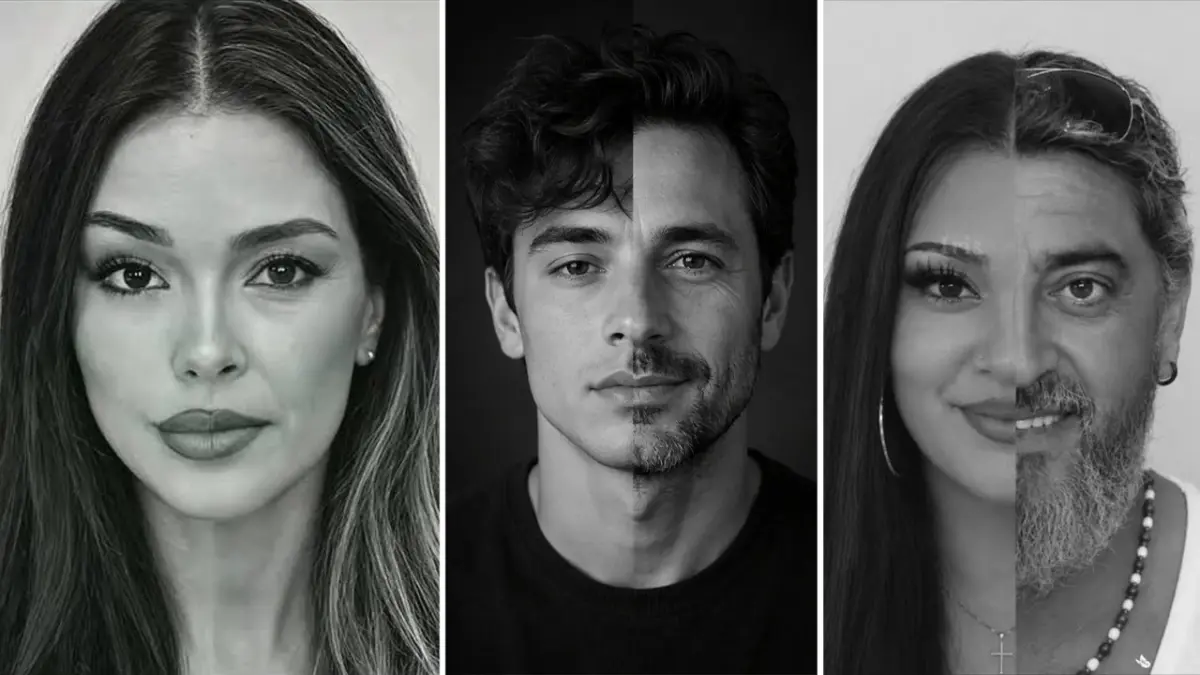
Emerging quietly in August 2026 before exploding across TikTok, Instagram, and adjacent platforms in September, the trend relies on a deceptively simple yet striking visual concept: users merge one-half of their own facial portrait with that of a parent, sibling, or romantic partner to visually test and demonstrate familial or interpersonal resemblances. Often rendered in stark, dramatic black-and-white photography—though occasionally appearing in full, vibrant color—these split-face composites have captivated millions.
What began as scattered digital experiments involving early generative artificial intelligence tools quickly matured into a widespread cultural moment. Propelled by accessible video-editing templates on platforms like CapCut and advanced prompt-engineering techniques on AI systems, millions of users have leaned into the age-old question, "Who do you look like?" with unprecedented technological precision. This report provides an in-depth examination of the trend’s origins, its rapid ascent across the digital landscape, the underlying technology enabling its success, and its broader implications for how we visualize identity and ancestry in the digital age.
Detailed Chronology: From Obscurity to Global Virality
August 2026: The Genesis of AI-Assisted Comparisons
While the exact catalyst behind the broader split-face phenomenon remains decentralized—a common trait of organic internet movements—digital anthropologists trace the earliest iterations of the trend to the first week of August 2026.
On August 7th, 2026, Instagram user @samanthaslider03152023 published a modest carousel post featuring full-color portraits comparing her facial structure directly to both her mother and father. Utilizing Meta’s native artificial intelligence tools to achieve a seamless blend of features, the post served as an early blueprint for what would soon become a massive internet wave. At the time, however, the post remained a quiet personal experiment, accumulating only a nominal number of interactions in its first month.
The inflection point toward widespread adoption arrived shortly thereafter on August 19th, 2026. A TikTok user operating under the handle @ngomai729 uploaded a tutorial video—produced in Russian—demonstrating how everyday users could bypass complex photo-editing software by utilizing specialized CapCut templates and custom AI prompts (frequently directed at models like ChatGPT) to generate precise half-and-half facial alignments. This instructional approach unlocked the trend for the masses, generating over a thousand likes and sparking early cross-cultural interest.
[August 7, 2026] ──> First known color split-face post on Instagram (Meta AI used)
       │
[August 19, 2026] ──> First CapCut/AI tutorial video surfaces on TikTok
       │
[Sept 8 - 12, 2026] ──> Exponential growth phase; viral CapCut templates spread globally
       │
[Sept 13+, 2026] ──> Diversification into siblings, romantic partners, and photo slideshows
September 2026: The Exponential Spread
As the calendar turned to September 2026, the Parent Split-Face Trend transitioned from a niche creator experiment into a mainstream digital mandate. The proliferation of user-friendly video templates transformed creation from a technical hurdle into a one-click process.
- September 8th, 2026: TikToker @clzl3vnad2 released an optimized CapCut tutorial. The video struck a chord with the algorithm, rapidly accumulating nearly 100,000 likes within ten days and cementing the template-driven nature of the trend.
- September 10th, 2026: User @templateccja formally branded the movement under the moniker "look alike trend" while showcasing a dual comparison featuring both mother and father, pulling in tens of thousands of engagements.
- September 12th–13th, 2026: The trend diversified significantly. TikTok creator @us3rqxr leveraged TikTok’s native photo-slideshow feature to present striking side-by-side and split-face diagnostics, prompting awed comments such as "I just know she sees my father in them." Simultaneously, creators like @idatravels05 and @b.boggs expanded the parameters of the trend beyond direct parent-child lineages, incorporating siblings and generating playful commentary regarding the unpredictability of genetic inheritance ("ChatGPT didn’t help me").
By mid-September, the hashtag spaces associated with the trend were flooded with hundreds of thousands of variations, featuring hauntingly seamless cinematic alignments set to melancholic or nostalgic audio tracks, most notably Anna Graves’ song "Bluebird" and various slowed-down instrumental mixes.
Supporting Context & Metrics: The Mechanics of a Viral Wave
The rapid acceleration of the Parent Split-Face Trend cannot be understood without examining the technological and psychological pillars that sustain it.
Technological Enablers: AI and Template Culture
The realism that defines the 2026 split-face trend separates it from older, crude photo-editing software tricks of the past. Users rely on a two-step technological pipeline:
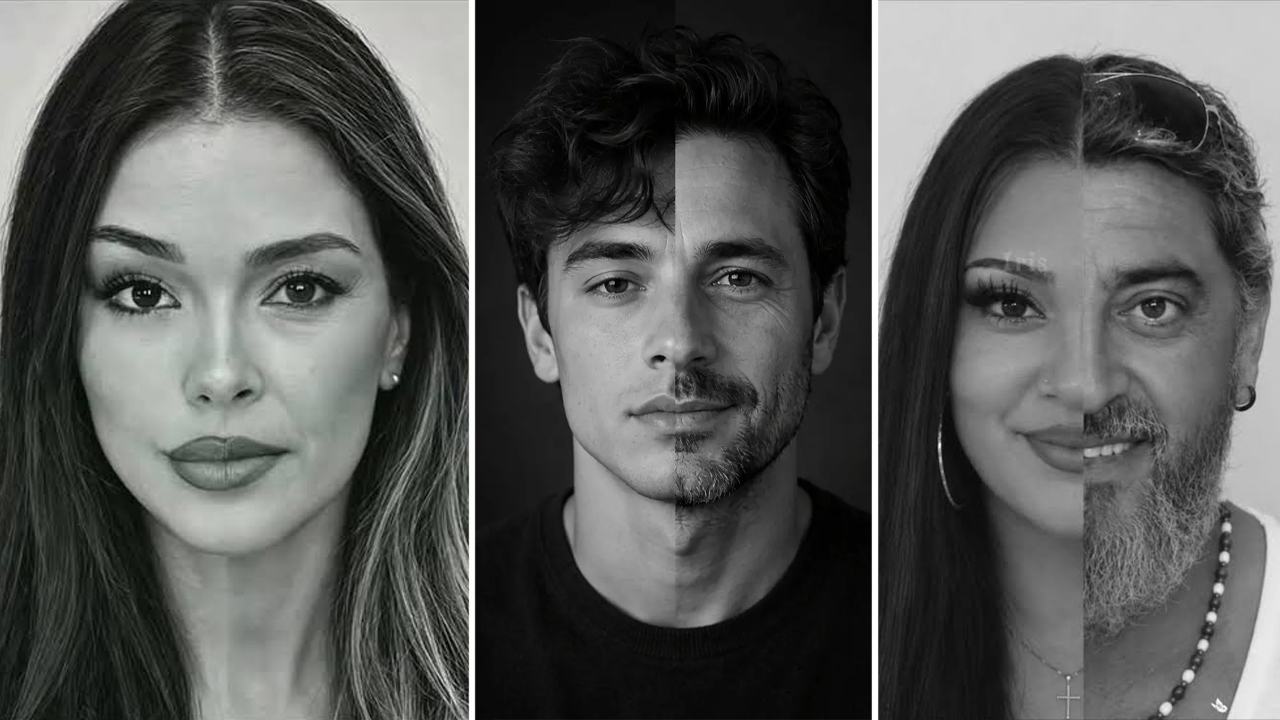
- Generative AI Prompting: Users input portrait photographs of themselves and their family members into conversational AI systems or specialized image-generation modules, prompting the algorithms to match eye levels, jawlines, and lighting schemas.
- Template Ecosystems: Platforms like CapCut democratize the output. Creators package the AI-generated assets into pre-timed video transitions synchronized with trending audio cues, allowing passive consumers to become active participants with minimal digital literacy required.
Psychological Drivers: The Quest for Identity
From a psychological perspective, the trend taps into deeply rooted human fascinations with identity, heredity, and self-recognition. For decades, psychologists have studied the "perceptual matching" of faces—the inherent human compulsion to look for familiar markers in offspring.
The split-face format weaponizes this compulsion by removing the noise of hair, clothing, and overall body type, forcing the viewer’s eye to evaluate micro-features: the slope of the nose, the curvature of the lips, and the spacing of the eyes. When the transition between a user’s face and their parent’s face is nearly imperceptible due to shared bone structure, it creates a momentary, uncanny valley effect that viewers find profoundly satisfying.
Furthermore, the trend acts as a digital canvas for expressions of gratitude and familial appreciation. Captions routinely shift from humorous observations about stubborn genetic traits to heartfelt acknowledgments of aging parents, transforming a technical visual trick into an emotional tribute.
Official Statements and Industry Impact
While major technology conglomerates have not issued standalone corporate press releases dedicated solely to the viral trend, representatives from adjacent platform ecosystems have noted the broader implications of user-generated AI integration.
An informal briefing from digital media analysts highlighted the trend as a prime example of "accessible synthetic media." Unlike earlier iterations of deepfake technology or high-end AI generation—which often triggered concerns over misinformation or deepfake maliciousness—the Parent Split-Face Trend represents a benign, highly localized, and socially bonding application of generative artificial intelligence.
"What we are witnessing in September 2026 is the mainstream domestication of AI facial mapping," notes Dr. Elena Vance, a digital culture researcher at the Oxford Internet Institute. "People are no longer afraid of what generative tools can do to alter reality; instead, they are domesticating those tools, using them to explore personal heritage, familial connection, and generational continuity. It is biological science meets digital play."
CapCut’s community growth teams similarly reported a marked spike in template duplications during the second week of September, attributing millions of platform impressions directly to the family resemblance video modules.
Future Outlook: The Evolution of Digital Self-Portraiture
As the Parent Split-Face Trend matures past its initial hyper-growth phase, industry observers are left to wonder about its long-term footprint on digital culture.
Several distinct trajectories are already taking shape:
- Expansion into Extended Kinship: Early adopters have begun moving past immediate nuclear family members. Recent uploads indicate a growing sub-trend of comparing faces across multiple generations—merging grandchildren with grandparents—as well as exploring ancestral photographs from early-to-mid 20th century archives restored via AI.
- The Romantic Partner Variant: A parallel movement within the trend involves long-term couples merging their faces to preview what future offspring might look like, or conversely, highlighting the psychological observation that long-term partners often begin to physically resemble one another over time.
- Fatigue and Iteration: Like all hyper-visible TikTok trends, the basic split-face mechanic faces inevitable saturation. However, the underlying technology—seamless, AI-assisted facial morphing—has firmly integrated itself into the standard toolkit of everyday digital creators.
Ultimately, the Parent Split-Face Trend of 2026 will be remembered not merely as a fleeting TikTok challenge, but as a cultural watershed moment where everyday internet users harnessed advanced machine learning to visualize the invisible threads of DNA that bind families together. In doing so, millions turned a cold algorithm into a warm mirror, reflecting the faces of those who came before them.