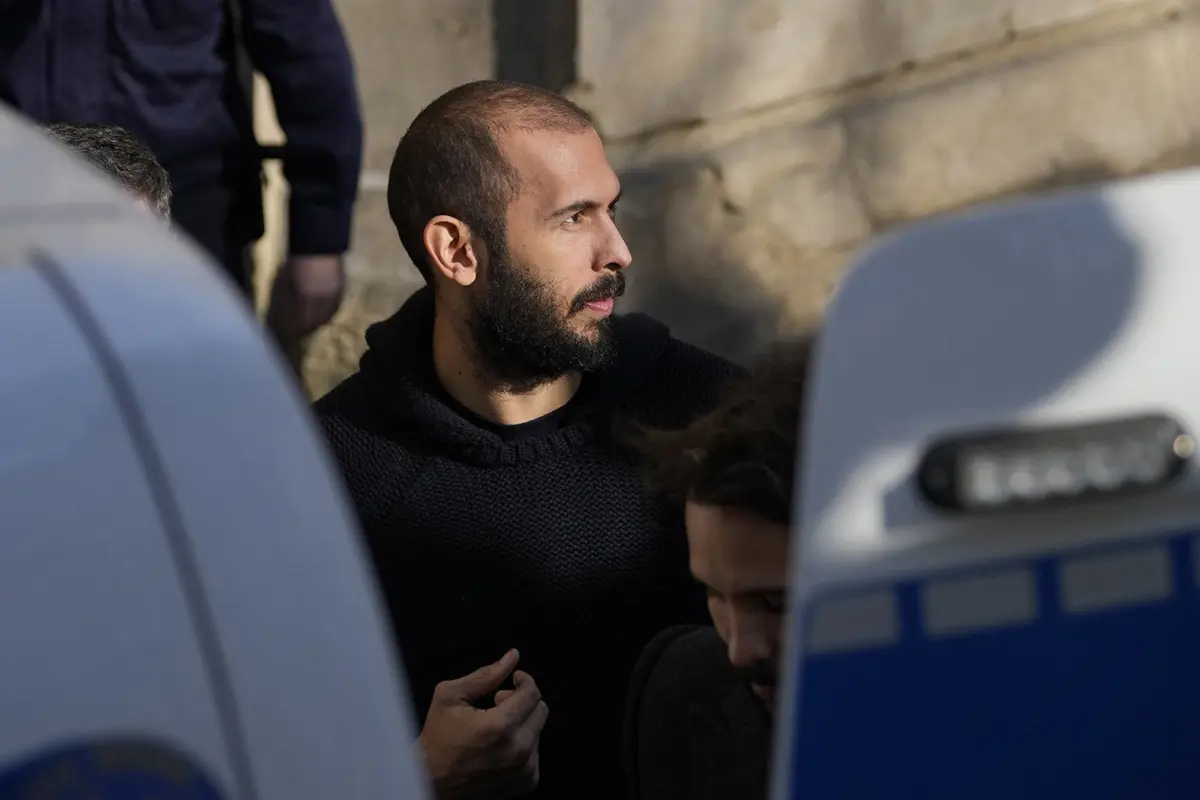
BUCHAREST — In the sprawling landscape of modern internet culture, few figures have courted as much infamy as the self-proclaimed "king of toxic masculinity," Andrew Tate. Alongside his brother, Tristan Tate, the controversial kickboxer-turned-influencer has built a digital empire on the backs of millions of impressionable young men, monetizing misogyny, hyper-consumerism, and a manufactured aura of invincibility.
However, the illusion of untouchability collided harshly with legal reality in the early hours of December 29, 2022, when Romanian authorities raided the brothers’ compound in Pipera, north of Bucharest. Detained alongside two alleged accomplices—Georgiana Naghel and Luana Radu—the Tates found themselves facing severe, institutional gravity: allegations of organized crime, human trafficking, and repeated acts of sexual violence.
While a late-March court ruling transitioned the quartet from a high-security detention center to plush house arrest ahead of an anticipated late-April trial, an exhaustive review of court documents, freedom-of-information disclosures, and exclusive interviews with judicial insiders reveals a staggering self-sabotage campaign. Far from keeping a low profile, the Tates and their associates have allegedly engaged in a litany of backchannel maneuvers—including attempted witness intimidation, elaborate escape plots, data breaches, and overtures to fringe political figures.
According to prosecutors, Romanian judges, and legal experts, these actions have profoundly alienated the judiciary, practically guaranteeing that the brothers’ subsequent legal battles will be fought on an uphill, hostile terrain.
Executive Overview
The journey of Andrew and Tristan Tate from prison cells to a heavily surveilled suburban compound has been closely tracked across the globe. Yet, beneath the high-stakes legal theater of their indictment lies a secondary narrative: the inability of digital provocateurs to operate within the constraints of traditional judicial systems.
Key takeaways from the unfolding prosecution file include:
- Escalation of Charges: Prosecutors are weighing additional criminal investigations into the Tates for witness tampering, data theft, and targeted harassment.
- The Dubai Flight Plot: Wiretaps from the central arrest facility indicate Andrew Tate allegedly attempted to orchestrate an escape to Dubai under the guise of urgent medical treatment for a lung anomaly.
- Coordinated Intimidation Campaigns: Court documents assert that the Tates mobilized their digital followers and utilized U.S. legal entities to pressure witnesses and victims into retracting statements.
- Institutional Backlash: Legal experts warn that the defendants’ erratic behavior has deeply offended Romanian magistrates, permanently staining their credibility in the eyes of the court.
Detailed Chronology of Events
To understand the precarious legal ledge upon which the Tates now stand, one must trace the timeline from their dramatic December arrest to their controversial release into house arrest.
Phase 1: The Pipera Raids and Initial Detention (Late December 2022)
On December 29, 2022, the Directorate for Investigating Organized Crime and Terrorism (DIICOT) in Romania descended upon the Tates’ compound. The brothers, along with Naghel and Radu, were placed under formal preventative arrest. Investigators laid out preliminary frameworks accusing the group of luring women under the false pretenses of romantic intent—the classic "loverboy" method—only to force them into producing pornographic content for online platforms under coercive conditions.
Phase 2: The Campaign Behind Bars (January – February 2023)
While locked inside Bucharest’s central arrest facility, the defendants allegedly initiated a sweeping campaign to undermine the prosecution’s case.
- The Police Database Breach: Between April and December 2022—and continuing to cast a shadow into their detention—former police officer-turned-accomplice Luana Radu allegedly leveraged illicit contacts to breach classified databases belonging to the Romanian Ministry of Internal Affairs, seeking tactical advantages in the looming case files.
- The U.S. Cease-and-Desist Letter: In December, a U.S. law firm representing the brothers dispatched a legal warning to a key witness in Florida, demanding she retract her statements or face aggressive defamation litigation. Romanian prosecutors promptly cataloged this maneuver as an overt act of transnational witness intimidation.
- Mobilizing the Digital Mob: Prosecutors noted a surge in online harassment directed at victims. The Tates’ vast army of digital followers allegedly flooded victims’ inboxes with threatening messages designed to force retractions.
Phase 3: The Medical Ruse and Flight Preparations (February 2023)
By late February, the walls of the detention center were closing in. Jailhouse phone wiretaps cited in court records revealed a desperate plot: Andrew Tate allegedly planned to flee to Dubai. Knowing that the United Arab Emirates lacks an extradition treaty with Romania, Tate purportedly manufactured a medical crisis.
A representative initially fed stories to British tabloids claiming a dark spot on Andrew’s lung was "most likely a tumor." However, when forced to maintain consistency in public statements, Andrew later tweeted that the spot was merely scarring "from an old battle." Romanian authorities thoroughly saw through the ruse and swiftly denied his travel requests.
Phase 4: Judicial Brick Walls and Political Overtures (Late February – March 2023)
On February 21, a presiding judge penned a scathing summary refusing to release the Tates, explicitly citing that the accused "present a clear danger for public order," had made active preparations to evade justice, and were intentionally exerting psychological pressure on vulnerable victims.
Undeterred, the Tates allegedly sought high-level political intervention. According to translated wiretaps, Andrew instructed an associate to approach two controversial, right-wing Romanian politicians: George Simion and Senator Diana Șoșoacă. Known for their anti-Western rhetoric and pro-Kremlin leaning, the politicians were reportedly offered future rewards once the Tates walked free. Both politicians ultimately declined to touch the toxic association.
Phase 5: The House Arrest Transition (March 31, 2023)
Despite the mountain of incriminating behavioral evidence accumulated by prosecutors, a panel of appeals court judges—reportedly new to the case—approved the Tates’ transfer to house arrest on March 31. The decision sent shockwaves through legal circles, prompting authorities to maintain a constant, heavy surveillance perimeter around the brothers’ upscale suburban compound.
Supporting Context & Metrics
The intersection of influencer culture and organized crime jurisprudence has created a legal anomaly in Eastern Europe. The table below outlines key dimensions of the case as documented by investigative sources and court files:
| Case Dimension | Detail / Allegation | Potential Legal Consequence |
|---|---|---|
| Primary Indictment | Human trafficking, organized crime, rape | Up to 20+ years imprisonment if convicted |
| The Dubai Escape Plan | Fabricated lung tumor narrative for emergency travel | Obstruction of justice, flight risk enhancements |
| Witness Tampering | Coordinated follower harassment & U.S. legal letters | Expansion of indictment to include witness intimidation charges |
| Database Intrusion | Unauthorized access to Ministry of Internal Affairs files | Additional felony charges for aiding cyber-breaches (Luana Radu) |
| Political Outreach | Bribes/promises to far-right Romanian lawmakers | Allegations of systemic corruption and manipulation attempts |
Official Statements and Legal Perspectives
The friction between the Tates’ aggressive public relations machine and the rigid, methodical temperament of the Romanian judiciary forms the crux of the current legal battleground.
The Prosecution and Judicial Viewpoint
Speaking on the condition of anonymity, sources within the prosecutor’s office emphasized the extreme sensitivity surrounding victim welfare. "The Tates have played an extremely dangerous game," the source stated. Regarding the weaponization of their online followers, the insider added, "From their tweets, it appears they are encouraging it. Every aspect of the case that touches on the victims is very sensitive."
Mihai Marete, a prominent criminal defense lawyer in Bucharest and law lecturer at Alexandru Ioan Cuza University, noted that the judiciary’s collective patience has worn paper-thin.
"Judges’ irritation at the Tate brothers was evident from the court papers," Marete explained. "Any subsequent statements they may give will be viewed with a certain amount of skepticism by the judicial bodies. If the cease-and-desist notification concerned a withdrawal of the criminal complaint, it could lead to a widening of the criminal investigation scope under the aspect of a new crime—that of influencing statements."
The Defense Response
The Tates’ legal and public relations teams have repeatedly pushed back against what they characterize as media sensationalism and distorted institutional interpretations.
Eugen Vidineac, lead defense counsel for the brothers, attempted to quell rumors of an impending escape in statements to local media: "They have a home and children in Romania, they are under criminal investigation, there is no reason to run away."
Meanwhile, spokesperson Mateea Petrescu defended the controversial wiretapped phone calls regarding Dubai, arguing that media outlets severely lacked context. "Regarding their departure from the country, the partially published wiretaps omitted the context, [namely] Andrew discussing leaving to Dubai for medical inquiries only in the case that his status allows it," Petrescu asserted.
Addressing the controversial U.S. cease-and-desist letter sent to the Florida witness, Petrescu maintained it was entirely standard procedure: "It was a LEGAL action in the USA. These suspicions are obsolete given that the judges from the appeals court decided to place them in house arrest."
Future Outlook
As the legal calendar ticks toward the formal commencement of the trial in late April, the Tates find themselves in a paradox. On one hand, securing house arrest was a tactical victory that removed them from the harsh confines of the central jail. On the other hand, the tactical maneuvers deployed to secure that freedom have permanently poisoned the well.
By attempting to outmaneuver a notoriously proud and meticulous judicial system through proxy intimidation, database breaches, flight plots, and political overtures, the brothers have transformed what might have been a standard defense into an escalating multi-front war with the Romanian state.
A seasoned justice system insider offered a blunt psychological assessment of Andrew Tate’s inability to stop engineering controversies: "I think Andrew Tate is not the most intelligent guy, but he probably can’t help himself. His compulsion for attention outweighs his self-preservation."
As the trial dates approach, the world will watch whether the digital empire built on bravado can withstand the unrelenting machinery of European criminal justice—or if the Tates’ own actions will ultimately seal their condemnation.