Executive Overview
Every season, with the mechanical predictability of a Swiss clock, the global fashion circuit rings in with the same tired, cyclical lament: New York Fashion Week is dead. Critics sitting comfortably in Milan and Paris frequently dismiss the American capital as commercial, overly utilitarian, and lacking the centuries-old artisanal heritage of its European counterparts. Yet, such reductive assessments fundamentally misunderstand the ethos of New York. While NYFW may not command the quiet, aristocratic luxury of Paris or the cinematic glamour of Milan, it possesses a vital, irreplaceable energy entirely its own. Beyond its status as a foundational global fashion capital, New York has always served as a crucible for radical, experimental style—a city where high concept collides with gritty reality, and where survival demands an uncompromising individuality.
The Spring/Summer 2027 (SS27) calendar decisively dismantled any lingering notions of industry stagnation. Over several dizzying days, the city’s boroughs played host to a masterclass in contrasts, bridging a diverse generational cohort of legacy houses and disruptive young visionaries. From the grunge-soaked nostalgia of 7 For All Mankind to the hyper-technical, amphibious gorpcore of Jane Wade, the week offered a rich tapestry of collections that commanded critical dissection. Far from being a spent force, NYFW SS27 proved that American fashion is currently undergoing a renaissance of witty introspection, technological integration, and fearless subversion. This report provides a comprehensive, authoritative breakdown of the collections, thematic movements, and critical moments that defined the season.
Detailed Chronology: The SS27 Collections
Proenza Schouler: The Art of New York Liberty
For the New York woman, freedom is the ultimate luxury—a non-negotiable parameter of everyday life. Stepping into her second collection as creative director of Proenza Schouler, Jamaican-American designer Rachel Scott anchored her vision in the rule-bending, idiosyncratic ways New Yorkers dress. In a city where looking sharp can simultaneously mean doing the completely unexpected, Scott’s ready-to-wear lineup masterfully balanced structure with chaos.
Structured, ankle-length coats and impeccably fitted suit jackets were electrified with funky animal prints and jarring slashes of bright yellow. Meanwhile, oversized blazers and billowing, architectural button-downs were grounded by theatrical poofy skirts and leg-baring bodysuits. Marking Scott’s sophomore body of work since taking the creative reins in 2025 (while continuing her visionary work at Diotima), the presentation carried immense historical weight. It was staged inside a former Barneys New York location—none other than the legendary flagship store that originally launched Proenza Schouler onto the global stage. Adding to the commercial and cultural excitement, Scott debuted the PS1 Walker, a brilliant reimagining of the house’s iconic PS1 bag, co-designed in collaboration with three-time CFDA Accessory Designer of the Year Reed Krakoff.
Jane Wade: Amphibious Femininity and the Riverbed
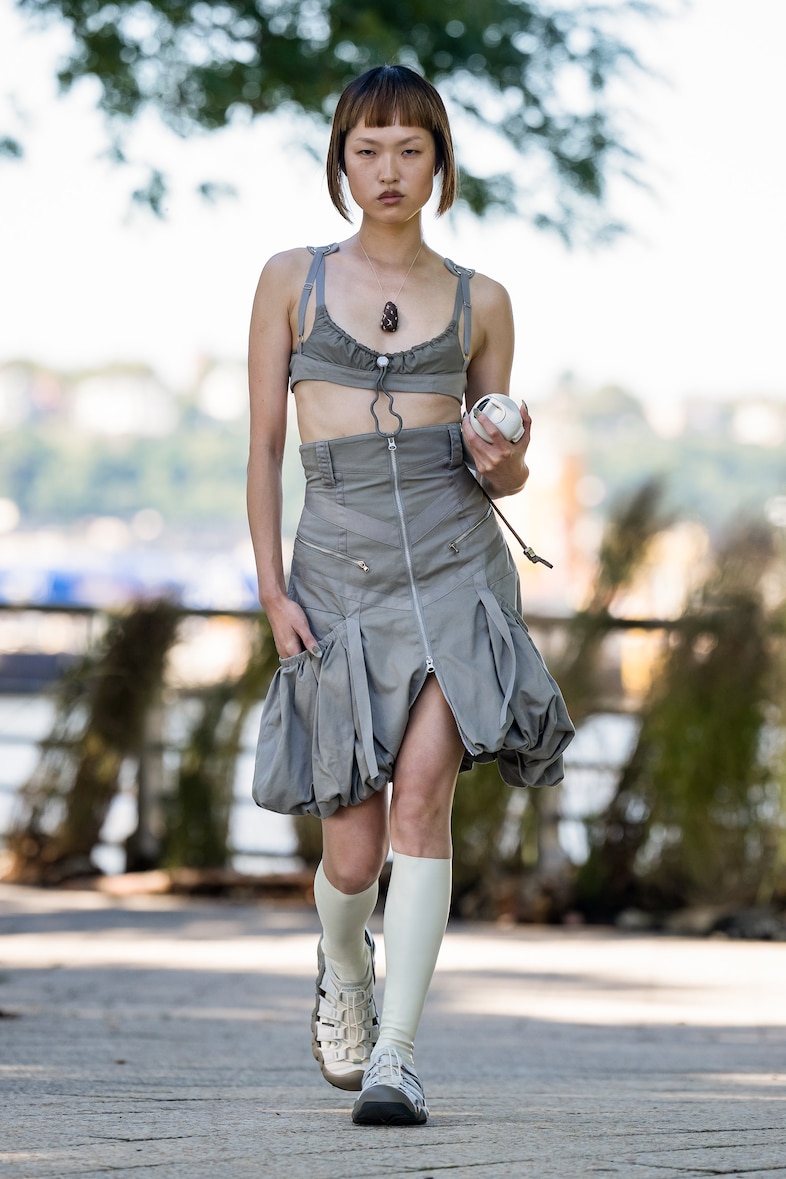
If the modern urbanite is perpetually chasing the endorphin rush of post-run euphoria, Jane Wade’s SS27 collection provided the uniform. Titled The Riverbed, Wade’s latest outing was the direct fruit of her intensive collaboration with Google’s product and innovation teams as a recipient of the prestigious CFDA x Google Fashion Fellowship.
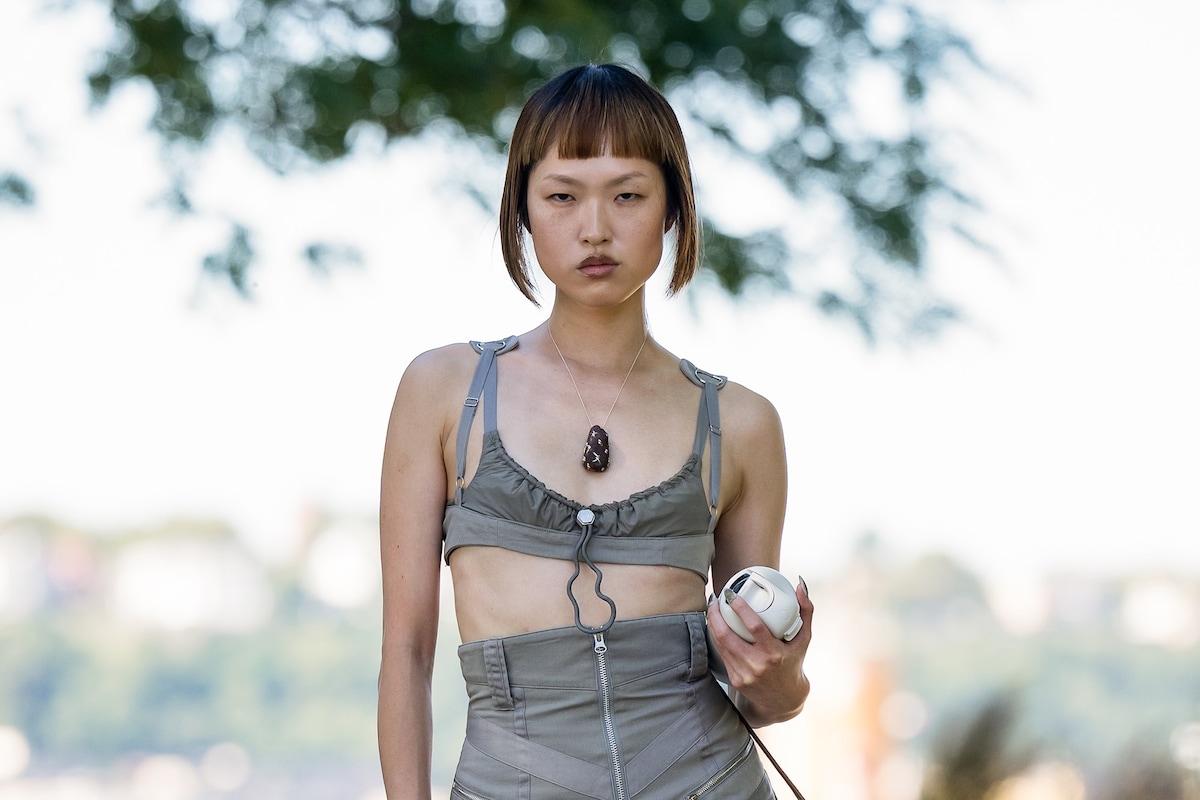
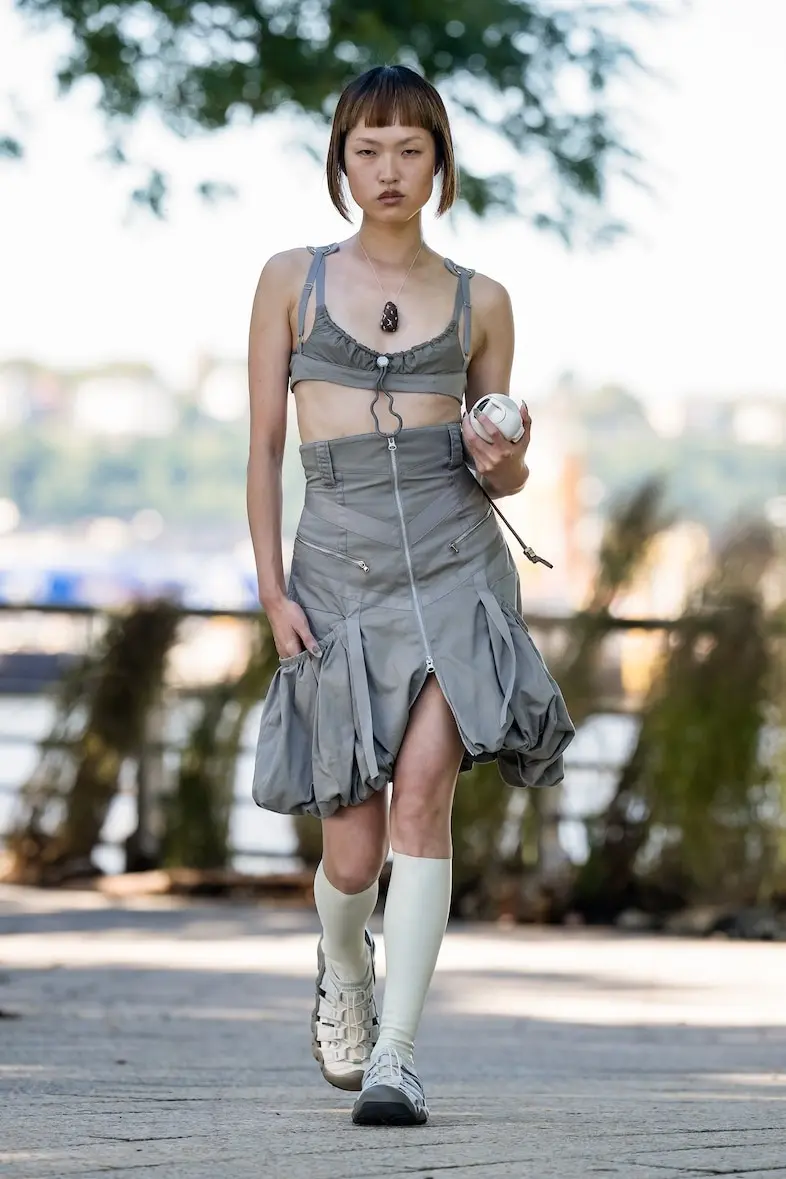
Described in show notes as “a return to grounded earth after a long trail run,” the collection conceptualized an afternoon at a metaphorical riverbed as a meditation on “amphibious femininity.” The resulting designs successfully bridged high-technical utility with environmental immersion: cargo bottoms, muted earth tones, and chain-mail pieces that shimmered under the runway lights like mineral deposits. This outdoorswoman energy was amplified by the introduction of Keen water shoes, custom-redesigned by Wade specifically for wet, treacherous terrain. The accessorization was brilliantly literal; models clutched dry bags outfitted with body-care kits, hoisted rolled-towel harnesses holding luxury body wash, and brandished Hydrojug water bottles as modern status symbols.
Calvin Klein: Stripping Down to Desire
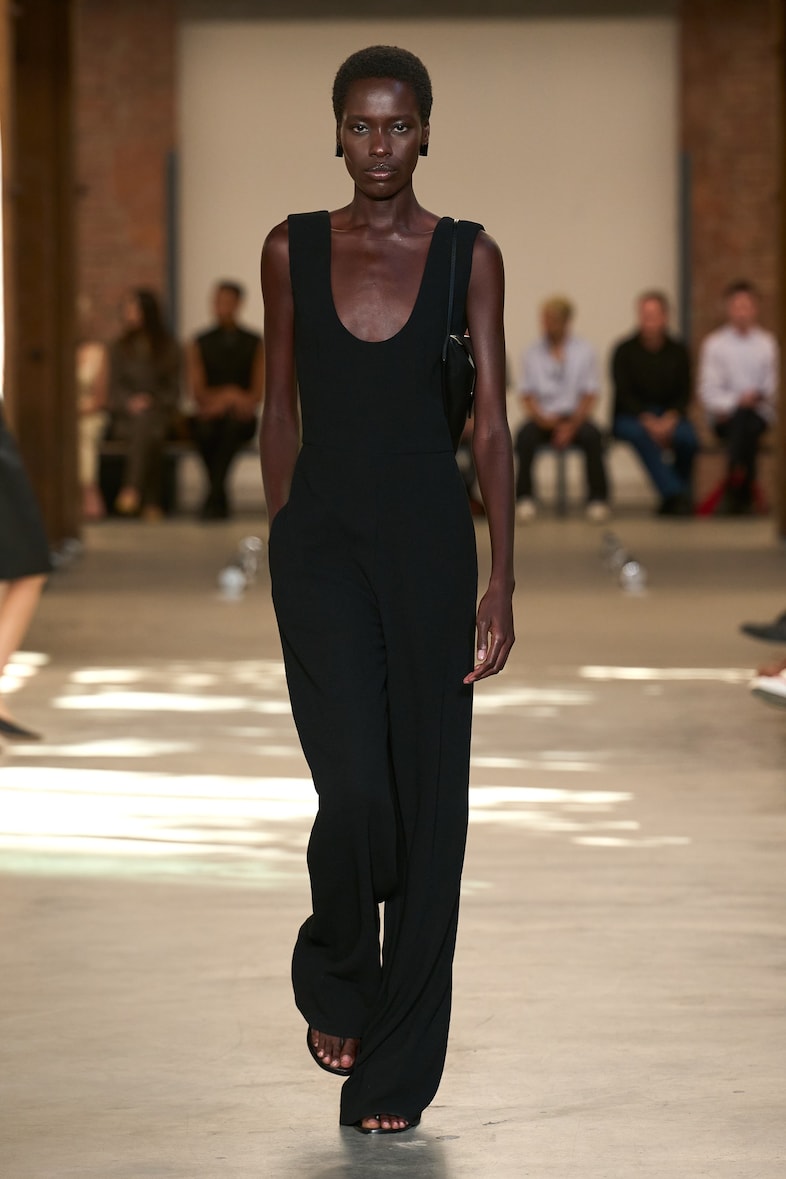
Under the direction of Veronica Leoni, Calvin Klein’s fourth consecutive womenswear outing doubled down on an uncompromising pursuit of the female form. Rather than hiding the body beneath layers of transient trends, Leoni chose to focus entirely on the anatomical relationship between garment and wearer.
“My minimalism begins there, in the relation between design and a body, with nothing in between,” Leoni noted in her manifesto. “Take everything away. What is left is desire.”
Staged within a cavernous, industrial warehouse in Chelsea, the collection was a masterclass in skeletal elegance. Clean lines, razor-sharp tailoring, and an absence of superfluous ornamentation defined the garments. The presentation was punctuated by an ambient, hypnotic soundscape featuring a spoken-word monologue by Solange, which verbalized the show’s core ethos: “The truest practice of minimalism is determining what is 100 percent necessary.”
AREA: Metallic Confetti and a Homecoming
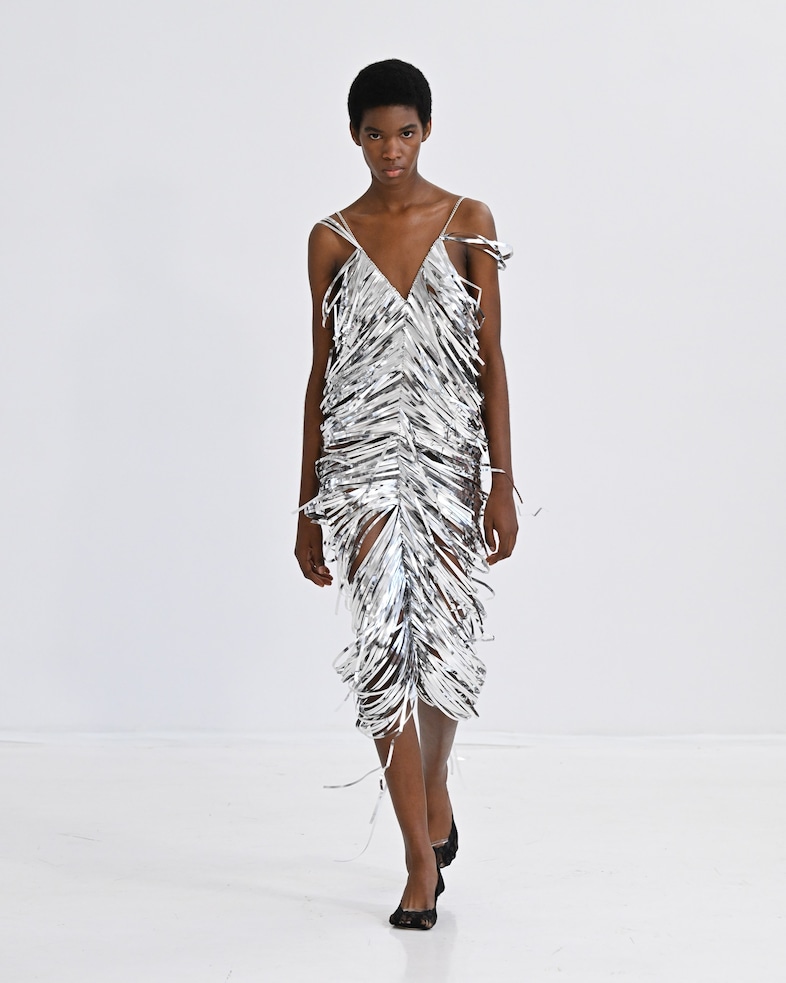
AREA transformed the SS27 runway into an unbridled celebration, sending out a parade of dresses, skirts, and tops that resembled glittering cascades of metallic confetti. For creative director Nicholas Aburn, the collection marked a literal and creative homecoming: the label’s design studio officially relocated from Milan back to New York this past summer, injecting a renewed jolt of downtown grit into the brand’s DNA.
The range of garments was thrillingly erratic, spanning from architectural dresses constructed entirely from flexible plastic tubes to slinky, crystal-encrusted tank tops paired with raw denim cut-offs. Alongside the show-stopping metallics, delicate lace staged a major comeback. Victorian-esque capris, lace-trimmed athletic shorts, and cascading Victorian ruffles layered beneath structured outerwear proved that AREA’s maximalist party girl is evolving into a more nuanced, historical romantic.
RIO: The Garden Greenhouse Takeover
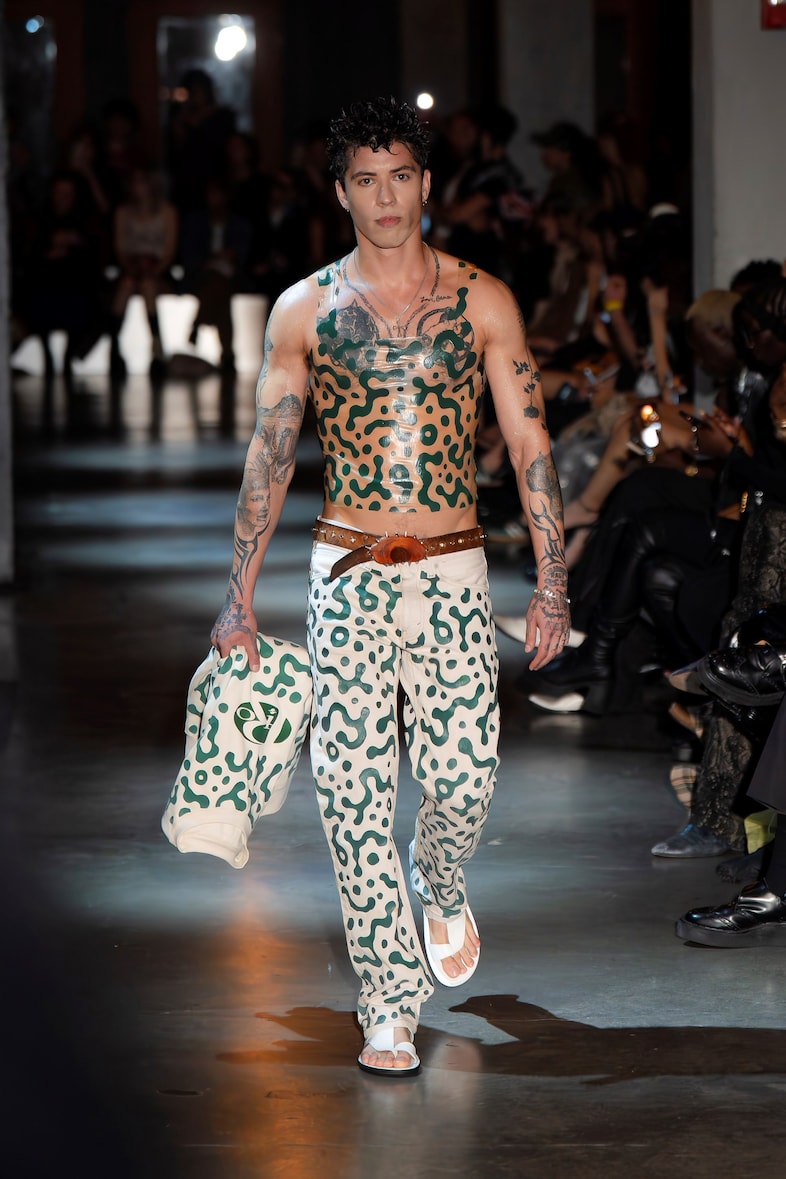
Set inside a steamy, botanical greenhouse in Greenpoint, Brooklyn, RIO’s SS27 location served as an immediate visual overture for a collection deeply indebted to the natural world. The runway felt like a tropical ecosystem bursting into full bloom, featuring subversive botanical motifs across nearly every look.
The styling pushed anatomical boundaries: nipples were discreetly covered by adhesive pink flowers, while bare chests were overlaid with transparent, animal-print second-skin tops. Even more structured, buttoned-up silhouettes received the tropical treatment. Sharp tailoring, including impeccably cut blazers, was superimposed with high-definition, vibrant imagery of exotic fish and amphibians, creating an uncanny valley of high fashion and wildlife photography.
7 For All Mankind: Indie Sleaze and the Office Siren
For devotees of the mid-2000s indie sleaze revival, 7 For All Mankind served up a feast of nostalgic excess. The standout moment of the presentation was the triumphant, unapologetic reintroduction of the skinny scarf—an accessory long relegated to vintage archives.
The runway offered a dual-track narrative. Looks featuring tight, wax-coated leather pants styled with suede knee-high boots captured the reckless abandon of an early-aughts downtown club scene. Conversely, pinstripe vests paired with matching capris and sky-high pumps made a compelling, authoritative case for the ongoing “office siren” aesthetic. Finished with Ray-Ban aviators and micro-blazers worn over denim mini shorts, the collection cemented the reality that 2000s nostalgia is anchored for the long haul.
Ben Doctor: The Trophy Wife Paradox
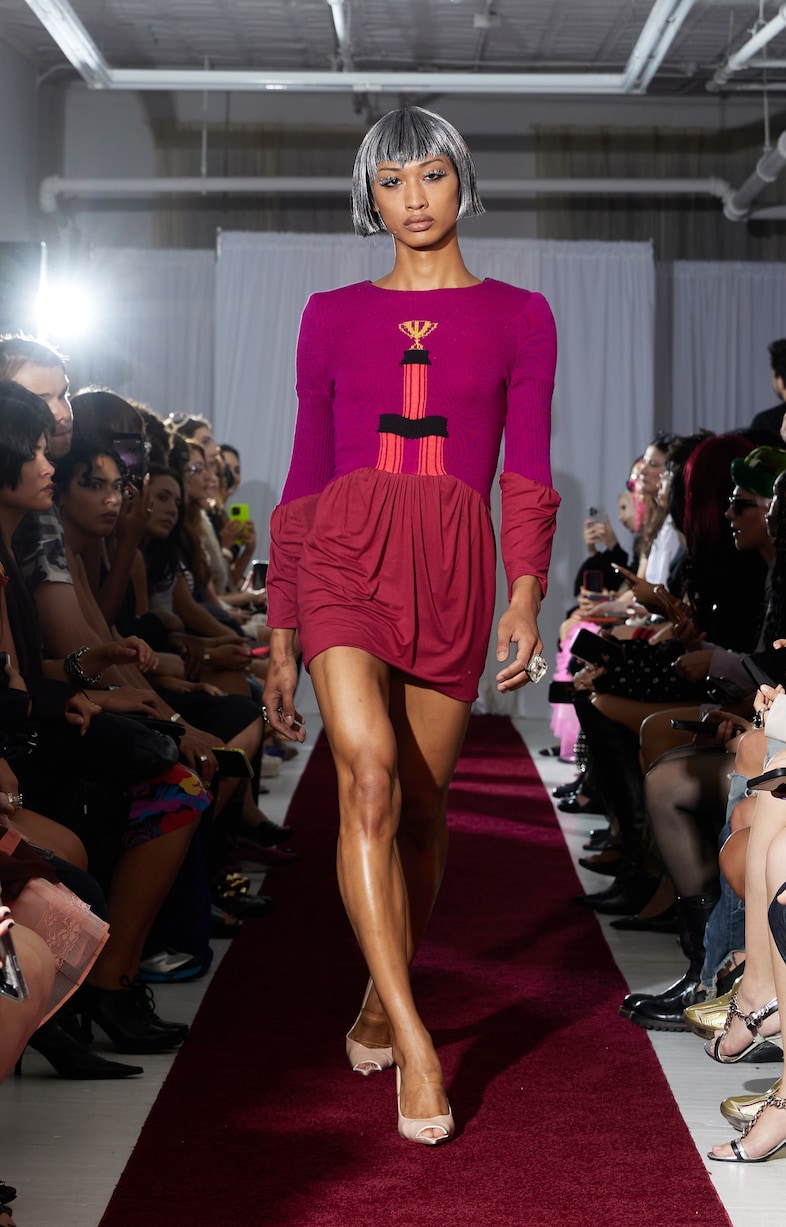
What happens when the quintessential New York party girl grows tired of the financial struggle and decides to marry into wealth? Designer Ben Doctor answered this satirical cultural query with IVORY TOWER, an SS27 collection built squarely around the dichotomy of the trophy wife versus the downtown rebel.
Doctor’s garments literalized this tension. Low-slung capris traditionally worn for casual daytime lounging were elevated with opulent fabrics; knit sweaters featured ironic trophy imagery; and vibrant, cascading sequined pieces captured the frantic energy of a woman caught permanently between two entirely different socioeconomic universes.
Thom Browne: An Entomologist’s Dream
Thom Browne transported his audience into a surrealist, oversized ecosystem where humanity played second fiddle to the insect kingdom. Staged within an installation of colossal cocoon and leaf sculptures, the SS27 presentation intentionally made guests feel like minuscule organisms navigating a giant backyard.
The insect references spanned a brilliant spectrum of subtlety and drama. Subtle nods included classic plaid trench coats detailed with hand-embroidered sunflowers, while maximalist statements arrived via ballooning, sculptural dresses featuring hyper-detailed ladybug-printed skirts that hovered around the models’ frames.
Tyler McGillivary: Virtual Botanica
Tyler McGillivary approached this season’s ubiquitous fashion obsession with nature through a distinctly digital, hyper-modern lens. Titled Botanica, the collection was conceptualized inside an imagined virtual reality where organic flora and computing technology seamlessly intertwined.
Floral prints were abundant—adorning belted midi dresses and athletic strappy bras—but they were rendered through a distorted, holographic filter. The resulting effect was that of an alien garden permanently trapped inside a retro video game console, offering a refreshing, youthful alternative to traditional floral printmaking.
Ella Mae: Marie Antoinette on the Boardwalk
“Marie Antoinette meets Jersey Shore”—this was how rising star Ella Mae described her explosive debut NYFW collection, PEACE ON EARTH!! Undeniably one of the most exciting young talents on the contemporary American schedule, Mae delivered a punkish, irreverent take on historical romanticism.
The collection juxtaposed oversized graphic tees with sheer, ruffled Victorian skirts and pastel pink sweatpants. It was an aesthetic collision of aristocratic luxury and boardwalk bravado, proving that the most compelling design directions in New York often emerge from the friction of high-low culture.
Supporting Context & Metrics: The State of NYFW SS27
Behind the glitz of the runways, New York Fashion Week SS27 operated within an evolving economic and logistical landscape. Industry analysts tracking the week noted several key structural shifts:
- The Return-to-Base Phenomenon: As evidenced by AREA relocating its studio back from Milan to New York, and Proenza Schouler anchoring its presentation in its historical birthplace of Barneys, NYFW is seeing a conscious repatriation of American design talent. Designers are recognizing that New York’s commercial infrastructure provides a vital springboard that European capitals cannot replicate.
- Experiential Real Estate: Venues this season moved far beyond traditional white-box tents. From disused warehouses in Chelsea and Greenpoint greenhouses to surrealist art installations by Thom Browne, brands heavily leveraged immersive spatial design to capture digital engagement. According to preliminary social media analytics, immersive sets (particularly Thom Browne’s macro-botanical installation and Jane Wade’s trail-runner environment) yielded double-digit increases in digital share-of-voice compared to SS26.
- The Fellowship Effect: Initiatives like the CFDA x Google Fashion Fellowship (which empowered Jane Wade’s The Riverbed) are proving essential for emerging talent. By fusing technical innovation with independent design, these incubator programs are allowing small-scale New York labels to produce structurally complex, high-concept collections that rival legacy houses.
Official Statements and Industry Commentary
The sentiment on the ground at NYFW SS27 was overwhelmingly optimistic, marked by a collective rejection of the "New York is dead" narrative.
Reflecting on the return of Proenza Schouler to a cultural landmark, creative director Rachel Scott emphasized the importance of local heritage:
"To design in New York is to design for a woman who refuses to be pigeonholed. There is an intrinsic freedom in how women dress here—sharp yet unexpected, utilitarian yet deeply expressive. Bringing our history back to a space like Barneys was a reminder of why we started this house in the first place."
Veronica Leoni of Calvin Klein articulated the philosophical backbone of her minimalist womenswear collection during her post-show debrief:
"We live in a saturated visual culture. My goal this season was subtraction. When you strip away the noise, the trends, and the unnecessary ornamentation, what remains is pure, unadulterated human desire. Minimalism in New York shouldn’t feel sterile; it should feel essential."
Meanwhile, emerging designer Ella Mae summarized the cross-cultural pollination defining the new guard of NYFW talent:
"Fashion doesn’t have to take itself too seriously to be brilliant. Pairing the grandeur of historical court dress with the unapologetic energy of the boardwalk is what New York style has always been about—it’s a high-low conversation that never stops."
Future Outlook: Where American Fashion Goes From Here
As the tents pack up and the fashion circus migrates across the Atlantic to London, Milan, and Paris, the legacy of New York Fashion Week SS27 remains distinctly clear. The week successfully proved that American fashion does not need to mimic European haute couture to be relevant. Its power lies precisely in its duality: its ability to synthesize gritty urban realism with high-concept theatricality.
Looking ahead to the upcoming seasons, several trajectories are poised to dominate:
- The Maturation of Tech-Infused Craft: Collaborations between independent designers and tech giants (such as the CFDA x Google fellowship) will likely accelerate, pushing technical performance wear deeper into the luxury ready-to-wear market.
- The New Guard Ascendancy: As demonstrated by talents like Ella Mae, Ben Doctor, and Tyler McGillivary, the future of NYFW belongs to designers who can fluidly blend subcultures, historical irony, and digital aesthetics.
- Infrastructure Consolidation: With major brands choosing to bring their operations and creative hubs back to New York soil, the city’s local manufacturing and design ecosystem is primed for a robust structural recovery.
Ultimately, those who proclaim the death of New York Fashion Week consistently mistake evolution for decline. SS27 demonstrated that New York is not dying; it is actively shedding its old skin, recalibrating its voice, and proving once again that when it comes to experimental style, American fashion remains unmatched.