Executive Overview
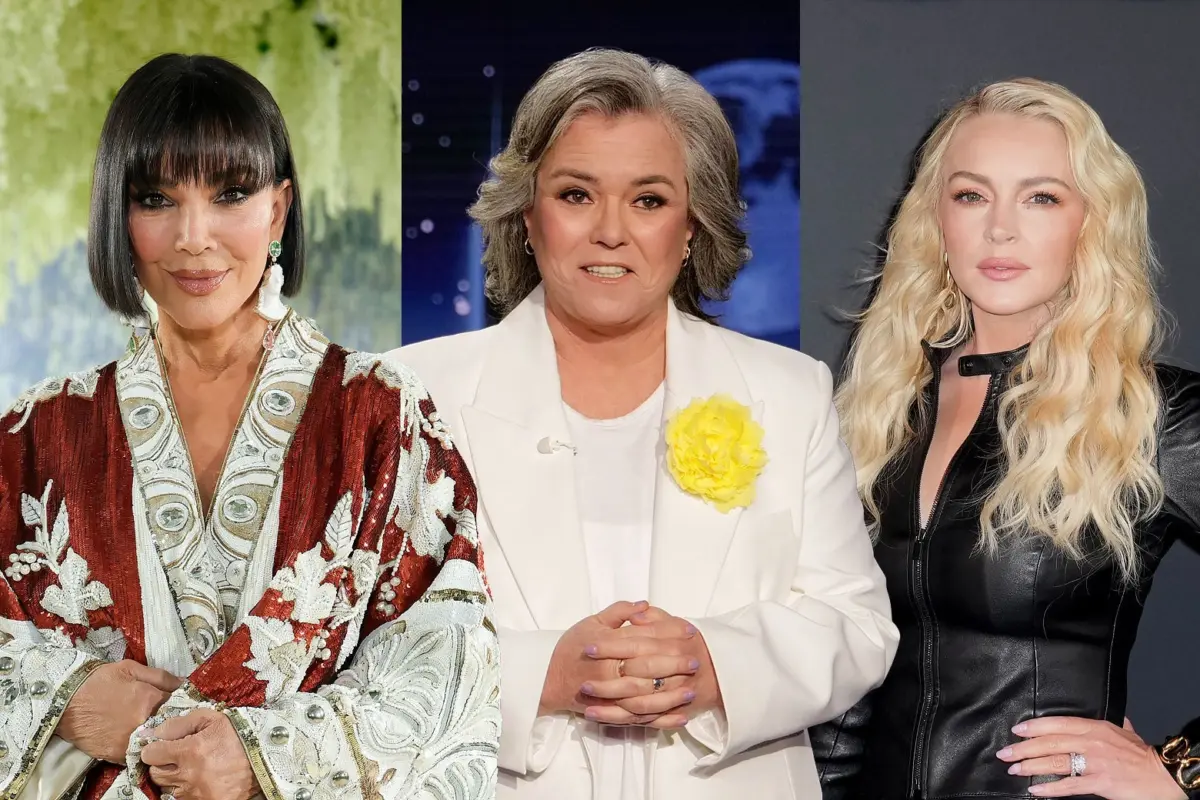
In the cultural imagination, the modern Western world is rapidly barrelling toward an aesthetic singularity. Driven by the relentless curation of social media algorithms, the proliferation of celebrity transformations—where stars like Lindsay Lohan and Kris Jenner seemingly converge toward the same high-cheekboned, pillowy-lipped visage—and the sophisticated invisibility of contemporary cosmetic medicine, a persistent anxiety plagues contemporary culture. It feels as though everyone, everywhere, is going under the knife.
Yet, a rigorous look at the data reveals a startling disconnect between cultural perception and demographic reality. While statistics from the American Society of Plastic Surgeons (ASPS) confirm steady post-pandemic growth in surgical and minimally invasive procedures, the actual percentage of the population undergoing major cosmetic surgeries remains remarkably low—hovering well below 1 percent for almost every major procedure.
This piece explores the anatomy of our collective aesthetic anxiety, investigating why a niche medical practice feels omnipresent, how the numbers truly stack up against historical baselines, and what the explosive rise of non-invasive treatments reveals about modern wellness culture.
Detailed Chronology: From the Twilight Zone to the Zoom Era
To understand contemporary anxieties surrounding cosmetic conformity, it is useful to look backward. Cultural anxieties regarding enforced beauty standards are far from novel.
- 1960: The Twilight Zone aired a classic episode in which a woman undergoes her eleventh round of surgery to escape societal exile, only to discover that her "normal" face is viewed as monstrous in a world where everyone else has been surgically modified to possess pig snouts and distorted features. The satire underscored the arbitrary nature of beauty standards, but also imagined a world of total aesthetic compliance.
- 2009–Present: Modern cosmetic surgery embarked on a trajectory of consistent, upward growth following the Great Recession, slowly weaving itself into the fabric of mainstream personal maintenance.
- 2014–2016: A stylistic shift took hold across digital platforms. As Jia Tolentino famously noted in The New Yorker essay "Our Plastic-Surgery Nightmare," the most visible faces on Instagram—particularly those belonging to white models and influencers—began to homogenize. Algorithmic preferences rewarded a specific set of features: cat-eyes, contoured jaws, and plumped lips, creating a template often dubbed "Instagram face."
- 2020–2022: The COVID-19 pandemic catalyzed an unexpected surge in demand. As populations spent hours staring at their own reflections on video conferencing software, self-scrutiny skyrocketed. Board-certified plastic surgeons reported a massive "Zoom boom," fueled by a psychological desire to exert control over one’s body during a period of profound global uncertainty.
- 2024–2026: Procedures hit new statistical highs. Face-lifts, brow lifts, and neck lifts surged across clinical practices, while celebrity transformations regularly dominated cultural discourse, fueling the illusion that aesthetic surgery had shifted from an elite luxury to a universal baseline for participation in modern society.
Supporting Context & Metrics: Breaking Down the Numbers
The central paradox of the modern aesthetic economy is that while media visibility for plastic surgery is at an all-time high, actual surgical penetration rates remain remarkably niche.
Major Surgeries: A Tiny Sliver of the Population
When examining historical data compiled by the ASPS, the percentage of the U.S. population undergoing major surgeries has remained remarkably stable—and remarkably small—over the last three decades.
Consider the numbers for liposuction:
- 1999: 230,865 procedures performed (roughly 0.08 percent of the U.S. population at the time).
- 2024: 349,728 procedures performed (roughly 0.1 percent of the modern U.S. population).
Other prominent procedures show similar demographic restraint. Breast augmentation and tummy tucks have remained fixed at roughly 0.09 percent and 0.05 percent of the population, respectively.
To contextualize these figures, the annual proportion of Americans undergoing any given major cosmetic surgery is comparable to rare medical anomalies or niche media consumption habits:
- People born with heterochromia (differently colored eyes): 0.06 percent
- People with situs inversus (internal organs mirrored in reverse): 0.01 percent
- Dedicated viewers of television staples like The Bachelorette: 0.7 percent
The Minimally Invasive Explosion
While surgical rates remain flat and exclusive, the landscape of minimally invasive treatments tells an entirely different story. This category includes Botox, dermal fillers, chemical peels, laser hair removal, non-surgical fat reduction, skin tightening, and the booming category of weight-loss pharmaceuticals like GLP-1 receptor agonists.
In its recent annual report, the ASPS recorded more than 28 million minimally invasive treatments in a single year—an increase of 3 million from the prior period.
Unlike a surgical face-lift, which yields dramatic, long-lasting, but infrequent interventions, minimally invasive treatments operate on a maintenance schedule akin to a haircut or dental cleaning. Patients return every three to six months to sustain the results. Consequently, the massive aggregate number of procedures does not represent tens of millions of unique individuals, but rather a dedicated cohort of repeat consumers engaging in frequent, micro-dose maintenance.
Official Statements and Industry Perspectives
Industry leaders and medical professionals emphasize that the cultural narrative of forced homogenization is largely detached from clinical reality. Surgeons report a fundamental shift in patient motivations away from radical transformation and toward restorative self-care.
"What surgeons are hearing is that patients want to feel like a better restored version of themselves, not a different version."
— Dr. Dr. Umbareen Mahmood, Plastic Surgeon
According to the ASPS, contemporary aesthetic medicine is increasingly framed through the lens of holistic wellness. Rather than erasing individuality to achieve an algorithmic template, many patients utilize targeted interventions to mitigate the visible markers of stress, fatigue, and chronological aging.
Furthermore, C. Bob Basu, board-certified plastic surgeon and president of the ASPS, points out that the resilience of the aesthetic market—which continued to grow despite recent macroeconomic uncertainty—reflects a permanent cultural integration of self-care practices into daily health regimens, rather than a fleeting pop-culture craze.
Future Outlook: Navigating the Aesthetic Landscape
As cosmetic technology continues to advance—offering increasingly subtle, undetectable interventions with shorter recovery times—the pressure to conform to digital beauty standards will likely persist. The boundary between skincare, dermatology, and surgical enhancement will continue to blur, facilitated by the normalization of preventative treatments among younger demographics.
Yet, the anxiety of mass conformity remains largely an illusion driven by feed-based echo chambers. The reality is that going under the knife remains an expensive, time-consuming, and statistically rare endeavor.
For those feeling overwhelmed by the pristine, smooth faces populating their social media feeds or television screens, the remedy requires no medical intervention or dystopian exile. It simply requires stepping outside the algorithmic bubble. In a population of over 330 million people, the "Instagram face" is not a universal mandate—it remains a fascinating, highly visible, but ultimately niche subculture.