Executive Overview
London Fashion Week has long served as a global stage for legacy houses and corporate-backed conglomerates, yet the true pulse of the city’s creative industry continues to beat far away from the official tents—within the raw, unpolished, and fiercely independent undercurrents of the capital’s East End. On a crisp September evening, this rebellious spirit manifested near Bethnal Green tube station, drawing scenes that local residents and industry veterans alike likened to a chaotic Central Saint Martins fire drill. Hundreds of students, recent graduates, and underground creatives queued relentlessly down Cambridge Heath Road, brandishing roll-up cigarettes, clutching canned beverages, and wearing avant-garde garments of their own design.
This massive, highly energized crowd had converged to witness the unofficial, off-schedule Spring/Summer 2027 runway debut of Kai Ghattaura and Fin Forsyth. Partners in both life and creative enterprise, Forsyth—a Central Saint Martins graduate of 2024—and Ghattaura, who recently showcased his Master of Arts collection in February, have quickly established themselves as torchbearers for a new generation of British design. Their collaborative presentation transcended the standard parameters of a fashion show; it was a visceral, theatrical celebration of youth, unbridled imagination, and tactile craftsmanship.
By utilizing an empty, industrial warehouse in Bethnal Green as their canvas, the dynamic duo subverted traditional luxury tropes. They replaced minimalist concrete and digital screens with an enormous, hand-crafted cardboard house, paper-crown seating arrangements, and a whimsical narrative inspired by Maurice Sendak’s 1963 children’s literary masterpiece, Where the Wild Things Are. What transpired over the course of the evening was not merely a display of garments, but an immersive exploration of metamorphosis, nostalgia, and the wild, untamed nature of creative freedom. As the industry increasingly gravitates toward commercial predictability, Ghattaura and Forsyth’s off-schedule triumph serves as a poignant reminder of why London remains the global capital of raw, unfiltered design talent.
Detailed Chronology: The Unfolding of an East End Spectacle
The atmosphere surrounding Cambridge Heath Road hours before the show was thick with anticipation. The queue stretching from Bethnal Green tube station functioned as an impromptu street-style showcase, featuring some of the most daring and inventive styling seen across the entire season. Industry insiders, press, and eager peers mingled in the autumn air, sharing cigarettes and comparing notes on what they anticipated from the two rising stars.
Inside the cavernous, raw-concrete expanse of the warehouse venue, the meticulous world-building of Ghattaura and Forsyth came into sharp focus. Rather than traditional benches, rows of seats were adorned with humble paper crowns, immediately signaling to the audience that they were entering a realm governed by childhood fantasy and egalitarian play. Looming over the space was an imposing, meticulously constructed cardboard house—a direct structural and thematic nod to Sendak’s narrative, wherein the protagonist Max escapes the confines of his ordinary domestic life to become the king of the "wild things."
The Theatrical Opening
The presentation commenced not with a conventional model stomping down a raised catwalk, but with an explosion of unscripted theatricality. Four young children marched into the space, dressed entirely in pristine white garments. Clattering down the runway with palpable, youthful energy, they clutched cardboard swords and makeshift shields, immediately launching into an enthusiastic, unchoreographed duel. The chaotic innocence of the scene was quintessential London: anarchic, charming, and entirely unpredictable.
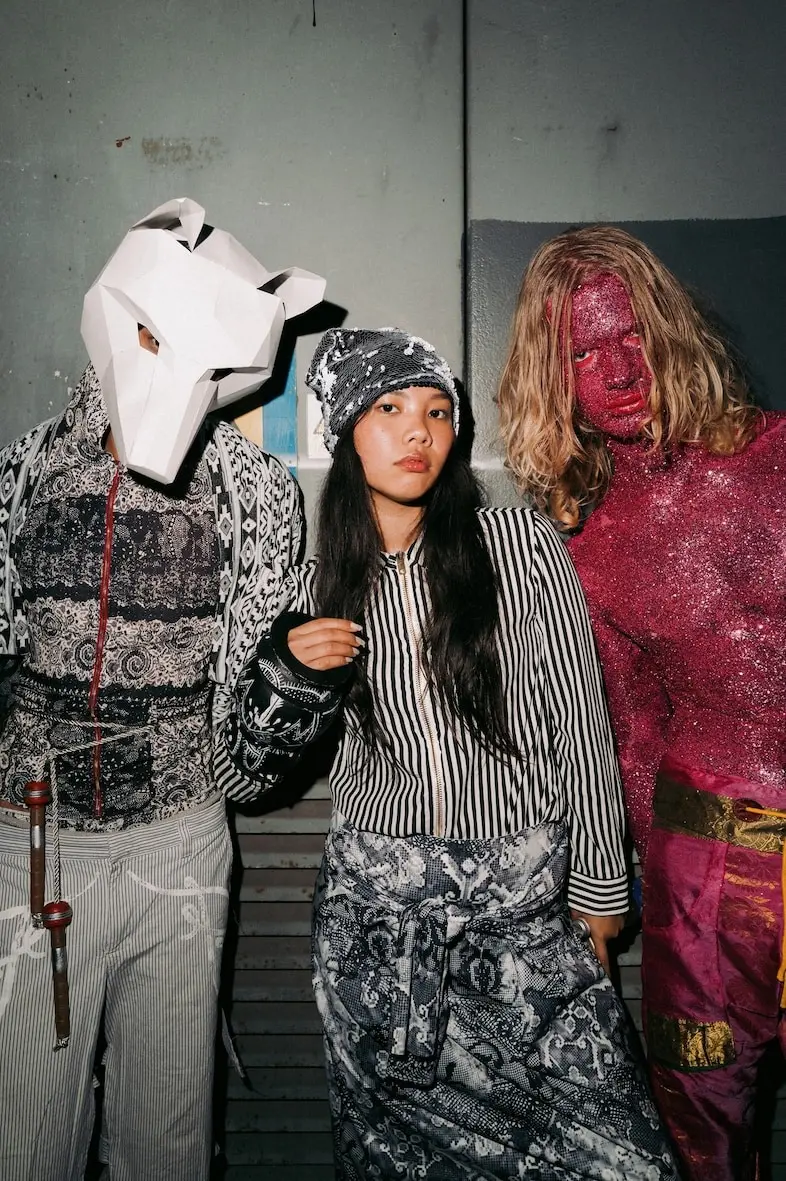
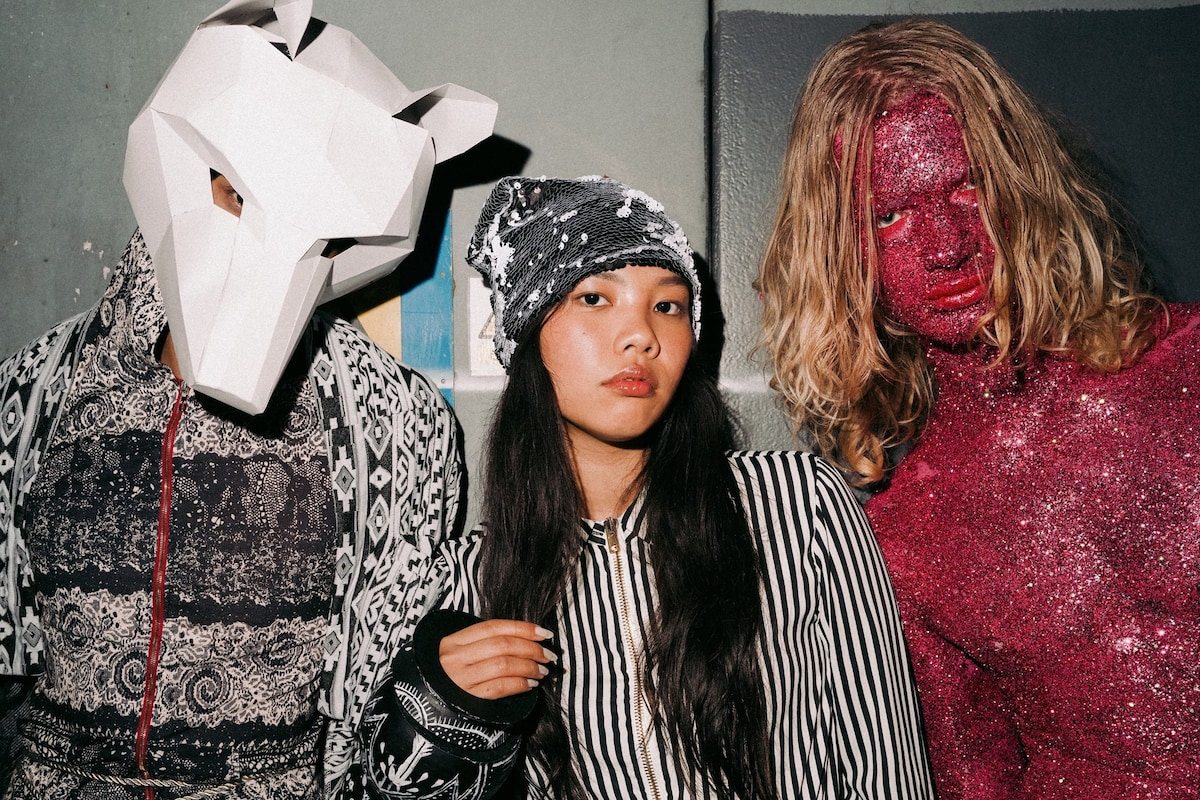
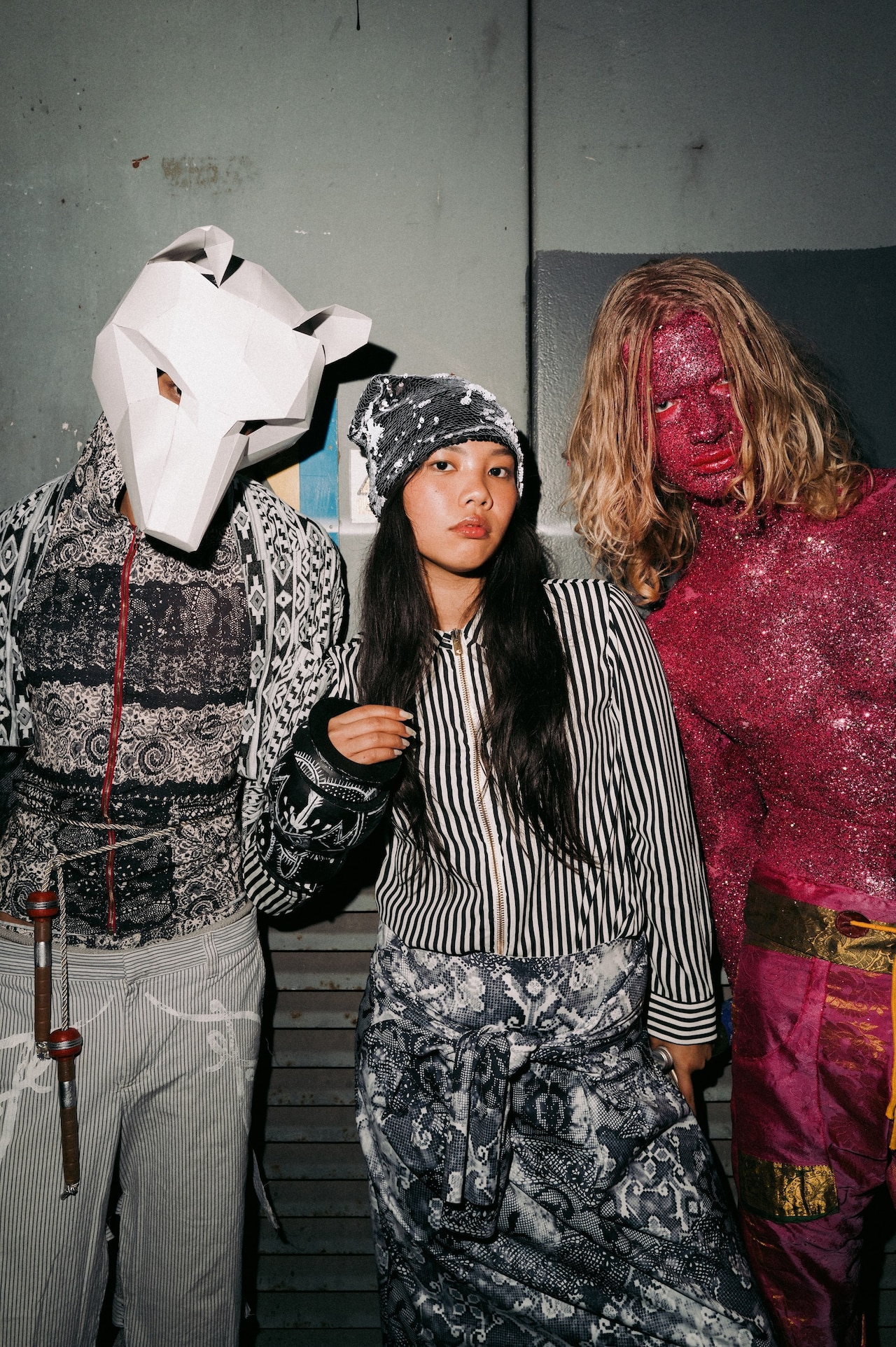
As quickly as they had entered, a harried public relations representative gently coaxed the children away, clearing the floor for the first official look of the collection. The initial model emerged wearing an ambiguous, hand-crafted paper mask resembling either a fox or a bear—depending on the viewer’s perspective. This set the tone for a collection that continuously blurred the boundaries between humanity and fauna, civilization and wilderness.
The Evolution of the Runway
As the procession continued, the styling evoked memories of an eccentric summer camp or an anarchic youth society reminiscent of William Golding’s Lord of the Flies. The models moved with a casual, unstudied grace, draped in garments that appeared to have been pieced together from leftover textile scraps, domestic linens, and found objects.
Key styling motifs included:
- Improvised Cummerbunds and Headscarves: Fashioned from clashing, bold prints that recalled domestic curtains or vintage picnic blankets.
- Asymmetrical Fabric Additions: Extra lengths of fabric strategically knotted around necks, twisted around single knees, or worn as eccentric arm warmers to disrupt clean silhouettes.
- Fauna and Avian Headwear: Masks modeled after birds—stylistically reminiscent of urban pigeons—alongside baseball caps playfully transformed with rigid brims mimicking the bills of platypuses.
The Climax and "Glister"
The narrative trajectory of the show shifted dramatically as the garments themselves began to undergo a celestial transformation. Moving away from the raw, earthy textures of cardboard and matte cottons, the collection—appropriately titled Glister—gradually dissolved into a dreamscape of shimmering light and tactile extravagance.
Models were systematically dipped, dusted, and coated in hyper-saturated glitter. One standout look featured a model entirely encased in radiant fuchsia sparkle, capturing the light of the warehouse industrial fixtures. The finale look was a masterclass in sensory overload: a model dripping head-to-toe in brilliant silver glitter, casually carrying a giant, oversized fidget spinner. This inclusion of modern, ubiquitous plastic toys underscored the collection’s dialogue between timeless childhood archetypes and contemporary suburban artifacts. Despite the eclectic mix of props and theatrical devices, the craftsmanship remained undeniable, cementing the presentation as an emotional and visual high point of the London fashion calendar.
Supporting Context & Metrics: The State of Independent Design
To fully grasp the significance of Kai Ghattaura and Fin Forsyth’s presentation, one must examine the broader socio-economic and institutional realities facing young graduates in the United Kingdom today. The pathway from institutional education to commercial viability has grown increasingly perilous for emerging designers, making independent, off-schedule interventions both a creative choice and an economic necessity.
The Central Saint Martins Pipeline
Central Saint Martins (CSM) continues to act as the primary incubator for avant-garde fashion talent on a global scale. However, the disparity between graduating with critical acclaim and securing sustainable financial backing has never been wider.
- Educational Footprint: Forsyth completed her studies at CSM in 2024, navigating a post-pandemic landscape characterized by soaring material costs and inflated studio rents in London.
- MA Milestones: Ghattaura’s recent presentation of his Master of Arts collection in February demonstrated a rigorous technical foundation, setting the stage for their joint label.
- Peer Solidarity: The front row of the Bethnal Green show was not populated by traditional celebrity brand ambassadors or corporate retail buyers, but by the 2026 graduating class of the CSM MA program, alongside supportive faculty members and family. This underscores an insular, deeply supportive ecosystem where community validation supersedes commercial metrics.
Off-Schedule Economics vs. Official Calendars
The decision to stage an off-schedule show during London Fashion Week is a calculated tactical maneuver utilized by a growing faction of boundary-pushing designers.
| Metric / Factor | Official LFW On-Schedule Shows | Off-Schedule Independent Shows (e.g., Ghattaura/Forsyth) |
|---|---|---|
| Financial Barrier | High (Venue rental, British Fashion Council fees, PR agencies) | Moderate-to-Low (Alternative spaces, DIY production) |
| Creative Control | Subject to sponsor demands, tight time slots, and strict guidelines | Absolute autonomy over narrative, casting, and venue |
| Audience Demographics | International press, institutional buyers, VIP clients | Peers, underground creatives, independent stylists, cultural tastemakers |
| Media Impact | Mainstream trade coverage (Vogue, WWD) | High-engagement digital virality (Dazed, TikTok, Instagram grassroots) |
By bypassing the financial gatekeeping of the official British Fashion Council schedule, Ghattaura and Forsyth retained absolute sovereignty over their artistic output. The choice of an abandoned warehouse in Bethnal Green minimized overhead while maximizing atmospheric authenticity—a luxury that traditional calendar slots rarely afford.
Official Statements and Creative Vision
While formal corporate press releases are typically reserved for established luxury houses, the ethos of Ghattaura and Forsyth is communicated directly through their material choices, design philosophy, and contextual references.
The Literary and Conceptual Framework
The invocation of Maurice Sendak’s Where the Wild Things Are serves as the conceptual anchor for Glister. In statements regarding their design process, the duo has frequently emphasized the psychological landscape of childhood—a space where domestic security collides with untamed imagination.
"Max’s journey from a bedroom regulated by order and punishment into a nocturnal forest populated by chaotic, howling monsters mirrors the creative process of the modern designer," noted an independent critique circulating among the CSM alumni network following the show. "You must venture into the wild to find your own crown."
This sentiment was physically manifested in the cardboard house and paper crowns. Rather than presenting clothes as passive objects of consumption, the designers framed them as costumes for a psychological rite of passage. The integration of everyday debris—cardboard, scraps of fabric, glitter, and plastic toys—speaks to a broader ethos of resourcefulness. In an era marked by climate anxiety and economic constraint, upscale craftsmanship derived from humble, discarded materials represents a sophisticated form of luxury that resonates deeply with contemporary youth culture.
Future Outlook: Whither the Next Generation?
The resounding success of the Bethnal Green presentation raises critical questions about the future trajectory of Kai Ghattaura and Fin Forsyth, as well as the broader structural health of London’s independent fashion scene.
Navigating Commercial Realities
As the duo looks beyond their SS27 collection, the immediate challenge will be translating the anarchic energy of their off-schedule runway into a commercially viable wholesale or direct-to-consumer business model. The fashion industry’s insatiable appetite for novelty often burns through young talent before sustainable infrastructure can be established. However, the grassroots loyalty demonstrated by the hundreds of students queuing down Cambridge Heath Road suggests a built-in community ready to support their growth.
The Re-Enchantment of London Fashion
Ghattaura and Forsyth’s triumph points toward a broader paradigm shift in how fashion is consumed and validated. As digital algorithms increasingly homogenize aesthetic trends and corporate sponsorships sanitize official fashion weeks, authentic underground subcultures are reclaiming the narrative.
The future of London Fashion Week may increasingly rely on these decentralized, off-schedule moments of collective joy. If Ghattaura and Forsyth’s SS27 debut is any indication, the most exciting chapters of British design are not being written in corporate boardrooms or gilded West End salons, but in the drafty, cardboard-filled warehouses of East London by creators who refuse to color within the lines.