Executive Overview
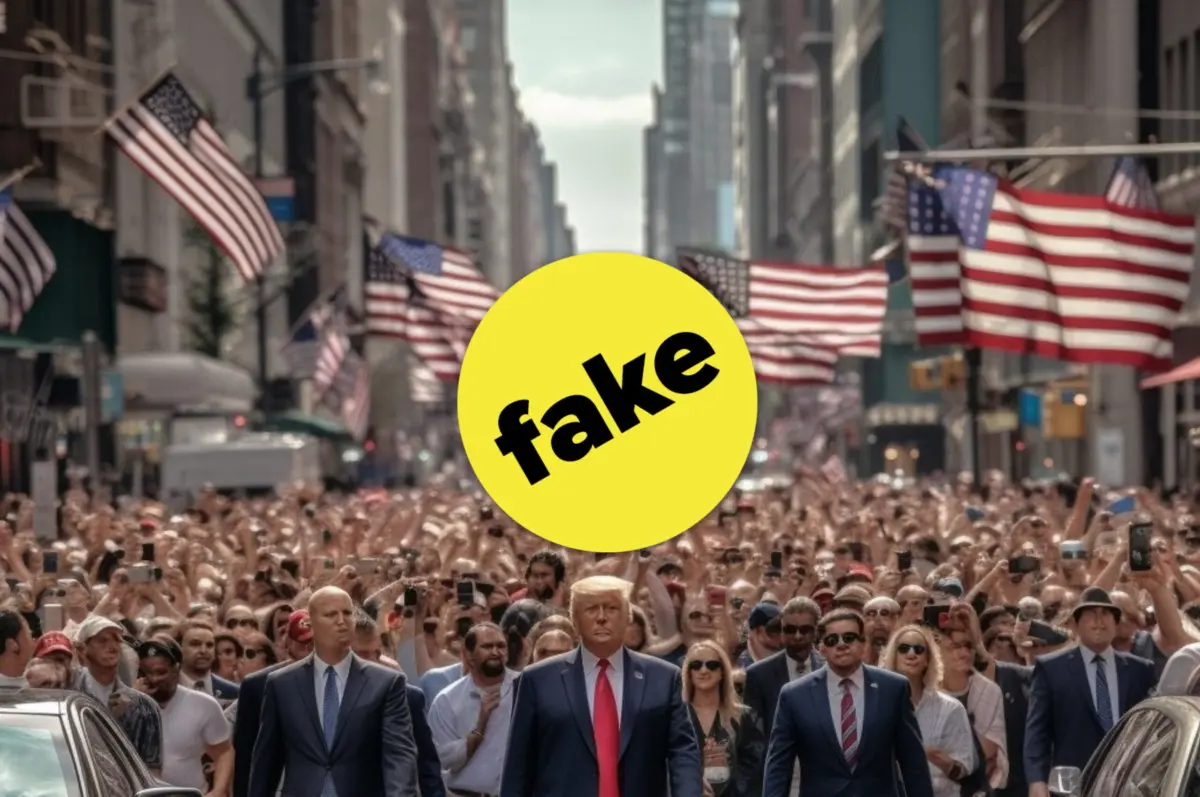
The rapid democratization of generative artificial intelligence has fundamentally altered the visual landscape of the modern internet. No longer confined to the experimental laboratories of tech giants or academic institutions, sophisticated neural networks capable of rendering hyper-realistic imagery are now accessible to anyone with a browser and an internet connection. From hyper-detailed portraits of fictional historical events to fabricated depictions of contemporary public figures, synthetic media has achieved a level of fidelity that routinely bypasses the cognitive defenses of the average observer.
This technological leap presents an unprecedented crisis for public information. As Andrey Doronichev, CEO and cofounder of Optic.xyz—a platform designed to detect synthetic imagery—observes, distinguishing between authentic photography and AI-generated fabrications has become an extraordinarily difficult task for the human eye. The implications of this paradigm shift extend far beyond novelty or digital art; they strike at the foundational pillars of democratic societies. When citizens can no longer trust their own eyes, bad actors gain the power to manipulate public opinion, erode trust in legitimate news institutions, and weaponize disinformation on an industrial scale.
The digital ecosystem’s response to this synthetic wave has been reactive rather than preventative. A burgeoning ecosystem of detection tools has emerged, attempting to identify the statistical anomalies and artifact signatures left behind by generative models. Yet, these countermeasures are locked in a perpetual arms race against rapidly evolving algorithms, rendering none of them entirely foolproof. Meanwhile, the major social media platforms—the primary distribution vectors for viral disinformation—appear profoundly unprepared. Regulatory frameworks are lagging, content moderation teams have been systematically hollowed out across several major tech firms, and legacy policies regarding manipulated media are applied with frustrating inconsistency.
This investigative report examines the multifaceted crisis of AI-generated imagery, exploring the technological mechanics behind the illusion, the institutional vulnerabilities allowing fake media to proliferate unchecked, the emerging tools fighting to restore authenticity, and the long-term societal fallout if the digital public square can no longer anchor itself to shared realities.
Detailed Chronology: The Evolution of Synthetic Media and the Detection Arms Race
To understand the current crisis of authenticity, one must trace the rapid acceleration of generative adversarial networks (GANs) and diffusion models over the past half-decade. What began as nightmarish, low-resolution digital collages has evolved, at breakneck speed, into photorealistic perfection.
2018–2020: The Era of Uncanny Valleys and GANs
The modern conversation surrounding synthetic media gained mainstream traction with the popularization of Generative Adversarial Networks. Early iterations, such as early versions of Midjourney precursors, DeepArt, and StyleGAN, introduced the public to the concept of AI-generated human faces. During this phase, the technology was defined by the "uncanny valley." Images were frequently betrayed by glaring anatomical errors: asymmetrical earrings, warped backgrounds, melting teeth, and, most famously, a total inability to render human hands correctly. Users could easily spot fakes by counting fingers or looking for unnatural blurring around the edges of subjects.
However, technology advanced exponentially. By 2020, models were producing remarkably convincing portraits of people who did not exist, prompting academic institutions and cybersecurity researchers to initiate early containment and detection frameworks.
2021–2022: The Diffusion Model Breakthrough and Open Access
The game changed permanently with the advent of latent diffusion models. Architectures such as Stable Diffusion, DALL-E 2, and advanced iterations of Midjourney shifted the paradigm from mere face-swapping to text-to-image generation of infinite complexity and stylistic range.
Crucially, the decision by Stability AI to open-source the Stable Diffusion model democratized—and decentralized—synthetic image generation. Rather than relying on guarded corporate Application Programming Interfaces (APIs), individuals could now run powerful generative models locally on consumer-grade hardware. This democratization eliminated guardrails, enabling the creation of unrestricted, unmoderated imagery on a global scale.
Late 2022–Present: The Weaponization of Real-Time Disinformation
As generative models achieved near-perfect mastery over lighting, texture, and complex composition, the visual markers of AI generation began to disappear. The era of obviously botched hands and mutated faces gave way to subtle artifacts: inconsistent shadows, micro-textural anomalies in skin, and bizarre background text rendering.
During this period, generative AI crossed over from a novelty platform to a weapon of political and social disruption. High-profile synthetic images—ranging from fabricated depictions of political arrests to staged disasters—began circulating virally during major news cycles. In response, a secondary industry of detection startups emerged. Platforms like Optic.xyz, Hive Moderation, and AI or Not launched web-based utilities allowing users to upload suspicious media for algorithmic analysis. Yet, as newer models like Midjourney v6 and DALL-E 3 entered the market, these detectors found themselves perpetually playing catch-up, struggling to maintain accuracy against an ever-shifting technological baseline.
Supporting Context & Metrics: The Vulnerability of the Digital Ecosystem
The proliferation of synthetic media does not occur in a vacuum; it exploits structural vulnerabilities within the modern internet, specifically the architecture of social media recommendation engines and the corporate dismantling of trust-and-safety apparatuses.
The Metrics of Manipulation
Quantitative analyses conducted by digital watchdog organizations reveal a deeply concerning correlation between the rise of generative AI tools and the velocity of viral disinformation. According to industry tracking:
- Accessibility Surge: Consumer-facing text-to-image platforms have experienced a user-base expansion exceeding 400% year-over-year since 2022.
- Detection Lag: Empirical testing of leading AI-detection algorithms indicates that while they achieve up to 90% accuracy on older generative models, their efficacy drops to between 55% and 70% when evaluating newly released, high-end diffusion outputs.
- Engagement Asymmetry: Studies on social media platform dynamics consistently show that emotionally provocative, visually striking synthetic images generate up to six times more algorithmic engagement (shares, likes, comments) than nuanced, text-based corrections or debunking articles.
The Platform Deficit
The most alarming finding from cybersecurity experts is the systemic unpreparedness of social media corporations. Kayla Gogarty, deputy research director at Media Matters for America, highlights a dangerous regulatory vacuum. "As there has been a recent rise of AI-generated media, it has become clear that platforms are unprepared for this moment in which fake images and misinformation could lead to real-world harm," Gogarty noted in interviews with industry analysts.
This vulnerability is acutely concentrated on platforms undergoing radical corporate restructuring. Platforms like X (formerly Twitter) have faced intense scrutiny following sweeping changes implemented under Elon Musk. The dismantling of dedicated content moderation teams, combined with the revamping of the platform’s verification system—the transition from the legacy blue checkmark to a paid subscription model—has fundamentally broken traditional heuristics of account credibility. When any user can purchase a badge of authority, and when systemic enforcement of manipulated media policies is abandoned or applied errantly, malicious actors find an open door for deploying coordinated synthetic disinformation campaigns.
Official Statements and Expert Perspectives
To grasp the gravity of the synthetic media dilemma, one must listen to the voices of those working on the front lines of digital verification, policy advocacy, and artificial intelligence development.
The Technological Realist: Andrey Doronichev
Andrey Doronichev, cofounder of Optic.xyz, approaches the issue from a product development perspective, acknowledging both the utility and the immense danger of the tools his company attempts to monitor.
"It has become increasingly challenging for the average human eye to distinguish between AI-generated and real photos," Doronichev explains. "This has the potential to manipulate public opinion, undermine the credibility of news sources, and ultimately threaten the democratic process by promoting disinformation."
Doronichev’s perspective underscores the asymmetrical nature of the problem: while generating an image takes mere seconds, verifying its authenticity requires technical expertise, specialized software, and cognitive labor that the average internet user scrolling through a social media feed simply does not possess.
The Policy Watchdog: Kayla Gogarty
Representing the perspective of media accountability, Kayla Gogarty emphasizes that the crisis is not merely technological, but institutional and regulatory.
"Particularly concerning is Twitter, as Elon Musk has abandoned much of the platform’s content moderation and it has become difficult to determine account credibility under the new checkmark policy."
Gogarty’s warning points to the intersection of AI generation and platform governance. Without robust institutional guardians, technological countermeasures alone cannot protect the public sphere from coordinated deception.
The Practical Countermeasures
Security experts and digital literacy advocates emphasize a multi-layered defense strategy for consumers navigating an increasingly synthetic internet:
- Algorithmic Screening: Whenever encountering emotionally charged, breaking-news imagery on social media, users are advised to run the files through dedicated detection platforms such as Optic.xyz, Hive, or Google’s emerging metadata inspection tools.
- Anatomical and Contextual Checks: While AI is improving, residual flaws persist. Observers should examine complex structural details—hands, asymmetrical eyewear, background signage with nonsensical lettering, and unnatural lighting reflections in the eyes.
- The "Too Good to Be True" Rule: As a general cognitive heuristic, if an image aligns too perfectly with a partisan narrative or evokes an extreme emotional reaction instantly, it demands immediate skepticism.
- Information Hygiene: The most reliable defense against synthetic manipulation remains the curation of information habits—prioritizing established, editorially rigorous, and verified legacy news organizations over decentralized, unverified social media feeds.
Future Outlook: Navigating the Post-Truth Horizon
As we look toward the horizon of artificial intelligence development, the challenge of synthetic media will only intensify. Generative video and real-time voice cloning are rapidly converging with text-to-image technology, promising an environment where multi-modal deepfakes can be generated on the fly during live streams or video conferences.
Addressing this existential threat to public discourse requires a coordinated, multi-stakeholder response:
- Legislative and Regulatory Action: Governments globally must establish clear, enforceable standards for digital watermarking and provenance tracking. Frameworks like the Coalition for Content Provenance and Authenticity (C2PA) offer technical standards for embedding cryptographic metadata into authentic media, allowing consumers to trace an image’s lineage back to its camera sensor of origin.
- Corporate Accountability: Technology platforms must reinvest in trust-and-safety infrastructure. Content moderation cannot be treated as a cost-cutting target; it is critical national and international security infrastructure. Policies against deceptive manipulated media must be codified, transparently communicated, and ruthlessly enforced, regardless of political expediency or account status.
- Public Education and Media Literacy: Educational systems must pivot to address digital hygiene and synthetic media literacy as core competencies. Citizens must be equipped not just with technical tools, but with the critical thinking skills required to interrogate the media environment effectively.
Ultimately, the rise of hyper-realistic AI imagery forces a profound philosophical reckoning. It challenges our collective definition of truth, documentation, and trust. If technology strips away our ability to believe our own eyes, society must construct new institutional, cryptographic, and cultural guardrails to ensure that truth does not become a casualty of the digital age. Until those systems are firmly in place, the burden remains on the individual user: approach every pixel with caution, verify before you share, and rely on trusted journalistic institutions to illuminate the darkness of the synthetic illusion.