Executive Overview
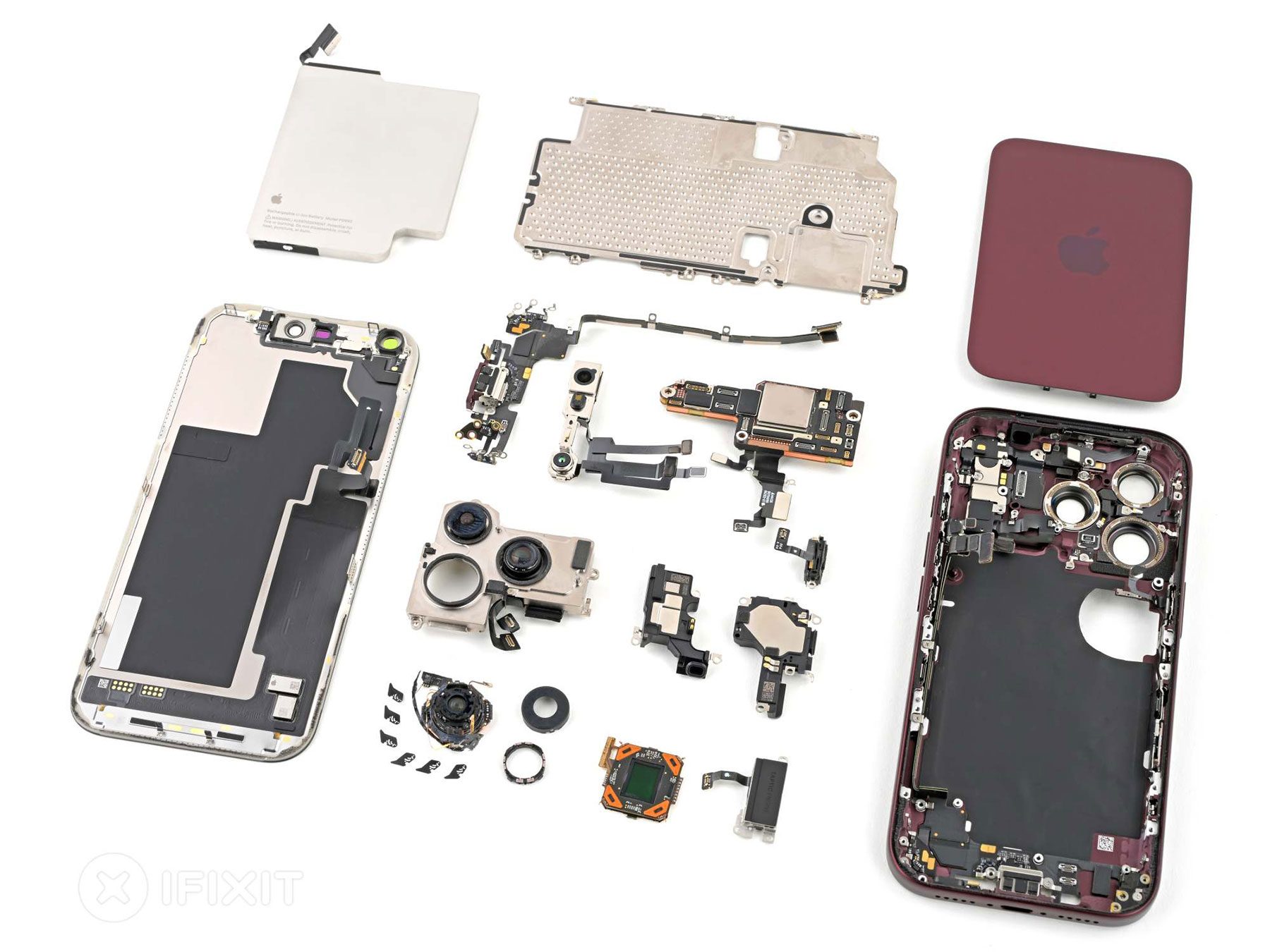
The annual autumn ritual of device teardowns has returned, offering a rare glimpse into the meticulous engineering choices powering Apple’s latest hardware. Right on schedule, the repair and sustainability advocates at iFixit have published their comprehensive, component-level dissection of the iPhone 18 Pro and its larger sibling, the iPhone 18 Pro Max. This year’s teardown goes far beyond routine hardware updates, delivering a front-row seat to some of Apple’s most ambitious design shifts to date.
At the center of the conversation is the smartphone’s standout feature: a sophisticated variable aperture mechanism integrated directly into the primary camera array. Utilizing a series of electromagnetically driven blades, this camera upgrade bridges the gap between computational photography and traditional mechanical optics.
Simultaneously, the teardown uncovers significant internal architectural changes, including a relocated under-display infrared camera for Face ID and a radically redesigned thermal layout featuring a massive vapor chamber. Powered by the next-generation A20 Pro system-on-chip, these advancements clearly aim to push performance boundaries while keeping thermal throttling at bay.
However, beneath the gleaming titanium chassis and cutting-edge optical innovations lie familiar challenges for the independent repair community. While Apple has retained customer-friendly features like a glue-free battery tray and modular camera components, structural quirks—most notably a fragile plastic display frame—complicate the repair process.
As iFixit assigns the iPhone 18 Pro a provisional repairability score of 7 out of 10, the industry is left weighing these engineering triumphs against ongoing hurdles in DIY repairability. This in-depth report explores the architectural evolution of the iPhone 18 Pro, analyzing its revolutionary camera mechanics, thermal architecture, under-display sensors, and what these changes mean for the future of smartphone maintenance.
Detailed Chronology: The Anatomy of the Teardown
To understand the complexity of the iPhone 18 Pro, one must follow the step-by-step disassembly process recorded by iFixit’s technicians. Breaking down a modern smartphone requires navigating a delicate maze of precision adhesives, micro-connectors, and tightly packed silicon.
1. Initial Entry and the Display Dilemma
The teardown process begins, as it has for several generations of Apple’s Pro devices, by attacking the primary point of entry: the display assembly. Technicians apply localized heat using a specialized heating pad to soften the factory-grade waterproof adhesive holding the screen to the chassis.
However, this routine step quickly introduced an unexpected hurdle during iFixit’s session. The technicians discovered that the ultra-thin plastic frame surrounding the OLED display was physically damaged or cracked on three out of the four iPhone 18 Pro units they opened. While Apple has utilized this specific plastic frame configuration since the iPhone 15 Pro, the unusually high failure rate in this batch sparked immediate concern.
iFixit hypothesizes that the device’s newly expanded vapor chamber and hyper-efficient thermal dissipation system may inadvertently draw heat away from the display edges during the heating phase, preventing the adhesive from softening evenly and placing undue stress on the delicate plastic border. In practical terms, a cracked or warped display frame means the screen will not sit perfectly flush upon reassembly, instantly compromising the device’s water and dust resistance ratings.
2. Peering Under the Glass: The Under-Display Face ID Camera
Once the display is safely (or, in this case, cautiously) detached, the internal layout of the iPhone 18 Pro reveals a notable reorganization of front-facing components. For this hardware generation, Apple has successfully relocated the infrared (IR) camera beneath the OLED display panel, freeing up valuable physical space within the Dynamic Island. The primary selfie camera and the IR dot projector remain housed within the signature cutout, but the supporting sensor has vanished from plain sight.
Examining the display under a microscope, iFixit uncovered the clever engineering behind this optical illusion. Apple hides the relocated infrared camera by systematically removing every other row of pixels directly above the sensor. This selective pixel omission allows near-infrared light to pass through the display matrix to the camera sensor below with minimal distortion.
A specialized IR-pass filter is positioned beneath the OLED layer to block out visible light, preventing color contamination. Interestingly, iFixit noted that this filter does not extend all the way to the absolute edge of the cutout, resulting in a distinct "eclipse effect" visible only under specific microscopic magnifications—a minor optical artifact completely invisible to the naked eye during daily use.

3. The Crown Jewel: The Variable Aperture Mechanism
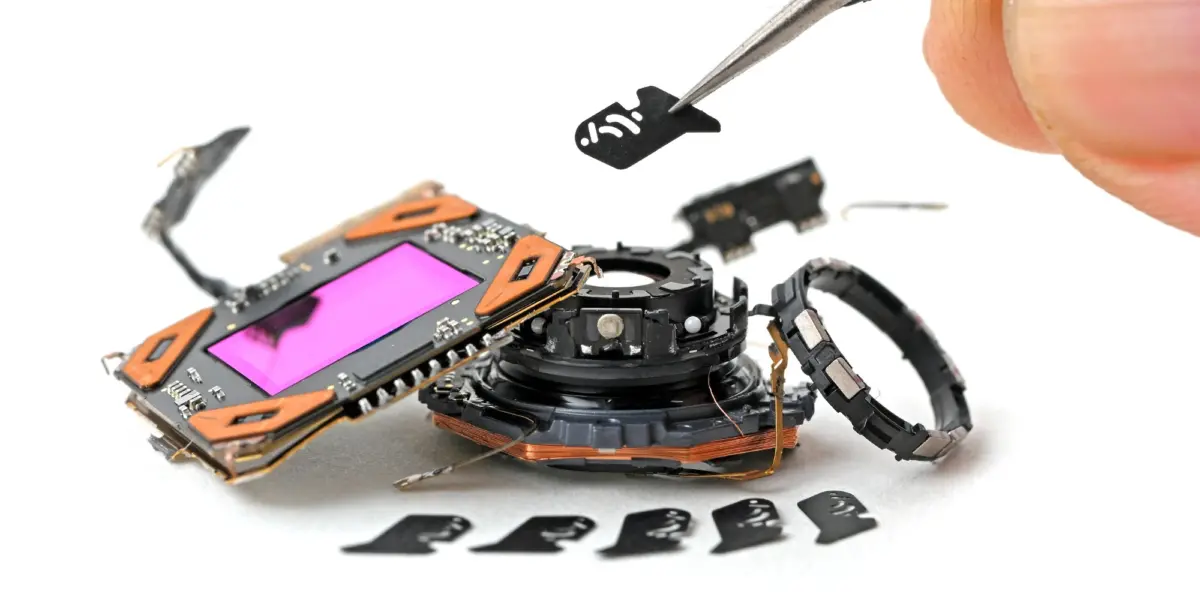
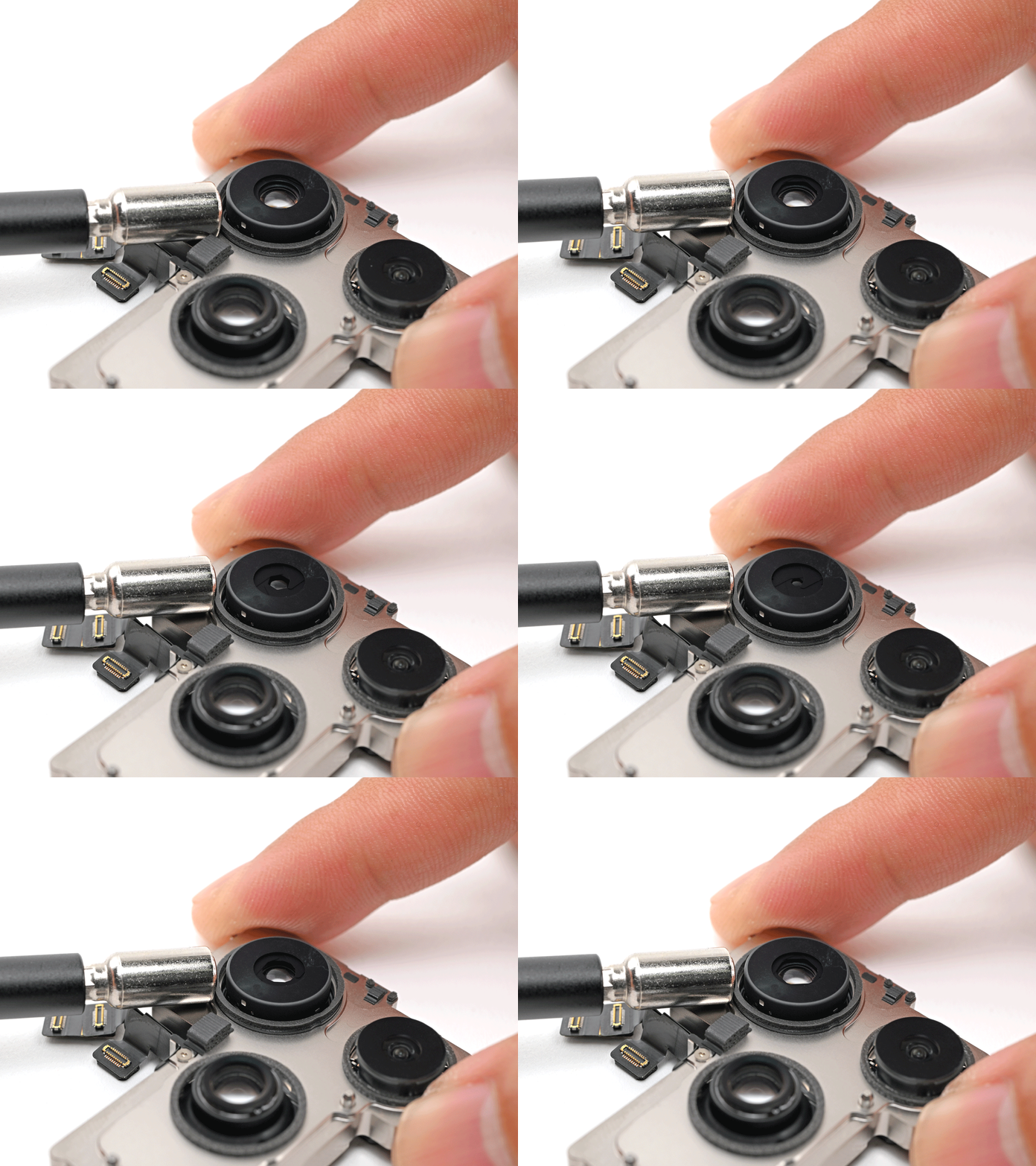
Without a doubt, the most technically fascinating discovery of the teardown lies within the primary camera module. Apple’s introduction of a true variable aperture mechanism marks a major milestone in mobile optics, allowing the device to physically alter the amount of light entering the lens.
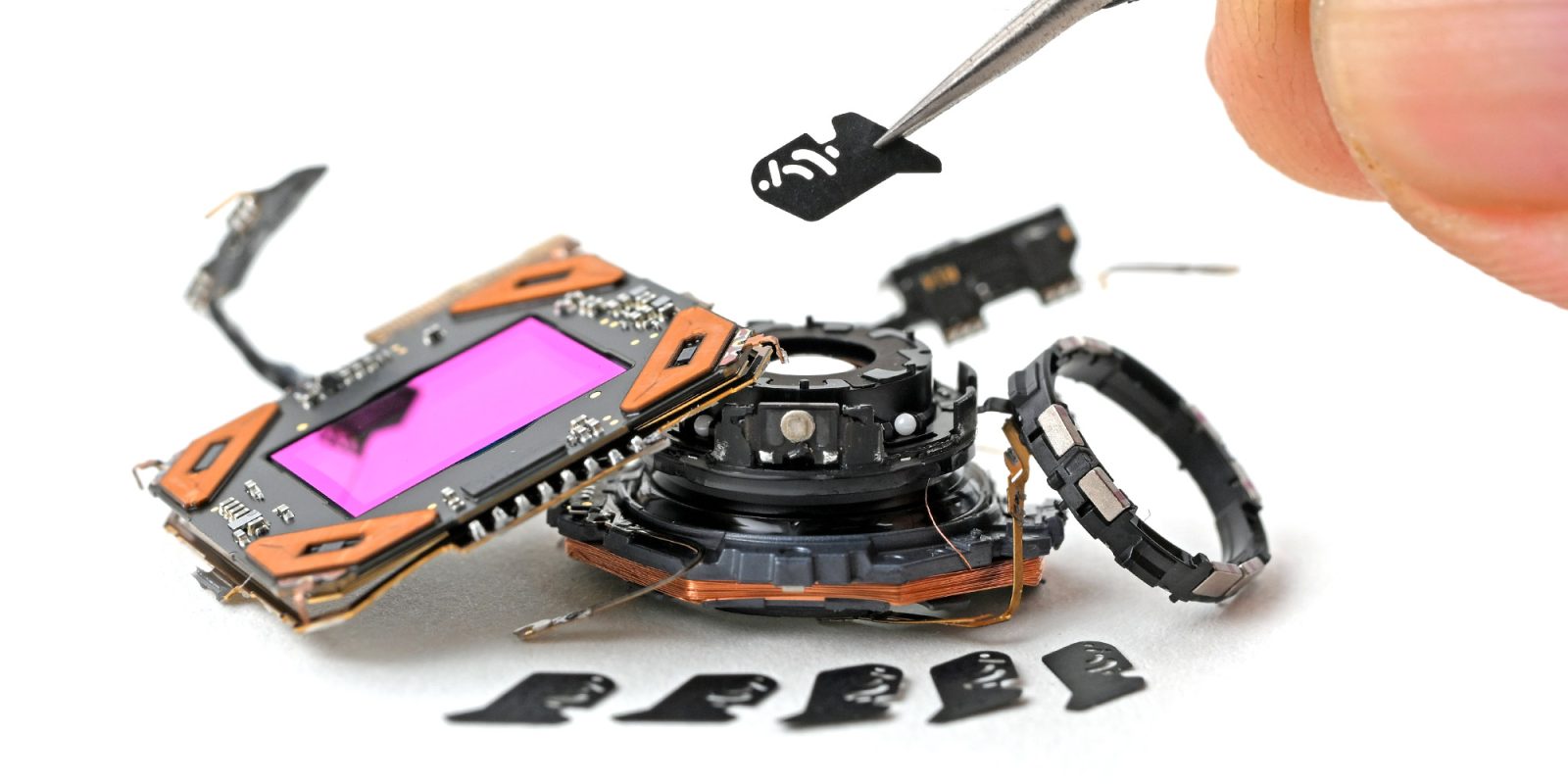
Under magnification, iFixit revealed that the mechanism relies on six microscopic blades constructed from ultra-lightweight material. These blades are manipulated by miniature electromagnets, operating on a principle similar to the optical image stabilization (OIS) systems found in modern smartphones. However, the variable aperture and OIS systems function entirely independently.
The sheer miniaturization of the mechanism leaves very little margin for error. During the disassembly of the lens stack, one of the paper-thin aperture blades unexpectedly flew out, dramatically highlighting the impossibility of component-level repairs. iFixit concluded that if a variable aperture blade were to jam, deform, or fail in the field, technicians would be forced to replace the entire primary camera assembly rather than servicing the optical iris itself.
4. Direct Contact Cooling: The A20 Pro and Vapor Chamber
Thermal management has become a critical bottleneck for high-performance mobile silicon, and Apple’s response in the iPhone 18 Pro is a complete architectural overhaul.
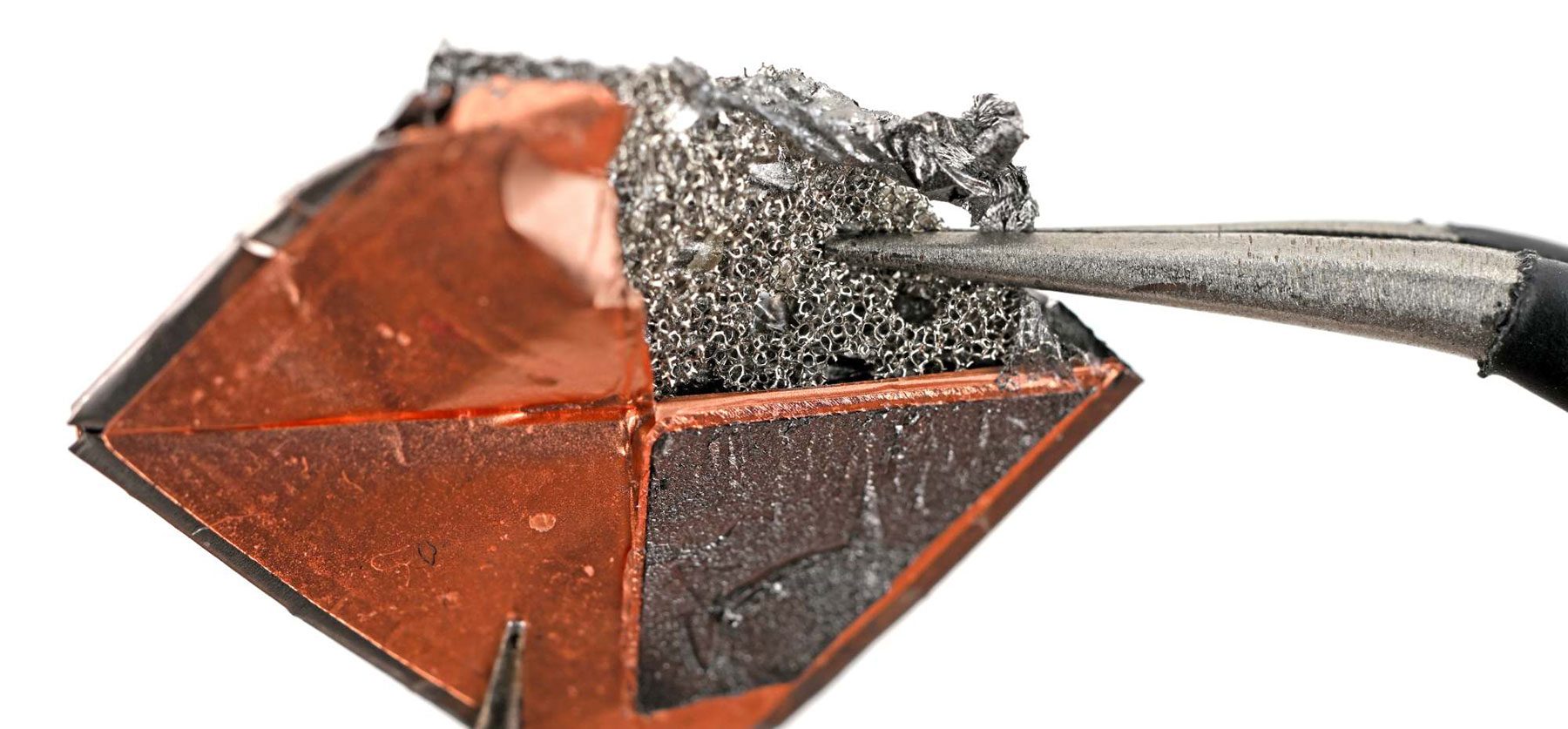
During its initial product unveiling, Apple detailed how the A20 Pro system-on-chip utilizes a novel packaging technique. Unlike previous generations where system memory (RAM) was stacked directly on top of or immediately adjacent to the primary silicon die within the same thermal path, the A20 Pro places the silicon die side-by-side with the memory modules.
iFixit’s teardown provides visual confirmation of this layout. By separating the RAM from the SoC, the primary processor makes direct physical contact with an expansive new vapor chamber via a dedicated thermal interface material. This vapor chamber spans a vast majority of the phone’s internal body area, boasting roughly three times the surface area of the cooling solution found in the preceding iPhone 17 Pro. This setup allows sustained peak performance during heavy gaming or video rendering sessions without inducing rapid thermal throttling.
5. Deep Internal Access and the USB-C Port
While major structural improvements have been made, routine access to peripheral components remains mixed. The teardown confirmed that Apple has thankfully retained its glue-free battery tray design, featuring pull-tab adhesive strips that make battery replacements significantly safer and cleaner than in competing Android flagships.
However, other deep components remain buried. The physical USB-C port, which undergoes heavy mechanical wear over the lifespan of a smartphone, is positioned deep within the internal hierarchy. Replacing a worn or damaged charging port requires technicians to strip away nearly all internal shielding, logic boards, and subsidiary ribbon cables—turning a simple port swap into a time-consuming, highly intricate procedure.
Supporting Context & Metrics: Repairability Scores and Industry Impact
To contextualize the physical findings of the teardown, it is helpful to look at the broader metrics governing modern device repairability, consumer right-to-repair legislation, and historical performance baselines.
| Metric / Feature | iPhone 17 Pro (Previous Generation) | iPhone 18 Pro (Current Generation) |
|---|---|---|
| Cooling Architecture | Standard graphite sheets / smaller vapor chamber | Expanded 3x surface area vapor chamber + side-by-side RAM layout |
| Face ID IR Camera | Housed entirely within the Dynamic Island cutout | Relocated beneath the OLED display panel |
| Primary Camera Optics | Fixed aperture system | 6-blade electromagnetic variable aperture mechanism |
| Battery Replacement | Glue-free pull-tab adhesive tray | Glue-free pull-tab adhesive tray (Retained) |
| Display Frame Design | Standard plastic integration | High-sensitivity plastic frame (prone to thermal stress cracks) |
| Provisional Repairability Score | 7 out of 10 | 7 out of 10 |
The stability of the provisional 7 out of 10 repairability score reflects a fascinating push-and-pull dynamic within Apple’s engineering department. On one hand, the company continues to embrace modular design principles: individual camera lenses, speaker assemblies, and the battery tray are engineered for straightforward extraction. Apple’s continued support for digital repair manuals, self-service repair parts pairing, and diagnostic software tools keeps its devices scoring relatively high compared to tightly bonded legacy hardware.
On the other hand, the physical vulnerability of the display bezel during heating processes introduces an unacceptable risk variable for independent technicians. If the plastic frame issue proves to be systematic rather than a localized batch anomaly, it could force repair shops to routinely factor the cost of replacement display bezels—or entire assemblies—into standard screen repair quotes.
Official Statements and Industry Reactions
The release of the iPhone 18 Pro teardown has triggered widespread discussion across technological forums, engineering blogs, and independent repair communities.

While Apple has not yet issued a formal public statement addressing iFixit’s specific observations regarding the display frame cracking during heating, company representatives have historically emphasized the careful balance between structural rigidity, waterproof sealing, and ease of serviceability. During the device’s official launch event, Apple engineers highlighted the extreme durability requirements of the titanium-aluminum composite frame and the necessity of tight tolerances to achieve IP68 water resistance ratings.
Independent repair advocates have offered a nuanced perspective on the findings. Speaking on the mechanics of the new hardware, veteran technicians have praised Apple for abandoning cramped thermal stacks in favor of the side-by-side A20 Pro layout.
"The transition to a side-by-side memory and silicon layout with a direct-contact vapor chamber is a masterclass in thermal engineering," noted one independent hardware analyst. "It solves real-world throttling problems that have plagued high-end smartphones for years. However, locking the variable aperture blades into a completely non-serviceable module underscores that component-level micro-soldering is increasingly giving way to modular assembly swaps."
Furthermore, consumer rights organizations have expressed cautious optimism regarding the continued inclusion of accessible battery trays, while reiterating calls for Apple to loosen software locks on serialized parts—a policy that continues to complicate cross-swapping components between identical iPhone models without official diagnostic authorization.

Future Outlook: What the iPhone 18 Pro Teardown Means for Mobile Hardware
As smartphones evolve from incremental generational updates into highly specialized computing powerhouses, teardowns like iFixit’s serve as an invaluable X-ray into the future of consumer electronics.
The innovations housed within the iPhone 18 Pro point toward several clear trajectories for the mobile industry at large:
- The Normalization of Mechanical Optics: Apple’s successful integration of a multi-blade variable aperture driven by miniature electromagnets suggests that future high-end smartphones will increasingly blur the line between computational mobile photography and traditional DSLR lens mechanics. As consumers demand greater optical depth control and low-light fidelity, mechanical apertures may become standard across flagship tiers.
- Under-Display Sensor Evolution: The successful relocation of the infrared camera beneath the pixel matrix represents a crucial stepping stone toward Apple’s ultimate goal of an uninterrupted, all-screen front display. By refining pixel-removal techniques and optical filtering, future iterations will likely push the remaining selfie sensors and dot projectors beneath the glass as well.
- Thermal Management as a Core Specification: With mobile chipsets packing desktop-grade performance into pocket-sized enclosures, advanced thermal architecture is no longer an afterthought. The massive vapor chamber layout introduced in the iPhone 18 Pro sets a new benchmark for sustained performance, signaling that future processors will demand dedicated, high-surface-area cooling solutions natively integrated into the chassis design.
- The Ongoing Battle for Repairability: While consumer pressure and right-to-repair legislation have successfully forced manufacturers like Apple to make batteries and select modular components more accessible, complex subsystems like variable aperture cameras and deeply buried USB-C ports remind us that complete device autonomy remains an uphill battle.
As iFixit continues its extended testing and waits for official replacement parts to hit the open market, the final repairability verdict on the iPhone 18 Pro remains open. Whether the display frame issue will be resolved through improved technician training, adjusted thermal heating thresholds, or quiet manufacturing adjustments by Apple remains to be seen. What is certain, however, is that the iPhone 18 Pro stands as one of the most mechanically daring and densely engineered smartphones ever to grace the teardown bench.