Executive Overview
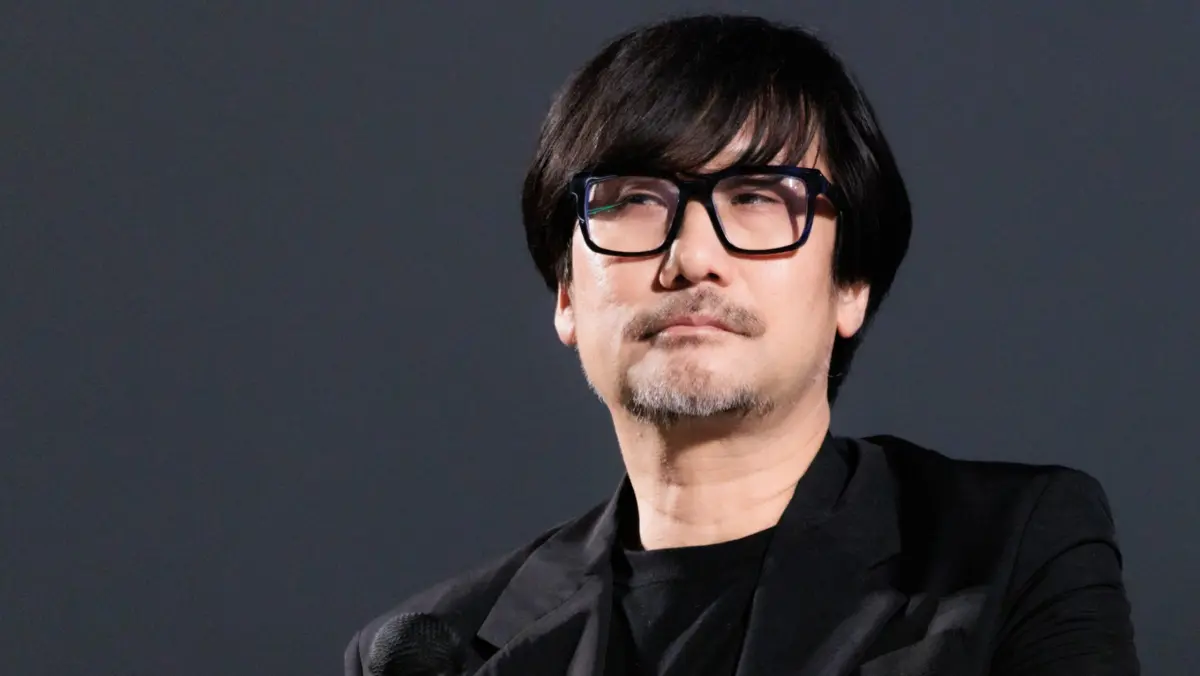
In the high-stakes theater of modern AAA video game development, few partnerships have carried the historical weight of the alliance between legendary creator Hideo Kojima and Sony Interactive Entertainment (SIE). For three decades, Kojima’s career was inextricably linked to the PlayStation ecosystem, culminating in the critical acclaim of Death Stranding and the foundational work on his studio’s upcoming slate.
However, behind closed doors, structural shifts within Sony and an evolving economic landscape culminated in a moment that could have spelled the end for Kojima Productions.
In June, during an unannounced Zoom call with SIE leadership, Kojima was informed that PlayStation was abruptly pulling its funding for Physint—his highly anticipated spiritual successor to Metal Gear Solid. With the stroke of a pen, a cornerstone project for the independent developer’s 10th anniversary was eradicated.
Left temporarily stunned and fearing for the immediate survival of his 200-employee studio, Kojima navigated a precarious tightrope of corporate silence, internal restructuring, and a masterclass in swift pivoting. Within weeks, Microsoft and Xbox—led by newly appointed executive leadership—stepped in to rescue the project. In doing so, they engineered one of the most dramatic console exclusivity shifts in video game history.
This is the comprehensive, behind-the-scenes account of how Physint survived a near-fatal cancellation, why Sony walked away, and how Kojima Productions forged a transmedia alliance with Xbox to keep the auteur’s espionage dreams alive.
Detailed Chronology: The Zoom Call and the 72 Hours That Shook an Empire
The Fateful Meeting
The crisis began on an ordinary day in June. Fresh off high-profile trips to New York for a Prada event and subsequently to Los Angeles, Hideo Kojima was already juggling two massive concurrent developments: the Xbox-backed horror project OD and PlayStation’s espionage action game Physint.
Accompanied by Kojima Productions president Shinji Hirano and head of talent development Aki Saito, Kojima dialed into a routine-seeming Zoom call with SIE executives. What followed was anything but routine.
Without prior warning or protracted negotiation, Sony dropped the bombshell: PlayStation was pulling out of the Physint project entirely, and all financial backing would cease immediately.
"I was so shocked and I said, ‘What did you say?’ I couldn’t quite process what they had said," Kojima recalled in an exclusive interview. "My mind went blank… My first thought was, ‘What am I going to do with my studio?’"
The Threat of Corporate Collapse
Operating as a fiercely independent studio, Kojima Productions relies on a precarious project-to-project financial model. The studio had expanded its headcount to roughly 200 employees specifically to accommodate the sweeping demands of Physint.
Furthermore, the studio was shouldering significant commercial loans from banks—loans secured after the release of Death Stranding to scale up operations. If the banking sector or creditors caught wind of a cancelled flagship project, the consequences could have triggered an immediate liquidity crisis and the collapse of the company.
Beyond financial insolvency, Kojima was plagued by human concerns. He had already begun scanning actors, consulting with visual artists, and committing professional resources to the project. The specter of P.T.—his infamous Konami cancellation—loomed large over his anxieties. He refused to repeat that opaque cycle of heartbreak for his staff and collaborators.
The 72-Hour Blackout and Internal Resilience
Choosing discretion over panic, Kojima, Hirano, and Saito kept the cancellation strictly confidential for the first 72 hours. They refused to even notify the wider studio staff while they formulated a survival strategy.
Kojima returned to his desk, poured his anxieties into expanding the conceptual framework of Physint, and immediately began scheming. Recognizing that traditional game publisher pitches were outdated, he broadened his scope. He envisioned a comprehensive transmedia package: an IP that bridged video games, cinema, streaming television, music, and digital infrastructure.
Three days post-meeting, Kojima gathered the leadership of the Physint team. He delivered the unvarnished truth of Sony’s defection, while reassuring them of his intent to find a new home for the project. To manage the interim gap, a portion of the Physint team was temporarily reassigned to OD, while a core experimental skeleton crew continued foundational prototyping.

To Kojima’s profound relief, the studio’s resilience exceeded all expectations. Expecting demoralization, he walked into the office the following week to find the team enthusiastically generating pitch materials for the very game that had just been unceremoniously dropped.
Supporting Context & Metrics: The Xbox Rescue and Transmedia Vision
Pitching Microsoft and Finding a "Common Vision"
With a refined, transmedia-focused pitch in hand, Kojima turned his gaze outward. Having already established a working rapport with Microsoft through the development of OD, Kojima Productions approached Xbox to gauge their interest in saving Physint.
The reaction from Microsoft was instantaneous and enthusiastic. Recognizing the changing guard at Xbox—highlighted by interactions with new CEO Asha Sharma—Kojima found a corporate partner whose ambitions extended far beyond traditional hardware sales.
"The biggest thing was, they’re not thinking of just funding a game. They’re thinking about movies and anime. It’s more about the IP. Let’s create a new IP. And that’s bigger in scale, so to speak," Kojima explained.
This philosophical alignment mirrored the modern multi-platform cross-entertainment strategies pioneered by Nintendo with Super Mario and The Legend of Zelda. By treating Physint as a foundational multimedia ecosystem rather than a solitary console-bound executable, Microsoft secured a landmark agreement to publish the title.
Technological Synergy and the Engine Question
Beyond financial investment, Xbox offered state-of-the-art technological support. Having toured Microsoft’s cutting-edge labs—which Kojima jokingly likened to encountering squads of "Doc Browns from Back to the Future"—the auteur expressed eagerness to leverage advanced proprietary tools, particularly in the realm of next-generation enemy artificial intelligence.
As for the underlying game engine—specifically whether the project would transition away from Sony’s Decima engine—Kojima noted that investigations and experiments remain ongoing. Development on the core mechanics, motion capture trials, and conceptual prototyping continues daily.
Official Statements and Industry Fallout
The Bloomberg Report and the Studio’s Pushback
The public revelation of Physint‘s platform switch was rapidly followed by investigative industry reports—most notably from Bloomberg—alleging that PlayStation’s decision to sever ties was precipitated by missed production deadlines, ballooning budgets, and concerns over the long-term commercial yield of the Death Stranding franchise.
While Kojima acknowledged that Sony offered no substantive post-meeting clarification or closure regarding their precise rationale—marking an abrupt end to a 30-year professional relationship—Kojima Productions issued a forceful, unified counter-statement addressing the circulating rumors:
Official Studio Statement:
"You may have seen a recent article that mentions Kojima Productions, speculating on the reasons for the change in publishing partners for Physint… Make no mistake, this was a serious situation for the studio with a range of potentially significant implications. While we recognise that the article may have caused alarm, we want to reassure you all, for the record: that the studio is in a healthy, profitable state, development for Physint continues to move forward with Xbox, and our relationship with PlayStation remains strong."
Kojima himself reinforced this sentiment, stating that despite the abrupt termination of the contract, he harbors no personal bitterness toward Sony, maintaining a deep personal affection for the brand’s heritage and hardware lineage.
Future Outlook: What Lies Ahead for Physint and Kojima Productions
The Multiplatform Uncertainty
A central question remaining in the wake of the Xbox acquisition is whether Physint will retain any form of release footprint on PlayStation platforms. Given Microsoft’s recent publishing philosophies—which prioritize broader consumer accessibility across competing ecosystems—Kojima deferred ultimate platform strategy decisions to his new partners at Xbox, noting that official announcements regarding target platforms will be made at a later date.
A Race Against the Clock
As Kojima Productions celebrates its milestone 10th anniversary alongside the 40th year of Kojima’s illustrious career in game creation, the stakes for Physint have never been higher. Reflecting on mortality and the finite timeline of his creative ambitions, Kojima views Physint as the ultimate synthesis of his life’s work in the action-espionage genre.
With a hardened core team, robust backing from Xbox, and a renewed transmedia blueprint that aims to compress the timeline between interactive gaming and cinematic adaptation, Physint has dodged an existential bullet. What began as a terrifying afternoon on a Zoom call has ultimately crystallized into a testament to studio resilience, redefining the boundaries of independent game development in the modern era.