Executive Overview
In the rapidly evolving landscape of cloud computing, the mandate for modern enterprises is clear: high performance, absolute data sovereignty, and ultra-low latency are no longer optional luxuries—they are operational imperatives. As organizations worldwide race to deploy real-time applications, artificial intelligence, and high-throughput data processing systems, the physical distance between data centers and end-users has emerged as a critical architectural bottleneck.
This week’s Amazon Web Services (AWS) dispatch highlights a two-pronged strategy designed to bridge this divide. On one front, AWS is deepening its grassroots engagement with the global developer ecosystem, recently convening hundreds of technical builders in São Paulo, Latin America, for a landmark regional tech summit. On the other front, AWS is pushing its infrastructure deeper into the architectural edge with the official launch of a brand-new AWS Local Zone in Athens, Greece.
The opening of the Athens Local Zone represents a milestone for the Europe, Middle East, and Africa (EMEA) region. As the second Local Zone in EMEA equipped with native support for Amazon Simple Storage Service (Amazon S3) and Amazon Elastic Block Store (Amazon EBS) Local Snapshots, it directly addresses the stringent regulatory frameworks governing data residency in Southern Europe. By combining in-country data storage and processing with single-digit millisecond latency, AWS is empowering Greek enterprises—spanning financial services, healthcare, media production, and real-time gaming—to innovate locally without the heavy operational burdens of managing proprietary data center infrastructure.
This comprehensive report examines the strategic implications of the Athens Local Zone deployment, analyzes the technical specifications powering this release, and explores how community-driven initiatives in Latin America continue to shape the future of cloud engineering.
Detailed Chronology & Infrastructure Deployment
The rollout of AWS infrastructure to metropolitan hubs outside core availability zones has accelerated significantly over the past twenty-four months. The journey toward the Athens Local Zone deployment reflects a meticulous engineering effort to extend the AWS global footprint directly into high-density industrial and population centers.
The Anatomy of an AWS Local Zone
To understand the magnitude of the Athens launch, one must first examine the architecture of AWS Local Zones. Traditional AWS Regions are comprised of multiple Availability Zones (AZs) located miles apart from one another. While ideal for fault-tolerant, highly available distributed applications, these core regions can sometimes introduce network latency that exceeds the strict tolerances of ultra-responsive workloads—such as live multi-player gaming, financial high-frequency trading platforms, or real-time remote medical diagnostics.
AWS Local Zones solve this challenge by placing compute, storage, database, and other select AWS services close to large population and industry centers. The Athens Local Zone integrates seamlessly into the broader AWS global network, allowing developers to run latency-sensitive applications that require single-digit millisecond response times while leveraging the exact same APIs, management tools, and security controls they use in standard AWS Regions.
Key Technical Specifications of the Athens Local Zone
The newly minted Athens Local Zone is not merely a localized compute outpost; it is a fully realized infrastructure node tailored for enterprise-grade performance.
- Advanced Compute Instances: The Athens facility supports modern compute architectures, specifically launching with C7i, M7i, and R7i instances. Powered by custom Intel processors, these instances deliver exceptional price-performance ratios for compute-intensive analytics, general-purpose enterprise applications, and memory-bound databases, respectively.
- Data Sovereignty and Advanced Storage: Crucially, the Athens Local Zone is only the second Local Zone in the EMEA region to feature native support for Amazon S3 and Amazon EBS Local Snapshots. This capability allows organizations to capture, store, and process sensitive data entirely within the physical borders of Greece. Furthermore, the inclusion of the Amazon S3 One Zone-Infrequent Access storage class provides a cost-effective tier for infrequently accessed data that still must remain immediately accessible and compliant with local jurisdiction laws.
- Container Orchestration: Recognizing the ubiquitous adoption of containerized microservices, the Athens Local Zone fully supports Amazon Elastic Container Service (Amazon ECS). Developers can effortlessly deploy and scale containerized applications locally, ensuring that microservices communicating with local data repositories experience minimal network hop latency.
By removing the friction associated with data transfer across international borders, the Athens Local Zone enables Greek enterprises to comply effortlessly with European data protection regulations, including the General Data Protection Regulation (GDPR) and national compliance mandates, without sacrificing the elasticity and agility of the cloud.
Supporting Context & Metrics: The Human and Technical Equation
While cloud infrastructure relies heavily on silicon, fiber optics, and distributed software algorithms, its ultimate success is dictated by the developer communities that build upon it. This symbiotic relationship between infrastructure deployment and human community building was vividly illustrated last week during a high-profile technical gathering in São Paulo, Brazil.

The Latin American Builder Summit: A Catalyst for Innovation
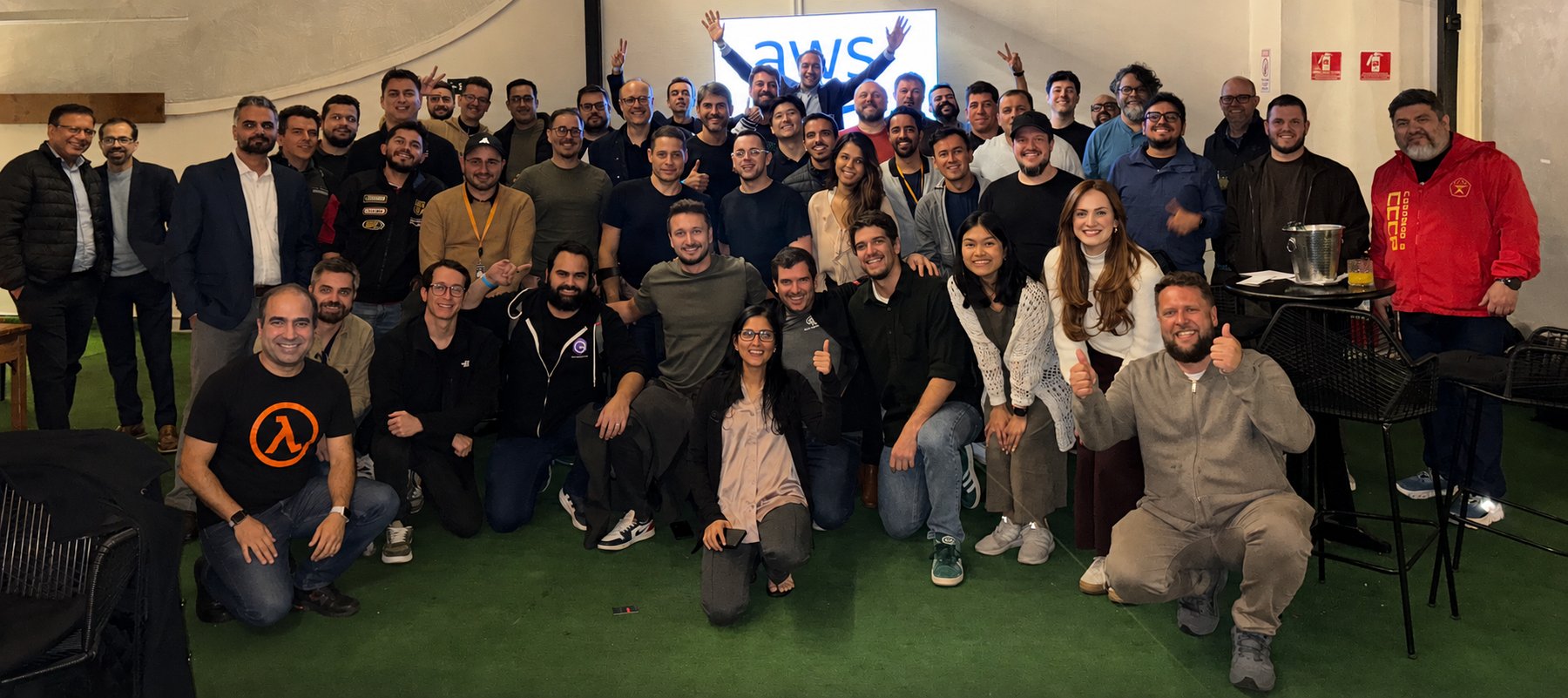
For three intensive days, São Paulo served as the epicenter for technical builders from across Latin America. The regional tech event featured deep-dive architectural sessions, hands-on workshops, and collaborative forums designed to break down silos between AWS engineers, enterprise customers, and independent software vendors (ISVs).
Industry analysts and AWS representatives alike noted that the primary value of the summit transcended the formal slide decks and structured lab sessions. In regions where specialized cloud engineering talent is rapidly scaling but historically fragmented by geography, bringing developers into the same physical room acts as a powerful catalyst for innovation.
- Collaborative Architecture: Attendees engaged in impromptu whiteboarding sessions, trading optimization strategies for microservices architectures, serverless event-driven pipelines, and machine learning model deployments.
- Feedback Loops: These regional gatherings serve as critical feedback loops for AWS product teams. Real-world challenges faced by Latin American builders—ranging from intermittent connectivity in remote industrial sites to unique regional compliance frameworks—directly inform the roadmap for edge computing services like AWS Local Zones and AWS Outposts.
- Community Stickiness: As cloud ecosystems mature, the tooling becomes increasingly commoditized. The true differentiator for an enterprise platform is the depth and vibrancy of its developer community. Initiatives like the AWS Builder Center and regional summits ensure that technical builders remain engaged, supported, and continuously educated on emerging paradigms.
Quantifying the Edge: Why Local Zones Matter
To put the impact of edge infrastructure into perspective, consider the latency mathematics governing modern digital experiences:
$$textHuman Perception Threshold approx 100 text milliseconds$$
$$textReal-Time Gaming / AR/VR Tolerance approx 10 text to 20 text milliseconds$$
$$textHigh-Frequency Financial Trading approx textSub-5 milliseconds$$
When core cloud regions are hundreds or thousands of miles away from end-users, baseline network propagation delays alone can push round-trip times (RTT) well past the thresholds required for real-time applications. By deploying infrastructure nodes like the Athens Local Zone directly into major metropolitan peering centers, AWS reduces network hops, effectively slicing latency down to single-digit milliseconds.
This technical leap directly translates to measurable business metrics: lower customer churn for gaming platforms, zero-frame-drop media production pipelines, and flawless real-time telemetry for industrial Internet of Things (IoT) deployments.
Official Statements and Industry Perspectives
The dual thrust of community empowerment and infrastructure decentralization has drawn widespread praise from industry leaders, regional stakeholders, and AWS executives.
Reflecting on the energy of the Latin American technical community during his three-day residency in São Paulo, a senior AWS community leader remarked:
"What struck me most wasn’t any single session, it was the energy of a technical community that so rarely gets to be in the same room. People traded architecture ideas over coffee, sketched out solutions on whiteboards, and left with a longer list of things to try than they arrived with. It’s a good reminder that, for all the tooling we build, the community around it is what makes the technology stick."
This sentiment of human connection directly mirrors the strategic intent behind the infrastructure expansion in Southern Europe. The rollout in Greece is designed to alleviate the complex operational overhead traditionally associated with localized data compliance. By bridging the gap between global cloud scalability and local data residency, AWS is effectively democratizing enterprise-grade architecture for the Greek market.
Commenting on the technical capabilities unlocked by the new facility, regional infrastructure leads emphasized the democratization of high-performance computing:
"With the opening of the Athens Local Zone, organizations no longer have to choose between ultra-low latency and strict in-country data residency. By integrating Amazon S3 and EBS Local Snapshots directly into the Athens node, we are providing financial institutions, healthcare providers, and media creators with the robust tools they need to innovate fearlessly within their regulatory boundaries."
Industry analysts observing the EMEA cloud landscape have noted that Athens is rapidly emerging as a vital digital gateway. As foreign and domestic investments flow into Greece’s technology sector, the presence of localized hyperscale infrastructure provides a foundational bedrock for startups and legacy enterprises alike to modernize their IT stacks without compromising on security or performance.
Future Outlook: The Convergence of Edge Computing and Community
As we look toward the horizon of cloud architecture, the trajectory is unmistakable: the cloud is no longer confined to massive, centralized data centers situated in remote rural areas. Instead, it is becoming a fluid, ubiquitous fabric that extends wherever builders and users reside—from metropolitan hubs like Athens and São Paulo to factory floors, retail storefronts, and connected vehicles.
What’s Next for AWS Local Zones
The successful launch of the Athens Local Zone serves as a blueprint for future deployments across emerging tech markets. We can anticipate several key trends shaping the immediate future of AWS infrastructure:
- Expanded Regional Parity: AWS will likely continue rolling out advanced storage services—such as localized S3 capabilities and EBS snapshots—to additional Local Zones worldwide, ensuring that data residency mandates never become a barrier to utilizing modern cloud-native storage primitives.
- AI and Machine Learning at the Edge: As generative AI models and localized inference workloads gain mainstream traction, the demand to run latency-sensitive machine learning models (such as computer vision in manufacturing or real-time natural language processing in healthcare) close to the data source will skyrocket. Edge infrastructure nodes like Local Zones will increasingly incorporate specialized AI accelerator instances.
- Deepened Developer Engagement: Regional summits, hackathons, and localized technical workshops will remain central to AWS’s go-to-market and community-building strategy. Ensuring that builders in regions like Latin America, Southern Europe, and Southeast Asia have direct access to peer networks and AWS engineering resources is vital for cultivating the next wave of cloud innovations.
Conclusion
The events of this past week—spanning the vibrant technical exchanges in São Paulo and the strategic infrastructure deployment in Athens—underscore the holistic nature of modern technology leadership. True technological advancement requires more than just powerful silicon and sophisticated networking protocols; it requires a thriving, connected community of builders empowered by infrastructure that respects their local needs while connecting them to global possibilities.
For developers and enterprise leaders eager to engage with this evolving ecosystem, resources such as the AWS Builder Center provide an invaluable portal for collaboration, shared solutions, and continuous learning. As AWS continues its relentless march toward a more connected, edge-optimized future, the Weekly Roundup will continue to track the breakthroughs that redefine what is possible in the cloud.
Stay tuned to our weekly dispatches every Monday for ongoing coverage of AWS announcements, architectural deep dives, and global infrastructure expansions.