For generations, the global cultural export of the United States has relied on a hyper-stylized mythos—a glittering, celluloid-drenched dreamscape of high school football games, locker-lined corridors, AOL chatrooms, and pop icons splashed across the glossy pages of international magazines. For children growing up far from the epicenters of this cultural manufacturing, the US functioned less as a tangible geopolitical superpower and more as a boundless promissory note of possibility.
Photographer Eva Verbeeck was one of those children. Growing up in Tessenderlo, a quiet farming community in northern Belgium, her exposure to American culture was strictly rationed. But what managed to cross the Atlantic was consumed with voracious intensity. Britney Spears singles, Christina Aguilera tours, and tattered pages torn from imported issues of Vanity Fair, Vogue, and Nylon formed the wallpaper of her adolescence. It was an exercise in pure escapism—a teenager’s blueprint of a world where everything felt loud, bright, and radically accessible.
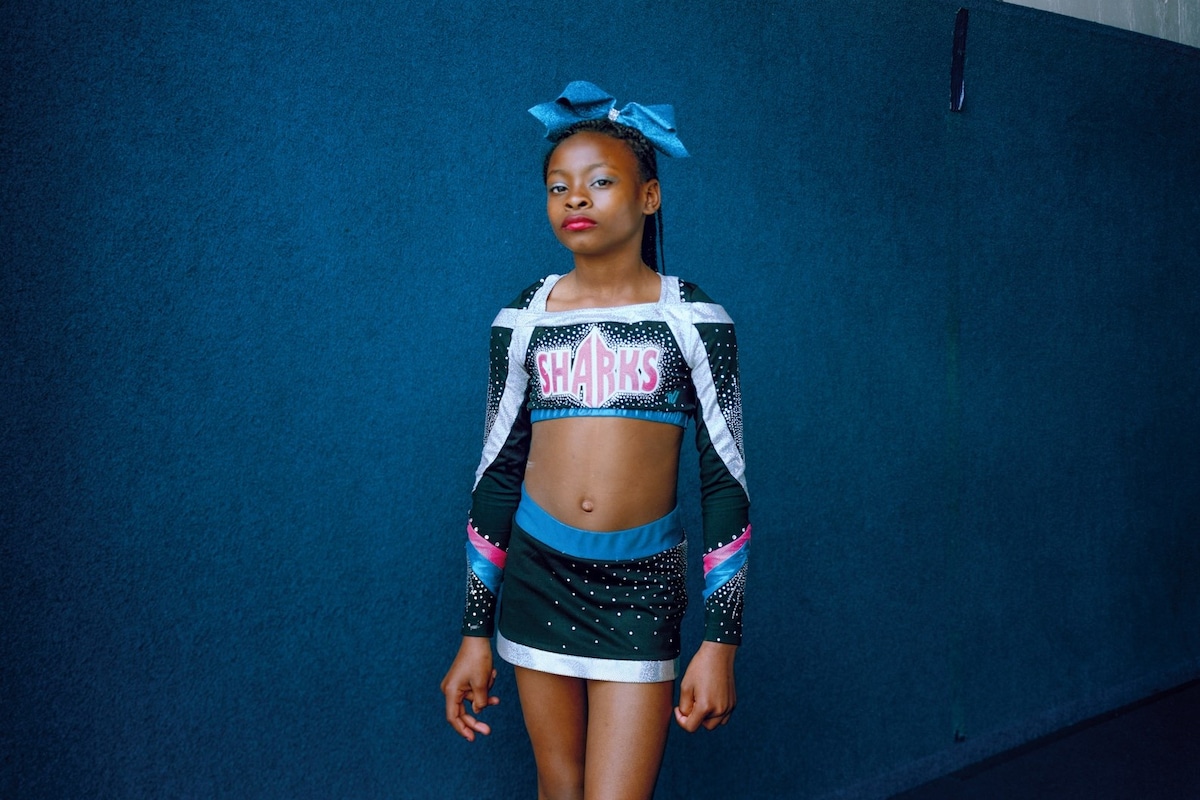
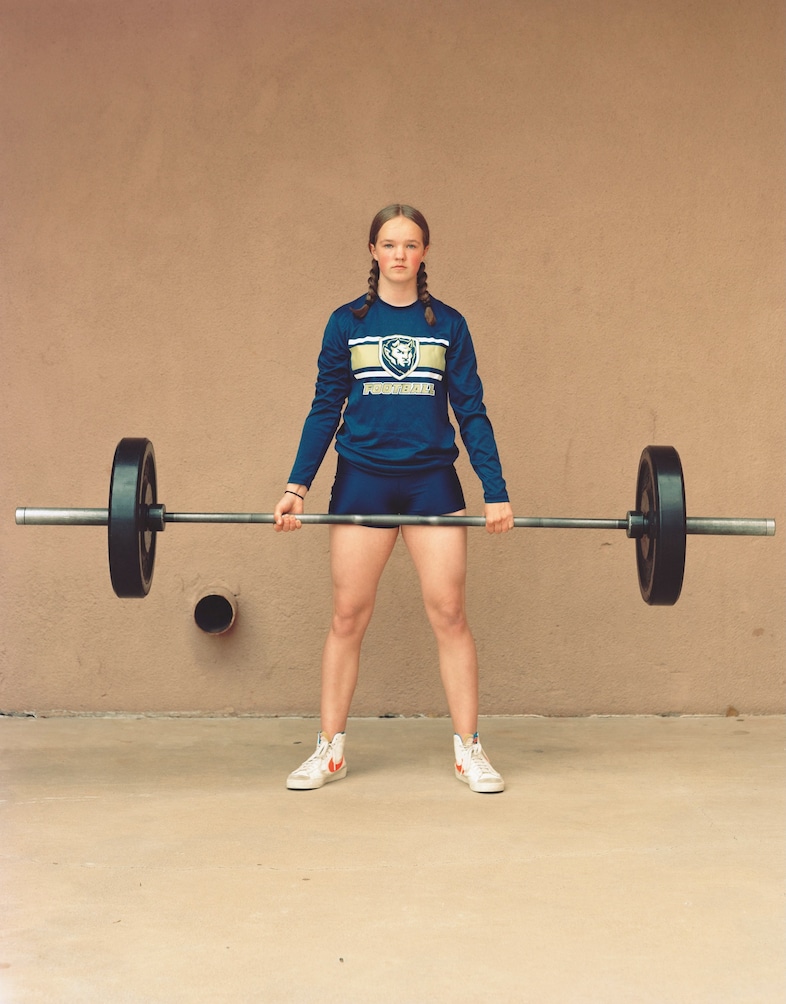
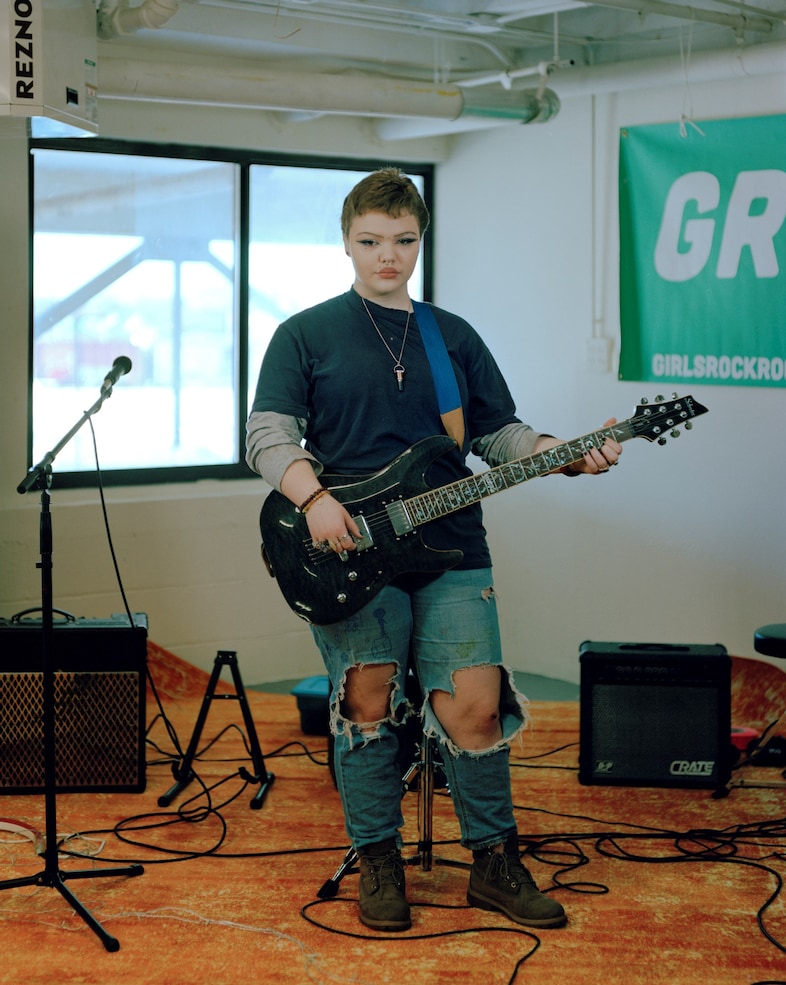
Years later, after transitioning from an avid consumer of these imported fantasies to a resident and professional photographer in the United States, Verbeeck turned her lens back toward the source of her childhood daydreams. The result is America’s Girls, On the Edge of a Dream, a monumental six-year photographic investigation published by GOST Books. Spanning 28 states and featuring more than 400 subjects aged eight to 18, the project strips away the monolithic, commercialized tropes of American girlhood. Instead, it offers a deeply intimate, nuanced cartography of what it actually means to navigate youth, identity, and visibility as a young woman in contemporary America.
Detailed Chronology: From Tessenderlo to Times Square
The European Bedroom Tapestry (Late 1990s–Early 2000s)
In the agrarian isolation of Tessenderlo, Verbeeck’s universe was physically bound by rural Belgian horizons, yet mentally anchored to the United States. In an era before ubiquitous high-speed internet or streaming platforms, American media trickled into her household through carefully curated channels. Friends and family members abroad acted as cultural couriers, sending back American magazines that Verbeeck would immediately deconstruct.
“I would rip it out, and I would paste it all over my wall,” Verbeeck recalls of the Vogue and Nylon spreads that lined her bedroom. “There was this real idea of escapism.”
This era of intense visual absorption coincided with the rise of the MySpace generation. Equipped with a rudimentary film camera gifted by her mother and a self-timer, Verbeeck began documenting her own immediate circle. Photography functioned as an organic extension of her diary—a methodology for anchoring her lived reality while simultaneously dreaming of a grander stage. At the time, her ambitions were pointed squarely at Hollywood, fueled by the cinematic mythology of American adolescence.
First Contact: The Pilgrimage at Sixteen
The abstract dream crystallized into physical reality when Verbeeck was 16 years old. Accompanying her father on a work trip to the United States alongside her brother, she experienced her first direct, unfiltered encounter with the American landscape.
Stepping into New York City, she was immediately overwhelmed by the sensory shockwave of Times Square, neon-lit diners, and the sheer verticality and velocity of urban life. “It was very different to where I’d grown up, and I found it all so exciting,” she reflects. “It screamed so loudly.”
This foundational trip planted the seeds for an eventual relocation to the US, setting the stage for a profound psychological and artistic reckoning. Once she lived within the country, her relationship with its cultural mythology shifted from passive adoration to active interrogation.
The Six-Year Odyssey (2018–2024)
Relocating to the United States provided Verbeeck with the unique vantage point of an insider-outsider. She began to question the durability of the tropes she had ingested in her Belgian bedroom: All of this fascination and escapism as a teenager aside, what does it mean to be a young woman in the US now? What does it mean to be a young woman in this day and age?
These inquiries catalyzed America’s Girls, On the Edge of a Dream. Over a six-year period, Verbeeck traversed 28 American states, embedding herself in local communities, small towns, and sprawling metropolitan suburbs. She bypassed traditional commercial modeling agencies and scouting networks, choosing instead to source her subjects organically through schools, youth groups, sports clubs, community organizers, and localized word-of-mouth networks.
The resulting archive captures a sprawling demographic mosaic of over 400 girls, culminating in a definitive body of work scheduled for release on September 25, 2026.
Supporting Context & Methodology: The Architecture of Authenticity
To understand the artistic rigor of America’s Girls, one must examine Verbeeck’s deliberate rejection of contemporary photographic speed. In an age defined by the instant gratification of smartphone cameras, digital filters, and algorithmic self-curation, Verbeeck chose an intentionally archaic, deliberate medium: large-format 4×5 and 8×10 film cameras.
The Slow Mechanics of Large-Format Photography
Working with large-format equipment imposes severe technical and temporal limitations. Verbeeck restricted herself to just two exposures per subject. Because subjects cannot instantly review the resulting image on a digital screen, the dynamic of the portrait session fundamentally shifts.
“It became really meditative in a way,” Verbeeck notes. The cumbersome camera, the inverted glass focusing screen, and the long moments of stillness created a collaborative ritual rather than a transactional capture. Furthermore, Verbeeck relinquished directorial control over the framing of identity: she instructed the girls to stand however they wished, affording them absolute agency over their posture, gaze, and bodily presentation.
The Archive of Personal Artifacts
To deepen the narrative layers of each portrait, Verbeeck invited every participant to bring a single object of profound personal significance. This invitation yielded a startlingly diverse cross-section of American material culture:
The Athletic Overachiever: One subject arrived laden with a medical cast, three massive basketball trophies, a stack of books, and roughly 20 medals, illustrating the intense physical and academic pressures placed on modern youth.
The Intergenerational Baker: Another participant brought a complete baking kit, honoring the ritualized bond she shared with her father in the kitchen.
The Archivist of Pop Culture: Mirroring Verbeeck’s own adolescent history, one girl arrived clutching a stack of magazines—a poignant nod to the ways youth construct identity through the media they consume.
The Spontaneous Communities: Other subjects brought musical instruments, beloved pets, everyday clothing, or simply arrived empty-handed, trusting entirely in the quiet dignity of their unadorned presence.
The Decisive Moments Between the Exposures
Beyond the technical frames, Verbeeck emphasizes that some of her most poignant realizations occurred off-camera. She recalls observing a circle of teenage ballet dancers sitting quietly together, actively writing about their bodily experiences and the pressures of performance. Witnessing these young women articulate their vulnerabilities collectively underscored a universal truth for the photographer: “All of us care about the same thing. We all want to be seen and heard.”
Official Statements & Critical Insights
Throughout the development of America’s Girls, Verbeeck has been transparent about the ethical weight of documenting youth culture as an outsider. She was acutely aware of the historical gaze of documentary photography, which has frequently reduced young women to either romanticized archetypes or exploited commodities.
"I didn’t see a lot of my own peers with their own voices being documented," Verbeeck explains, reflecting on her early inspirations. "I saw older girls, or maybe the same girl, continuously portrayed in the same way."
By deliberately avoiding the urge to cherry-pick subjects based solely on a superficial standard of "coolness," Verbeeck safeguarded the project’s integrity:
"I didn’t want to go around and be like, ‘You’re cool, you’re interesting, I want to photograph you.’ That would give the project a very different feeling."
Instead, the resulting portraits manage to balance distinct markers of American culture—high school letterman jackets, sports uniforms, institutional architecture, and regional landscapes—with a transcendent humanity that resonates far beyond US borders.
"The things I would rip out of magazines and paste on walls were all very similar ideas of what an American girl or woman was like," Verbeeck says. "Hopefully this book gives a little bit more nuance to the idea of what girlhood is and what it means for different people in the US."
Future Outlook & Cultural Legacy
As America’s Girls, On the Edge of a Dream prepares for its official publication by GOST Books on September 25, 2026, its release arrives at a critical cultural juncture. In an era where young people’s self-images are increasingly mediated, commodified, and flattened by social media algorithms, Verbeeck’s analog archive offers a vital counter-narrative.
The book serves multiple concurrent functions:
An Anthropological Document: It records the realities of American youth during a period of profound socio-political and technological transition.
A Critique of Cultural Imperialism: It deconstructs how soft power and media export shape the psychological landscapes of children growing up thousands of miles away from the United States.
A Monument to Agency: By handing control over to her subjects through large-format portraiture and personal artifacts, Verbeeck champions a new paradigm of documentary ethics—one where the subject is an active co-creator of their own visual legacy.
Ultimately, America’s Girls transcends its physical boundaries across 28 states and 400 portraits. It stands as a universal meditation on the threshold of adulthood—that fragile, luminous space where childhood myths collide with the complex, unscripted reality of becoming oneself.