Executive Overview
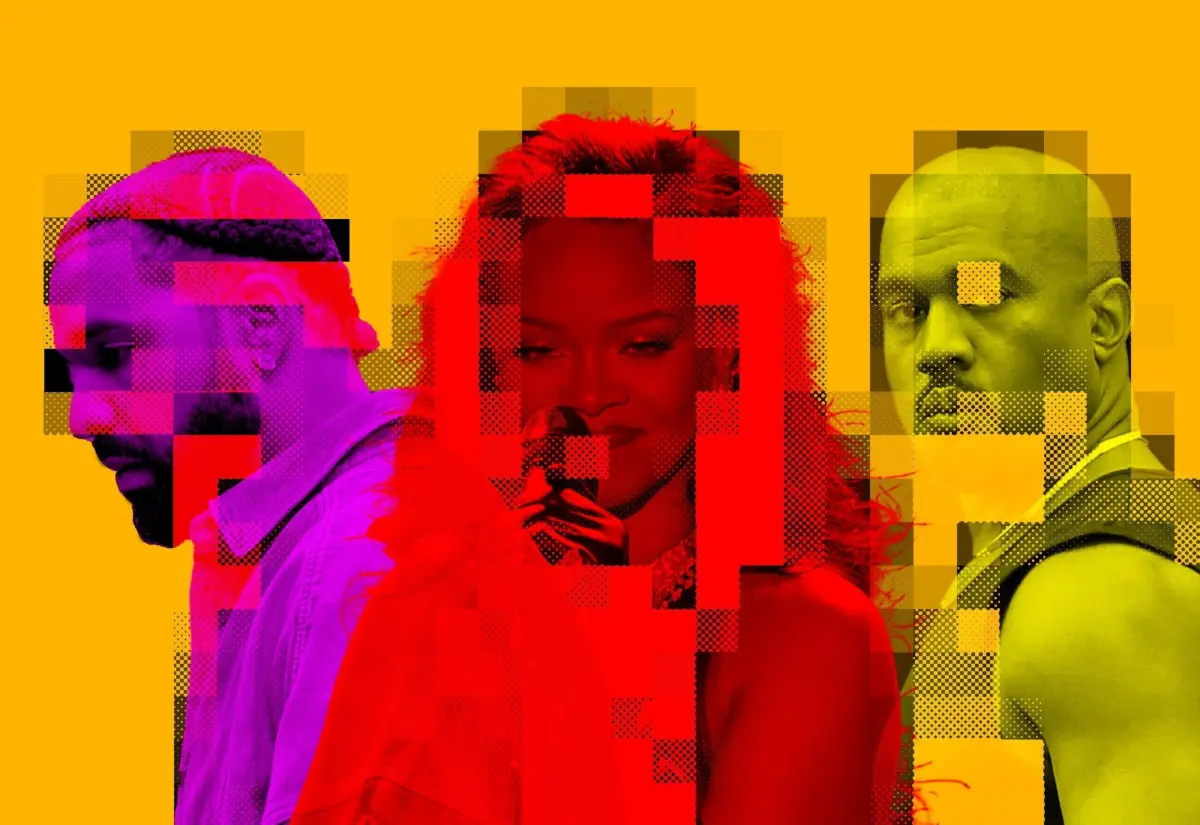
The global music industry stands at an unprecedented precipice. Across YouTube, TikTok, Instagram, and specialized Discord servers, a quiet revolution is taking place—one driven by powerful, accessible generative artificial intelligence tools. Songs featuring uncanny, flawless vocal replications of superstars like Drake, Kanye West, Jay-Z, and The Weeknd are multiplying daily. While millions of listeners stream these tracks in amused fascination, major record labels, legal experts, and top-tier artists are sounding the alarm.
What began as localized tech experiments and internet fan projects has rapidly evolved into an existential threat to copyright law, artist likeness rights, and traditional revenue streams. Artificial intelligence has democratized the replication of the human voice, allowing hobbyists with minimal technical background to place words into the mouths of icons—living and dead. As Universal Music Group and other industry heavyweights scramble to pressure streaming platforms and lock down copyrighted data, a chaotic new cultural frontier has emerged. It is a Wild West where fans see harmless digital fanfiction, while legal scholars and industry executives see a systemic crisis of identity theft on a massive scale.
Detailed Chronology of the AI Music Boom
The collision between generative AI and commercial music did not happen overnight, but its acceleration throughout early 2023 caught the establishment completely flat-footed.
Early 2023: The Wave Begins
The disruption became impossible to ignore in February 2023, when superstar DJ David Guetta surprised a live concert audience by playing an original track incorporating AI-generated vocals mimicking Eminem. The rapper had given no permission for his voice to be used, yet the crowd reacted enthusiastically to the sonic illusion.
Shortly after, French hip-hop act AllttA released “Savages,” a track featuring AI-generated vocals of Jay-Z. Critics and listeners alike noted that the familiar timbre of Jay-Z’s voice added an ineffably compelling gravity to the song, proving that synthetic vocals were no longer mere robotic novelties—they carried emotional resonance.
Spring 2023: Viral Phenomenon and the "Final Straw"
The tipping point arrived in April 2023 with the release of “Heart on My Sleeve,” a remarkably polished collaboration attributed to AI-generated versions of Drake and The Weeknd. The track went wildly viral across social media before industry watchers began to suspect it might be a calculated startup marketing ploy.
Simultaneously, faux cover songs flooded the internet. Independent creators began pushing the boundaries of what these tools could accomplish. A notable tipping point occurred when an AI-generated track surfaced featuring a synthesized version of Drake rapping Ice Spice’s breakout hit "Munch (Feelin’ U)." The real Drake took to Instagram to denounce the track, declaring it unequivocally as "the final straw."
Mid-2023 to Present: The Underground Explosion
Despite artist pushback, underground communities have embraced open-source software with evangelical fervor. Tools like So-Vits-SVC have become viral sensations, spawning dedicated subreddits, TikTok hashtags with millions of views, and specialized Discord servers where users openly share voice models and training techniques.
Creators within the "Kanye unreleased community" began utilizing vaulted a cappella recordings of Kanye West to train proprietary models, enabling them to complete unfinished demos and cross-pollinate genres. Tracks like a synthesized Kanye covering the Plain White T’s pop-rock classic "Hey There Delilah" achieved viral acclaim. Even mainstream artists like Travis Scott publicly interacted with these synthetic creations, signaling a cultural acceptance among younger musicians that starkly contrasts with the defensive posture of corporate boardrooms.
Supporting Context & Metrics: The Technology and Its Creators
To understand how a college student or an amateur bedroom producer can craft a hyper-realistic vocal clone of a multi-platinum artist, one must examine the underlying technology.
The Engine: So-Vits-SVC and Open-Source Democratization
The democratization of voice cloning is largely driven by open-source machine learning projects hosted on platforms like GitHub. Chief among them is So-Vits-SVC (Soft-Voice to Soft-Voice Singing Voice Conversion). The software operates by taking existing audio files—such as isolated a cappellas or clean vocal stems extracted from studio albums—and training a neural network on the unique tonal qualities, vibrato, accents, and cadence of a specific artist’s voice.
- YeezyBeaver: A 22-year-old hobbyist from Oklahoma operating under an alias, YeezyBeaver built a viral YouTube presence by feeding Kanye West’s voice model into tracks like Drake’s "Jungle." His journey began simply by following a link on a Ye Discord server that provided step-by-step instructions on deploying the technology.
- pieawsome: An American college student and member of the "Kanye unreleased community," pieawsome utilized leaked audio snippets to construct a sophisticated voice model. By chopping up fragmented studio outtakes, he trained a model over several days, subsequently releasing it to peer networks where artists like Travis Scott ultimately took notice.
- Jered Chavez: A 19-year-old student at the University of South Florida, Chavez combined generative AI with internet meme culture, crafting mind-bending videos of Drake, Kanye West, and Kendrick Lamar singing anime theme songs (such as Rascal Does Not Dream of Bunny Girl Senpai). Chavez intentionally leaned into comedy to build a distinct brand while implicitly insulating himself from immediate legal blowback.
The Scale of Consumption
The public appetite for these hybrid creations is staggering:
- TikTok hashtags associated with voice-conversion software have easily cleared millions of views.
- Specialized web portals like BohemianRhapsod.ai allow users to orchestrate a virtual choir of 16 AI-generated Freddie Mercury vocal tracks harmonizing through Queen’s iconic rock opera.
- Mainstream indifference or curiosity has left artists like Rihanna—whose AI-generated covers span repertoires from Beyoncé to Katy Perry—without an official corporate counter-strategy for months.
Official Statements and Industry Response
The music industry’s response to the generative AI gold rush has transitioned rapidly from mild curiosity to aggressive containment.
Universal Music Group Draws the Line
Universal Music Group (UMG), which represents industry titans including Drake and Rihanna, took decisive action in the spring of 2023. UMG reportedly reached out to major streaming distributors—including Spotify and Apple Music—demanding that they block AI developers from "scraping" copyrighted melodies, lyrics, and vocal performances from their platforms.
This corporate defense mechanism was spurred in part by warnings from financial institutions. An influential analyst report from BNP Paribas Exane explicitly categorized AI-generated music as a "new disruptive threat" to the economic architecture of major record labels, highlighting the potential for synthetic tracks to siphon streaming royalties away from human creators.
The Legal Vacuum: Modding, Fanfiction, or Identity Theft?
Despite corporate crackdowns, the legal landscape remains remarkably murky. Major entertainment lawyers are treading lightly. Donald Passman, a veteran music attorney who has represented cultural icons like Adele and Taylor Swift, declined to offer definitive legal stances on AI vocal mimicry, noting that the technology is far too new and he refused to jeopardize future courtroom strategies.
Independent creators often rationalize their work through the lens of participatory fan culture. As pieawsome put it:
"I think of what I do as the equivalent of modding a video game or producing fanfiction based on a popular book. It’s our version of that. That may be a good thing. It may be a bad thing. I don’t know. But it’s kind of an inevitable thing that was going to happen."
Conversely, technology ethicists argue that repurposing an artist’s physical identity crosses ethical and legal boundaries. Jonathan Bailey, former chief technology officer of music tech firm Soundwide, offered a starkly different interpretation:
"I think you can make a persuasive argument that using AI to reanimate Jay-Z’s voice to have him rap or sing something he never created is kind of a form of identity theft."
Furthermore, the ethical calculus becomes infinitely darker when applied to deceased icons. Replicating the voices of artists who are no longer alive to grant consent—or to object—strikes many creators and legal scholars as an unacceptable crossing of moral boundaries. Yet, as hobbyists continue to bypass traditional gatekeepers, platforms are increasingly resorting to blunt instruments. YouTube channels publishing AI covers have faced waves of copyright takedown notices, though creators remain skeptical that legal threats can put the technological genie back in the bottle.
Future Outlook: Navigating the Synthetic Era
As the dust begins to settle on the initial wave of viral novelty, the music industry faces a profound structural reckoning. The genie is out of the bottle, and the democratization of high-end vocal synthesis means that zero-budget bedroom producers can wield tools that once required multi-million-dollar studio budgets and elite production teams.
Several trajectory paths are currently shaping the future of audio production:
- New Legal Frameworks and Legislation: Governments and intellectual property attorneys are expected to introduce rigorous legislative frameworks addressing "right of publicity" violations specifically tailored to generative AI voice cloning. Expect landmark lawsuits to establish whether training an algorithm on an artist’s catalog constitutes fair use or copyright infringement.
- Authorized AI Partnerships: Rather than fighting an unwinnable technological war of attrition, forward-thinking labels and artists will likely begin licensing their voices directly to tech platforms. This will allow artists to monetize official AI avatars, authorize licensed collaborative tracks, and maintain creative control over how their digital likenesses are deployed.
- Watermarking and Content Authenticity: Streaming services and tech giants are already investing heavily in audio forensics—developing cryptographic watermarking and detection algorithms capable of instantaneously flagging and labeling synthetic audio streams for consumers.
- A New Subgenre of Pop Culture: Just as electronic music and auto-tune were initially dismissed as unauthentic novelties before reshaping the modern sonic landscape, AI-driven collaborative music may mature into an entirely legitimate, legally sanctioned subgenre of art.
Ultimately, as young creators like Jered Chavez point out, the responsibility moving forward may rest heavily on the ethical judgment of the human beings operating the software. As society steps deeper into this uncharted territory, the definition of what it means to be an "artist" is being rewritten in real-time by algorithms, algorithms that sing with voices borrowed from our collective cultural memory.