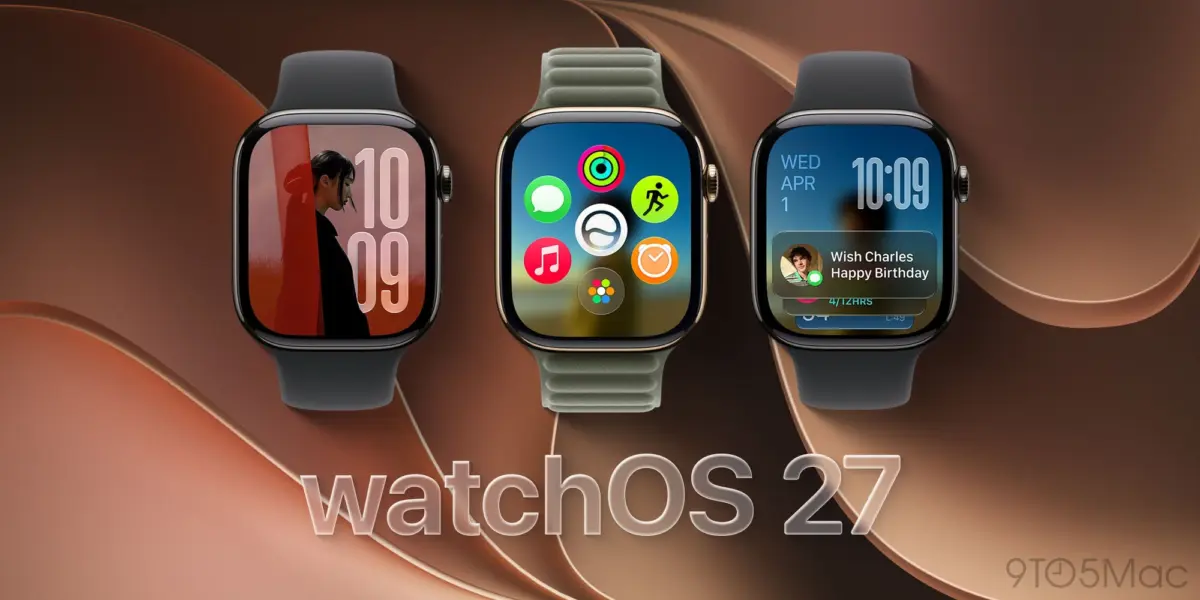
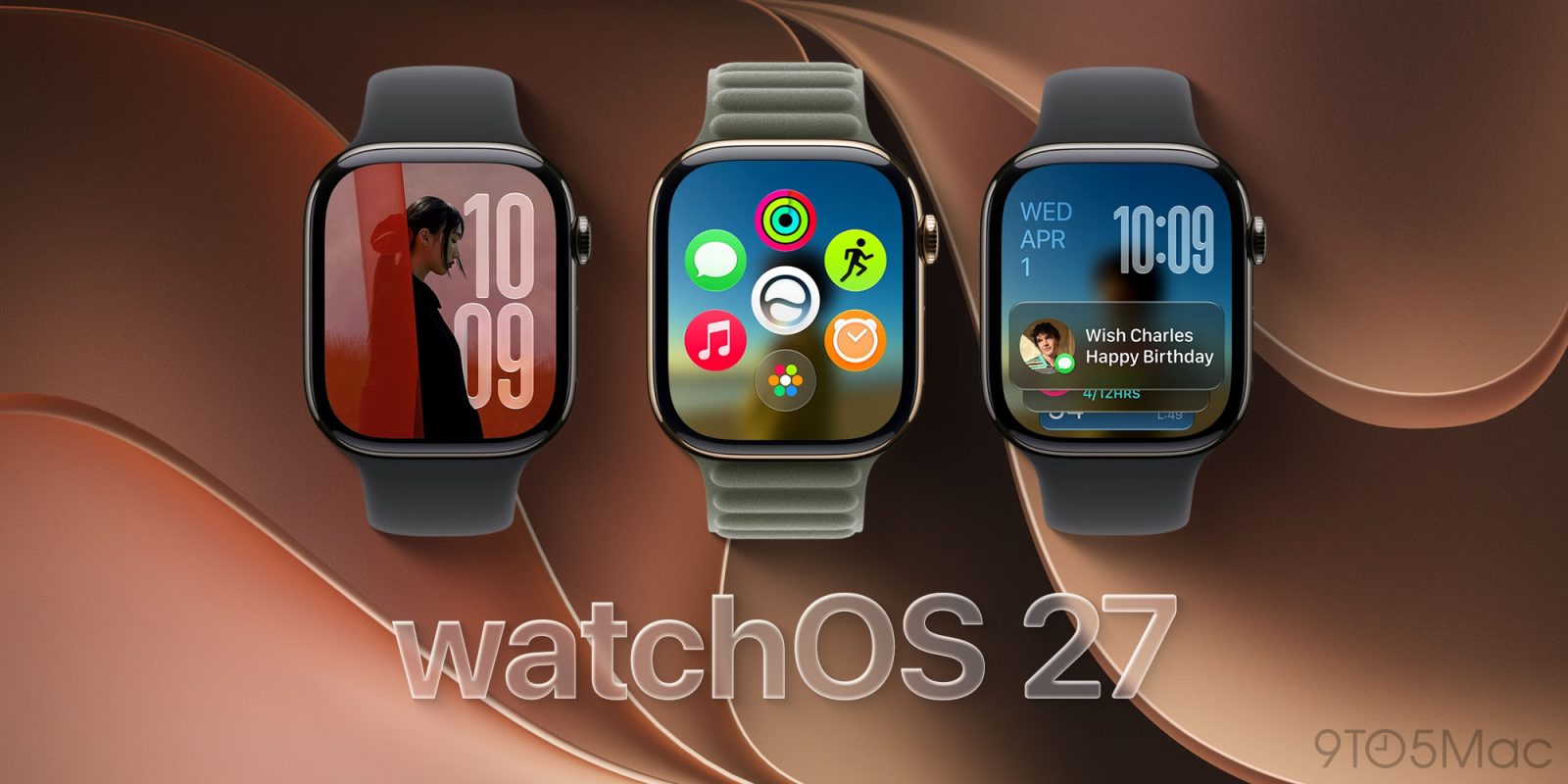
Apple Inc. has officially broadened the deployment of watchOS 27.0.1 to encompass the entirety of the compatible Apple Watch ecosystem. This move follows an initial, staggered release launched late last week that was strictly limited to the newly introduced Apple Watch Series 12 and the flagship Apple Watch Ultra 4.
The minor point release, designated by build number 24R365, addresses a recurring software stability glitch: an unexpected device reboot bug that affected a subset of users across various hardware generations. While initial deployment targeted only the bleeding-edge hardware configurations, today’s expansive rollout ensures that legacy and current-generation models alike can benefit from the patch.
Simultaneously, Cupertino has pushed a sweeping wave of synchronized software patches across its entire operating system portfolio. Alongside watchOS 27.0.1, users have received iOS 27.0.1 (notably rectifying a Face ID-related reboot issue on iPhone 18 Pro devices), iPadOS 27.0.1, visionOS 27.0.1, alongside legacy and transitional updates including iOS 26.7.1, macOS 27.0.1 Golden Gate, macOS Tahoe 26.7.1, and macOS Sequoia 15.8.1.
This multi-platform deployment underscores Apple’s rigorous, cross-ecosystem patch management strategy designed to stabilize newly deployed major operating system iterations. For Apple Watch users, installing watchOS 27.0.1 is critical for ensuring baseline operational continuity, mitigating anomalous hardware resets, and optimizing battery longevity that can be compromised by repeated initialization cycles.
Detailed Chronology: From Staggered Rollout to Global Deployment
The lifecycle of the watchOS 27.0.1 update reflects Apple’s cautious approach to firmware deployment, prioritizing its most advanced silicon and display architectures before scaling across hundreds of millions of active wearable devices.
Phase 1: The Initial Deployment (Last Week)
Last week, Apple surprised the developer and consumer communities by pushing watchOS 27.0.1 into the wild. However, the release notes and distribution channels were strictly partitioned. The update was made available solely to owners of the Apple Watch Series 12 and the Apple Watch Ultra 4.
Industry analysts quickly deduced that this isolated rollout was designed to isolate and mitigate hardware-specific software regressions. The newly minted S-series system-in-package (SiP) processors powering the Series 12 and Ultra 4 feature advanced power-management integrated circuits (PMICs) and neural accelerators. It became evident that an interaction between watchOS 27’s core scheduling algorithms and these advanced physical layers was triggering intermittent, unprompted reboots.
Phase 2: Verification and Build Consistency
Throughout the evaluation window, telemetry data gathered by Apple’s diagnostic servers confirmed that the initial patch (Build 24R365) successfully resolved the unexpected reset behavior on the Series 12 and Ultra 4 without introducing secondary regressions, such as excessive thermal throttling or abnormal battery drain.
Having verified the stability of Build 24R365 on its most demanding hardware, Apple greenlit the build for the broader market. Today’s expansion opens the floodgates, making Build 24R365 accessible to all watchOS 27-compatible models. Users attempting to pull the update will find that the cryptographic signing windows for older, unpatched sub-versions of watchOS 27 are rapidly closing, making this update mandatory for anyone seeking ongoing technical support and security compliance.
Supporting Context & Metrics: The Ecosystem-Wide Software Sweep
The release of watchOS 27.0.1 does not happen in a vacuum. It represents a single cog in a massive, synchronized maintenance cycle executed by Apple’s software engineering department. Operating system updates in the post-major-release window (typically occurring late September to early October) are notoriously frantic as millions of consumers upgrade their devices, exposing edge-case software bugs that evaded internal QA testing pipelines.
Synchronized OS Deployments
To fully contextualize the watchOS 27.0.1 release, one must examine the accompanying software distribution list deployed alongside it:
iOS 27.0.1: Targeted specifically at the iPhone lineup, this update carries profound importance, particularly for early adopters of the iPhone 18 Pro and iPhone 18 Pro Max. Reports indicated that a rare concurrency conflict involving Face ID sensor initialization and the Secure Enclave could force a kernel panic and subsequent reboot. iOS 27.0.1 squashes this bug.
iPadOS 27.0.1: Addresses peripheral synchronization issues and multi-tasking memory leaks reported by users utilizing Stage Manager on M-series iPad configurations.
visionOS 27.0.1: Focuses on spatial tracking stabilization and pass-through video latency adjustments for Apple Vision Pro hardware.
Legacy & Transitional Builds (iOS 26.7.1, macOS Tahoe 26.7.1, macOS Sequoia 15.8.1): Demonstrates Apple’s ongoing commitment to users who choose not to immediately leap to the x7 generation of operating systems, providing vital security patches and zero-day exploit mitigations for older architectures.
The Anatomy of the Apple Watch Bug
The core issue addressed by watchOS 27.0.1 centers on system stability. While Apple’s official release notes remain characteristically terse—stating merely that the update "provides bug fixes for your Apple Watch including fixing an issue where Apple Watch may restart unexpectedly"—kernel crash logs shared by developers on public forums shed deeper light on the matter.
Under specific conditions—often linked to background workout tracking routines, ambient noise measurements via the microphone array, or continuous heart-rate variability (HRV) polling—the watchOS 27 kernel encountered memory allocation anomalies. When the watchdog timer failed to receive a heartbeat signal from critical system daemons, the operating system executed a forced safety reboot to prevent hardware lockups or data corruption.
For a device worn on the wrist intended to function as an invisible, reliable assistant—and increasingly, a medical-grade health monitoring tool—these unprompted reboots disrupted active ECG recordings, paused fitness metrics mid-marathon, and occasionally delayed critical haptic notifications.
Official Statements and Technical Breakdown
Apple’s official documentation regarding Build 24R365 remains minimalist, adhering to the company’s long-standing communications policy regarding point releases.
The Official Release Note
"This update provides bug fixes for your Apple Watch including fixing an issue where Apple Watch may restart unexpectedly."
Despite the lack of granular prose, software engineers within the Apple Developer community have reverse-engineered aspects of the build to confirm that no user-facing interface modifications or API deprecations are packaged within 24R365. This is strictly a reliability patch.
How to Install watchOS 27.0.1
Given the critical nature of stability improvements, Apple recommends that all eligible users initiate the update procedure at their earliest convenience.
Ensure Device Charge: Place your Apple Watch on its magnetic charging puck. The device must maintain a minimum charge of 50% to initiate the firmware installation process.
Check iPhone Proximity: Ensure your paired iPhone is updated to iOS 27.0.1 (or the latest corresponding version) and is connected to a stable Wi-Fi network with Bluetooth enabled.
Navigate Settings: On your iPhone, open the Watch app.
Initiate Download: Tap on General > Software Update.
Install: When watchOS 27.0.1 appears, tap Download and Install. Enter your iPhone or Apple Watch passcode when prompted.
Note: Depending on your Wi-Fi bandwidth and the specific model of your Apple Watch, the installation process can take anywhere from 15 to 45 minutes. Do not remove the watch from its charger until the Apple logo and progress ring have completely finished and the device returns to the standard watch face.
Future Outlook: Looking Ahead to watchOS 27.1 and Beyond
With the deployment of watchOS 27.0.1 now encompassing the entire active device base, Apple’s internal engineering teams are shifting focus toward the next major feature drop: watchOS 27.1.
Anticipated Feature Additions in Subsequent Releases
While point releases like 27.0.1 and 27.0.2 are strictly confined to bug squashing, performance optimizations, and security patches, developer relations channels suggest that the upcoming watchOS 27.1 beta cycle will introduce deeper integrations for third-party health accessories, expanded workout metrics APIs for developers, and further refinements to the user interface paradigms introduced in watchOS 27.
Hardware Longevity and Software Support
The smooth scale-out of watchOS 27.0.1 highlights the robust nature of Apple’s long-term software support pipeline. By maintaining uniform build numbers (24R365) across both newly minted hardware like the Apple Watch Series 12 and Ultra 4, and legacy compatible models, Apple reduces fragmentation within its developer ecosystem. This ensures that application developers do not have to write hyper-fragmented codebases to support divergent firmware states across wrist-worn hardware.
As wearables increasingly transition from companion accessories to autonomous health, identity, and communication nodes, the speed and reliability of these over-the-air (OTA) updates will remain a cornerstone of Apple’s consumer trust matrix. Users are strongly advised to verify that their automatic update toggles are enabled within the Watch application to safeguard against future unannounced stability bugs.