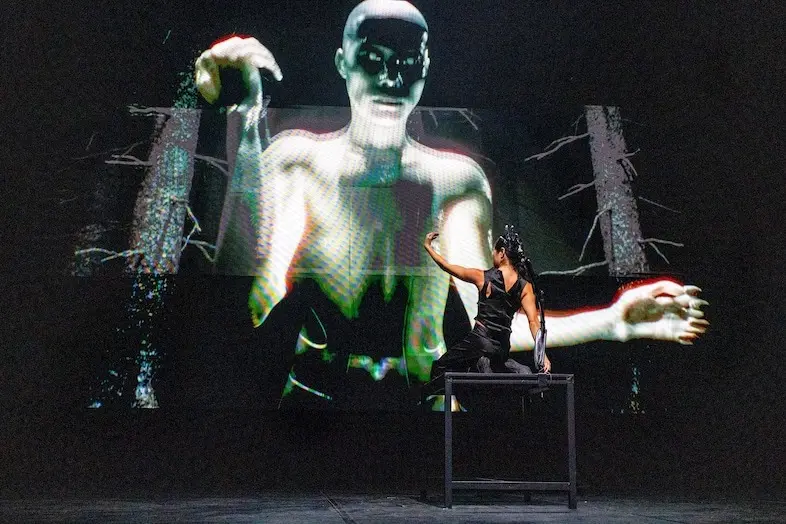
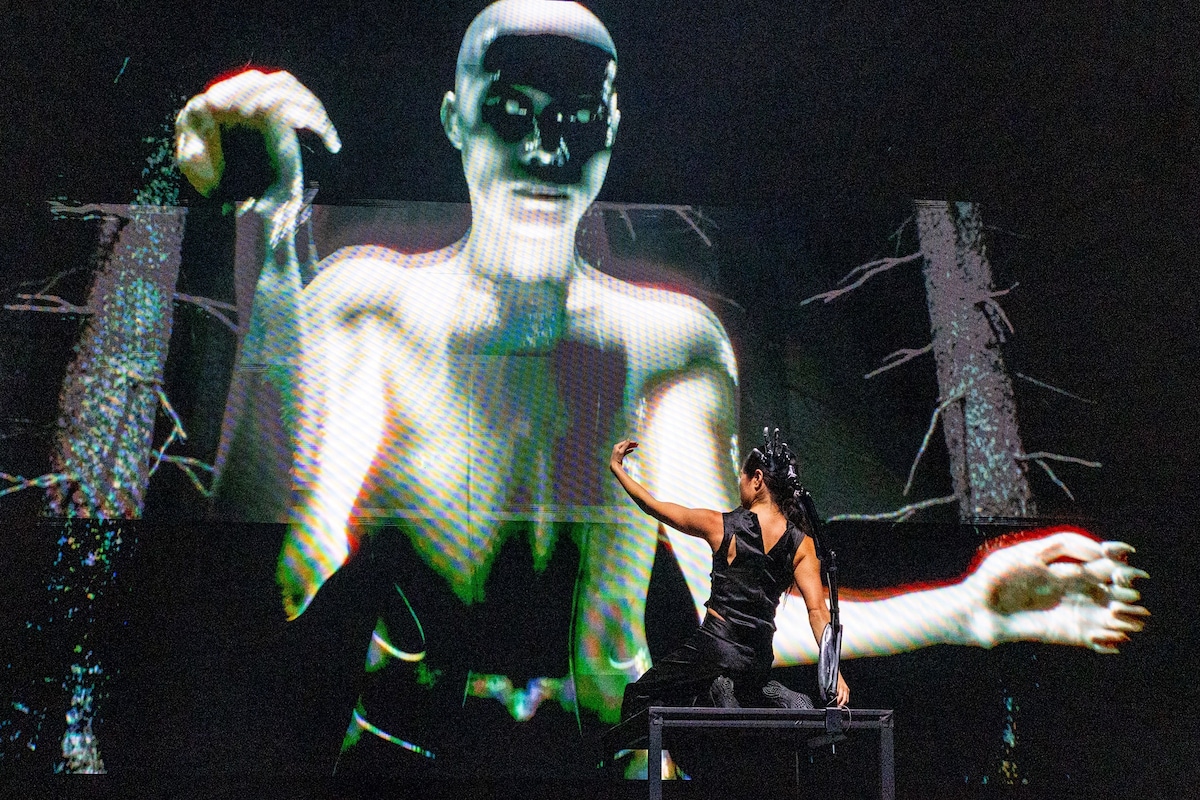
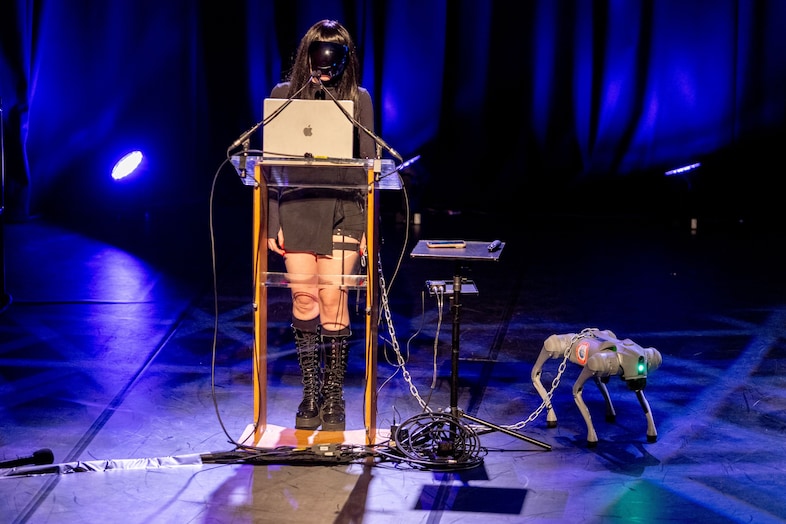
Step inside London’s iconic Southbank Centre, and you might expect the familiar acoustic hum of classical strings or the quiet reverence of a contemporary painting gallery. Instead, visitors of the inaugural Creative Intelligence festival—running from September 11 to 13 and already confirmed for a 2027 return—were met with a scene straight out of a speculative fiction anthology: a cybernetically masked handler desperately trying to wrangle a mechanical hound bred explicitly for competitive combat. Straining against its leash on the main stage, the robotic beast refused to budge, offering an arresting, slightly dystopian overture to a weekend dedicated to dissecting the bleeding edge of art and technology.
Far from a cynical marketing stunt, this chaotic encounter encapsulated the core thesis of Creative Intelligence: the future is arriving at a breakneck pace, and culture must actively engage with it rather than retreat into Luddite nostalgia. Curated in partnership with PACT, the three-day festival functioned as a high-octane collision zone for "cultural first movers"—artists, technologists, venture incubators, and theorists striving to redefine what it means to create in an era dominated by artificial intelligence, quantum computing, and the shifting paradigms of the attention economy.
Supported by prominent London-based incubators like Restless Egg, the event brought together divergent forces across the creative ecosystem. From anti-surveillance beauty demonstrations and quantum-powered video games to deep-listening sessions examining bespoke AI vocal models, the festival dismantled traditional boundaries between disciplines. For the attendees—including a cohort of design-forward adventurers equipped with discounted Dazed Club tickets—Creative Intelligence offered more than just intellectual stimulation; it provided a masterclass in survival and innovation for artists navigating the turbulent waters of the 21st-century creative economy.
Detailed Chronology & Event Breakdown
The festival’s programming unfolded as a dynamic dialogue between large-scale technological speculation and intimate, community-driven craftsmanship.
Day One: The Collision of Silicon and Stage
The opening sessions immediately established a tone of urgent disruption. The morning showcased the vanguard of commercialized tech-art, highlighting incubators like Restless Egg. Co-founder William Morgan argued passionately for the integration of Silicon Valley-style scalability into artistic production. Alongside the aforementioned robotic combat league, panels featured platforms like Fuser and visionary projects by architect and editor Jack Self, whose work interrogates the mechanics of the attention economy to establish what constitutes true cultural relevance today.
As the afternoon rolled in, the frantic, high-tech energy modulated into a more grounded, reflective mode. Directors Jenn Nkiru and Jordan Hemingway—renowned for their groundbreaking visual collaborations with Beyoncé and FKA twigs, respectively—sat down for a masterclass in creative worldbuilding hosted by artist Danielle Brathwaite-Shirley. This panel served as a vital counterpoint to the morning’s corporate-adjacent models, emphasizing the necessity of slow, deliberate community-building and a mindful, ethically protective approach to brand partnerships.
Day Two: Protocols, Platforms, and Quantum Leaps
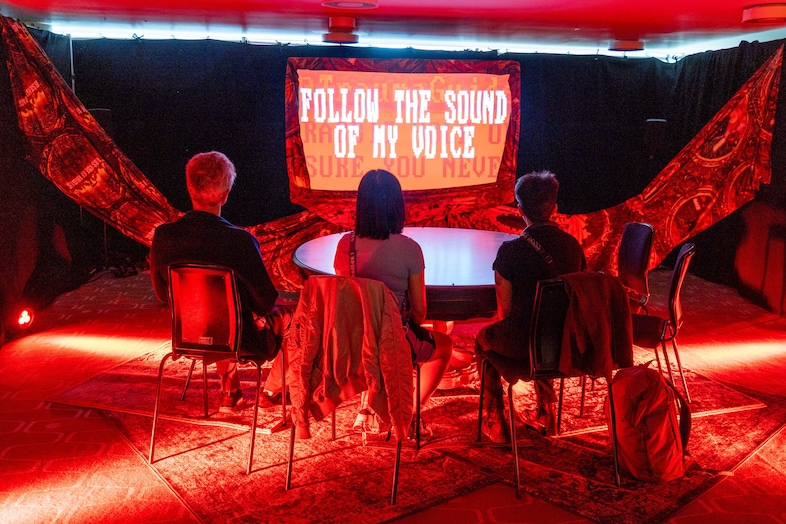
The second day shifted focus squarely onto the structural mechanics of modern creation. Holly Herndon and her partner Mat Dryhurst led an immersive, deep-listening session that traced their artistic evolution from the trailblazing album Frontier to their recent experiments training bespoke AI voice models with local community choirs. Herndon’s methodology highlighted the concept of "protocol art"—the idea that curating datasets, engineering software frameworks, and designing technological systems are just as much artistic acts as composing a melody or wielding a paintbrush.
Concurrently, the exhibition floors buzzed with hands-on installations curated by Peckham Digital. Attendees queued to experience Quantum Backrooms, an experiential game developed by quantum technology firm Moth that operates on bleeding-edge quantum computing architectures. Nearby, Lauren Bowker—founder of The Unseen and pioneer of space-grown cosmetic ingredients—drew crowds with striking anti-surveillance makeup demonstrations, visually manifesting the growing resistance to ubiquitous state and corporate data harvesting.
Day Three: Institutional Recognition and Future Horizons
The final day of the takeover pivoted toward institutional support and structural longevity. Most notably, the festival marked the launch of the Creative Intelligence Award, backed by a formidable coalition including the CoSTAR National Lab, the Southbank Centre, and UKRI (UK Research and Innovation). Providing £50,000 in project development grants, the award was established specifically to champion artists working at the volatile intersection of creative practice and emerging technology.
The festival closed not with a sense of definitive resolution, but with an open-ended invitation. Through showcases by the London Community Laptop Orchestra, avant-garde inventions from the research collective Termite, and rigorous panel debates, the event underscored a singular reality: human creativity has not vanished; it has merely donned new armor.
Supporting Context & Metrics: Navigating the New Creative Economy
To fully understand the gravity of Creative Intelligence, one must examine the socioeconomic pressures currently facing the global creative sector. For decades, the romanticized archetype of the "starving artist" has functioned as an invisible tax on cultural production, normalizing financial precarity as the price of authenticity. Festival speakers systematically dismantled this myth, arguing that economic sustainability is a prerequisite for creative autonomy.
Initiative / Project
Core Focus / Technology
Key Institutional Partner
Primary Objective
Restless Egg
Venture-model art incubation
Mozilla Foundation / Leonardo/ISAST
Commercialization as a force multiplier for cultural impact.
Moth Quantum
Quantum computing video games
Peckham Digital
Early public onboarding for embryonic quantum tech frameworks.
Creative Intelligence Award
£50k project development grants
CoSTAR National Lab / UKRI / Southbank Centre
Funding boundary-pushing art-tech collaborations.
The Unseen (Lauren Bowker)
Anti-surveillance cosmetics & space materials
Independent R&D
Designing physical countermeasures against biometric tracking.
The integration of venture-capital methodologies into art—championed by Restless Egg alongside figures like Diana Ayton-Shenker, CEO of Leonardo/ISAST—remains a subject of fierce debate within cultural circles. Critics worry about the commodification of critique, yet proponents argue that traditional funding models are crumbling beyond repair. In an era where legacy creative economies are buckling under digital piracy, algorithmic streaming payouts, and economic austerity, the search for robust alternative architectures is no longer optional.
Furthermore, the launch of the CoSTAR-backed Creative Intelligence Award injects much-needed capital directly into grassroots R&D. By earmarking funds specifically for cross-disciplinary experimentation, the initiative provides a financial bridge for practitioners who refuse to choose between technological innovation and artistic integrity.
Official Statements and Industry Perspectives
The discourse at the Southbank Centre was defined by a refreshing lack of technofuturist utopianism. While generative artificial intelligence dominated many conversations, the prevailing sentiment steered clear of blind technological determinism.
Addressing the pervasive fear that AI will reduce human culture to homogenized digital waste, multimedia artist K Allado-McDowell offered a pragmatic critique during a panel alongside Sougwen Chung and Jazia Hammoudi:
"Most of what is called slop is people working with the core, default setting of the system."
Building on this, William Morgan emphasized the agency retained by human practitioners within the feedback loop of machine learning:
"If you change the people, which are the input, I’m willing to bet that the output will change."
Morgan’s assertion—that creators must actively embed themselves within the development of emerging systems rather than "burying their heads in the sand"—resonated across multiple panels. This philosophy of early adoption was echoed by Harry Kumar, founder of Moth Quantum, who advocated for introducing the public to quantum computing while the technology is still in its nascent, malleable stages. By demystifying these systems early, creators can help dictate their trajectory rather than passively inheriting corporate-mandated constraints.
Holly Herndon encapsulated the micro-philosophical shift required by this technological epoch during her deep-listening session, noting simply:
"Each step is an art-making moment."
Whether curating training data for a neural network, programming a quantum matrix, or designing a garment that deflects facial recognition cameras, the modern artist acts as an architect of protocols.
Future Outlook: Escaping the Algorithm
As Creative Intelligence closes the book on its inaugural run and looks toward its 2027 iteration, the festival leaves behind a blueprint for how cultural institutions can navigate a rapidly transforming world. The traditional gallery model—passive, protective, and retrospective—is ill-equipped to address the complexities of algorithmic governance, bio-surveillance, and artificial intelligence.
The success of the Southbank Centre’s takeover proves that audiences and artists alike are hungry for active, participatory engagement with the future. By placing commercial strategists, quantum physicists, radical designers, and pop-culture auteurs on the same stages, the festival fostered a cross-pollination of ideas that is vanishingly rare in contemporary arts programming.
Ultimately, Creative Intelligence delivered a vital, reassuring message: technology does not have to spell the end of human culture. Armed with critical awareness, financial pragmatism, and a willingness to master tools while they are still in their infancy, creators possess the power to rewrite the rules. As the digital horizon continues to accelerate toward us, the mandate for the cultural vanguard is clear—stop fearing the algorithm, step into the lab, and start building the alternatives.